



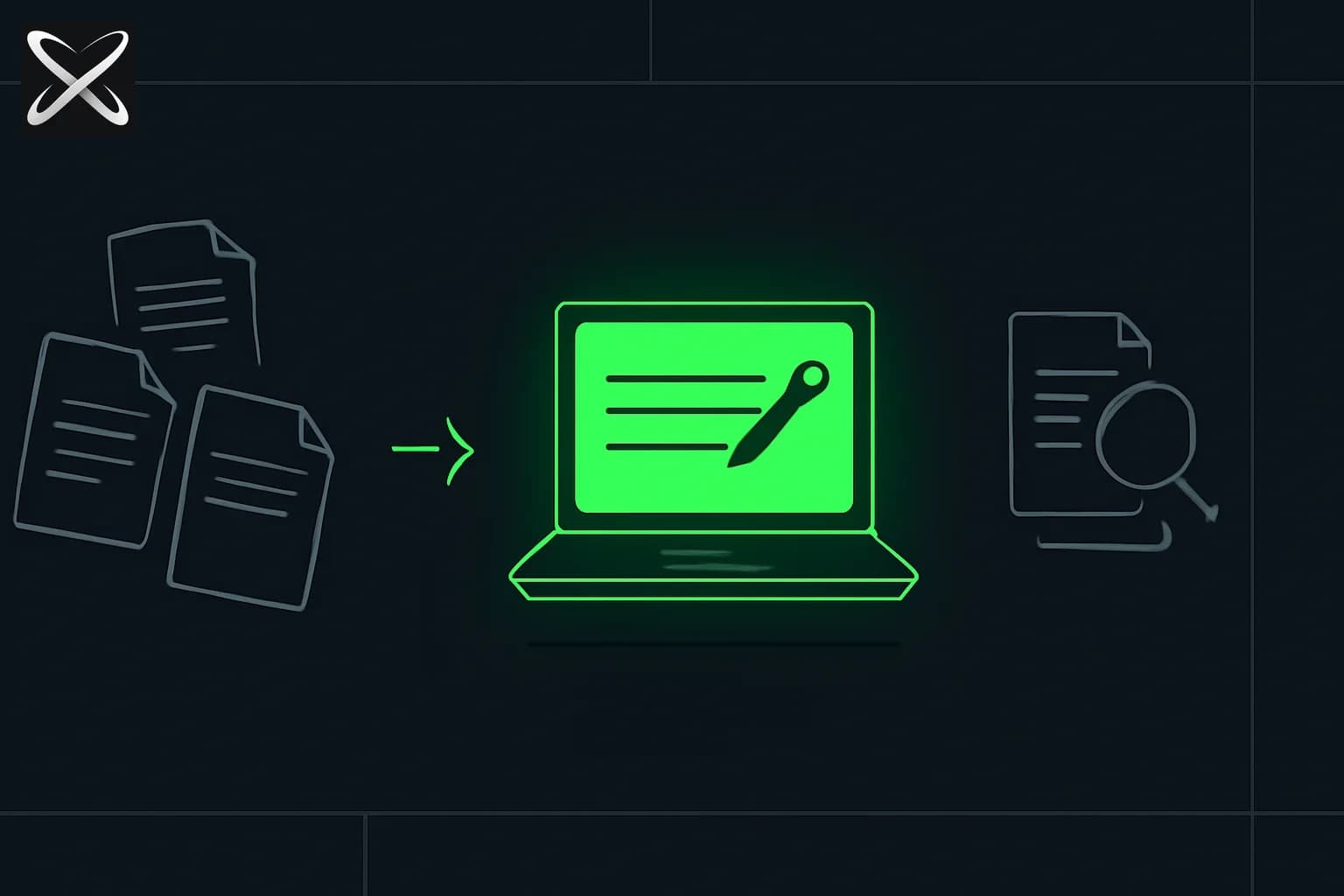
Every engineering team has the same recurring problem: one person spends an afternoon fighting a flaky test setup, writes a workaround, and it lives forever in their own CLAUDE.md file or a private prompt snippet — invisible to everyone else on the team who will hit the exact same problem next week. On September 7, 2026, Tencent AI open-sourced the tool it built to fix that: TeamAI-CLI, used internally since March 2026.
The pitch is simple and the mechanism is git-native: put a team's skills, rules, and docs in one repository, gate changes behind a merge request, and let a hook push merged updates to everyone's next agent session automatically. It's the same underlying problem explainx.ai covered in TencentDB Agent Memory v2's team hub and Karpathy's LLM wiki pattern — turning one person's hard-won context into shared, durable team knowledge — but TeamAI-CLI takes the plainest possible path to it: a git repo, not a hosted service.
TL;DR
| Question | Answer |
|---|---|
| What is it? | A git-based CLI that syncs a team's agent skills, rules, and docs across everyone's coding agent |
| Who built it? | Tencent, used internally since March 2026, open-sourced September 7, 2026 |
| How do changes propagate? | Merge request → hook fires → lands on every teammate's next session |
| How does it rank knowledge? | Confidence score from real usage — validated entries surface, unused ones sink |
| Which harnesses does it support? | Claude Code, Codex, Cursor, OpenCode, CodeBuddy, WorkBuddy |
| Is it free? | Yes — open-sourced on GitHub, no announced pricing |
| Is it the same as TencentDB Agent Memory? | No — that's a separate, hosted memory hub; TeamAI-CLI is git-native and simpler |
What people are asking
"Is this just a shared CLAUDE.md file?"
Not quite. A shared CLAUDE.md committed to a monorepo already solves part of this, but it's a flat file everyone edits directly with no review gate and no way to tell which lines still matter. TeamAI-CLI adds three things a plain shared file doesn't have: a merge-request gate before anything ships team-wide, a hook that actively pushes updates into live sessions rather than relying on a git pull, and a confidence score per entry so the file doesn't just grow forever with untested advice. It's closer in spirit to skills vs. hooks vs. prompts — TeamAI-CLI is specifically the hook-plus-skill-repo layer, not a prompt technique.
"Just for personal use — is that fine?"
Multiple replies on the announcement thread asked this. Tencent built TeamAI-CLI for teams — the merge-request workflow and confidence scoring only pay off when more than one person is contributing skills and validating them through use. A solo developer can absolutely run it as a personal skill library, but the git-review overhead is designed for a team of contributors, not optimized for a single user the way Pi's minimal harness or a local CLAUDE.md is.
"Does confidence fall when a rule is ignored, or only on reported failure?"
This is the exact question raised by a reply on the announcement thread, and Tencent's public post doesn't spell out the scoring mechanics in enough detail to answer definitively. What's confirmed: confidence is tied to "real usage" rather than a static rating a person assigns once. Whether that means passive non-use quietly lowers a rule's score, or only an explicit failure signal does, is the kind of implementation detail worth checking in the source before depending on it for anything safety-critical.
"How is this different from Codebuddy or Workbuddy themselves?"
CodeBuddy and WorkBuddy are two of the harnesses TeamAI-CLI syncs into — not competitors to it. TeamAI-CLI sits one layer up: it's harness-agnostic infrastructure for storing and distributing skills, and it pushes the same synced repo into whichever of the six supported tools an individual teammate happens to be running.
The core mechanism: git repo, merge request, hook
The workflow Tencent describes breaks into three steps:
- One repo holds everything. Skills, rules, and docs live together in a single git repository — not scattered across individual CLAUDE.md files, private prompt notes, or Slack threads where a fix gets mentioned once and never resurfaces.
- Merge requests gate changes. Nobody's individual workaround becomes team policy unilaterally — it goes through the same review process as a code change, which is also the point where a bad or stale rule has its best chance of getting caught before it spreads.
- A hook fires on merge. Once approved and merged, a hook triggers and the update lands on every teammate's next agent session — no manual sync step, no "did you pull the latest prompts" Slack message.
That third step is the part that makes this more than a documentation practice — it's closer to the automated-propagation pattern explainx.ai described in Microsoft's SkillOpt and WikiSkill's persistent wiki evolution: the distribution mechanism is automatic, not opt-in.
Confidence scoring: usage decides what surfaces
The second core idea is that skills aren't static once merged. TeamAI-CLI's announcement describes each learning earning a confidence score "from real usage" — entries that keep proving useful surface first when an agent looks for relevant context, while weak or unused ones sink in priority. That's a meaningfully different model than a wiki or CLAUDE.md, where every line carries equal weight regardless of whether it's been true for six months or was written yesterday and never validated.
This puts TeamAI-CLI in the same family as the self-improving harness ideas explainx.ai covered from Y Combinator's harness panel — where a harness treats its own configuration (in this case, which skills to trust) as something to actively optimize rather than a fixed input. The difference is scope: TeamAI-CLI applies that optimization to team knowledge shared across many people, not to one agent's internal state during a single run.
Harness compatibility
Tencent lists six supported targets: Claude Code, Codex, Cursor, OpenCode, CodeBuddy, and WorkBuddy. The practical implication is that TeamAI-CLI doesn't require a team to standardize on one coding agent — an engineer running Claude Code and another running Cursor can both pull from and contribute to the same synced skill repo, with TeamAI-CLI handling the translation into each tool's native skill or rules format. That cross-harness compatibility is worth comparing against Hermes Agent vs. OpenClaw and the broader top 10 open and closed-source agent harnesses roundup — most team-knowledge tools tie themselves to one harness; TeamAI-CLI's bet is that the repo format matters more than which agent reads it.
Honest limitations
- "Poisoning" risk is real, not just theoretical. A reply on the announcement thread flagged this directly, and it's a legitimate concern: because merged rules propagate automatically to everyone's next session, a subtly wrong rule that clears review can spread just as fast as a correct one. The merge-request gate reduces this risk but doesn't remove it — a reviewer has to actually catch the problem, and confidence scoring only demotes a bad rule after enough real usage reveals it's wrong.
- Scoring mechanics aren't fully public. Exactly how confidence rises and falls — passive disuse vs. explicit failure reports — isn't detailed in the announcement. Read the source before relying on it for anything where a stale or wrong rule would be costly.
- Best suited to teams, not solo use. The merge-request overhead is only worth it once more than one person contributes and validates skills; a solo developer gets less value from the review gate than from a simpler local skill file.
- No pricing or governance model announced. As with many freshly open-sourced internal tools, details on long-term maintenance, contribution policy, and enterprise support weren't part of the September 7 announcement.
Why this matters beyond one CLI
The pattern here — team knowledge as a git repo, propagated automatically, ranked by real-world confidence — is quickly becoming a recognizable category, not a one-off tool. TencentDB Agent Memory, WikiSkill, and now TeamAI-CLI are three different Tencent-adjacent-or-similar answers to the same question: how does an individual's hard-won fix become the team's default without a person manually broadcasting it? For anyone building or teaching agent workflows, that's the actual skill worth learning right now — not just how to prompt a single agent well, but how to design the sync layer that turns one person's context into everyone's.
Deployment patterns — how teams actually wire this
Three patterns emerge from Tencent's announcement and parallel tools like WikiSkill:
| Pattern | Setup | Best for |
|---|---|---|
| Monorepo skills/ | Single git repo; TeamAI-CLI syncs to each harness's skill directory | Small eng teams with shared conventions |
| Per-product repos | One repo per service; merge requests gate cross-team rules | Larger orgs avoiding one polluted global ruleset |
| Read-only upstream | Team consumes a curated skills repo; only leads merge | Regulated environments with strict change control |
Confidence scoring only helps once usage volume exists — a team of two may not generate enough signal for scores to mean much in the first month. Plan a manual review period before trusting auto-surfaced skills in production repos.
Related on explainx.ai
- Work2Skill: inducing agent skills from human GUI demonstrations
- TencentDB Agent Memory v2: team hub for Chat, Skills, Wiki, CodeGraph
- Karpathy's LLM Wiki pattern for agent memory
- What are Agent Skills? Complete guide
- Skills vs. hooks vs. prompts: when to use each
- WikiSkill: persistent wiki agent skill evolution
- Microsoft SkillOpt: self-improving agent skills
- YC's harness panel: self-improving agents, OpenJarvis, and QM
- Top 10 open and closed-source agent harnesses (2026)
Sources
- Tencent AI on X — TeamAI-CLI open-source announcement, September 7, 2026
Feature descriptions and quoted claims reflect Tencent AI's September 7, 2026 announcement thread. TeamAI-CLI is a newly open-sourced project — check the live GitHub repository and documentation before adopting it for a production team workflow.