



Two open-source AI agents have dominated the 2026 landscape. Hermes Agent by Nous Research: 188k GitHub stars, #1 on OpenRouter token rankings, the self-improving runtime that writes its own skills. OpenClaw by Peter Steinberger (now OpenClaw Foundation): 247k GitHub stars, 24 supported messaging channels, the local-first assistant with the largest skill ecosystem.
Both are MIT-licensed. Both run locally. Both support any LLM. Both connect to your messaging channels.
Where they diverge matters — and getting that choice right determines whether you spend the next six months fighting your agent or benefiting from it.
The architecture difference (the thing that drives everything else)
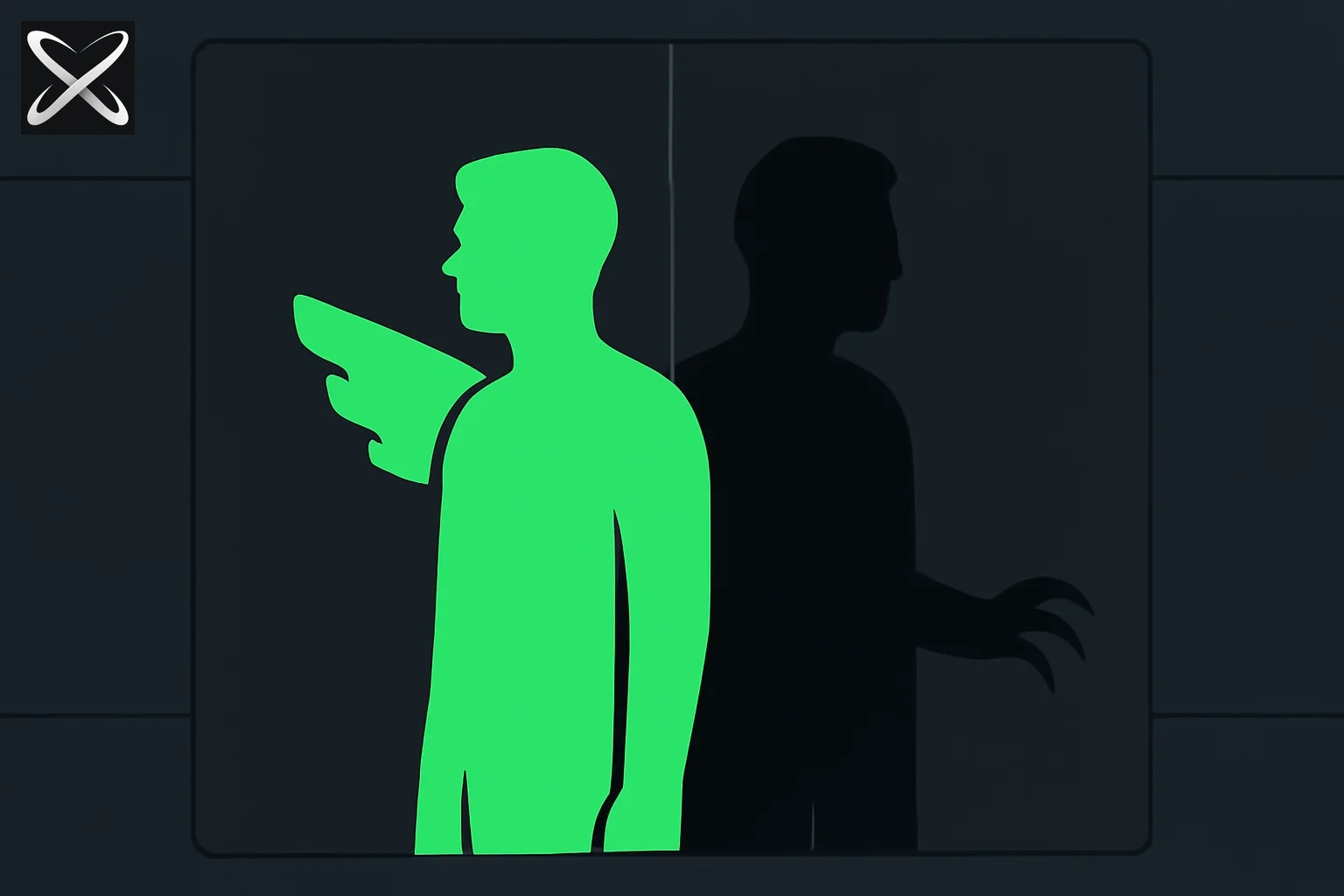
Hermes: Agent with a learning loop wrapped around a gateway.
OpenClaw: Gateway architecture with an agent inside.
This sounds like implementation detail but it is the load-bearing structural choice:
Hermes was designed from the start with self-improvement as a first-class feature. The Curator system runs every 15 tool calls and after complex tasks: it reflects on what worked, writes a Markdown skill file encoding the pattern, and loads that skill on the next run. The agent gets measurably better at your specific workflows over weeks of use.
OpenClaw was designed from the start as a universal gateway: connecting as many channels as possible, supporting as many integrations as possible, with skills (claws) as the extensibility mechanism. It does not have a learning loop — skills are installed and stay static unless you update them. The breadth of what it connects to is the value proposition.
This single difference — learning vs breadth — is what you should think about first when choosing.
Side-by-side comparison
| Dimension | Hermes Agent | OpenClaw |
|---|---|---|
| Creator | Nous Research | Peter Steinberger / OpenClaw Foundation |
| GitHub stars | 188k | 247k |
| License | MIT | MIT |
| Architecture | Learning loop around gateway | Gateway with agent inside |
| Self-improvement | ✅ Curator system (automatic) | ❌ Manual skill updates only |
| Supported channels | Telegram, Discord, Slack, WhatsApp, Signal, CLI | 24+ channels (all Hermes channels + iMessage, Teams, IRC, Matrix, WeChat, LINE, Feishu, and more) |
| Skill ecosystem | agentskills.io | ClawHub (5,400+ claws) |
| Model support | OpenRouter, Nous Portal, NovitaAI, NVIDIA NIM, any OpenAI-compatible | Anthropic, OpenAI, DeepSeek, Gemini, Ollama, any OpenAI-compatible |
| Cron/scheduling | ✅ Built-in (self-scheduling from conversation) | Via OS cron / launchd |
| CVEs (2026) | 0 reported | 9 in March 2026 (patched) |
| Web UI | hermeswebui (separate project) | Built-in at localhost:3000 |
| Twitter/X integration | Via skill | Via BirdClaw claw |
| Best for | Recurring tasks that should improve | Multi-channel integrations and broad ecosystem |
Learning loop: Hermes Agent's strongest advantage
Hermes's Curator is the feature that has no equivalent in OpenClaw. The loop:
- Agent completes a task
- Every 15 tool calls and after complex multi-step tasks: Curator pauses and reflects
- Curator writes a Markdown skill file encoding: what search queries worked, what output format the user preferred, which sources were reliable, what edge cases appeared
- Next run: skill file is loaded and the pattern is applied from the start
What this means in practice: A Monday morning research brief that takes 12 minutes and produces mediocre output on week one takes 6 minutes and produces noticeably better output by week four — without any changes from you. The agent learned your preferences from your reactions (corrections, follow-up questions, what you ignored).
OpenClaw claws do not work this way. A claw is a static SKILL.md file. If you want better output, you update the file manually. The ecosystem compensates for this with 5,400+ highly specific claws covering long-tail use cases — but none of them adapt to you specifically.
Channel breadth: OpenClaw's strongest advantage
OpenClaw supports 24 channels. Hermes supports 6 (the major ones). For most developers, the delta is not meaningful — Telegram, Discord, Slack, WhatsApp, and Signal cover nearly everyone.
But the delta matters for specific audiences:
- iMessage users (Apple ecosystem, does not want Telegram): OpenClaw only
- Teams-heavy organisations: OpenClaw only
- IRC / Matrix communities: OpenClaw only
- Markets where LINE, WeChat, or Feishu are primary: OpenClaw only
- Users who want to interact from the macOS system (native macOS channel): OpenClaw only
If your primary channel is one of these, the choice is made for you.
Ecosystem: scale vs quality
OpenClaw / ClawHub: 5,400+ claws (post-ClawHavoc audit of ~3,300 verified). Broad category coverage. Community-driven. Variable quality. Security audit required before installing community claws.
Hermes / agentskills.io: Smaller ecosystem, generally higher average quality (stricter submission process). Claws are compatible with the open agentskills.io standard.
The ClawHavoc incident in January 2026 — where 341 malicious skills used typo-squatting on ClawHub — is worth knowing about. ClawHub now requires VirusTotal scanning, but the structural risk of a large community registry with variable curation is real. Install claws from verified publishers and check VirusTotal reports.
Hermes's smaller ecosystem means you may need to write skills for niche use cases. But the capability-evolver skill (Hermes's most-downloaded) partially addresses this: it identifies workflows the agent is repeatedly doing manually and proposes generating a skill for them.
Security: Hermes leads, OpenClaw has patched
Hermes Agent has no reported CVEs as of June 2026, with a safer-by-default design: explicit tool approval required, approval pairing via QR code for remote access, containerisation documentation.
OpenClaw had nine CVEs disclosed in a four-day window in March 2026, including:
- CVE-2026-25253 (CVSS 8.8 High): remote gateway exploitation
- One rated CVSS 9.9: authentication bypass in certain channel configurations
All have been patched. But OpenClaw's broader attack surface — from supporting more integrations and channels — is a structural factor in its CVE exposure. The attack surface scales with the number of integrations.
Practical implication: For personal use behind a firewall, either is fine with proper setup. For team or production deployments with remote access, Hermes's conservative security posture is meaningful.
Model and provider support
Both support bringing your own model via API keys. The key differences:
Hermes: First-class integration with Nous Portal (their own model serving), OpenRouter (200+ models in one API), NovitaAI, and NVIDIA NIM. Switching models: hermes model.
OpenClaw: First-class integrations with major providers (Anthropic, OpenAI, Google, Cohere, Mistral) and Ollama for local models. Auto-detects based on available API keys. Switching: config file or environment variables.
For teams already on OpenRouter, Hermes is the more natural fit. For teams using direct provider APIs (Anthropic or OpenAI directly), OpenClaw's native support is equivalent.
Performance and resource usage
Both run comfortably on a $5-10/month VPS or a Mac mini for personal use. Hermes is slightly heavier when the Curator is running (reflection pauses use model tokens). OpenClaw's resource usage scales with the number of channels actively polling.
Neither requires GPU locally — inference goes to your configured provider.
Which should you use?
Choose Hermes Agent if:
- You have recurring tasks that run on a schedule and should improve over time
- Self-improvement and the learning loop are important to you
- Security is a priority (no CVE track record)
- You are already using OpenRouter or Nous Portal
- You want a terminal-first interface
Choose OpenClaw if:
- You want to use channels beyond Telegram/Discord/Slack/WhatsApp/Signal (iMessage, LINE, WeChat, Teams, etc.)
- You want access to 5,400+ community claws
- You want BirdClaw Twitter/X integration (the
birdclawclaw is OpenClaw-native) - You want a built-in web UI out of the box
- Your workflow is more about broad integrations than recurring learning
Run both if:
- You want OpenClaw as your day-to-day multi-channel assistant and Hermes as a background specialist handling deep research or scheduled work that should compound
- This is a legitimate and common deployment pattern
Migration between them
OpenClaw includes a claw migrator that converts OpenClaw claws to Hermes skill format. Not every claw migrates cleanly (browser-control claws tend to work; heavy API claws need manual porting), but the core SKILL.md format is similar enough that most text-based skills transfer.
Going the other way (Hermes → OpenClaw) is less supported — Hermes skills reference its specific memory and Curator patterns that OpenClaw does not have.
The bottom line
Hermes and OpenClaw are solving slightly different versions of the same problem. Hermes asks: "how do I make an agent that compounds?" OpenClaw asks: "how do I make an agent that meets users where they are?"
If compounding is your priority — if you are automating repeated workflows where marginal improvement over time multiplies — Hermes Agent is the right choice.
If breadth is your priority — if you want your agent on every channel, with access to the widest ecosystem of pre-built integrations — OpenClaw is the right choice.
Most power users who have used both for more than a month end up running both.
Related guides
- Nous Research ships Bot Mode — multi-agent teams in Hermes Desktop (Aug 2026)
- TencentDB Agent Memory v2 — shared Chat/Skills/Wiki/CodeGraph across Hermes & OpenClaw (Aug 2026)
- YC QM — open-source company multi-agent harness (Aug 2026)
- What Is OpenClaw? Complete Guide and Setup
- What Is Hermes Agent and How Does It Work
- Top 10 Things You Can Do With OpenClaw
- Top 10 Things You Can Do With Hermes Agent
- Top 25 OpenClaw Claws Worth Installing
- BirdClaw: Local Twitter/X Workspace