



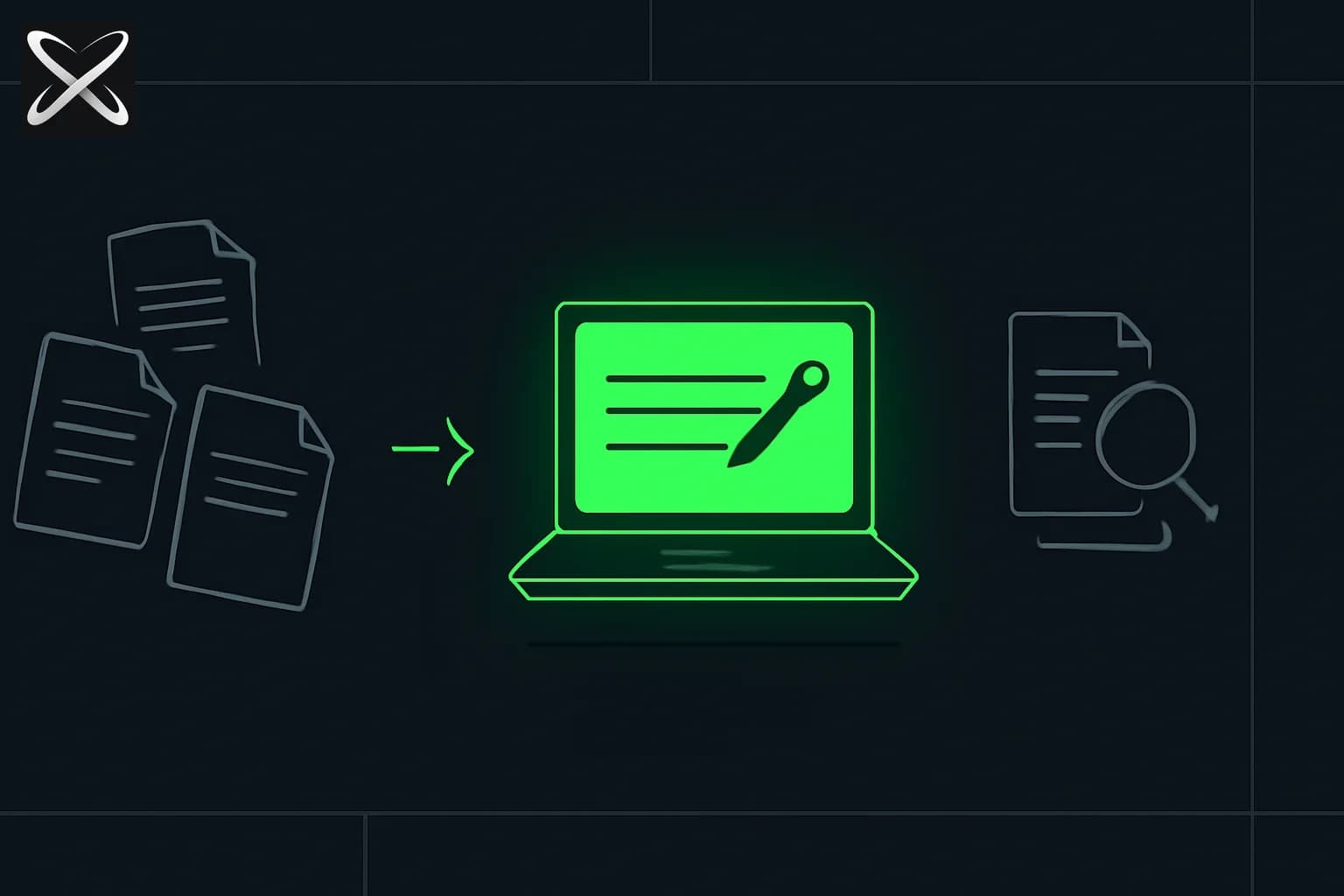
Andrej Karpathy's LLM Wiki gist is one of the most influential agent-memory documents of 2026—5,000+ stars and 5,000+ forks on a single markdown file that fits on one screen. It is not a product. It is an idea file meant to be copy-pasted into Claude Code, Codex, OpenCode, or Pi so your agent builds the specifics with you.
The core reframe:
Most LLM + document workflows are RAG: upload files, retrieve chunks, generate an answer. The LLM rediscovers knowledge from scratch every time. Nothing accumulates.
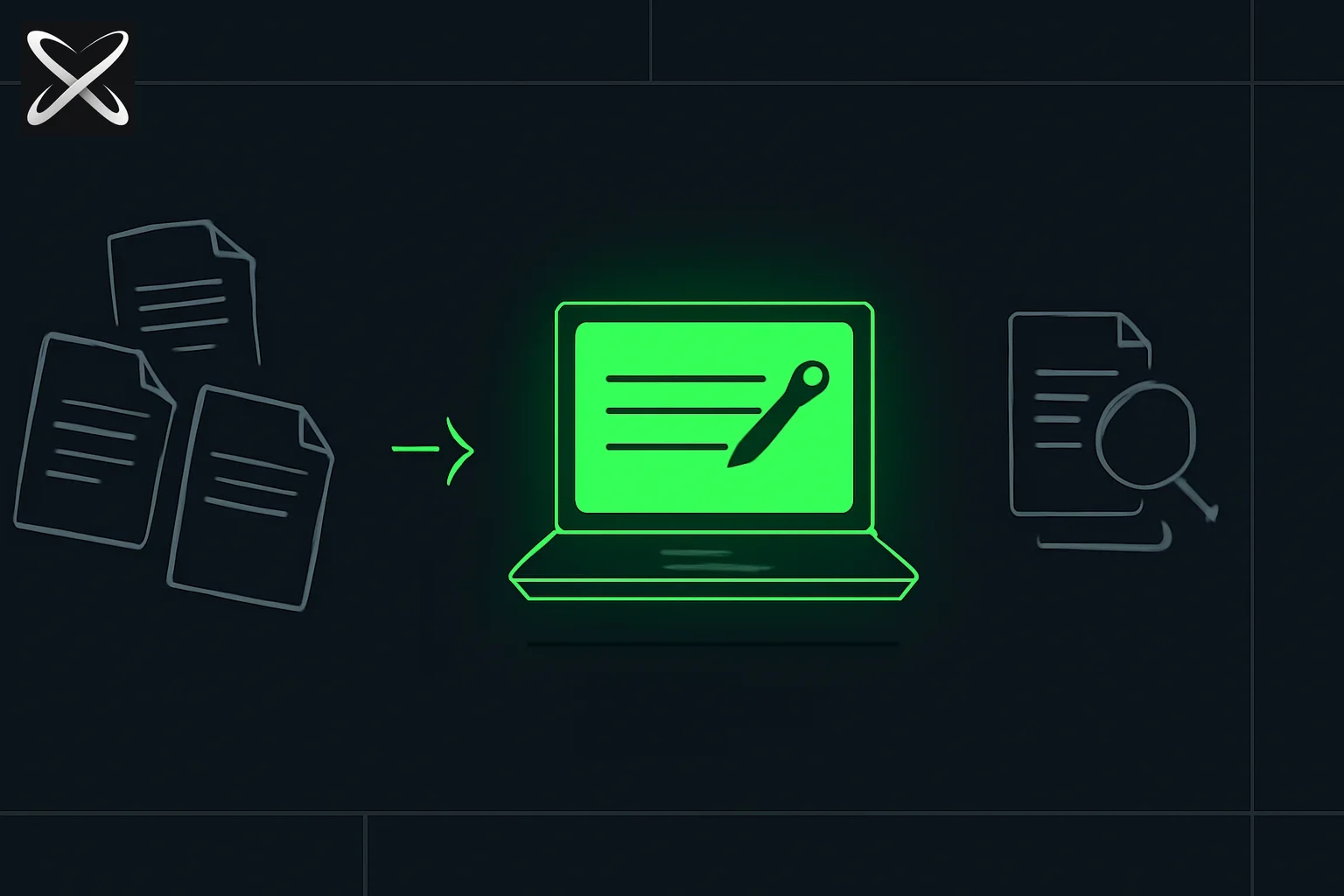
LLM Wiki is different: the LLM incrementally builds and maintains a persistent wiki—structured, interlinked markdown between you and raw sources. Knowledge is compiled once and kept current, not re-derived on every query.
Google formalized a vendor-neutral version as Open Knowledge Format (OKF) days after the gist went viral. OpenKnowledge from Inkeep (June 2026) ships a WYSIWYG editor and agent wiring (ok init) as a product implementation of the same pattern. This guide covers Karpathy's original pattern, the three layers, the ingest/query/lint loop, when wiki beats RAG, and the ecosystem the gist spawned.
TL;DR
| Question | Answer |
|---|---|
| Gist URL | karpathy/llm-wiki.md |
| Core idea | Persistent, compounding wiki—not per-query retrieval |
| Layer 1 | Raw sources (immutable) |
| Layer 2 | Wiki (LLM-owned markdown graph) |
| Layer 3 | Schema (CLAUDE.md / AGENTS.md) |
| Operations | Ingest → Query → Lint |
| Special files | index.md (catalog), log.md (timeline) |
| Human role | Curate sources, ask questions, steer analysis |
| LLM role | Summarize, cross-reference, file, bookkeeping |
| vs RAG | Wiki wins below ~50K–100K tokens; RAG for millions+ |
The Problem With RAG-Only Workflows
NotebookLM, ChatGPT file uploads, and most enterprise RAG share a limitation Karpathy names explicitly:
Ask a subtle question requiring synthesis across five documents, and the LLM must find and piece together fragments every time. Cross-references are not pre-built. Contradictions are not pre-flagged. Synthesis does not compound.
LLM Wiki treats maintenance as the LLM's job:
- When you add a source, the agent integrates it—updates entity pages, revises summaries, notes contradictions
- Cross-references already exist when you query
- The wiki gets richer with every source and every good answer you file back
Karpathy's workflow metaphor: Obsidian is the IDE; the LLM is the programmer; the wiki is the codebase. You browse graph view and links on one side; the agent edits on the other.
Three Layers
1. Raw sources (immutable)
Your curated collection: articles, papers, images, data files, meeting transcripts, code exports. The LLM reads them but never modifies them. This is source of truth.
Typical layout:
raw/
├── articles/
├── papers/
├── assets/          # local images (Obsidian clipper + download)
└── ...
Tip from the gist: Obsidian Web Clipper converts web articles to markdown. Set a fixed attachment folder and bind "Download attachments for current file" so the LLM can reference images locally.
2. The wiki (LLM-owned)
A directory of LLM-generated markdown:
| Page type | Purpose |
|---|---|
| Source summaries | One page per ingested document |
| Entity pages | People, companies, concepts |
| Topic summaries | Evolving synthesis |
| Comparisons / analyses | Filed from query operations |
overview.md | High-level map of the domain |
You read the wiki; the LLM writes and maintains it—including cross-links, consistency, and updates when new sources arrive.
3. The schema (CLAUDE.md / AGENTS.md)
The configuration file that makes the LLM a disciplined wiki maintainer rather than a generic chatbot:
- Directory structure conventions
- Page formats and naming
- Ingest workflow (steps after new source)
- Query workflow (search, cite, file good answers back)
- Lint workflow (health checks)
You and the LLM co-evolve this file as you learn what works for your domain. See What is CLAUDE.md? for how this fits Claude Code specifically.
Three Operations
Ingest
Drop a source in raw/, tell the LLM to process it.
Typical flow:
- LLM reads the source
- Discusses key takeaways with you (optional but Karpathy prefers staying involved)
- Writes a summary page in the wiki
- Updates
index.md - Updates relevant entity and concept pages (often 10–15 files per source)
- Appends entry to
log.md
Karpathy prefers one source at a time with human review. Batch ingest with less supervision is possible—document your choice in the schema.
Query
Ask questions against the wiki, not raw files:
- LLM reads
index.mdto locate relevant pages - Drills into pages
- Synthesizes answer with citations
Answers can take many forms: markdown, comparison tables, Marp slide decks, matplotlib charts. Critical insight: good answers should be filed back into the wiki as new pages—explorations compound like ingested sources.
Lint
Periodically health-check the wiki:
| Check | Action |
|---|---|
| Contradictions between pages | Flag or reconcile (domain-dependent) |
| Stale claims superseded by newer sources | Update or mark superseded |
| Orphan pages (no inbound links) | Link or merge |
| Concepts mentioned but no dedicated page | Create stub pages |
| Missing cross-references | Add links |
| Data gaps | Suggest web search or new sources |
The LLM suggests new questions to investigate—lint is proactive, not just cleanup.
index.md vs log.md
| File | Orientation | Purpose |
|---|---|---|
index.md | Content | Catalog of all pages—link, one-line summary, optional metadata (date, source count). Updated on every ingest. Query entry point. |
log.md | Chronological | Append-only timeline of ingests, queries, lint passes |
Greppable log tip from the gist:
## [2026-04-02] ingest | Article Title
Then: grep "^## \[" log.md | tail -5 for recent activity.
At moderate scale (~100 sources, hundreds of pages), index-first navigation works surprisingly well—no embedding infrastructure required.
Use Cases (From the Gist)
| Domain | Example |
|---|---|
| Personal | Goals, health, psychology—journal + articles → structured self-model |
| Research | Papers over months → evolving thesis wiki |
| Reading a book | Chapter-by-chapter filing → personal Tolkien Gateway |
| Business/team | Slack, meetings, docs → LLM-maintained internal wiki |
| Competitive analysis | Due diligence, market maps |
| Trip planning, courses, hobbies | Any accumulating knowledge |
Karpathy links the idea to Vannevar Bush's Memex (1945)—private, curated knowledge with associative trails. Bush couldn't solve maintenance; the LLM handles that.
LLM Wiki vs RAG: The Magnitude Question
@Shilren's interview-doc-agent articulates the decision tree the gist community converged on:
| Corpus size | Best approach |
|---|---|
| < ~50K–100K tokens (~150–200 dense pages) | LLM Wiki / full context — 100% retrieval reliability, no vector DB, global reasoning |
| Millions of tokens+ | RAG — won't fit in context |
| In between / production | Hybrid — stable core in wiki, dynamic mass in RAG |
Important nuance: index.md is not RAG. It does not vector-match or chunk—it lets the agent open fewer whole files. Even reading the entire library often fits modern 200K–1M token windows; the index is an optimization.
Optional: CLI Tools
When the wiki outgrows index-only search:
- qmd — local hybrid BM25/vector search + LLM re-ranking; CLI + MCP
- Custom search scripts — "vibe-code a naive search script as the need arises" (Karpathy's words)
The gist is modular: skip image handling if text-only; skip Marp if you only want markdown; skip search if small.
Ecosystem: What People Built
The gist comments section became a design space catalog. Selected implementations:
| Project | Focus | Link |
|---|---|---|
| AutoSci | Research agent; contradiction edges; self-evolving wiki; 3 papers end-to-end | github.com/skyllwt/AutoSci |
| memwiki | Coding-agent memory (.memory/ + hooks for Claude/Cursor/Copilot) | github.com/hereisSwapnil/memwiki |
| secure-llm-wiki | Untrusted-source isolation; four-eyes review; provenance | github.com/NicoBleh/secure-llm-wiki |
| interview-doc-agent | Personal career library; context vs RAG proof | github.com/Shilren/interview-doc-agent |
| Dense-Mem | MCP memory server; typed claims, conflicts, graph | github.com/markhuangai/dense-mem |
| LLM-Wiki-MCP | Wiki as MCP-accessible system; provenance-aware ingest | github.com/Electro-resonance/LLM-WIKI-MCP |
| synthadoc | Web chat UI, lint, scheduled ingest | github.com/axoviq-ai/synthadoc |
| synto | Local-first; per-role providers; Ollama-friendly | github.com/kytmanov/synto |
| my-llm-wiki | Agentic arXiv/GitHub/YouTube ingest + D3 graph demo | github.com/MuhammadSaqlainAslam/my-llm-wiki |
| Google OKF v0.1 | Vendor-neutral spec formalizing the pattern | OKF guide |
Community design debates (worth knowing)
- @pursultani: Contradiction-as-defect fits science; in humanities, contradiction is information—needs typed edges (
contradicts,extends) and lint policy changes - @NicoBleh: Autonomous ingest is an indirect prompt-injection surface—untrusted sources must not become trusted wiki pages without gates
- @watsonrm: Multi-writer wikis need append-only, partitioned writes—git merge solves text conflicts, not semantic duplicates
- @Archimondstat: Socratic–Plato–Bayes variant—only promote ideas to the wiki after user refinement, not raw AI summaries
How to Start (Minimal)
- Copy the gist into your agent session or repo docs
- Scaffold directories:
raw/,wiki/, plus rootCLAUDE.md(schema) - Create empty
wiki/index.mdandwiki/log.md - Ingest one source with the agent; review updates together
- Query against the wiki; file a good answer as a new page
- Lint after ~10 sources or when links feel stale
For Claude Code specifically:
/init                    # starter CLAUDE.md — extend with wiki schema
/memory                  # edit project memory
/plan "set up LLM wiki"  # agent proposes directory layout
See Claude Code commands reference.
LLM Wiki vs OKF vs CLAUDE.md
| Karpathy LLM Wiki | Google OKF | CLAUDE.md | |
|---|---|---|---|
| What | Pattern / idea file | Formal spec v0.1 | Agent convention file |
| Scope | Any domain you define | Org knowledge graphs | Single-repo instructions |
| Required metadata | You define in schema | type in YAML frontmatter | None required |
| Interoperability | Bespoke per wiki | Cross-vendor bundles | Tool-specific |
| Best for | Personal/team wikis, research | Enterprise catalogs, BigQuery | Coding agent behavior |
They stack: CLAUDE.md can point agents at an OKF bundle or LLM wiki directory and define ingest/query/lint rules.
Why This Works (Karpathy's Argument)
The tedious part of maintaining a knowledge base is not the reading or the thinking — it's the bookkeeping. Updating cross-references, keeping summaries current, noting when new data contradicts old claims.
Humans abandon wikis because maintenance cost grows faster than value. LLMs don't get bored, don't forget cross-references, and can touch 15 files in one pass.
Your job: curate sources, direct analysis, ask good questions, think about meaning.
The LLM's job: everything else.
Update — August 26, 2026: Production packaging for Obsidian + Claude Code — claude-obsidian second brain guide (13k stars, 15 skills, transaction-safe vault writes).
Karpathy's LLM Wiki is the clearest statement yet that agent memory should compound—not re-retrieve. Three layers (raw → wiki → schema), three operations (ingest → query → lint), two navigation files (index.md, log.md), and a git repo of markdown as the artifact.
Copy the gist into your agent. Let it build the rest with you. For organizational interoperability, layer Google's OKF on top when you need cross-team bundles.
The wiki is just markdown in git. Version history, branching, and collaboration come free.
Update — September 7, 2026: Tencent TeamAI-CLI takes a git-native version of this pattern to team-wide scale — merge requests plus confidence scoring instead of a single wiki file.
Related Reading
- Tencent TeamAI-CLI — git-based team skills for agents (Sep 2026)
- Claude Obsidian — Obsidian + Claude Code PKM (Aug 2026)
- TencentDB Agent Memory v2 — team hub for Chat, Skills, Wiki, CodeGraph (Aug 2026)
- What Is an Obsidian Vault? (viral post fact-check)
- Open Knowledge Format (OKF)
- OKF Sample Bundles: GA4 & Bitcoin Guide
- What is CLAUDE.md?
- Agent Markdown Files Complete Guide
- What Are Agent Skills?
- Files.md: Local-First Note-Taking
- Karpathy Claude Code Guidelines
- Loop Engineering for Coding Agents
Pattern and operations cited from Karpathy's LLM Wiki gist and gist comment ecosystem as of June 14, 2026.