



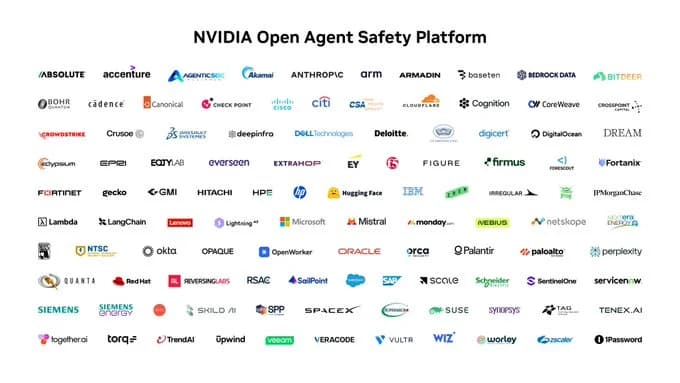
Update — September 28, 2026: Same week — NVIDIA Open Agent Safety Platform, Perplexity SPACE red-team, and Anthropic billable blocks for distillation-shaped refusals.
September 28, 2026 — CNBC reported that NVIDIA CEO Jensen Huang rejected the White House's "theft" framing for AI distillation on Squawk Box, calling it "competition" instead. The clip landed the same day on Hacker News with a familiar split: policy hawks vs builders who see output harvesting as inevitable, plus skeptics noting Huang sells the GPUs that make large-scale distillation cheap.
Distillation here means training or fine-tuning a model on another model's outputs — chat completions, reasoning summaries, tool traces — to transfer capability without matching the original training budget. U.S. officials treat industrial-scale versions as terms-of-service violations and national-security leverage. Huang treats product testing and learning from rivals as ordinary market behavior.
TL;DR
| Actor | Position (Sep 2026) |
|---|---|
| Jensen Huang (CNBC) | Distillation = competition; test rivals' products; disable service for bad customers |
| Scott Bessent (July) | Distillation = theft; sanctions threat for overseas extractors |
| CISA (Sep) | Industrial-scale Chinese distillation campaigns vs U.S. ToS |
| Anthropic (Sep) | Alibaba / Qwen and DeepSeek — illicit distillation |
| China | Rejects U.S. claims |
| HN reaction | Incoherent to privilege model outputs if training data isn't; Huang biased as shovel seller |
What Huang said (verbatim themes)
CNBC's Kai Nicol-Schwarz summarized Huang's Squawk Box answers:
- "That's called competition." — Asked whether distillation was "not robbery," Huang pushed back on the theft frame.
- "You're allowed to test somebody else's products all you want." — Likens distillation to benchmarking and reverse-engineering pressure Nvidia itself faces.
- Nvidia gets torn down too — Competitors strip Nvidia products "down to bones" to learn how they work; he'd prefer they didn't, but "competition makes everything better."
- Customer control — "If you don't like people to use your products … know your customers, and disable the service."
That last line is the operational policy hidden inside a philosophical take: Huang is not arguing labs lack remedies — he's arguing market and account enforcement, not Treasury criminalization, should dominate.
What the U.S. side had already said
Scott Bessent — "theft" (July 2026)
Treasury Secretary Scott Bessent described distillation as "theft" in July 2026 and floated sanctions against foreign companies using it to extract capability from U.S.-built models. That language matters for export control and banking — not just blog posts.
CISA — industrial-scale campaigns (September 2026)
CNBC notes CISA accused China's AI companies of "industrial-scale knowledge distillation campaigns" violating U.S. companies' terms of use — the government version of what Anthropic documents as bot farms and proxy APIs.
Anthropic — Alibaba and DeepSeek (September 2026)
Anthropic said Alibaba ( Qwen ) and DeepSeek engaged in "illicit distillation." explainx.ai's Chinese labs secretly serving Claude post walks through Moonshot, 151M+ exchange figures from Anthropic's Threat Intelligence Report, and the 25,000 fake-account narrative.
China rejects the claims — CNBC says Beijing disputed U.S. characterizations; this post does not adjudicate sovereignty claims, only document the public split.
Why Huang's take is predictable (without calling it cynical)
Huang's September 28 calendar was already agent-trust heavy: Open Agent Safety Platform with 100+ partners, plus Perplexity amplifying SPACE containment research. Distillation is a different axis — IP and export politics — but the same GPU demand story:
| Incentive | Effect on distillation rhetoric |
|---|---|
| Sell GPUs globally | Labeling distillation theft risks demand destruction in China and among U.S. labs serving Chinese customers |
| Sell GPUs to U.S. labs running inference | High-volume API traffic is exactly what harvesters automate — Huang's "disable the service" shifts blame to customer KYC, not chip export bans |
| Open weights narrative | Huang has often favored permissionless innovation; Garry Tan's "American distillation regime" argues U.S. startups need cheap distilled models to compete |
HN commenters condensed this to "guy who sells shovels says there is gold everywhere" — unfair if taken alone (Huang also ships OpenShell), but directionally right on CNBC distillation day.
The HN debate: is "competition" coherent?
Top threads on item 49879032 cluster into four buckets:
1. Legal coherence (captainbland)
If training on copyrighted web text is treated as fair use / inevitable, it is hard to argue model outputs are sacrosanct while inputs were not. Distillation may not be fair competition, but labs and politicians may not have a consistent IP story.
2. Shovel-seller bias (simonw, utopiah, feverzsj)
Huang ** sells GPUs to the highest bidder**; Chinese labs burning GPU hours on U.S. APIs still buy silicon. Expect pro-volume, anti-moral-panic framing on Squawk Box.
3. Labs' own defenses (prodigycorp thread)
If Anthropic fears distillation, why show long reasoning in Claude Code while OpenAI hides Codex thinking? Fair product question — Anthropic's answer in practice is classifiers, billable blocks, and Cyber Verification for red teams, not zero visible reasoning everywhere. See Opus 5.5 reasoning_extraction refusals and billable blocks.
4. "Training was theft anyway" (rsx88, _imnothere)
A cynical mirror of the U.S. position — closed labs complaining about distillation while scraping the open web. Policy makers still distinguish ToS-breaking automation at scale from individual prompting; courts and export agencies may not care about Twitter symmetry.
What labs are doing while politicians argue
Huang says disable bad customers. Anthropic and OpenAI are already engineering around distillation:
| Defense | Where explainx.ai covered it |
|---|---|
Bill pre-output refusals (frontier_llm, reasoning_extraction) | Billable blocks post |
| Hide or structure reasoning traces | Fable 5.1 CoT distillation speculation, token black market |
| Account fraud detection | Alibaba 25k fake accounts |
| White House / Moonshot allegations | Kratsios Moonshot distillation |
None of that requires agreement with Huang that distillation is virtuous — it treats output harvesting as an adversarial ML problem with economics (billing blocks) and law (sanctions) layered on top.
Open weights vs closed frontier (where Huang and Bessent might both be right)
Huang's competition frame fits open-weight ecosystems — Qwen, DeepSeek, Kimi K3 — where weights are public and distillation is explicit strategy. Bessent's theft frame fits closed API extraction at scale against ToS — the Anthropic case studies.
Dario Amodei's July 2026 position tried to split the difference: no ban on open weights, but enforce anti-distillation, chip controls, and safety testing. Huang on CNBC sounds closer to "let markets and account bans handle it" than "Treasury should define theft."
What this means for builders
- If you fine-tune on another API's outputs, read commercial terms —
frontier_llmrefusals and U.S. sanctions talk are aimed at you, not at hobby LoRAs. - If you run an API, Huang's "know your customers" is bare minimum — rate limits, billing on blocks, reasoning display policy, and fraud teams are the engineering complement.
- Do not expect policy consistency — CNBC Huang, CISA, and Anthropic can all be simultaneously sincere on different incentives; your compliance story should track contracts and export law, not CEO philosophy.
- HN is right about CUDA irony — asks whether a 100% open CUDA stack would also be "competition"; AMD's ROCm is the real-world partial answer, but CUDA moat politics rhymes with distillation politics.
Honest limitations
- This post relies on CNBC's reporting of Squawk Box — not a full transcript checked line-by-line against video.
- White House did not comment to CNBC per the article; no official rebuttal to Huang quoted same day.
- We do not verify CISA or Anthropic forensic claims independently; we link explainx.ai's prior coverage where those claims were unpacked.
Related on explainx.ai
- Chinese labs secretly serving Claude — distillation roundup
- Anthropic Threat Intelligence Report (September 2026)
- Anthropic billable blocks and distillation-shaped refusals
- Garry Tan's American distillation regime
- Jensen Huang "AGI has arrived" with GPT-6 Astra
- NVIDIA Open Agent Safety Platform
- Why explainx.ai supports open-source AI (distillation section)
Primary sources: CNBC — Jensen Huang on AI distillation and China, published September 28, 2026; Hacker News discussion, September 28, 2026.
U.S. sanctions policy, Anthropic enforcement, and Huang's public statements may change after September 28, 2026.