



List price per token stayed flat, but the same job got bigger. That is the claim in Playcode founder Ruslan Ianberdin's November 2026 article, updated November 9 with Claude Fable 5.2 numbers after Anthropic's 20 percent per-token cut. The piece names two mechanisms: models that emit more output tokens for the same deliverable, and tokenizer changes that count more tokens for the same text.
For builders, the actionable line is not outrage — it is measure usage.output_tokens on fixed benchmarks before you flip a default model.
TL;DR
| Case | List price move | Same-task token move | Playcode cost signal |
|---|---|---|---|
| GPT Image 2.6 vs 2.5 | Same Sunburst rates on OpenAI pricing | ~3.3x output tokens at 1024x1024 medium | ~3.3x spend on identical fox prompt |
| Fable 5.1 vs 5.2 | Down to $8/$40 per Anthropic pricing Nov 9 | ~4.2x output tokens on MacBook SVG | ~3.4x dollars despite cheaper list |
| Opus 5.5 (cited) | Cheaper list vs Opus 5 | 1.8x tokens at xhigh on same drawing | Higher bill anyway |
GPT Image 2.6: same rate card, triple the tokens
Playcode opens with an internal Sunburst migration. Colleagues expected GPT Image 2.6 to cost triple the dollars; Ianberdin checked OpenAI's page and saw identical per-token pricing between gpt-image-2.5-sunburst and gpt-image-2.6-sunburst.
The gap appeared in usage.output_tokens on the same prompt — a flat vector fox at 1024x1024, medium quality:
| Request | 2.5 tokens | 2.6 tokens | Ratio |
|---|---|---|---|
| 1024x1024 medium | 439 | 1,449 | 3.3x |
| 1536x1024 medium | 343 | 1,132 | 3.3x |
| 2.6 lowest vs 2.5 medium | 439 | 824 | 1.9x |
At Playcode's cited rates that turned $0.013 into $0.044 for one image — without a published multiplier change on the pricing page.
Ianberdin argues visual quality improved slightly, but not 3x worth for every SKU. Playcode therefore kept 2.5 as default and restricts 2.6 to cases needing sharper output or GIF/SVG features 2.5 lacks.
Copy-paste verification
Playcode's post includes a bash curl loop against https://api.openai.com/v1/images/generations printing usage.output_tokens for both models. Run it on your key with a fixed prompt hash and archive results — that is your internal price regression suite for image models.
Anthropic tokenizer inflation (earlier Playcode thread)
The same article references Playcode's tokenizer layer post: Opus 4.8 list price matched Opus 4.6, but identical text reportedly counted ~30 percent more tokens. That is the second inflation path — counting, not verbosity.
Tokenizer drift matters for cached-prefix agents and long system prompts. If you budget prompts using an old token estimator, you will miss spend until production logs update.
Claude Fable 5.2: cheaper per token, pricier per SVG
Anthropic shipped Fable 5.2 and Mythos 5.2 on November 9 at $8 input / $40 output per million tokens, down from $10/$50 on Fable 5.1. Headlines called it a price cut.
Playcode's November 9 update runs the same MacBook SVG benchmark used in their earlier Fable comparisons:
| Model | Price per M (in/out) | Output tokens | Cost | Time |
|---|---|---|---|---|
| Fable 5 | $10 / $50 | 5,383 | $0.27 | 1.1 min |
| Fable 5.1 | $10 / $50 | 17,933 | $0.90 | 3.8 min |
| Fable 5.2 | $8 / $40 | 76,158 | $3.05 | 12.5 min |
List price fell 20 percent; task cost rose ~3.4x versus 5.1 on that one drawing at high effort.
Reasoning effort and empty outputs
Playcode adds anecdotal effort sweeps:
- At xhigh and max, Fable 5.2 reportedly spent 128,000 output tokens thinking and returned no image — $5.12 each at standard rates.
- Fable 5.1 finished at those levels in their runs.
- On a pelican SVG motif, 5.2 wrote 2.6x–3x the tokens of 5.1 at every effort level — echoing Simon Willison's November 9 llm-anthropic tests where max exhausted context on a playful prompt.
That connects to our Claude effort parameter guide: higher effort is not free even when per-token prices drop.
Opus 5.5 precedent in the same post
Playcode recalls September numbers: Opus 5.5 at $4/$20 versus Opus 5 at $5/$25, but 1.8x output tokens at xhigh on the MacBook task — $1.72 vs $1.18. They warned when setting defaults that reasoning models burn budgets fast.
Why vendors might do this
Playcode does not claim intent — it shows measurements. Economically, output tokens are where image latents, tool traces, and chain-of-thought land on bills. If quality competition pushes longer internal sequences, vendors can hold $/Mtok steady while revenue per task rises.
Builders feel it in batch jobs and agent loops where one user click triggers thousands of hidden tokens. That is separate from OpenRouter surge reporting but shares the same lesson: watch utilization, not only list cards.
What to log in your stack
- Fixed benchmark suite — one image prompt, one SVG, one retrieval QA triplet; run nightly per model ID.
- Store
usage.output_tokens,usage.input_tokens, model ID, effort in your observability warehouse. - Alert on week-over-week token multiples at constant quality scores — not on list price changes.
- For images, store pixel dimensions and quality enums beside token counts — Playcode shows resolution affects totals.
- For Anthropic, separate thinking tokens from deliverable tokens when the API exposes them; treat empty completions as incidents.
Building your own MacBook SVG benchmark
Playcode's MacBook SVG task is a regression-friendly agent prompt: fixed visual target, measurable SVG output, comparable effort levels. You can clone the pattern without their proprietary harness:
- Freeze the prompt file in git — include dimensions, stroke colors, and forbidden shortcuts (no embedded PNG).
- Pin model IDs and effort per run — store
claude-fable-5-2besidehigh,xhigh, andmaxseparately. - Record wall time — Playcode lists minutes per model; latency often correlates with token-heavy reasoning.
- Score outputs with a simple rubric: closed paths, keyboard legend present, hinge curve tolerance. Automate what you can; human-grade the rest weekly.
- Compute cost as
(input_tokens * input_rate + output_tokens * output_rate) / 1e6using the rates on the invoice date, not blog archives.
When Fable 5.2 fast mode doubles throughput at 2x token rates per Anthropic's November 9 notes, rerun the benchmark in both modes. Fast mode is not automatically cheaper per task if output tokens balloon.
Batch API caveat
Playcode notes Fable 5.2 max finishing with 250,082 tokens on Batch where Fable 5.1 needed 99,072 — about $10 at standard list rates for one drawing. Batch discounts change dollars but not the token fact. Capacity planners should budget tokens per successful artifact, not per request attempt.
Procurement questions to ask vendors
Use Playcode's framing in vendor reviews:
| Question | Why it matters |
|---|---|
| Did output tokens rise on a fixed eval suite for this revision? | Separates marketing price cuts from task economics |
| Are thinking tokens billed as output? | Affects max effort defaults |
| Did the tokenizer change? | Shifts input counts for the same prompt text |
| Is there a quality-adjusted token metric? | If not, build one internally |
| What is the rollback model ID? | Playcode keeps GPT Image 2.5 hot for a reason |
Finance teams reading $/Mtok on contracts should ask engineering for $/successful-job dashboards instead.
Image API versus chat completions
GPT Image models return usage.output_tokens in the generations response Playcode quotes. Chat-completions wrappers may hide the same data behind nested usage objects. Standardize logging middleware so image, audio, and text endpoints write the same BigQuery schema.
For Claude, image and SVG work often flows through messages and tool use, so tokens include tool JSON and thinking blocks. That makes Playcode's SVG numbers higher than a single-completion baseline — still valid as an agent realism test.
Historical pattern: list price stable, wallet feels worse
Playcode is not alone. Industry posts have tracked context window inflation (more tokens per turn because models write longer), reasoning traces, and multimodal latents since 2024. The November 2026 twist is simultaneous headline price cuts on Fable 5.2 and Sunburst image tiers while micro-benchmarks move the opposite direction on total tokens.
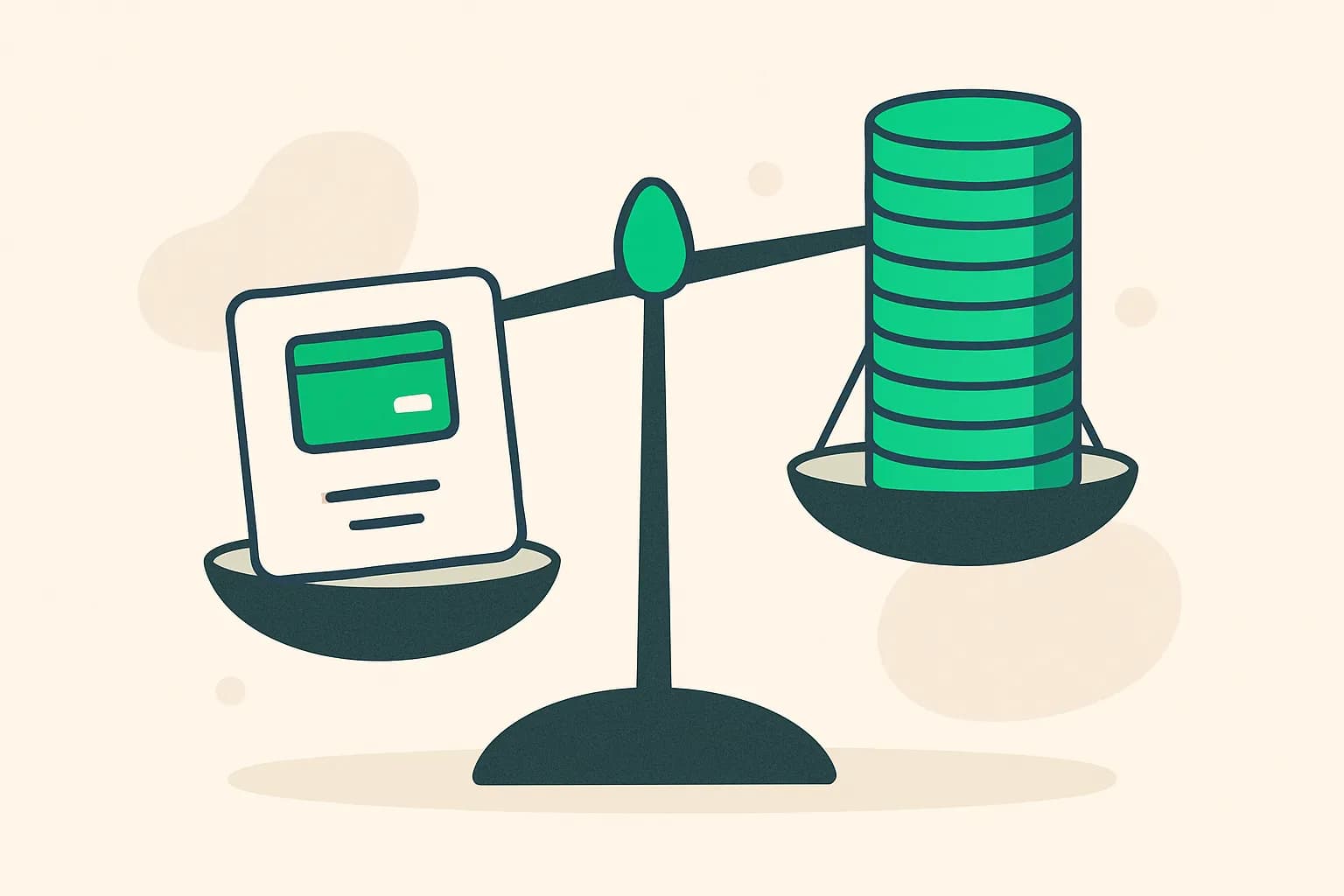
 Output token inflation shown as subscription scale weighing tokens against flat list price
Semantic caching — see our cost latency guide — helps on repeated prefixes, but does not fix new output token volume on unique creative tasks.
Product policy Playcode chose
Ianberdin's team:
- Defaults GPT Image 2.5 in Playcode production.
- Uses 2.6 only when features or sharpness justify cost.
- Implicitly applies the same skepticism to Fable 5.2 defaults after the MacBook regression.
That is a template: ship new models in shadow mode behind a feature flag until per-task cost and success rate beat the old default on your distribution, not vendor demos.
Curl reference (OpenAI images)
Playcode's verification snippet (abridged for readability) loops models and prints tokens:
for m in gpt-image-2.5-sunburst gpt-image-2.6-sunburst; do
  curl -s https://api.openai.com/v1/images/generations \
    -H "Authorization: Bearer $OPENAI_API_KEY" \
    -H "Content-Type: application/json" \
    -d "{\"model\":\"$m\",\"size\":\"1024x1024\",\"quality\":\"medium\",\"prompt\":\"A flat vector illustration of a red fox reading a book under a tree at night\"}" \
    | jq -r --arg m "$m" '"\($m): \(.usage.output_tokens) output tokens"'
done
Swap the prompt for your product's canonical creative brief. Store results in object storage with ISO timestamps so finance can replay disputes.
How this fits November launch week
November 9 was dense: Fable 5.2 API migration rules, electronics PCB results, and RSI scrutiny. Token inflation posts are the billing counterpart — easy to miss when release notes highlight lower $/Mtok.
If you fine-tune fraud or support agents, also read Coinbase-style small-model wins as a reminder that smaller outputs sometimes beat frontier verbosity on unit economics.
Related reading
- Claude Fable 5.2 launch and API pricing
- Claude effort parameter guide
- GPT-6 Astra xHigh quota behavior
- Anthropic OpenRouter token surge
- Semantic caching for LLM cost
- Meta Muse Ember pricing benchmarks
Token counts cited from Playcode's November 5–9, 2026 measurements and linked OpenAI and Anthropic pricing pages unless you rerun them on your account.