



Meta released Muse Ember on November 9, 2026, billing it as the smallest and most efficient Muse model for the work agents repeat all day: tool calls, coding subtasks, routing, extraction, and long-document parsing. In its official research post, Meta lists API pricing at $0.10 per million input tokens and $0.50 per million output tokens, with a 1M-token context window and up to 512K output tokens. The Meta Model API docs describe the same muse-ember-1.0 ID and multimodal inputs.
For builders routing multi-model agents, Ember is the volume tier: pair it with Muse Wonder or Muse Spark 1.3 on the planning loop and hand repetitive steps to Ember. Meta says Ember is the first model trained using Muse Wonder Full after Wonder's October release.
TL;DR
| Question | Answer |
|---|---|
| Model ID | muse-ember-1.0 |
| Price (standard) | $0.10 in / $0.50 out per MTok |
| Cached input | $0.004 per MTok |
| Context / max output | 1M / 512K tokens |
| Modalities in | Text, image, video, audio, PDF |
| Endpoints | Responses, Chat Completions, Messages |
| Best for | Sub-agents, tool loops, routing, batch docs |
| Not for | Hardest single-shot coding (use Wonder) |
Pricing and when long-context rates apply
Meta's model card splits pricing:
| Tier | Context | Input $/MTok | Cached in $/MTok | Output $/MTok |
|---|---|---|---|---|
| Standard | under 200K input | 0.10 | 0.004 | 0.50 |
| Long context | over 200K input | 0.30 | 0.012 | 1.50 |
That matters for agents that stuff entire repos or document sets into one call. Meta allows 1M tokens in, but long inputs jump to the higher row.
Meta compares Ember to Claude Haiku 5.5 and GPT-6 Luna using Artificial Analysis cost per task at each reasoning effort. Meta claims Ember matches Haiku's best score at roughly one-third the cost and beats Luna settings on its efficiency chart. Those Muse Ember cost points on the chart are estimates at proposed pricing, per Meta's footnote, so treat them as vendor math until your own harness reproduces them.
Against Muse Spark 1.3 on the same post:
| Metric | Muse Ember (max) | Muse Spark 1.3 (max) |
|---|---|---|
| Artificial Analysis Intelligence Index | 36 | 37 |
| Cost per index task (Meta table) | $0.14 | $2.39 |
| List input / output $/MTok | $0.10 / $0.50 | $1.25 / $4.25 |
Spark still leads slightly on the index score; Ember wins on cost per task by an order of magnitude in Meta's table.
Benchmarks Meta published
All figures below come from Meta's November 9 post. Reasoning effort is max unless noted.
Agents and automation
| Benchmark | Muse Ember | Claude Haiku 5.5 | GPT-6 Luna |
|---|---|---|---|
| AutomationBench-AA | 37.8% | 13.9% | 20.2% |
| Agents' Last Exam (Linux subset) | 61.6% | 57.0% | 57.1% |
| Personal Superintelligence Index | 46.8% | 36.1% | 37.0% |
Coding
| Benchmark | Muse Ember | Claude Haiku 5.5 | GPT-6 Luna |
|---|---|---|---|
| Terminal-Bench 4.0 | 40.9% | 39.2% | 16.4% |
| Coding Agent Index-AA | 46 | 37 | 31 |
| FrontierCode 2.0-AA | 27.2% | 34.9% | 25.2% |
Terminal-Bench uses different harnesses per model in Meta's footnote: mini-swe-agent for Ember, Claude Code for Haiku, Codex for Luna. Compare trends, not single numbers, across harnesses.
Multimodal and desktop
| Benchmark | Muse Ember | Claude Haiku 5.5 | GPT-6 Luna |
|---|---|---|---|
| GDP.pdf-AA | 22.8% | 20.8% | 22.8% |
| OSWorld 2.1 (partial credit) | 69.5% | 68.9% | 50.5% |
| PerceptionBench (with tools) | 80.6% | 78.6% | 62.8% |
Meta positions Ember as native multimodal so sub-agents can read screenshots and PDFs without swapping models.
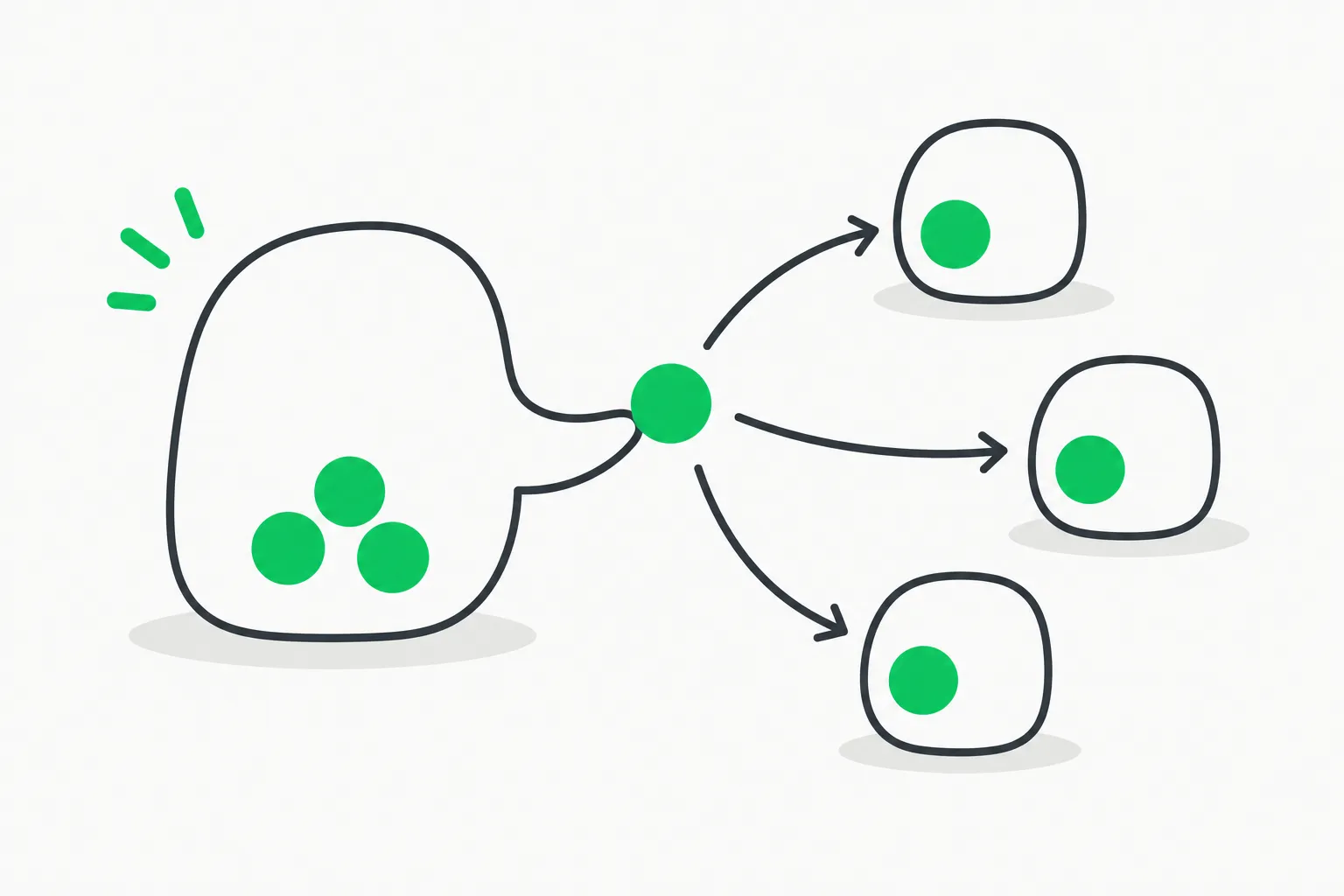 Muse Ember agent routing concept with small model handling repeated tool and coding steps
Architecture pattern: planner plus Ember workers
Meta's docs echo a pattern many teams already use with Haiku or Luna as a worker model:
- Wonder or Spark owns planning, architecture, and tool strategy.
- Ember runs file reads, test commands, classification, and parallel extractions.
- The harness keeps the same request schema; only the
modelfield changes between calls.
That is the same economic idea as routing Opus versus Sonnet in Claude Code, but Meta prices Ember for millions of small calls.
OpenRouter announced Ember availability on November 9; Meta's post also quotes partners including Box, Cline, Oracle, Cloudflare, and You.com on latency and sub-agent fit. Those are vendor testimonials, not independent benchmarks.
Safety and availability
Meta says Muse Ember went through its Meta Superintelligence Scaling Framework checks on chemical, biological, cybersecurity, and loss-of-control risks, and agent-behavior evals for instruction injection in tool outputs. Ember shares core safety training with larger Muse models, per Meta.
Availability today:
- Meta Model API pay-as-you-go
- Muse Code on all subscription tiers
- No Contributor-mode variant for Ember on Model API (Spark/Wonder lines may differ)
Meta Model API is generally available globally; confirm enterprise compliance on your contract before production PHI or regulated data.
How to try Muse Ember
Meta's quickstart uses the Responses API:
curl -X POST "https://api.meta.ai/v1/responses" \
  -H "Authorization: Bearer $MODEL_API_KEY" \
  -H "Content-Type: application/json" \
  -d '{"model":"muse-ember-1.0","input":"Classify this support ticket as billing, bug, or feature request."}'
Install Muse Code with curl -fsSL https://dev.meta.ai/install.sh | sh on macOS or Linux, per Meta's overview docs.
When you wire Ember into a harness that can run shell and MCP tools, treat high-volume loops as a security surface. AgentBeam stops AI agents before they take dangerous actions.
What to watch next
Meta says more efficient models are in training. Same day as Ember, Anthropic shipped Claude Fable 5.2 at $8/$40 for the opposite end of the agent stack: frontier reasoning with a price cut. The market is splitting planner and worker tiers with list prices, not just vibes.
Re-run your own eval on Ember before moving production sub-agents. Meta's Terminal-Bench gap over Haiku is single digits; your repo's test suite may look different.
What early partners said (vendor quotes)
Meta's post includes named quotes. Treat them as directional, not benchmarks:
- Box (VP AI Products Yashodha Bhavnani) highlights contract clause scoring and candidate screening accuracy on an internal Complex Work Eval.
- Cline founder Saoud Rizwan frames Ember as the model you mount as a sub-agent when cost per call matters.
- Oracle SVP Konstantinos Papamiltiadis cites encouraging complex engineering tasks in early tests.
- Cloudflare CTO Dane Knecht reports up to 30% faster tail latency versus a comparable model in their tests, plus strong multi-repo investigation behavior.
- You.com inference lead Chak Pothina cites 2.2s p95 latency on coding quests and 36–48% fewer output tokens than leading open-weight models in their suite.
None of these replace your own latency histogram on your prompts. They do show Meta pitching Ember to platform vendors and agent IDE authors, not only end developers.
Example harness sketch: Wonder plans, Ember executes
Conceptually, a multi-model loop looks like this:
const plan = await client.responses.create({
  model: 'muse-wonder-1.0',
  input: 'Break this bug into subtasks with file paths only.',
});

for (const subtask of parseSubtasks(plan)) {
  await client.responses.create({
    model: 'muse-ember-1.0',
    input: subtask,
    tools: repoTools,
  });
}
Meta's docs stress the same request body as Muse Spark; you are not learning a second API. The hard part is orchestration policy: when to escalate back to Wonder, how many parallel Ember workers to allow, and how to cap spend when a Routine fans out across thousands of PDFs.
Pair this pattern with semantic caching on repeated subtask prompts, and with agent sandbox isolation when Ember runs shell tools.
Safety notes Meta published
Meta claims Ember passed its Superintelligence Scaling Framework on cyber, bio, and loss-of-control axes, plus agent-behaviour tests for hidden instructions in web pages, documents, and tool outputs. That is table stakes for a model shipped into Muse Code, which can run terminal commands on developer machines.
If Ember classifies or routes PII-heavy tickets, review data processing terms on Meta Model API the same way you would for Wonder. Ember's low price makes it easy to accidentally over-call the model in a loop; add budget caps in the harness.
Choosing Ember versus Haiku, Luna, and Spark on paper
Use this decision table as a starting point, then run a fifty-task eval on your own prompts:
| Workload shape | Lean toward | Why |
|---|---|---|
| One-shot hard bug on a monorepo | Muse Wonder or Spark | Frontier reasoning and tooling depth |
| Hundred file reads plus lint fixes | Muse Ember | List price and Meta's Terminal-Bench parity claim |
| Ticket routing at the edge | Muse Ember or Haiku | Classification latency and cost |
| Long PDF portfolio with images | Muse Ember | Multimodal in plus 1M context (watch long-context tariff) |
| On-device or air-gapped | Muse Glimmer open weights | Meta's separate open line, not Ember |
Claude Haiku 5.5 still wins some Meta tables, such as FrontierCode 2.0-AA at max reasoning. Ember's pitch is blended agent cost, not winning every row.
OpenRouter and third-party hosts
OpenRouter's November 9 post (linked from Meta's xSources feed) means many teams will try Ember before wiring Meta's first-party API. Watch for different cache and rate-limit behavior on resellers. Pin muse-ember-1.0 explicitly; do not rely on aliases that might map to Spark on some hosts.
Meta says Muse Ember trained with learnings from Muse Wonder Full, the subscription-only variant we covered in October. That lineage matters: Ember is not a generic distillation artifact; Meta claims intentional specialization for repeatable tool loops. Still verify on your harness before you replace Haiku workers in production. Re-check pricing after the first invoice arrives, especially if many calls cross the two-hundred-thousand-token long-context threshold.
Related reading
- Muse Wonder and Wonder Full launch
- Muse Spark 1.3 benchmarks
- Claude Fable 5.2 pricing and migration
- Rigel and small-model efficiency
- Agent sandboxes compared
- Semantic caching for LLM apps
Pricing and benchmark tables follow Meta's November 9, 2026 Muse Ember research post and dev.meta.ai documentation.