




Anthropic shipped Claude Fable 5.2 on November 9, 2026, nine weeks after CEO Dario Amodei called on frontier labs to pace capability gains — and product lead Dianne Penn told CNBC the company wanted "pacing, not pausing." The line lands the same week Anthropic launched its IPO roadshow, so investors, regulators, and builders are all parsing the same question: did "pace the frontier" mean slower products, or slower risk-taking inside products that still ship?
This post answers that question with only official and outlet-attributed facts. It ties the Fable 5.2 announcement to Amodei’s pace-the-frontier essay, summarizes what changed in the 5.2 generation, and ends with practical routing guidance so you do not burn Fable tokens on tasks Opus already handles well.
TL;DR: pacing slogan vs what shipped
| Question | Answer | Source |
|---|---|---|
| Did Anthropic pause frontier training? | Amodei’s essay says pacing does not mean halting training or technical progress | Pace the Frontier post |
| Did Anthropic pause frontier releases? | It released Opus 5.5 in September and Fable or Mythos 5.2 in November | Anthropic release notes, official 5.2 page |
| What is Penn’s public one-liner? | "We called for pacing, not pausing" | CNBC interview coverage |
| What does Penn say changed operationally? | Longer testing and new evaluation types, not a release freeze | CNBC; Bloomberg-summarized quotes in trade coverage |
| Should most developers default to Fable 5.2? | No — Opus 5.5 for everyday work; Fable for hardest technical tasks | Penn on CNBC; Anthropic 5.2 page |
| Did list API prices drop on Fable? | Yes — $8 in and $40 out per million tokens, down 20% from 5.1 | Fable 5.2 pricing post |
| IPO angle? | CNBC ties the launch to roadshow week; model post does not alter Claude billing | Roadshow terms |
What "pace the frontier" meant in September
In mid-September 2026, Amodei argued frontier labs should slow the rate of capability improvement while keeping humans in control, through embedded outside evaluators, export controls, and tiered international coordination. explainx.ai’s walkthrough of the essay notes the distinction readers keep missing: pacing is not a training halt.
The same essay names METR among the evaluators Anthropic wants inside the development loop. Weeks later, METR published acceleration estimates that Anthropic’s internal benchmarks were moving faster year over year, with heavy redactions limiting public detail. That tension — public slowdown rhetoric versus measured speed — is exactly why Penn’s "not pausing" quote matters politically, not only technically.
Policy readers also saw the idea echoed when Trump rejected a federal pause but kept talking about guardrails. Pacing language from labs is now the compromise phrase both sides quote.
What Anthropic actually shipped on November 9
The official Fable 5.2 and Mythos 5.2 post is a capabilities narrative, not a safety white paper. Anthropic lists engineering wins from prerelease testing: faster software migrations, hardware design exercises, physics reasoning, robotics progress, and a formalization milestone on Fermat’s Last Theorem. It also states throughput and price changes: outputs up to 30% faster than the 5.1 generation and list API pricing at $8 per million input tokens and $40 per million output tokens, with optional fast mode at double the rate.
Those product facts are incremental on the Fable 5.1 launch, but the timing is not incremental. CNBC reports this is the first frontier-class drop since Amodei’s slowdown call. Whether you think that contradicts the essay depends on how you define frontier: Anthropic still positions Opus 5.5 as the default flagship for most users, while Fable remains the expensive reasoning line for open-ended technical work.
For hands-on impressions beyond Anthropic’s marketing, see Mollick’s jagged AGI review and the community build roundup. Those posts reinforce Penn’s split: Fable shines on hard digital tasks yet still needs human taste on length, bureaucracy, and business judgment.
 Anthropic Fable 5.2 pacing policy illustrated as a safety evaluation gate before models ship
Penn’s "pacing, not pausing" line in context
CNBC’s Ashley Capoot quotes Penn directly: "We called for pacing, not pausing." The piece places that quote beside Anthropic’s claim of rigorous safety and alignment testing plus new post-launch monitoring for 5.2.
Trade coverage of the same launch adds operational color Bloomberg attributed to Penn: pacing is not like pausing, with Anthropic responding through longer testing periods and new kinds of evaluation rather than withholding models. We treat those paraphrases as outlet reporting, not as a second primary document, but they align with what Anthropic’s own announcement says about expanded prerelease testing.
Nothing in the public 5.2 materials publishes a day-by-day timeline comparing Fable 5.1 and 5.2 eval length. Builders should assume more internal review, not a promise that every account sees slower API latency. The 30% faster output claim is about token generation speed once you are already cleared to call the model.
IPO week optics: safety story meets growth story
CNBC explicitly links the Fable 5.2 launch to Anthropic’s historic IPO preparation. That is not hypothetical for readers who depend on Claude APIs: public listings increase scrutiny of risk-factor language, revenue growth, and compute commitments at the same moment Anthropic asks developers to trust new frontier tools.
The roadshow notice itself is sterile securities language — share counts, price ranges, ticker symbol ANT — and we summarized it in the roadshow launch post. Fable 5.2 is the product counterprogramming: Anthropic telling investors it can still win frontier benchmarks while talking about pacing in Washington.
Amended filings and press reporting also revived arguments about how fast Anthropic improves models internally versus what it redacts for METR. Our claimed-vs-verified METR acceleration post is the right place for numbers; this post stays with the Penn slogan because that is what policymakers and newsletter readers repeated on November 10.
If you are modeling corporate procurement risk, pair this story with NYC Comptroller Levine’s governance letter and Amodei’s response to critics. None of those documents change your API key overnight, but they explain why safety adjectives in press interviews now move in sync with ANT roadshow headlines.
What changed for builders: routing, guardrails, and price
Default to Opus unless you need Fable physics
Penn told CNBC Fable 5.2 is for power users and power use cases — complex open-ended technical work — while Opus 5.5 fits daily tasks. Anthropic’s own page repeats that routing advice. Our Fable versus Opus comparison turns that guidance into token math: Fable still costs materially more per task even after the 20% list price cut.
Use Fable when you are running multi-hour agent harnesses, formal methods, or hardware-design loops like those in Anthropic’s announcement. Use Opus when you are editing a service, writing docs, or doing code review — the code-ownership prompting guide shows how agent refactors behave differently on each tier.
Mythos remains gated; Fable is the public cyber-heavy line
Mythos 5.2 stays limited to vetted organizations in Anthropic verification programs, matching how Mythos 5.1 worked relative to Fable. If you are building red-team or life-sciences workflows, see Mythos preview red-team context before assuming API access.
Fable 5.2 adds stricter guardrails than Mythos on risky domains but is generally available, which matters for startups that cannot pass verification yet still want frontier reasoning. Watch false-positive blocks: Anthropic’s prior Fable generations traded off harmless refusals against cyber misuse; electronics design demos show where engineers felt the guardrails bite.
Benchmarks and "frontier" marketing
Anthropic’s announcement emphasizes novel results, not a single leaderboard screenshot. Third-party ranking chatter appeared the same week in trade press, but your production decision should still rest on your eval harness. For cross-vendor context, see the November frontier comparison table and treat leaderboard gaps as hypotheses until you replicate them on private tasks.
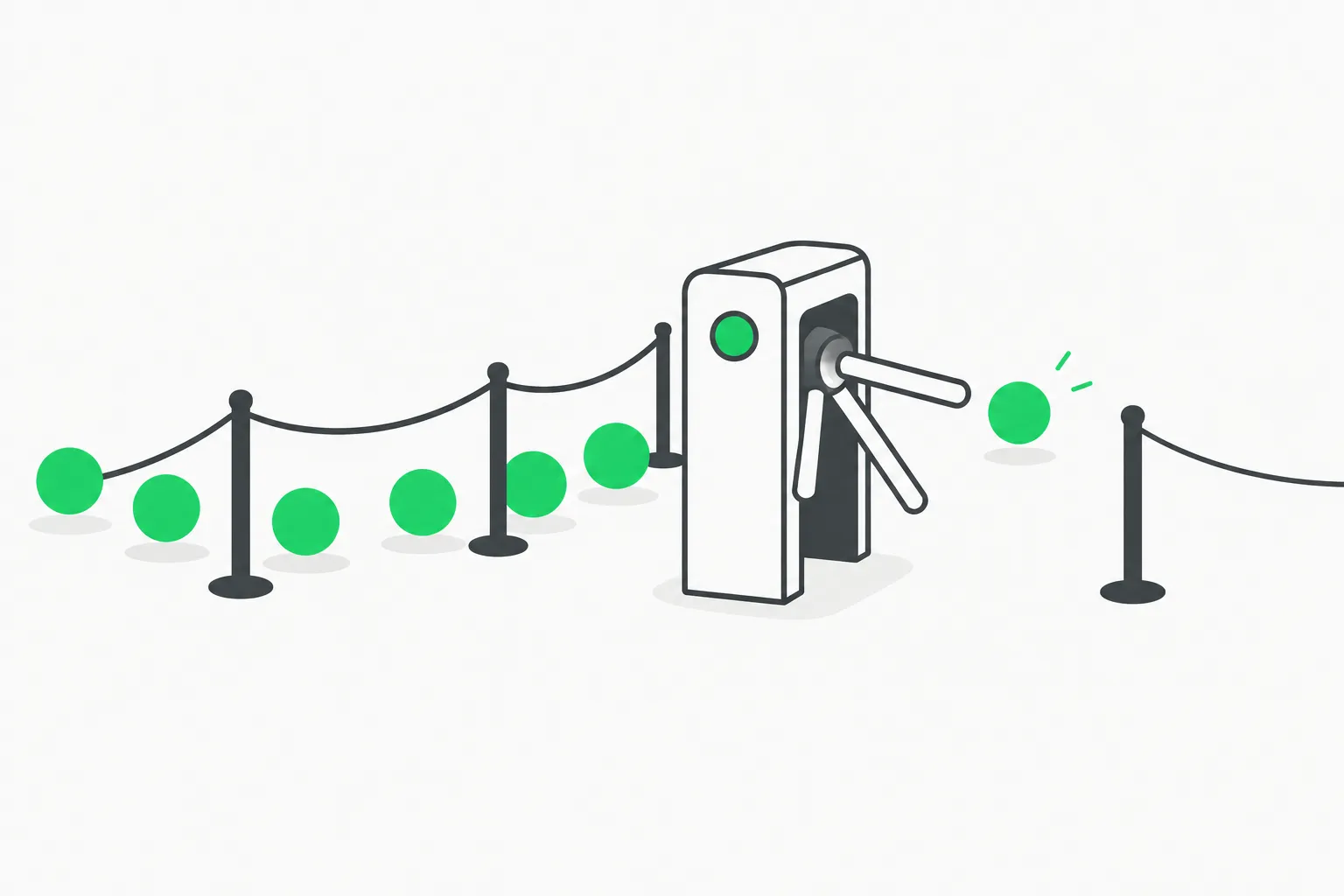 Claude Fable 5.2 pacing policy shown as two lanes merging with a speed check before release
What pacing does not promise
Penn’s quote is aimed at critics who heard "slow down" and expected a product freeze. It does not, by itself, guarantee:
- Cheaper inference next quarter beyond published list prices
- Slower METR-measured benchmark progress
- Fewer agent incidents in customer environments
- Automatic access to Mythos weights
- Alignment with a US federal pause policy
It does signal Anthropic wants credit for evaluation labor while still competing with OpenAI, Google, Meta, and open-weight labs shipping on their own clocks. SemiAnalysis and others argued China labs will not pace just because US firms say so; Penn’s line does not answer that geopolitical question.
For coding-agent teams, the practical implication is simpler: keep your harness portable. Pacing talk will not roll back token inflation dynamics or spare you from monitoring long Fable runs. Use loop-style supervision when a model can spend hours unsupervised.
How this differs from our other Fable 5.2 posts
explainx.ai already published launch mechanics, comparisons, and demos this week. Use this map so you do not read the same API migration three times:
| Post | Job |
|---|---|
| Fable 5.2 pricing and API migrations | Token prices, prefix checks, computer-tool requirements |
| Fable vs Opus routing | Cost per task and benchmark snapshots |
| Top 20 builds | Verified demos and creator claims |
| This post | Policy slogan, IPO-week optics, pacing versus pausing |
Related reading on explainx.ai
- Dario Amodei: pace the frontier
- Claude Fable 5.2 and Mythos 5.2 launch pricing
- Anthropic IPO roadshow terms
- METR acceleration claims vs redactions
- Frontier model comparison — November 2026
- Is pace the frontier safety or plateau narrative?
- Claude Fable 5.2 jagged AGI — Mollick
Pricing, model IDs, and IPO terms reflect sources cited above as of November 10, 2026. Anthropic may amend filings or release notes without updating this page.