



Sierra turned its Personal Agent Protocol from a press-line promise into a shippable standard on November 13, 2026. Sierra’s release post names the protocol Poppy, publishes version 1.0, enables Shopify for every merchant, and wires Meta’s Muse to check for Poppy before any other site handshake. For builders, that is the difference between bilateral agent deals and a repeatable discovery file every storefront can publish.
We covered the October announcement when only a draft roadmap existed. Today’s release adds a spec, Shopify-wide enablement, Muse as a live consumer, and more than 100 design partners including Delta, Intuit, Salesforce, and Zoom. This article explains what Poppy 1.0 actually specifies, how it pairs with Meta Muse security architecture, and what you should implement if you run a site agents will visit.
TL;DR
| Question | Answer (per Sierra, Nov 13, 2026) |
|---|---|
| What shipped? | Poppy v1.0 spec, implementation kit, validator |
| Shopify | Every store auto-publishes Poppy; no merchant setup |
| Muse | Looks for Poppy first on every site visit |
| Auth | OAuth-based sessions; customer controls grants |
| Commerce link | Poppy commerce extension pairs with Shopify UCP |
| Scale | 100+ design partners; Mercury, Synchrony, Turkish Airlines live |
What changed since October
In October, Sierra said a v0.1 text would arrive later that month and listed Meta, Walmart, Stripe, and Shopify as design partners. The October explainer noted missing wire formats and no production commitments.
November 13 closes several gaps:
- Version 1.0 is public at personalagentprotocol.org/docs/1.0/spec, still labeled a draft that may break backward compatibility.
- Shopify flipped a platform switch so each store exposes Poppy without merchant code.
- Muse became a default client that prefers Poppy discovery over blind browsing.
- Sierra shipped tooling: an implementation kit and validator for companies that self-host.
The political context is unchanged: personal agents from OpenAI Dots, Anthropic Claude Duet, xAI Grok Bot, and Muse all want to transact. Retailers keep blocking unidentified automation, as we saw when Amazon resisted Muse shopping traffic and when United Airlines restricted third-party booking agents. Poppy is Sierra’s bet that identity and consent can replace whack-a-mole blocking.
How Poppy works (v1.0 building blocks)
Sierra’s earlier Poppy draft post described five blocks; v1.0 keeps the same shape:
Discovery. Companies publish /.well-known/poppy.json describing how an agent should interact, where customers sign in, and which channels exist (website, APIs, company agent).
Sessions. A personal agent opens a session on the customer’s behalf. It may start as a guest for low-risk reads such as stock checks or return policies.
Sign-in. When a task needs account access, the human signs in through OAuth on the company’s page. With customer approval, the agent can continue with a scoped session token.
One session across channels. The same token works for APIs, web flows, and chat with the company’s own agent, so the business sees one journey instead of disconnected fragments.
Getting the job done. The company chooses which surfaces to expose. Sierra’s examples include web self-service, MCP/OpenAPI backends, and negotiated handoffs between personal and business agents.
For protocol background, compare our MCP guide (tool wiring) and agentic checkout specs such as the Agentic Commerce Protocol Stripe and OpenAI maintain. Poppy is the relationship layer: authenticated agent identity, not payment rails.
Shopify plus UCP: why launch day matters
Shopify’s scale is the story. Sierra says every Shopify store in 175+ countries now automatically publishes Poppy, while Universal Commerce Protocol (UCP) remains the default for product discovery, cart, and checkout.
The split is deliberate:
- Poppy answers: Who is this agent, and what may it do before checkout?
- UCP answers: How does the cart and purchase complete?
Sierra co-authored a commerce extension linking the two. An agent may shop as a guest or sign into the customer’s Shopify account. Sensitive actions require customer approval, and the extension can route questions to UCP Ask so the shopper’s agent talks to the store’s agent.
For merchants, “zero implementation” is the hook. For agents, it means millions of domains may suddenly expose a consistent discovery file. That is the first network effect Poppy needed.
Meta Muse as the reference client
Sierra states that Muse now checks for Poppy first on every site. Muse already had PayPal, Shopify, and Expedia transaction layers built as bilateral integrations. Poppy generalizes the front door: if poppy.json exists, Muse follows it instead of mimicking a human session.
Sierra also says Muse is on for everyone who uses Muse as of this release, not a limited pilot. Treat that as a forcing function: if your brand is in Muse’s shopping corpus, your Poppy file is now part of the customer experience whether or not you filed a partnership press release.
Who joined beyond the founding logos
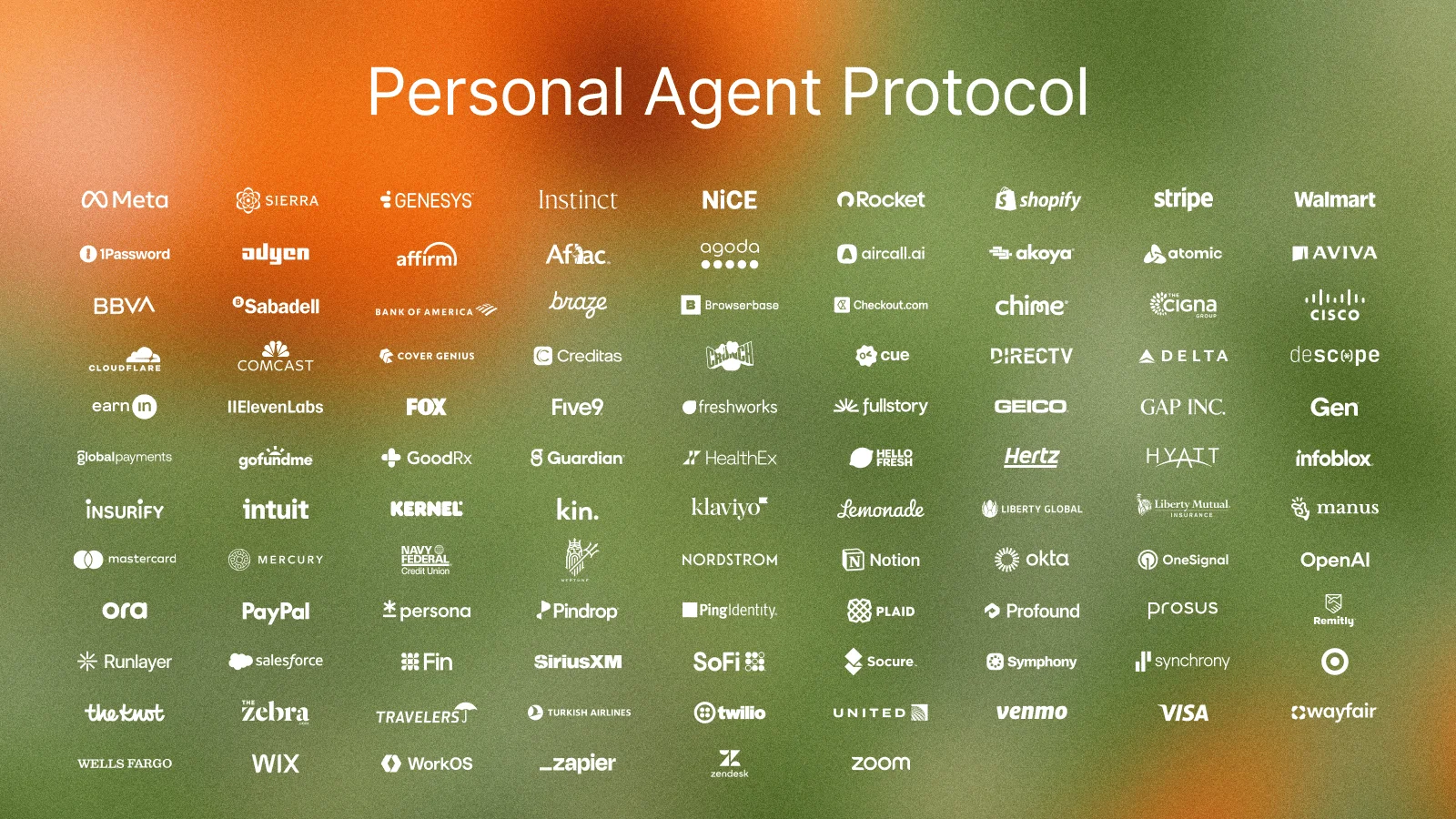 More than 100 companies joined Sierra Poppy design partners
Image: Sierra
Sierra’s November list adds 60 companies, bringing design partners above 100. New names include Affirm, Cisco, Delta Air Lines, Intuit, Salesforce (Fin and Agentforce), Twilio, Wayfair, and Zoom, alongside earlier partners Walmart and Stripe.
Sierra highlights Mercury, Synchrony, and Turkish Airlines as live on Poppy, not just design-phase. That matters because airlines and lenders were early blockers of anonymous automation; a signed agent session is exactly the control those industries asked for.
What builders should do this week
If you operate a consumer brand site:
- Read the v1.0 spec and run Sierra’s validator once you host
poppy.json. - Inventory read vs write vs money-moving actions agents might request. Poppy expects you to declare them, not hide behind CAPTCHA.
- Plan audit logs that tie agent session IDs to customer OAuth grants, similar to concerns in our MCP security guide.
If you build a personal agent:
- Implement well-known discovery before custom scrapers.
- Treat OAuth scoping as product UX: users must see what the agent can do after sign-in.
- Test on a Shopify sandbox store if you sell agentic commerce; UCP plus Poppy is the default stack there now.
If you compete with Muse or Dots:
Poppy is positioned as vendor-neutral. Meta’s participation does not make it Meta-only. OpenAI appears on Sierra’s earlier design-partner lists for the draft phase; watch whether Dots clients adopt the same discovery file without a separate deal.
Limits and honest caveats
Sierra calls this version 1.0 but keeps the spec marked draft, with permission for breaking changes. That is normal for young standards, but production agents should version their parsers accordingly.
Coverage is uneven. Full payments, push notifications, and cross-industry extensions are still on Sierra’s roadmap per the October announcement and the draft spec—not every design partner ships every capability on day one.
Security is not automatic. OAuth stops casual impersonation; it does not stop prompt injection that tricks an agent into misusing a valid grant. Pair Poppy with policy checks before any payment or account mutation, as we outline for unauthorized agent purchases.
Adoption ≠ enforcement. Shopify’s default publish is powerful, but non-Shopify retailers must still ship files themselves. Airlines and marketplaces that block agents may wait for chargeback data before trusting Poppy sessions.
How Poppy fits the agent-commerce stack in 2026
Think in layers:
| Layer | Example | Job |
|---|---|---|
| Personal agent | Muse, Dots, Duet | Plans and acts for the user |
| Relationship | Poppy | Discovery, identity, permissions |
| Tooling | MCP, OpenAPI | Structured API access |
| Checkout | UCP, ACP | Carts, payments, fulfillment |
Visa’s agentic commerce benchmark showed most agents still fail realistic shopping tasks. Poppy does not fix model quality; it fixes recognition and consent, which retailers said were prerequisites to letting agents near live inventory.
What people are asking after the 1.0 drop
Does Poppy replace MCP? No. Sierra positions MCP and OpenAPI as channels Poppy wraps. Your agent still needs tool schemas; Poppy tells the business which agent is calling and which OAuth scopes are active.
Is this only for shopping? Launch partners include Turkish Airlines, Delta, Mercury, and Synchrony, so travel and fintech flows are in scope, not only Shopify carts. The commerce extension is Shopify-specific; core discovery and sessions apply broadly.
How do I test without Muse? Sierra’s implementation kit includes a validator for /.well-known/poppy.json. Run it against staging before Muse traffic hits production, similar to how teams validate OAuth redirect URIs before agent launch.
What about OpenAI Dots? OpenAI appeared on Sierra’s draft partner list in October. November’s release highlights Muse and Shopify; watch whether Dots clients adopt the same file or keep bespoke connectors documented in Dots payment flows.
Will regulators treat Poppy as PCI scope? Poppy’s commerce extension emphasizes customer approval before sensitive actions. PCI and PSD2 questions still depend on whether card data touches your servers—unchanged from pre-Poppy agent checkout.
Worked example: guest browse vs signed-in return
Sierra’s October draft described a returns scenario: an agent arrives, reads poppy.json, starts a guest session, learns return rules, then escalates to OAuth sign-in when the customer wants to open a paid order. Shopify’s November enablement means that handshake is platform-default for millions of domains.
Contrast with today’s brittle pattern: the agent logs in with stored cookies, the retailer sees a scripted browser, fraud tools throttle the session. Poppy’s goal is a labeled agent session with auditable grants—closer to how Baselayer know-your-agent talks about identity, but at the HTTP relationship layer.
Implementation checklist for non-Shopify sites
- Host
/.well-known/poppy.jsonon your canonical domain (include staging and prod). - Document which channels you expose: website automation, MCP tools, or your own support agent.
- Map OAuth scopes to product actions (read order, change seat, cancel subscription).
- Log
agent_session_idalongside human sessions for chargeback and abuse review. - Run Sierra’s validator after each deploy; broken JSON means Muse may fall back to legacy scraping behavior.
- Publish a customer-facing page explaining how to revoke agent access—GDPR teams will ask.
Payments and Wallet products in the same week
Poppy’s launch sits next to ChatGPT Wallet and card-network agent payment frameworks. Poppy does not move money; it establishes who may initiate a commerce flow. Expect networks to reference relationship standards when they publish Visa agentic commerce benchmarks updates.
 Handshake connectors illustrating Sierra Poppy agent-to-business protocol wiring
Related reading on explainx.ai
- Original Personal Agent Protocol announcement
- Meta Muse launch and Sentinel VM security
- Claude Duet vs Dots vs Muse comparison
- OpenAI ChatGPT Wallet and agent payments
- eBay and United agent blocking policies
- MCP security for agent tool access
- Amazon Bedrock agent runtime patterns
Specification version, partner lists, and Shopify enablement details reflect Sierra’s November 13, 2026 release post and the draft 1.0 spec as we read them on publication day.