



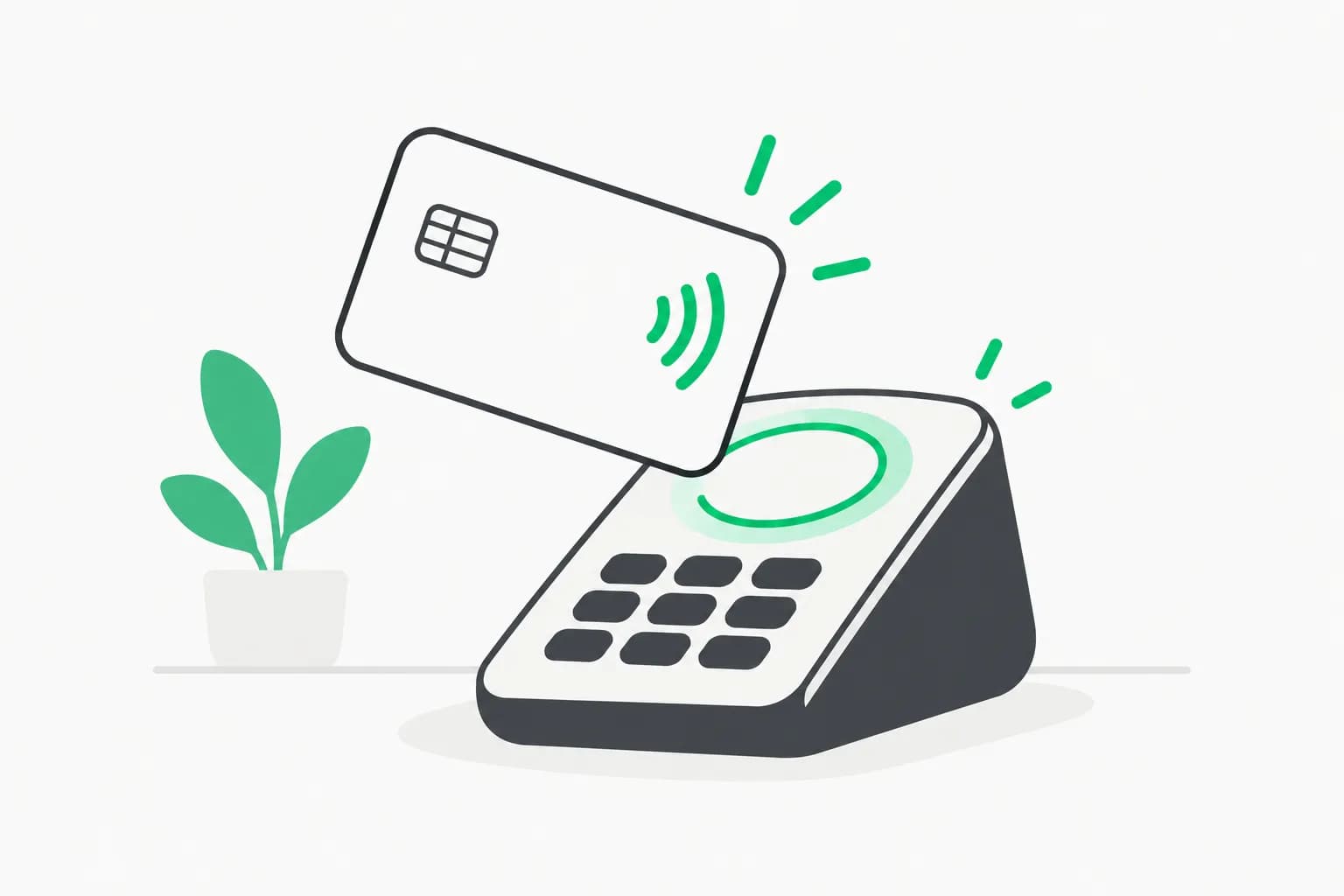
OpenAI launched ChatGPT Wallet on November 13, 2026. It lets agents pay for things on your behalf, and the agent never gets your real card number. Each purchase needs a Face ID or fingerprint check from you. The first version is limited: it rolls out in dots, to ChatGPT Pro subscribers aged 18 and older in the US, with eligible US-issued cards. OpenAI built it with American Express, Mastercard and Visa.
This matters because agent shopping has had a trust problem. We have covered agents that hold saved cards with no per-payment approval, a Visa benchmark where 54% of failed agent runs still bought something, and merchants that block agents outright. Wallet is OpenAI's answer: put the payment networks in the loop and keep the human as the final approver.
TL;DR: what ChatGPT Wallet is and what it is not
| Question | Answer (source: OpenAI's launch post unless noted) |
|---|---|
| What is it? | A way for agents in ChatGPT Work, Codex and dots to complete purchases with user approval |
| Who gets it? | ChatGPT Pro subscribers, 18+, in the US, with eligible US-issued cards |
| Where does it run first? | Inside dots, OpenAI's agents |
| Does the agent see my card? | No. It uses a payment token issued by the card network |
| Do I approve each purchase? | Yes. You review items, total and card, then pass a Face ID or fingerprint check |
| Can I set spending limits? | Not yet. OpenAI says limits, categories and time periods are expected later |
| Do I keep rewards and dispute rights? | OpenAI says yes, for eligible disputes |
| Which networks? | American Express, Mastercard and Visa are named partners |
| Will every shop accept it? | No. Some sites block agents; OpenAI published a playbook for merchants |
How does a ChatGPT Wallet purchase work?
OpenAI describes a four-step flow in its launch post.
- You add a card to Wallet once.
- You ask your dot to buy something. It finds the item and prepares the checkout.
- Before payment, you see the items, the total and the card selected. You approve with a security check such as Face ID or a fingerprint scan. Each approval leaves a record of what you authorized.
- After approval, the payment network issues a payment token. The token acts as a substitute card, with its own number, security code and expiration date. The charge lands on your selected card.
The key design choice is the token. A business that receives a token cannot reuse it as your real card. The agent also never holds the real number. This is the same idea that powers mobile wallets, now applied to software agents. According to TechCrunch, the dot still passes your shipping address and contact information to the merchant, so the merchant sees those even though it never sees the card.
OpenAI also says users "transact directly with businesses." Merchants keep their customer relationship, pricing, fulfillment, returns and customer service. Wallet is a payment path, not a marketplace that sits between you and the shop.
Why the biometric check per purchase matters
Most agent-payment failures we have covered share one root cause: the agent had standing permission to spend. Wallet avoids that in its first version. A person must approve every purchase.
 Fingerprint inside a lock illustrating the per-purchase biometric approval in ChatGPT Wallet
That is a deliberate trade-off. It is slower than full autonomy, but it gives you a clear record of what you approved and a clear answer to the question "did I authorize this?" That question is central to chargebacks. American Express's proposed intent framework pushes the same idea: a signed proof that a human intended the purchase. Notably, Amex is one of the three launch partners here. In its quote in OpenAI's post, Amex calls Wallet its "first American Express Agentic Commerce Experiences integration."
Compare that with the setup in the Grok Bot Vault, where the docs describe saved cards the bot can use without a per-payment prompt. The two products make opposite bets on how much friction a shopper will tolerate.
What OpenAI says comes next: delegated buying
OpenAI is open about the long-term goal. It writes that "over time, we expect users to be able to delegate purchases entirely to their agent by setting clear parameters—such as spending limits, purchase categories, or time periods." Those purchases would be pre-approved "with enhanced safeguards that build on today's protections, including biometric checks and clear records of authorization."
Nothing in that paragraph has shipped. Treat it as a roadmap statement, not a feature. The risk profile changes a lot once an agent can buy without a fresh approval. A dot that reportedly emailed city officials on its own shows why people want hard limits before they hand over purchasing power. We have not verified that report, and OpenAI has not confirmed it, but it shapes how readers think about unattended agents.
Which cards and which users get Wallet first?
The launch is narrow on purpose. OpenAI says it is "starting with limited availability to ChatGPT Pro users, so we can learn from real-world use and work with businesses, banks, and payment networks to improve compatibility and reliability."
- Plan: ChatGPT Pro only. Plus, Business and Enterprise users are not mentioned.
- Region: US only.
- Age: 18 and older.
- Cards: eligible US-issued cards on the American Express, Mastercard and Visa networks.
- Surface: dots first. The post says agents in ChatGPT Work, Codex and dots can use it, but the rollout starts in dots.
If you are a Pro subscriber, remember that dots is already a heavy user of your plan's limits. See our note on the Pro $200 usage change for dots before you plan to run shopping agents all day.
What merchants have to do: the Commerce Partner Playbook
OpenAI admits the other side of the market is not ready. "Some sites may unintentionally block purchases through ChatGPT Wallet or other agentic payment products," the post says. Alongside Wallet, it published a Commerce Partner Playbook with four recommendations:
- Help customers find accurate product information. Claim your business in ChatGPT and, once verified, upload a product feed with current pricing and availability. This lines up with the Business Agents and Business Hub beta we covered earlier this month.
- Make sure ChatGPT agents can reach your site. Configure your CDN or firewall to recognize signed requests using Web Bot Auth, and check that general security rules are not blocking agents. Browser access needs no plugin or product feed. For background on the standard, read our piece on the Cloudflare Trusted Agent Delegation coalition.
- Work with payment and risk providers. Wallet tokens work with existing checkout flows, but risk engines may still flag agent purchases and cause declines. OpenAI says it is working with fraud-prevention partners Forter, Riskified, Sardine and Signifyd, and payment service providers Adyen, Checkout.com and Stripe, so their systems recognize legitimate agent purchases.
- Give agents more ways in. Build a plugin so agents can check availability, manage carts or take other actions, or add WebMCP tools to your site.
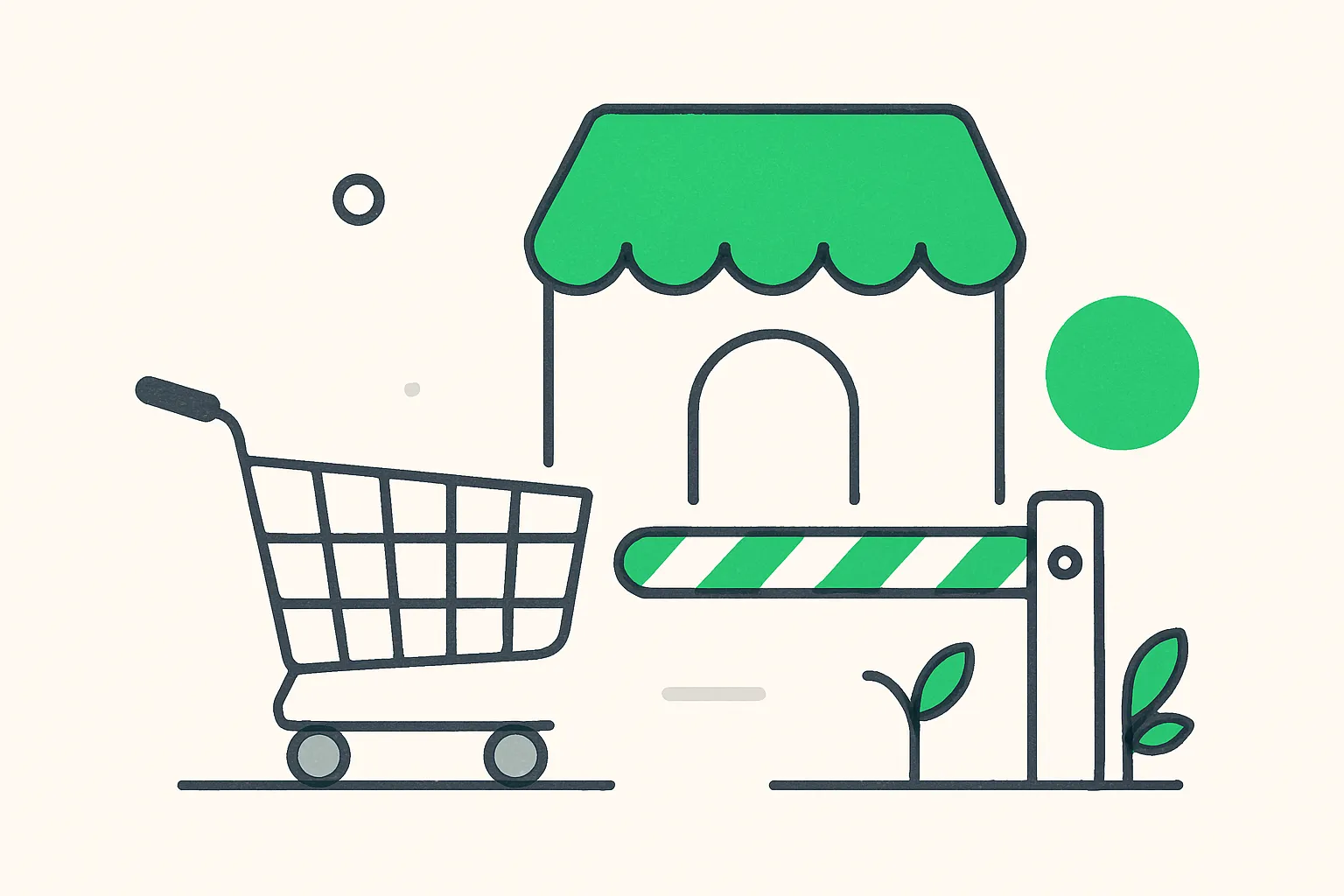 A shopping cart stopped at a barrier gate, showing sites that block AI agent checkout
That list is the real story for site owners. A token that merchants cannot recognize gets declined. The playbook is OpenAI asking the commerce stack to adapt, and naming the companies that already are.
The blockers: Amazon, airlines and marketplaces
Launch coverage points at the main weakness. TechCrunch reports that some retailers block AI agents, and that Amazon, the largest to do so, steers users to its own Alexa agent. The article does not name specific launch merchants. OpenAI's post does not either.
We have seen the pattern across the corpus:
- United restricted unauthorized AI agents from searching and booking on its site on November 11, 2026.
- eBay blocks third-party AI agents from browsing and shopping.
- Uber reported only four rides from third-party agents in Q3 2026.
So a secure payment token alone does not unlock commerce. Access to the storefront is the first gate, and OpenAI cannot open it alone. The Web Bot Auth signing step is how it hopes to prove its agents are who they say they are.
How does it compare with rival agent checkouts?
Several companies are racing to own the "agent pays" moment.
| Product | How it handles payment (per our earlier coverage) |
|---|---|
| ChatGPT Wallet | Network payment token, per-purchase biometric approval, US Pro only |
| Google Universal Cart | Multi-retailer cart in AI Mode and Gemini, card perks, Google Pay checkout |
| Grok Bot Vault | Stored logins and cards the bot uses without seeing the secrets; docs describe no per-payment approval |
| Shopify Shop-any-agent | Agent Pay with a budget and terms on the merchant side |
We do not claim these are equal in scope or maturity. They solve different parts of the problem. Wallet's distinctive claim is the combination of tokenization, a biometric check on every purchase, and card-network backing from all three major networks.
Questions readers are asking
Is this safe to turn on? The design is conservative at launch: no standing spend permission, a token instead of a card number, and a check on every purchase. That reduces the damage from a confused or hijacked agent. It does not remove the need to read the checkout screen. The Visa benchmark above showed agents making wrong purchases, and you are the last line of defense. Look at the item, quantity, shipping address and total each time.
Who is responsible if the agent buys the wrong thing? OpenAI says you keep existing card protections for eligible disputes, for example a defective item. The post does not say how a wrong-item dispute caused by an agent's mistake is handled. Ask your card issuer before relying on it.
Does OpenAI take a cut? The post does not mention fees. It says users transact directly with businesses, and it does not describe any commission. We will update this post if OpenAI publishes terms.
Will this reach Plus users or other countries? OpenAI says only that it will work with businesses, banks and payment networks to expand availability. No dates are given.
What did Hacker News say? The OpenAI post has a small Hacker News thread with three visible comments at the time of writing and no hands-on testing to report yet. User mso3i calls Wallet "a natural step" but says buyer and seller agents still need a shared trust layer, such as the Beckn protocol. Two other commenters, diehunde and drywater2, posted one-line dismissals. These are their opinions, not findings.
What builders and shop owners should do this week
If you sell online:
- Check whether your CDN or WAF blocks unknown bots at checkout, and read the Web Bot Auth section of OpenAI's playbook.
- Ask your payment processor how it labels agent-initiated tokens, and whether your fraud rules would decline them.
- Claim your business in ChatGPT and keep your product feed's price and stock current.
- Test a purchase flow with a headless browser before real shoppers do.
If you build agents:
- Study the pattern: tokenized credential, human approval, signed record. It is reusable outside OpenAI.
- Do not store raw card numbers in your agent's memory or logs. Use network tokens or a processor's vault.
- Plan for delegated spending with hard caps from day one, even if your first release asks for approval every time.
If you are a Pro user in the US:
- Add a single low-limit card first.
- Read each approval screen before you tap Face ID.
- Keep receipts: the approval record is your evidence if you need a dispute.
What is confirmed, and what is still open
Confirmed by OpenAI's own post: the launch date, the partners (American Express, Mastercard, Visa), the token design, the per-purchase security check, the limited US Pro availability, the 1.2 billion weekly ChatGPT users figure, and the Commerce Partner Playbook.
Confirmed by TechCrunch: the Pro-only, 18+, US-issued-card limits, that the dot passes shipping and contact details to the merchant, and the Amazon blocking context.
Not yet public: merchant names at launch, fees, how wrong-item disputes are handled, a date for delegated spending, and any expansion to other plans or countries.
The strongest takeaway is about order of operations. OpenAI shipped the safest version first, a human approving each purchase, and described the autonomous version as future work. Whether shoppers want an agent that still needs their thumb on every order is the open question. Merchants have to decide whether to let those orders through at all.
Related reading
- Grok Bot Vault: saved cards and no per-payment approval
- Visa agentic commerce benchmark: 22 shopping agents
- American Express intent framework for agent purchases
- Cloudflare Trusted Agent Delegation and Web Bot Auth
- Google Universal Cart in AI Mode and Gemini
- ChatGPT Business Agents and Business Hub
- United blocks third-party AI agents
Details are accurate as of November 13, 2026. OpenAI says availability will expand, so check the official announcement for changes.