



An aggregator headline made the rounds on August 27-28, 2026 claiming a model called "PhoneLLM" matches OpenAI's GPT-5.6 Terra at roughly 1/18th the cost — a claim vague enough, and a name unusual enough, that it read like it could be aggregator noise or a garbled rewrite of something else. It isn't. PhoneLLM is real: it's an open-weights voice-agent model published on August 27, 2026 by Daily, the company behind Pipecat, the most widely used open-source framework for building voice and real-time multimodal AI agents. The claim traces to Daily's own blog post and a companion thread from Pipecat co-founder Kwindla Hultman Kramer — not to independent press coverage or a public leaderboard, which is an important caveat for how much weight to put on the numbers below.
This is a cost-and-latency story, the same category explainx.ai has been tracking all week in Small Models Have Arrived and in AI token pricing, explained. PhoneLLM is a narrower, more extreme version of the same trade: a small, specialized model built to do one job — phone-based voice agents — cheaply and fast, rather than to be a general frontier model.
TL;DR
| Question | Answer |
|---|---|
| What is it? | PhoneLLM Alpha 1 — an open-weights fine-tune of NVIDIA Nemotron 3 Nano 30B-A3B, purpose-built for voice agents |
| Who built it? | Daily, maker of the Pipecat voice-AI framework; announced by co-founder Kwindla Hultman Kramer |
| When was it released? | August 27, 2026, labeled "Alpha 1" |
| What does it claim vs. GPT-5.6 Terra? | Performance "on par with" GPT-5.6 Terra on voice-agent tasks, at 94% lower cost (~1/18th) and 1,300ms faster P95 time-to-first-token |
| What benchmark backs the claim? | Daily's own PhoneBench v1 — LLM judges calibrated against human labels, not an independent public leaderboard |
| How fast is it? | Sub-100ms P95 single-request TTFT on a B200; sub-600ms P95 end-to-end time-to-first-audio-token at ~80 concurrent agents |
| How cheap is it? | ~$0.00025 per agent-minute on Modal's B200 AutoEndpoints |
| Where can I get it? | Hugging Face (pipecat-ai/phonellm-alpha-1), BSD license, one-click Modal deploy, vLLM/SGLang compatible |
| Is it verified independently? | No — treat it as an early, vendor-reported alpha until third-party benchmarks appear |
What PhoneLLM actually claims
Daily's announcement, "Announcing Pipecat PhoneLLM Alpha 1", positions PhoneLLM as narrow by design. It is not a general chat model — it is trained specifically to handle inbound customer-service calls and outbound calling in financial services, healthcare, retail, and hospitality, with "thinking disabled" so it responds quickly and stays on-topic across long conversations instead of reasoning at length before every turn.
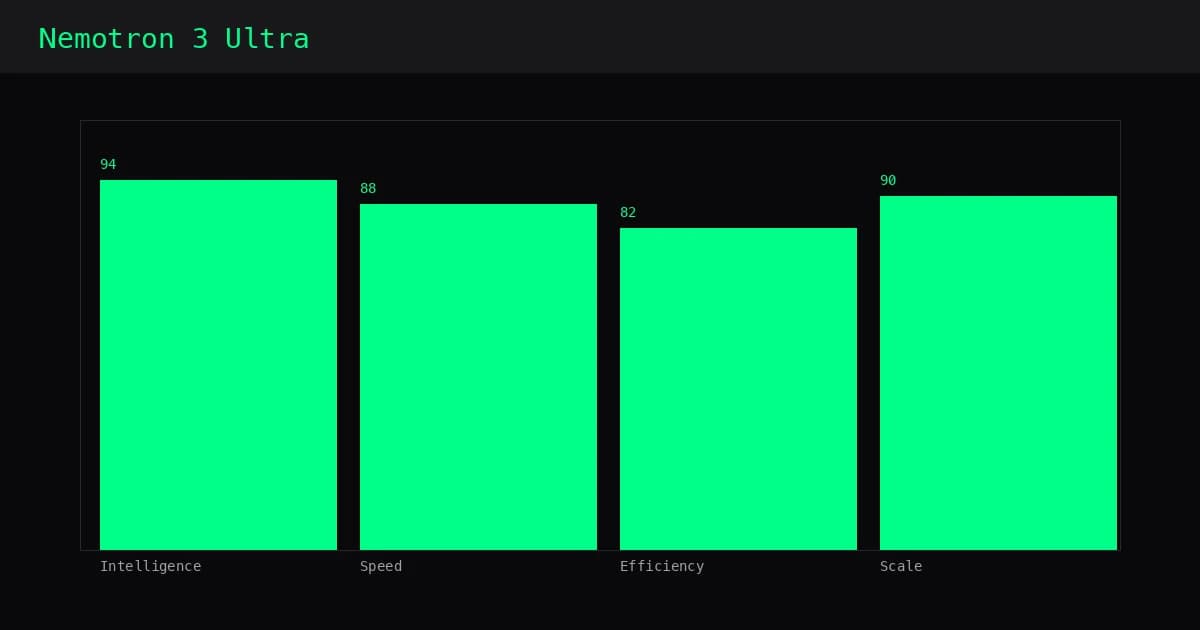
Under the hood, it's a full-weights fine-tune of NVIDIA's Nemotron 3 Nano 30B-A3B, a mixture-of-experts architecture with only 3.5B active parameters per token — trained using NVIDIA's NeMo framework. That's the same Nemotron family explainx.ai covered at NVIDIA Computex 2026's Nemotron 3 Ultra recap, where NVIDIA first laid out its intelligence-vs-speed positioning for the Nemotron line. PhoneLLM inherits that small-active-parameter efficiency and specializes it further for one task category: phone conversations.
The headline claim, in Kwindla Hultman Kramer's own words on X: PhoneLLM gets "GPT 5.6 Terra performance on typical voice agent tasks at 1/3 the latency and 1/18 the cost." Daily's blog post states the same comparison slightly differently — performance "on par with GPT-5.6 Terra" at "94% cheaper and with 1,300ms faster P95 time-to-first-token." The two framings are mathematically consistent (94% cheaper is roughly 1/18th the price), which is at least a good sign the numbers weren't garbled between the tweet and the blog post.
Cost and latency, compared to GPT-5.6 Terra
To put the claim in context: GPT-5.6 Terra currently costs $2.00 per million input tokens and $12.00 per million output tokens, after OpenAI's July 30, 2026 price cut from $2.50/$15. That's the mid tier of OpenAI's GPT-5.6 lineup, sitting between Sol ($5/$30) and Luna ($0.20/$1.20) — see explainx.ai's GPT-5.6 Sol/Terra/Luna breakdown for the full tier structure.
PhoneLLM isn't priced per token in the same way — because it's open weights, Daily reports cost as per-minute agent cost when self-hosted on Modal's B200 GPUs: about $0.00025, a quarter of a cent per minute of conversation, running up to 44 agent processes per B200 (88 per node with two GPUs). That framing matters for voice agents specifically, where a call's cost depends on duration and turn-taking overhead, not just token count.
On latency, the comparison is about first-token and first-audio-token speed, which is what determines how "laggy" a phone call feels:
| Metric | PhoneLLM (self-hosted, B200) | Context |
|---|---|---|
| Single-request TTFT | Under 100ms P95 | Lightly loaded B200 |
| End-to-end TTFAT at ~80 concurrent agents | Under 600ms P95 | Modal AutoEndpoints, production concurrency |
| Target voice-to-voice latency | ~1,500ms | Daily's stated comfort threshold for natural conversation |
| Claimed latency advantage over GPT-5.6 Terra | 1,300ms faster P95 TTFT / 1/3 the latency | Vendor claim, not independently reproduced |
The catch is that this is a self-hosted, purpose-tuned deployment being compared against a general-purpose third-party API. Terra's latency and cost are what OpenAI's hosted endpoint delivers for any task; PhoneLLM's numbers assume you're running the weights yourself on a B200, tuned specifically for phone-call structure, with thinking disabled and temperature pinned to 0. That's not an apples-to-apples API-to-API comparison — it's closer to "specialized self-hosted model vs. general hosted API," which is exactly the kind of trade the Small Models Have Arrived essay describes: a narrower job, done by a smaller model, at a fraction of the cost, because it no longer needs to be good at everything.
How this fits the small-models economics trend
PhoneLLM is a sharper, more extreme data point in the same story Calvin French-Owen's essay put on Hacker News's front page this week. French-Owen's argument was that general-purpose small models — GPT-5.6 Luna, GLM 5.3 — had crossed a usefulness threshold cheap enough to change consumer AI economics, cutting his own eval cost from about $1 to about $0.10 per run. PhoneLLM goes a step further: instead of a smaller general model, it's a small model fine-tuned for exactly one job (phone-based voice agents), which is how you get from a 90% cost cut to a claimed 94% cost cut plus a latency win at the same time.
This also tracks with the broader shift explainx.ai has been documenting in AI token pricing, explained and in DeepSeek V4's price move against GPT-5.6: the cost-per-completed-task, not the sticker price per million tokens, is what determines whether a product is economically viable. For voice agents specifically, that math is even more sensitive to latency, because a slow first-token response breaks the illusion of a real conversation regardless of how cheap the tokens are. PhoneLLM's pitch is that task-specific fine-tuning gets you both — lower cost per minute and a shorter response gap — at the price of losing general-purpose flexibility.
Why to treat this with real skepticism (for now)
A few things are worth flagging plainly, because this is genuinely an early release:
- It's labeled "Alpha 1" by its own creators. Daily is not claiming production maturity.
- The benchmark is self-authored. PhoneBench v1 is Daily's own evaluation, using LLM judges calibrated against human labels — not a public, third-party leaderboard like Artificial Analysis or a peer-reviewed eval suite. That doesn't make the numbers wrong, but it does mean they haven't been reproduced outside the team that built the model.
- Configuration-sensitive. Daily's own documentation notes temperature must be set to 0 and "thinking" disabled to match the reported numbers — deviate from that and results likely change.
- The comparison is self-hosted vs. hosted API. Terra's cost and latency are what you get from OpenAI's API with zero infrastructure work; PhoneLLM's numbers assume you're running and tuning a B200 deployment yourself via Modal.
None of that means the release is fake or the numbers are fabricated — the sourcing (an official Daily.co blog post, a named individual with a verifiable track record building Pipecat, weights published on Hugging Face, a working Modal deploy path) clears the bar of a real, attributable release. It just means "matches GPT-5.6 Terra at 1/18th the cost" is a vendor's Alpha 1 claim on its own benchmark, not an independently confirmed fact yet.
Where to find it
- Weights: Hugging Face,
pipecat-ai/phonellm-alpha-1, BSD license with no commercial restrictions - Deploy: Modal AutoEndpoints —
modal endpoint create --model pipecat-ai/phonellm-alpha-1 - Serving: Compatible with vLLM and SGLang inference engines
- Framework: Pipecat for wiring PhoneLLM into a full voice-agent pipeline, with a GitHub starter repo referenced in Daily's announcement
Related reading
- Small Models Have Arrived: Calvin French-Owen on Luna Economics
- AI Token Pricing, Explained Without the Pricing-Page Fog
- OpenAI Cuts GPT-5.6 Luna Price 80%, Terra 20% (July 2026)
- GPT-5.6 Sol, Terra, Luna Preview (June 2026)
- NVIDIA Computex 2026: Nemotron 3 Ultra Complete Recap
- DeepSeek V4 Price Increase, Live GPT-5.6 Comparison
- Claude Sonnet 5 vs GPT-5.6 Luna/Max Comparison
Figures in this post reflect Daily's own PhoneLLM Alpha 1 announcement and GPT-5.6 Terra's publicly listed pricing as of August 28, 2026. Both are subject to change as PhoneLLM moves past Alpha and as OpenAI adjusts GPT-5.6 pricing.