



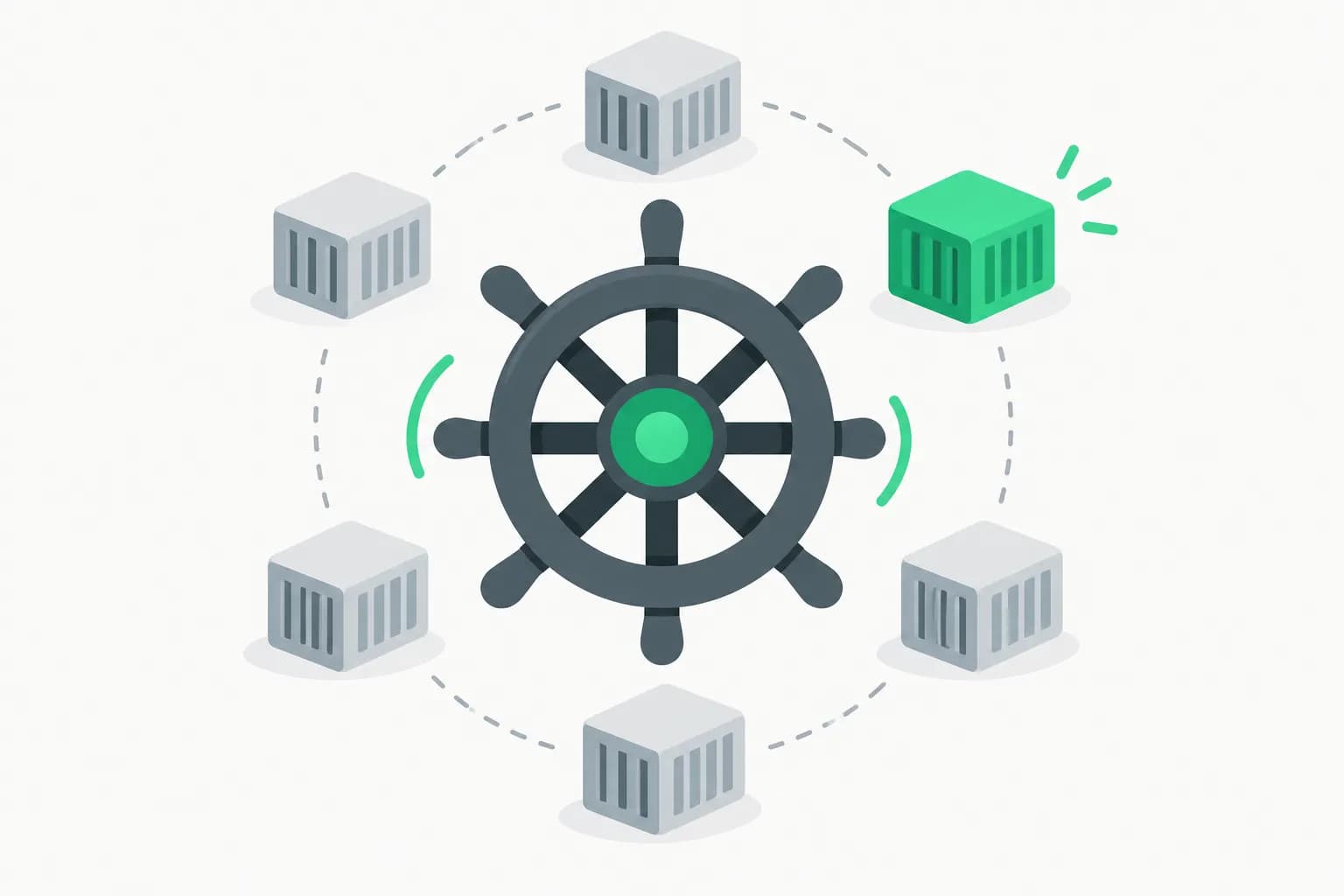
At KubeCon + CloudNativeCon on November 10, 2026, NVIDIA announced it is donating OpenShell to the CNCF Sandbox, contributing to Google''s Agent Substrate, and shipping new DSX Kubernetes pieces including Snapshot for fast GPU inference recovery.
For teams running agents on Kubernetes, the headline is governance: security runtimes are becoming community projects, not single-vendor black boxes.
TL;DR
| Piece | Role |
|---|---|
| OpenShell → CNCF Sandbox | Shared agent policy runtime under foundation governance |
| Agent Substrate | Long-running agent pods with suspend/resume |
| OpenShell + Substrate integration | Cross-cloud agent security with Google |
| NVKE / NVKR previews | Managed Kubernetes on GPU AI factories |
| Snapshot | Checkpoint restore without model reload |
Why CNCF Sandbox matters
Linux Foundation CEO Jim Zemlin framed the problem in NVIDIA''s post: cloud-native infra now must give agents safe sandboxes. Parking OpenShell in CNCF Sandbox means vendors and practitioners co-govern roadmaps, similar to how Dynamo entered agent inference conversations last month.
Sandbox is not graduation — expect API churn — but you gain public issue trackers and third-party audits, critical when agents touch customer credentials.
Our Korea sovereign AI roundup already sketched Hyundai Motor Group exploring OpenShell with NemoClaw. KubeCon turns that regional story into global infra.
OpenShell recap: deterministic gates on tools
NVIDIA OpenShell applies policy before tools fire. The November 10 post repeats core promises:
- Deterministic controls on tool calls and inference hops.
- Pluggable backends for compute, models, secrets, and observability.
- Hundreds of organizations experimenting, with tens of thousands of contributions in under a year per NVIDIA''s count.
Compare with explainx''s earlier OpenShell + Sentry overview. CNCF donation shifts the conversation from "trust NVIDIA builds" to "inspect the runtime yourself".
 Helm-style shield over Kubernetes wheel spokes
Teams pairing OpenShell with AWS Bedrock AgentCore or Home Assistant MCP should treat policies as versioned code, not UI toggles.
Agent Substrate: keep agents warm without wasting GPUs
Agent Substrate (Google-led, CNCF Sandbox) tackles session persistence:
- Preserves agent environments between tasks.
- Suspends idle agents and resumes them on a shared pool.
- Integrates with NVIDIA Dynamo for inference and KAI Scheduler for cluster sharing.
NVIDIA and Google are integrating OpenShell with Substrate so security policies follow suspended pods across nodes. That pairing matters for Gemini /swarm-style fleets where dozens of workers spin up overnight.
Read alongside ClickHouse + Xata agent sandboxes if your agents need durable SQL state between suspends.
DSX Kubernetes stack: NVKE, NVKR, Snapshot
The same blog introduces AI factory Kubernetes building blocks:
| Component | Purpose |
|---|---|
| NVKE | Lifecycle automation for GPU Kubernetes control planes |
| NVKR | Signed, version-pinned recipes for managed K8s on AI factories |
| Snapshot | Restore checkpointed replicas without reloading weights |
Snapshot benchmarks (vendor-reported):
- Crusoe cut GLM-5.3 ready time from ~8 minutes to 31 seconds on HGX B300.
- Saturn Cloud reported vLLM cold starts dropping from 2–8.5 minutes to 6–34 seconds.
If you operate vLLM vs SGLang fleets, Snapshot targets the elasticity pain when agents trigger scale-from-zero.
Ecosystem partners named for NVKE/NVKR include Mirantis, Spectro Cloud, vCluster, SK Telecom, Firmus, and others — signals that hosted GPU clouds want opinionated K8s baselines.
What builders should do this week
- Read the CNCF Sandbox application once public and pin a version in staging.
- Map agent tool calls to OpenShell policies before you grant cluster-admin tokens.
- Test Substrate suspend/resume with your MCP servers to see if state survives pod moves.
- Benchmark Snapshot on your largest model; compare against NVIDIA snapshot GPU checkpoint article if you already piloted DSX pieces.
CNCF Sandbox lifecycle: what to expect next
Sandbox is the entry runway, not graduation. Historically, projects spend 12–24 months hardening APIs before incubating. For OpenShell, watch:
- Governance meeting notes for policy DSL changes.
- Security audits filed as public issues.
- Vendor-neutral docs replacing NVIDIA-only examples.
If you bet on OpenShell today, pin git SHAs in production manifests and subscribe to CNCF tag notifications.
Mapping OpenShell policies to real agent tools
Start from an inventory table:
| Tool surface | Example risk | OpenShell policy angle |
|---|---|---|
| Shell exec | rm -rf / | Deny paths outside workspace |
| HTTP fetch | SSRF to metadata IP | Allowlist domains |
| Cloud APIs | DeleteBucket | Role-bound IAM via credential broker |
| Inference | Prompt injection to tools | Separate planner vs executor tokens |
NVIDIA stresses deterministic controls — policies should be testable unit tests, not LLM prompts. Pair with Beneath the Surface harness evolution reviews so policy gaps surface in CI.
Agent Substrate operations playbook
Suspend/resume changes how you think about GPU allocation:
- Warm pools for chat agents with sub-second latency SLAs.
- Cold suspend for nightly batch agents that run once per day.
- Checkpoint files on persistent volumes when tools write local artifacts.
Test resume latency after Dynamo model moves between nodes. Inference caches may invalidate unless Snapshot-style restore is in play (NVIDIA Snapshot post).
NVKE and NVKR for platform teams
Managed Kubernetes on AI factories is crowded; NVIDIA''s pitch is signed images and version-pinned recipes. If you operate Spectro Cloud or Rafay, evaluate whether NVKR removes snowflake GPU node AMIs.
Document who owns upgrades: central platform team vs individual ML teams. Agent substrate Kubernetes CNCF news already warned that schedulers and inference servers must move in lockstep.
Snapshot benchmarking methodology
Vendor numbers from Crusoe and Saturn Cloud are one-click restore stories, not universal law. Reproduce on your stack:
- Checkpoint a vLLM pod at steady-state throughput.
- Kill the pod.
- Measure time-to-first-token after Snapshot restore vs cold pull from S3.
- Compare cost of idle GPUs waiting warm vs restore latency.
For Wayve driving training style jobs, restore wins matter less than batch queues; for shopping agents, restore wins matter immensely.
Security overlap with intent-level guards
OpenShell governs what runs inside the sandbox. AgentBeam focuses on intent and dangerous action sequences before tools fire — useful when planner models try creative bypasses OpenShell policies did not encode yet.
Use OpenShell for infrastructure boundaries and an intent-level guard for application semantics (finance trades, prod deploy buttons, PII exports). The two layers fail differently, so a gap in one does not open the other.
Review both layers together after every policy change. Test each layer alone first, then test them in sequence, and record which layer denied each action. That record shows where a missing rule lives and who owns the fix.
Korea to KubeCon: narrative continuity
Read the timeline as one strategy:
- Nov 8–9: Korea sovereign AI package with Hyundai + OpenShell pilots (coverage).
- Nov 10: CNCF donation plus Agent Substrate handshake with Google.
International customers should expect feature parity, not Korea-only forks.
Why Kubernetes won the agent runtime war (for now)
Bare-metal agent demos are easy; production agents need autoscaling, secrets rotation, and network policies. Kubernetes already solved those for microservices. Agent Substrate and OpenShell argue the next control plane is agent sessions, not just pods.
If your org is not on Kubernetes yet, OpenShell can still run outside K8s, but CNCF donation signals where community energy concentrates. Heelo terminal-native agents on laptops and K8s-scale agents will coexist — policy engines must span both.
Community contribution playbook
CNCF Sandbox thrives when users file reproducible policy examples:
- Publish minimal Deployment + OpenShell policy YAML for a fake agent that hits three tools.
- Document expected allow/deny outcomes.
- Attach CVE-style narrative when a policy miss allows SSRF or credential theft.
NVIDIA''s donation removes vendor NDA friction, but maintainers still need your failures to harden defaults.
FAQ deep dive
Is Sandbox production-ready? Treat as beta infrastructure. Run OpenShell in shadow mode logging would-be denies before enforcement.
Do I need Agent Substrate if I only run batch jobs? No — batch Job objects may suffice. Substrate helps interactive agents with minutes-long sessions.
Will Snapshot work on AMD GPUs? AWS blog focuses on NVIDIA HGX partners; verify hardware support before promising SLAs.
How does this interact with CNCF Dynamo? Dynamo addresses inference throughput; OpenShell addresses tool policy. You likely need both in the same cluster.
Should startups self-host OpenShell day one? Start with managed agent sandboxes (Xata/ClickHouse patterns) if you lack SRE capacity, then migrate policies into OpenShell as you grow.
Schedule a quarterly red team that tries new MCP tools against frozen policies. Agent capabilities change monthly; static YAML rots without review. Record video replays of denied tool calls for onboarding new security engineers. When agents share clusters with batch inference, namespace NetworkPolicy objects so a compromised agent pod cannot reach unscoped Bedrock endpoints in another namespace. Document egress allowlists in the same repo as agent prompts so security reviews catch drift before deploy. OpenShell policies deserve the same code review checklist as application pull requests. Treat deny events as product telemetry, not security noise only. Review denies weekly with product managers.