



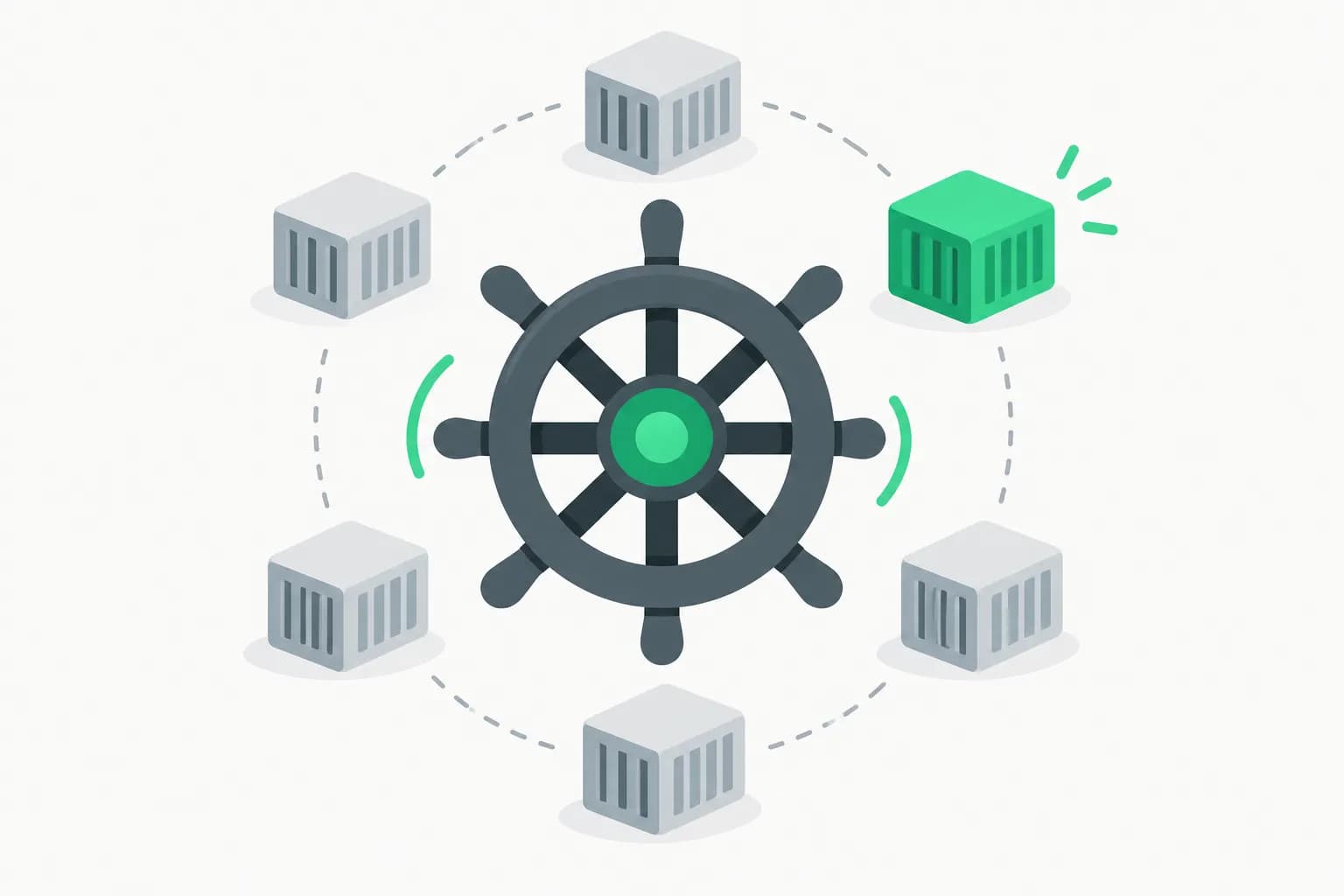
NVIDIA published a technical deep dive on Agent Substrate on November 10, 2026, framing agent platforms as an actor multiplexing problem on Kubernetes—not a one-Pod-per-chat pattern. The runtime snapshots idle sandboxes (gVisor or microVM), restores them on warm workers, and coordinates with NVIDIA Dynamo so inference routing knows when an agent is waiting on a model response.
The post lands the same week as KubeCon North America and follows Google's Agent Compute Engine narrative: hyperscalers want millions of sandboxes without abandoning cluster schedulers.
TL;DR
| Piece | Detail |
|---|---|
| Project | Agent Substrate (CNCF Sandbox donation per NVIDIA) |
| Core idea | Many actors (agents + environments) on fewer worker Pods |
| Idle handling | Checkpoint memory + filesystem; free worker for next resume |
| Router feature | Request parking when all workers busy (PR #221, follow-up #1229) |
| GPU angle | DRA-based device plug-in; NVIDIA GPUs first; checkpoint/restore design |
| Inference partner | Dynamo shares KV location, latency projections, saturation |
| Scheduler | KAI Scheduler places Substrate workers beside trainers and inference |
| DSX | Dynamo + KAI in DSX OS; Substrate external but integrated |
Why Kubernetes struggles with agent shape
Traditional services stay up for weeks. Agents pulse: a shell command, a file edit, an LLM call, then minutes of waiting. Keeping a full sandbox warm for every session burns CPU and RAM; tearing down Pods each step pays seconds of apiserver, scheduler, kubelet, and image-pull tax on a loop that may return in tens of milliseconds.
NVIDIA's blog names two bad equilibria platform teams hit today:
- One warm Pod per agent — mostly idle silicon.
- Ephemeral Pods per step — state loss and latency spikes.
Agent Substrate inserts a control plane that maps actors onto a pooled worker tier still governed by normal Kubernetes placement and quotas.
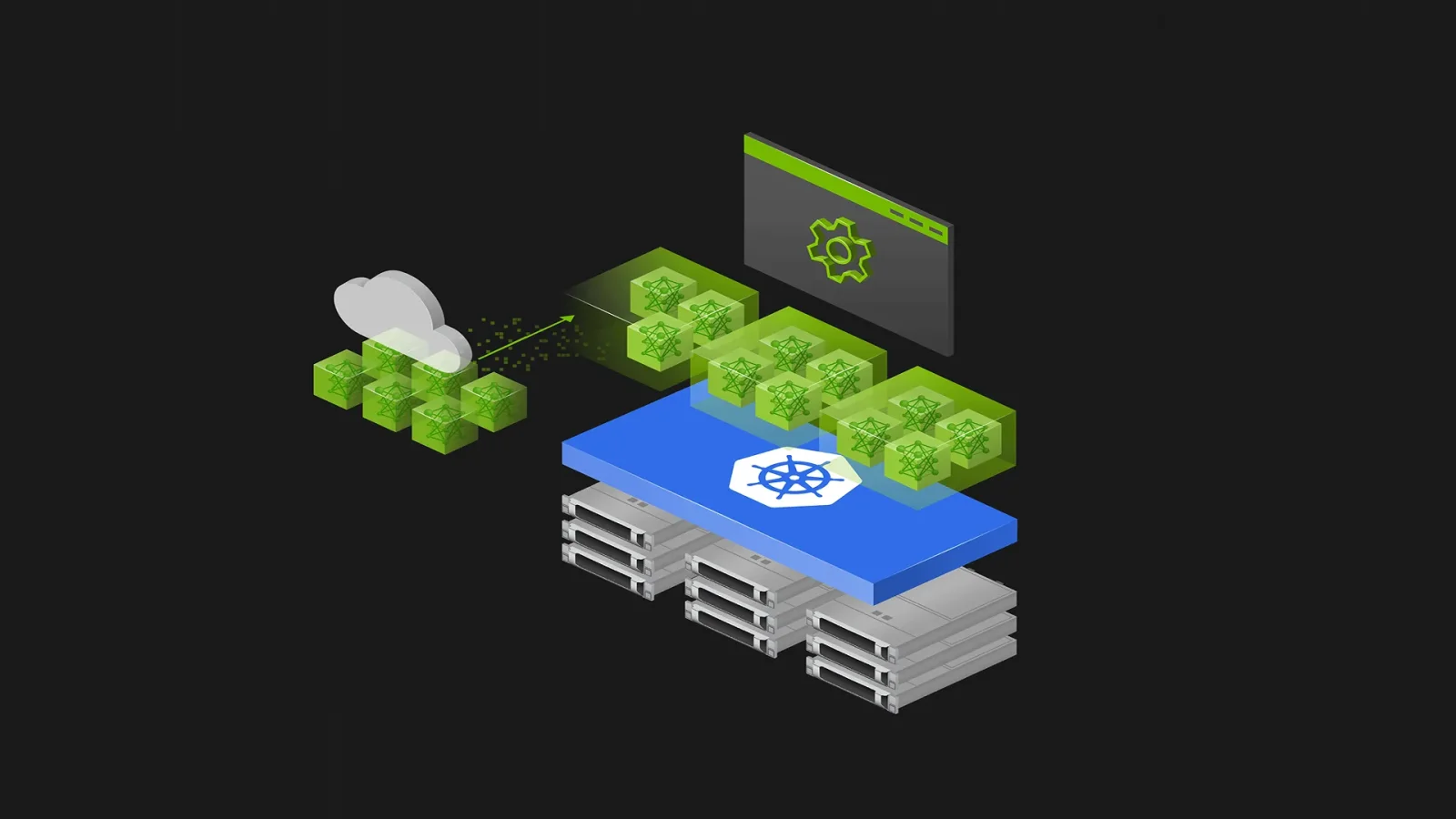 NVIDIA Agent Substrate multiplexes many agent sessions across warm Kubernetes worker Pods
Image: NVIDIA
Compare that architecture to Google's AX orchestrator and Bedrock AgentCore's seven layers: everyone is converging on scheduling agents like data-plane workloads, not like static microservices.
Three workloads NVIDIA optimizes for
The November post is explicit about who should care first:
Coding assistants and agent serving
An agent alternates model calls with repo operations—clone, edit, test. Users expect persistent working directories and snappy follow-up turns. Thousands of concurrent IDE or web sessions cannot each hold a dedicated sandbox.
RL post-training with agentic environments
GPU trainers and generation servers sit beside CPU-heavy sandboxes (compilers, browsers, code runners). Rollout batches create bursts; the slowest environment gates the trainer. NVIDIA cites growth from hundreds of environments in early runs to hundreds of thousands in production-shaped training.
Research GPU sandboxes
A coding agent may need a GPU inside the sandbox for a CUDA compile or kernel bench—not for serving a chat model. That implies many short-lived, isolated GPU sandboxes on a shared cluster with fair sharing.
Each story connects to explainx.ai's multi-agent infrastructure guide: density, isolation, and kill switches matter as much as model quality.
Upstream features named in the post
NVIDIA ties shipping code in the Agent Substrate repository to concrete pain:
| Feature | Problem it addresses |
|---|---|
| Request parking (#221) | Return errors when all workers busy even though a worker frees soon |
| Parking follow-up (#1229) | Running actors must not wait behind parked resumes |
| Per-container limits in microVM sandboxes (#859) | Untrusted sidecars starving the agent |
| DRA device plug-in (#752) | GPU inside sandbox without one-device-per-Pod waste |
| GPU snapshot restore design | Pause sandbox, release GPU, resume on matching hardware |
The GPU checkpoint section is vendor-neutral on paper: vendors describe pause semantics and hardware compatibility constraints; Substrate records dependencies and cold-starts if no matching device is free. NVIDIA GPUs are first, but the pattern targets other accelerators.
Dynamo: connecting tool loops to inference loops
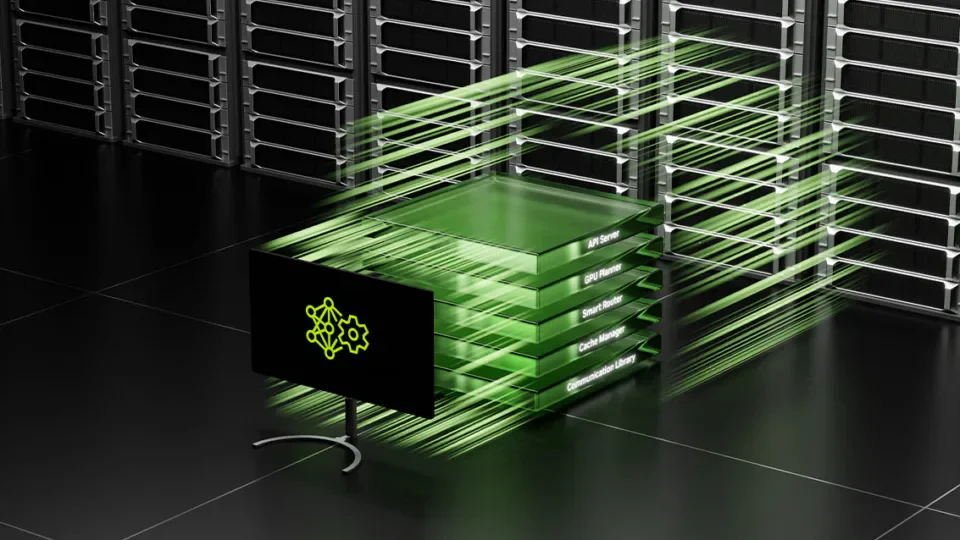 NVIDIA Dynamo KV-aware routing paired with Agent Substrate worker pools
Image: NVIDIA
Agent Substrate owns where agents act; Dynamo owns where models think. NVIDIA argues both waste resources if sized independently.
Classic inference routers treat each HTTP call as unrelated. Agent loops reuse system prompts, tool definitions, and conversation prefixes. Dynamo already tracks KV cache placement and GPU load; Substrate adds session identity, priorities, tool boundaries, and lifecycle events.
Together they can:
- Stick related steps on workers that already hold reusable KV cache
- Prioritize interactive turns under pressure
- Drop cache from terminated subagents first
- Pre-warm context as tool calls near completion
The feedback direction matters for builders: Dynamo exposes projected time to first token, completion time, cache readiness, and pool saturation. Substrate uses that to keep an actor resident, suspend during long inference waits, or resume as tokens arrive—reducing CPUs spinning behind saturated GPU queues.
That is the same economic story as semantic caching in LLM apps, but wired into cluster autoscaling instead of only HTTP middleware.
DSX stack placement
NVIDIA's table (reproduced conceptually below) clarifies branding:
| Layer | Tech | DSX OS? |
|---|---|---|
| Agent frameworks | NeMo RL, Gym, your harness | App layer |
| Agent execution | Agent Substrate | External OSS integrating with DSX |
| Model serving | Dynamo | DSX OS |
| Placement | KAI Scheduler | DSX OS |
| K8s foundation | GPU Operator, etc. | DSX OS |
Substrate worker Pods remain ordinary Kubernetes Pods, so KAI Scheduler can place them beside trainers today; future work may tie worker-pool autoscaling to queue fairness policies.
If you run CoreWeave-style GPU leases or Korean sovereign stacks, the lesson is the same: inference and environment schedulers must exchange signals, not hide behind separate autoscalers.
Getting started and maturity caveats
The post's getting started path targets a Pi coding agent on Substrate actors, GLM-5.3-Flash via Dynamo, and Harbor driving SWE-bench Verified evals. NVIDIA warns APIs are still changing, GPU support is rebuilding on DRA, and Dynamo agent hooks are experimental.
KubeCon touchpoints listed for November 10–12, 2026 in Salt Lake City include an Agent Substrate community party, a Google Cloud lightning talk on GPU-aware agent infrastructure, and NVIDIA booth office hours.
For homelab readers, compare against Home Assistant MCP and Jan Street agent skills: local agents skip Kubernetes until density forces your hand—but the suspend/resume pattern still applies when you outgrow Docker Compose.
What platform engineers should benchmark
Before adopting Substrate on a shared cluster, measure:
- Resume latency distribution after checkpoint—not p50 alone.
- Parking queue depth under burst versus hard errors.
- Dynamo signal lag if you suspend actors—stale TTFT estimates wake sandboxes too early or too late.
- Filesystem snapshot size for repos with large
node_modulestrees. - GPU restore failure rate when hardware is contended.
Document those beside model quality metrics. A faster LLM attached to a 45-second resume still loses users.
Request parking in production bursts
NVIDIA's blog walks through a frustrating failure mode: at peak, every worker Pod is occupied, yet a new user turn arrives. A naive router errors immediately even though an actor will likely checkpoint milliseconds later.
Request parking (#221) queues the resume with bounded wait and a cap on parked requests. Follow-up #1229 ensures calls targeting already-running actors bypass the queue.
For SRE teams, instrument:
| Metric | What a spike means |
|---|---|
| Parked request depth | Undersized worker pool or slow checkpoint |
| Park timeout rate | Need more workers or faster snapshot I/O |
| Resume latency p99 | Users perceive "stuck agent" even if models are fast |
| Actor churn rate | Agents may be thrashing instead of idling cleanly |
Compare against AI usage fragile codebase debates: infrastructure waits show up as apparent model regressions when the harness is actually starved.
RL post-training at sandbox fleet scale
The RL section is where Kubernetes economics bite hardest. Trainers assume homogeneous step times; agentic environments are heterogeneous and bursty.
NVIDIA's narrative:
- Early experiments: hundreds of concurrent sandboxes.
- Production-shaped runs: hundreds of thousands.
When the slowest sandbox cold-starts, GPUs idle. Substrate's bet is that checkpointed actors amortize environment setup across thousands of rollouts—similar in spirit to Handshake RL data loops but at cluster scheduler layer.
Questions for RL platform owners:
- Do environments need GPU inside the sandbox or only on the trainer?
- Can you pin compiler caches in snapshots to avoid rebuild storms?
- Does your reward server tolerate resume after minutes of pause?
If not, parking + Dynamo suspend may invalidate Markov assumptions in your pipeline unless episodes reset cleanly.
Coding-agent density math (simplified)
Suppose 10,000 concurrent coding sessions and 30 seconds mean idle between tool steps:
- One Pod per session ≈ 10k warm sandboxes × baseline memory.
- Substrate pool of 500 workers ≈ 20 sessions multiplexed per worker if snapshot restore is fast enough.
The break-even depends on snapshot size (git checkout + node_modules) and restore SLA. NVIDIA does not publish universal numbers; you must benchmark on your repo shapes.
Pair with Jane Street agent skills and Addy Osmani's production skills pack for application-level efficiency—substrate only multiplies what your harness already does per turn.
KubeCon 2026 rollout cues
The post lists Salt Lake City touchpoints for readers on the ground:
- Agent Substrate Community Party (November 10 evening).
- Google Cloud booth lightning talk on GPU-aware agent infrastructure (November 11).
- NVIDIA booth #170 office hours including Substrate maintainers.
Even if you skip the conference, watch for post-conference blog posts listing merged upstream PRs—NVIDIA framed several features as landed versus in flight.
Security and tenancy notes
NVIDIA emphasizes security-hardened, zero-trust sandboxes (gVisor or microVM). Per-container limits address untrusted sidecars—logging or metric agents that should not OOM the main workload.
Pair runtime isolation with identity and kill-switch patterns at the orchestration layer. Substrate solves density; it does not replace policy.
Update — November 10, 2026: NVIDIA Snapshot addresses GPU inference cold starts; Substrate addresses CPU agent multiplexing.
Related on explainx.ai
- Google Agent Compute Engine microVM claims
- Google AX agentic orchestrator on Kubernetes
- AWS Bedrock AgentCore seven layers
- Multi-agent infrastructure engineering
- WorkflowArena orchestration benchmark
- Heelo agent-native primitives
- NVIDIA Dynamo Korean open models recipes
NVIDIA blog details and repository issue numbers are accurate as of November 10, 2026.