



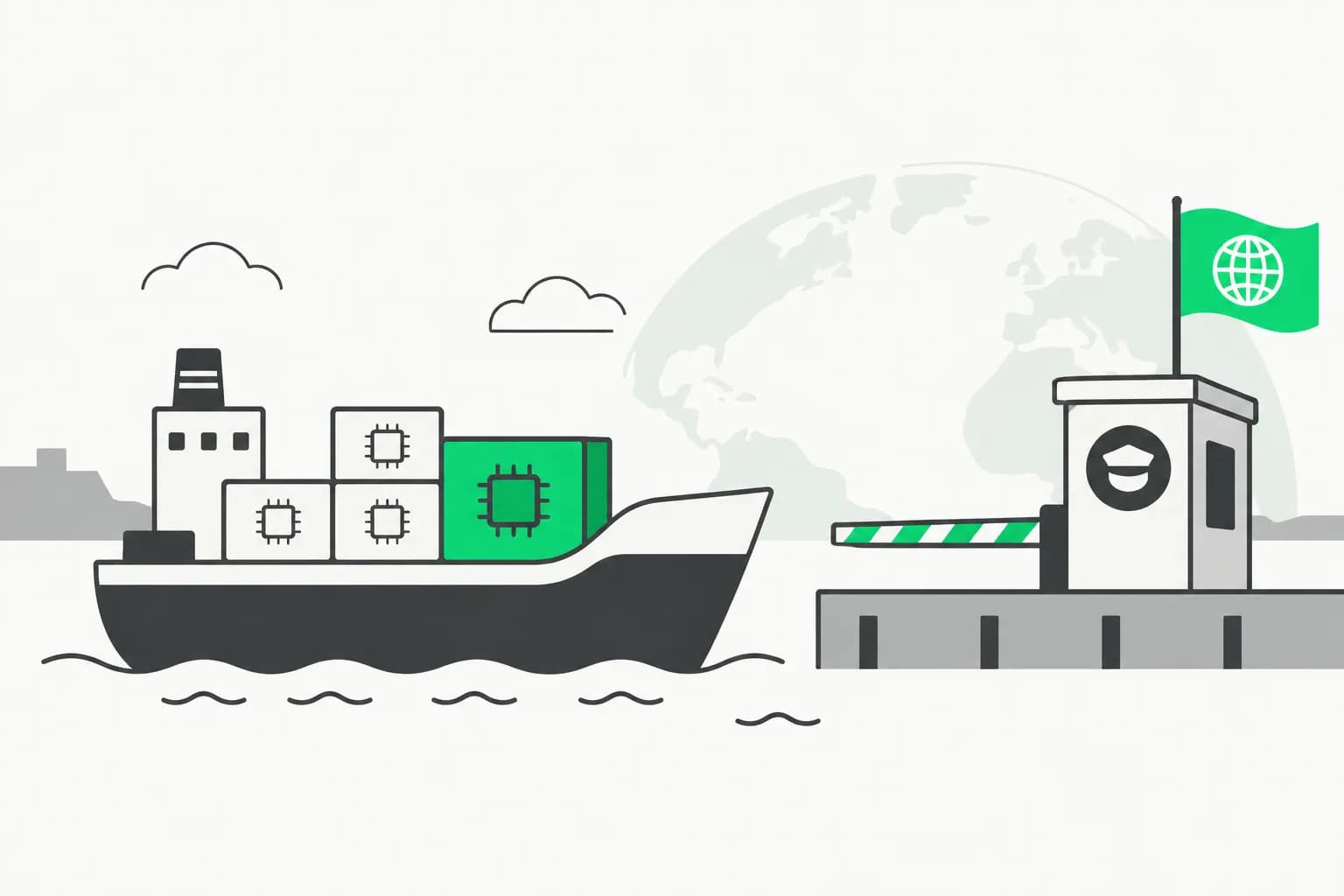
Michael Dell, the founder and CEO of Dell Technologies, says the AI memory crunch is not about to ease. Speaking to CNBC's David Faber on Tuesday, October 13, 2026, he said "I do think it gets worse next year in terms of demand and supply," and when asked about memory specifically: "Maybe it's a four-year problem because there's just not enough supply." The comments, reported by Benzinga via Yahoo Finance, landed in the same week that the biggest chip-tool maker said it cannot meet demand either.
This post lays out what was actually said, what independent evidence supports a multi-year shortage, where the numbers are thin, and what it changes for anyone who builds with or pays for AI compute.
TL;DR: the claim, the evidence, the caveats
| Question | Short answer |
|---|---|
| Who said it? | Michael Dell, CEO of Dell Technologies, to CNBC's David Faber (Tuesday, Oct 13, 2026) |
| What exactly? | Supply and demand "get worse" in 2027; memory "maybe" a four-year problem |
| Why four years? | New fabs take about four years, so plants planned now may produce in 2029 or 2030 |
| Is there backing? | ASML said supply will fall short in 2027 and 2028; customers ask about 2029 and 2030 |
| Is it a firm forecast? | No. It is a hedged CEO estimate, repeated in a Wall Street Journal interview, as cited by Digital Today |
| Who is hurt first? | Anyone buying memory-heavy hardware: AI servers, GPUs, workstations, laptops, phones |
What Michael Dell actually said
According to the Benzinga write-up, Dell made three separate points. First, that the shortage is tied to demand, not a one-off disruption: the first wave came from companies building frontier models, and "now we're starting to see this wave in the enterprise. But it's really just beginning."
Second, the timing argument. New factories take about four years to build, so a fab planned today may not begin production until 2029 or 2030. That is the whole logic behind "four-year problem": it is a construction-lead-time claim, not a forecast of demand curves.
Third, the same warning was repeated in a Wall Street Journal interview, which Digital Today cited on October 19 when it wrote that Dell said the supply problem could last up to four years, until 2030, and could worsen next year. Some outlets attribute the quote to one interview and some to the other, so the safest reading is that Dell has made the same case in more than one place. We could not open the original CNBC or WSJ pages ourselves, so the quotes above come from the secondary write-ups.
Why AI makes memory the bottleneck
Training and serving large models is memory-bound as much as compute-bound. High-bandwidth memory (HBM) sits next to the accelerator, and every AI server also carries large amounts of ordinary server DRAM. When hyperscalers and labs order racks by the thousand, memory makers shift wafers toward the products with the best margins, which squeezes supply for everything else.
We have already seen the effects ripple outward on explainx.ai:
- Apple CEO John Ternus told TIME the memory shortage is "absolutely a crisis" and that all options are on the table after reports Apple tested Chinese memory chips.
- A roundup of the AI chip supply chain reported that memory costs were high enough that Samsung reportedly asked suppliers for 20 to 30 percent fewer phone parts.
- Micron's Taiwan union voted 99 percent for a strike threat, a reminder that a large share of the world's DRAM and HBM depends on a few sites.
- A separate look at US chip producer prices shows why headline price numbers need checking before anyone treats them as fact.
The independent evidence: ASML, TSMC and CXMT
Dell is one voice. The more useful question is whether other parts of the chain say the same thing.
ASML: tools are short through 2028
Per the Benzinga report, ASML said on Wednesday, October 14 that its planned chipmaking-equipment supply will fall short of customer demand in 2027 and 2028, with some customers seeking orders for 2029 and 2030. Our own write-up of that release is here: ASML says it cannot meet AI chip-tool demand in 2027 and 2028. Fabs need tools before they need wafers, so a tool shortage pushes out memory capacity as well.
TSMC: advanced capacity is sold out
Semiconductor veteran Steve Williams told Benzinga the prior week that TSMC was effectively sold out of advanced manufacturing capacity for 2026, and named advanced packaging, which combines AI processors with HBM, as another bottleneck. TSMC itself reported record results; see TSMC's Q3 2026 results and what is confirmed. Note that Williams is a commentator, not TSMC, and TSMC does not publish a "sold out" statement in the sources we checked.
CXMT: more supply, but the wrong kind
China's CXMT is the main new entrant people point to. Digital Today, citing Counterpoint Research and TrendForce estimates relayed by TechRadar on October 19, reported:
| Year | CXMT DRAM wafer output (estimate) |
|---|---|
| 2026 | about 320,000 wafers |
| 2027 | about 420,000 wafers (more than 30 percent growth) |
| 2028 | 500,000 to 600,000 wafers |
Even so, the Digital Today report says the extra output targets commodity DRAM for PCs, not HBM, and most of it is expected to go to China's domestic market. Its prices are reportedly similar to Samsung's, so price pressure is unclear. In other words, new capacity exists, but it does not obviously reach the segment where AI buyers are squeezed.
The business side: a $95 billion backlog and a downgrade
The same week brought a reminder that demand is real. According to the Benzinga write-up, Dell reported $16.4 billion in quarterly AI server revenue and a record $95 billion backlog in September. Dell builds AI servers that combine Nvidia processors with memory, networking and cooling, so it feels the memory shortage directly, as both a buyer and a seller.
On Wednesday, October 14, Barclays analyst Tim Long downgraded Dell from Overweight to Equal-Weight and cut the price target from $603 to $574; Dell shares fell about 8 percent in morning trading. Barclays sees no meaningful acceleration yet in businesses buying their own AI infrastructure, forecasts Dell's AI server revenue tripling to $75 billion this fiscal year with slower growth after, and estimates AI server operating margins near 5 percent.
That is a market story, and this blog does not cover stock moves for their own sake. It matters here for one reason: a 5 percent margin on AI servers means rising memory costs are hard for server vendors to absorb, so they flow to customers.
What is confirmed and what is not
Confirmed (by multiple outlets quoting the same remarks): Dell said the shortage gets worse in 2027 and may be a four-year problem; he gave the four-year fab build time as the reason; ASML said its supply will fall short in 2027 and 2028.
Reported but not independently verified by us: the exact interview venue (CNBC versus WSJ, with outlets citing both); a CIO.com report that Micron's CEO expects tighter memory conditions in 2027 and 2028 than in 2026, which we could not open; and the CXMT wafer figures, which are analyst estimates, not company disclosures.
Not established: that the shortage will last exactly four years. Dell said "maybe." Demand could soften, a large new fab could come in faster, or model efficiency could cut memory per token. Nobody can confirm 2030 today.
How to check for yourself: read ASML's quarterly release and call, watch memory makers' guidance for capital spending (fab plans show up there two to four years before output), and track contract DRAM and HBM pricing from industry trackers such as TrendForce.
What this means for what you build or pay
This is a hardware-supply story, but it has direct consequences for builders.
- Do not budget for steep compute price drops. If memory stays tight through 2028, GPU rental and server prices may fall more slowly than past cycles. Our coverage of B300 rental prices shows one place the pressure is visible.
- Memory efficiency becomes a product feature. Techniques that shrink KV cache, quantize weights or route to smaller models save the scarcest part of the stack. See how Qualcomm's 100-billion-parameter phone claim runs into the same memory arithmetic.
- Local AI hardware may stay pricey. Workstations and laptops that ship with big unified memory compete for the same chips as data-center parts.
- Optical and other components are tight too. Memory is not the only constrained input; see optical parts reported sold out into 2029.
- Lock in capacity where you can. If you run production inference on rented GPUs, longer commitments may be cheaper than spot over the next two years, but only if your usage is predictable.
Dell's own reading: enterprise demand has barely started
The most interesting part of Dell's comments is not the pessimism about supply, it is the demand claim. He argues that the enterprise AI wave is just beginning. Barclays disagrees on timing, saying it has not seen meaningful acceleration in companies buying their own AI infrastructure. If Dell is right, the shortage deepens because a second buyer class arrives before the first has been satisfied. If Barclays is right, demand may be lumpier than the shortage narrative suggests, and the four-year horizon could prove too long.
Neither view is a measurement. The honest position for builders is to plan for a range: constrained supply through 2027 is well supported, constrained supply through 2030 is one executive's estimate.
Bottom line
Michael Dell's four-year warning is a hedged estimate backed by a simple mechanism, fab build time, and by ASML's own statement that tool supply trails demand in 2027 and 2028. It is not a guaranteed forecast. For anyone who builds, buys or rents AI hardware, the practical read is to expect memory to stay a cost driver, favor memory-efficient designs, and watch the next signals: memory makers' capital spending, ASML's order book and HBM contract prices.
Related reading
- ASML: AI demand exceeds EUV supply through 2028
- Apple CEO Ternus on the memory crisis
- AI chip supply chain roundup, October 2026
- Micron Taiwan strike threat and HBM supply
- TSMC Q3 2026: what is confirmed
- Qualcomm 100B-parameter phones: memory math
Figures and quotes are accurate as of October 20, 2026, and come from the secondary reports linked above; check the original interviews and company releases for updates.