



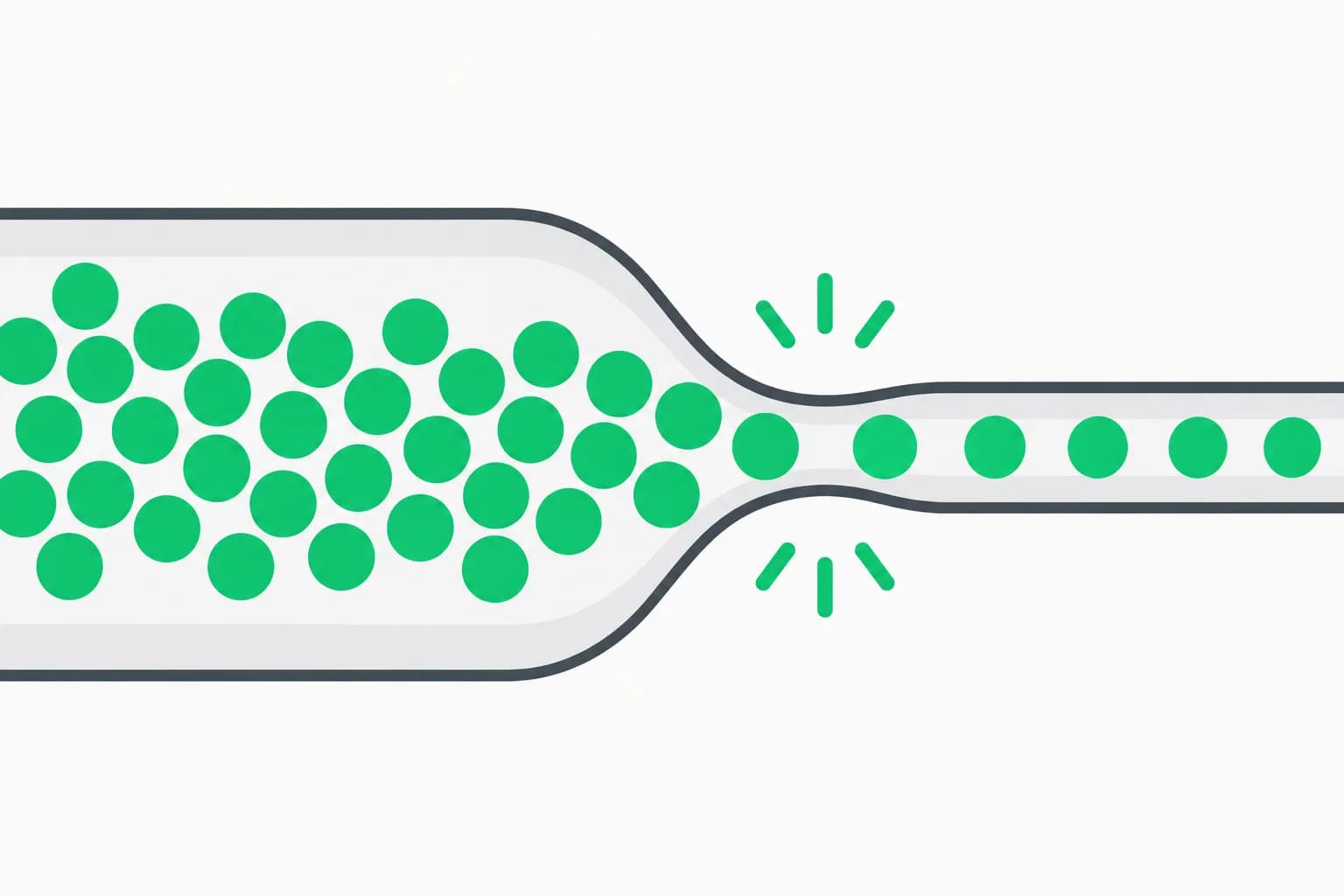
The headline spreading on November 4 says OpenAI is negotiating for more memory chips in South Korea, and that SK Hynix shares rose. The confirmed part is smaller. Sam Altman made an unannounced trip to Korea over the weekend, Samsung confirmed he met about 50 of its affiliate executives, and Korean media reported a lunch with SK Group's chairman. SK Hynix said it could not confirm that lunch, and no new memory order has been announced.
This post sorts what is reported from what is confirmed, recaps the agreement that already exists, and explains why high-bandwidth memory (HBM) supply matters to anyone who pays for AI compute. It extends our coverage of SK Hynix's record third quarter.
TL;DR: reported versus confirmed
| Claim | Status | Source |
|---|---|---|
| Altman made an unannounced Korea visit over the weekend | Confirmed | CNBC |
| He met about 50 Samsung affiliate executives in Yongin | Confirmed by Samsung | CNBC |
| He lunched with SK Group Chairman Chey Tae-won, with SK Hynix and SK Telecom executives | Reported by Korean media; SK Hynix could not confirm | CNBC |
| Talks covered HBM supply and data centers | Reported by local media; not confirmed by the companies | CNBC |
| SK Hynix shares rose 2.4% | Reported by a market news site | Bloomingbit |
| OpenAI placed or negotiated a new, larger memory order | Not confirmed anywhere we found | n/a |
| A 900,000 wafer-starts-per-month target exists | Confirmed, from October 2025 | OpenAI |
What happened over the weekend
According to CNBC, Altman visited South Korea without advance notice on the weekend of October 31 to November 1. Samsung said he met about 50 executives from its affiliates on Saturday in Yongin, south of Seoul. Those affiliates span electronics, finance and biotechnology. Samsung said the talks covered AI developments, business opportunities and AI's effect on corporate decision making.
Korean media reported that Altman also had lunch on Saturday with SK Group Chairman Chey Tae-won, and that senior executives from SK Hynix and SK Telecom attended. Local media said the group may have discussed existing plans for HBM supply and AI data center development. SK Hynix told CNBC it could not confirm the lunch. CNBC adds that participants gave no details of the discussions, and that Altman left Korea on Saturday, per local media.
That is the entire confirmed record. Nothing on a price, a volume or a contract has been published by OpenAI, Samsung or SK Hynix for this trip.
Timeline: how the OpenAI and Korea relationship got here
| Date | Event | Source |
|---|---|---|
| October 1, 2025 | OpenAI, Samsung and SK announce Stargate partnerships after a Seoul meeting with President Lee | OpenAI |
| July 2026 | Samsung says Jay Y. Lee met Altman at OpenAI's San Francisco headquarters | CNBC |
| October 28, 2026 | SK hynix reports record third-quarter profit and says shortages last through 2030 | Our earlier post |
| October 31 to November 1, 2026 | Altman visits Korea, meets Samsung affiliate executives; reported lunch with SK Group's chairman | CNBC |
| November 2, 2026 | SK Hynix shares reported up 2.4% | Bloomingbit |
Read as a sequence, the visit looks like relationship maintenance between a company that needs memory and two companies that sell it. That may be all it was. It may also be the lead-in to a firmer agreement. The public record does not let us tell which, and we would rather say so than guess. Buyers and sellers of scarce components often meet at the top level before any filing appears, so a meeting is a weak signal on its own. A contract, a capacity announcement or a regulatory filing is a strong one.
What the market report adds, and what it does not
A Nov. 2 market news piece on Bloomingbit says SK Hynix shares rose 2.4% after the visit. It credits a social account, "Walter Bloomberg", with saying Altman met SK Group executives about HBM supply and Stargate infrastructure. Treat that attribution with caution: it is an aggregator account, not a Bloomberg News report that we could open.
The same piece repeats a line SK Hynix has used before, that customer requests for HBM supply are more than double what it can provide. It also mentions a separate, unfinalized report about a special dividend tied to the company's Kioxia investment, with no named source. We do not use that dividend item.
Two cautions follow. First, a 2.4% move on a day with several drivers cannot be tied to one meeting. Second, "negotiating for more" is an inference. A lunch involving the chairman of the group that is already a named Stargate partner does not show a new order.
What was already agreed in October 2025
OpenAI's own announcement, dated October 1, 2025, is the best primary record. It says Samsung Electronics and SK hynix plan to scale up production of advanced memory chips, "targeting 900,000 DRAM wafer starts per month at an accelerated capacity rollout." It also says:
- The announcement followed a meeting in Seoul among President Lee Jae-myung, Samsung's Jay Y. Lee, SK's Chey Tae-won and Altman.
- OpenAI signed a memorandum of understanding with Korea's Ministry of Science and ICT to evaluate AI data centers outside the Seoul metropolitan area.
- It signed a separate partnership with SK Telecom to explore an AI data center in Korea, and an agreement with Samsung C&T, Samsung Heavy Industries and Samsung SDS to assess more capacity.
- Samsung and SK will look to deploy ChatGPT Enterprise and API features in their operations.
- Further details "will be shared as plans progress."
The verbs matter: scale up, target, explore, evaluate, assess. In more than a year, we have found no public document that turns the target into a priced purchase commitment. That is why a new report of "more memory" is hard to judge. It could be a firmer contract, a schedule change or simple relationship work.
 Stack of chip layers representing HBM memory packaging that OpenAI and other AI buyers compete for
Why HBM is the pinch point
High-bandwidth memory is stacked DRAM placed beside the accelerator, and it limits both how many AI chips can ship and how fast they run. SK hynix's third-quarter results, covered in our earlier post, showed record profit, HBM4 expected to overtake HBM3E in the fourth quarter, and long-term agreements covering over half of 2027 and 2028 capacity. The company expects shortages through 2030.
The shortage shows up in other places too:
- Michael Dell has called the problem a four-year memory shortage that gets worse in 2027.
- Anthropic's IPO filing named TSMC and HBM suppliers as core risks.
- Apple CEO Ternus discussed the memory shortage in a Time interview.
- Our look at the DGX Spark 64GB at $4,999 shows memory configuration driving a local AI device's price.
- China's CXMT posted big revenue and profit gains on AI memory prices.
- Samsung and SK Hynix are upgrading their China memory plants.
Taken together, buyers are racing for a limited resource. A visit by the CEO of the largest AI buyer to the two largest HBM makers fits that pattern even if nothing new was signed.
The Stargate context
Stargate is OpenAI's umbrella for AI data center builds. Korea fits it two ways: as a source of memory, and as a possible site for data centers. That second thread is also part of OpenAI's current messaging. See our report on OpenAI's switch to the term AI compute campuses for how the company frames its sites.
 Chip supply chain trays carrying a green chip, showing how memory supply feeds AI infrastructure
What to watch next
- A joint statement or filing. A priced contract or a disclosed purchase obligation would turn the reports into fact.
- SK Hynix commentary. Its next earnings call or investor note may address OpenAI demand directly.
- Samsung's version. Samsung confirmed a meeting but gave no memory detail.
- Korean government statements. The Ministry of Science and ICT signed the data center MoU and might comment on progress.
- Capacity news. Any new fab or packaging line announcement would show whether the 900,000 target is moving.
What this means for what you build or pay
Not much changes this week. If a larger OpenAI memory commitment does follow, the likely effect is indirect: memory makers allocate more output to OpenAI-linked demand, so other buyers see tighter supply and firmer prices. For builders:
- Expect compute prices to stay firm rather than fall in 2027 plans.
- Avoid single-provider lock-in for inference where you can.
- Treat stock-move headlines as signals to read the filings, not as facts about your costs.
How to read a story like this
Look for the verb. "Met" is not "agreed". "Discussed" is not "ordered". Check who confirmed it, and whether the company said it could not confirm. Check the date of any number: the 900,000 figure is from 2025, and it is a target, not a delivery. If an aggregator account is the source of a claim, look for a news organization that reports it independently.
Related reading
- SK Hynix Q3 2026: record profit and a shortage through 2030
- Michael Dell: the memory shortage is a four-year problem
- Anthropic's S-1 on TSMC, Taiwan and HBM suppliers
- Samsung and SK Hynix upgrade China memory plants
- CXMT Q3 2026 and AI memory prices
- OpenAI and the AI compute campuses rebrand
Details are accurate as of November 4, 2026. The Korea visit reports may change as the companies comment.