



Qualcomm CEO Cristiano Amon said on October 8, 2026 that leading AI companies want smartphones that can continuously run models of around 100 billion parameters by 2028. That is the claim in circulation, and it is worth being exact about what it is: a customer request relayed by a chip vendor's CEO, not a shipping product, not a chip announcement, and not a date Qualcomm has committed to. Below we separate what is verified from what is not, then do the memory and quantization math that shows why the target is hard and how it might be met.
Claimed vs verified
| Claim | Status |
|---|---|
| Amon said AI companies want ~100B-parameter models on phones | Reported by multiple outlets from an October 8 interview; consistent across summaries |
| The target year is 2028 | Appears in secondary summaries tracing to a podcast and a paywalled newsletter; we could not find a primary transcript to quote |
| It is a Qualcomm product plan | No. Reporting says Qualcomm described it as a customer requirement and that no chip for continuous 100B inference has been announced |
| Current flagship chips handle up to ~30B parameters | Reported for Snapdragon 8 Elite Gen 6 and Extreme Gen 6 (2nm, unveiled September 22, 2026), using mixture-of-experts architectures |
| Always-on sensing hubs run ~200M parameters | Reported, at about 1 million tokens per day |
| ~32,000-token context on the top chip | Reported in the same coverage |
If you cite this, attribute it to Amon and say "customers want", not "Qualcomm will deliver".
What was actually said, per the coverage
Per the German outlet's summary of the interview, Amon said new mobile processors must provide permanent background AI with all-day battery life, and listed what has to change: loading parameters from flash storage, expanding NPU memory, and a refined low-power architecture. He also said memory-chip supply is in a temporary squeeze, which is raising device prices, and predicted a smartphone "supercycle" in which the premium segment grows. He described the phone as the central node for AI applications, with cloud and device merging into one system.
The memory math
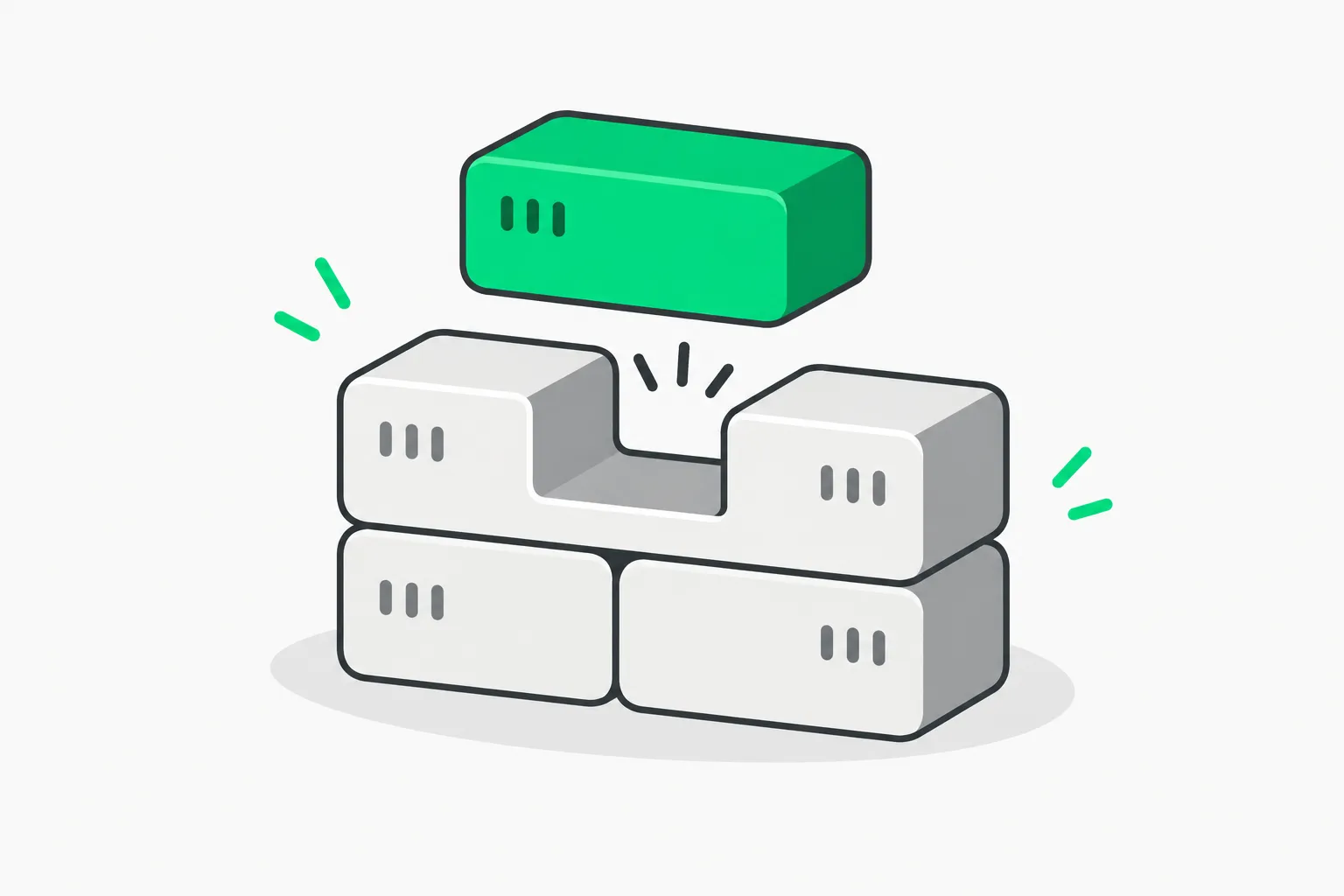 Stack of memory blocks showing the memory a 100B-parameter phone model needs at different quantization levels
A model's weights take roughly parameters times bits per weight divided by eight bytes. For 100 billion parameters:
| Precision | Weight memory |
|---|---|
| 16-bit | about 200 GB |
| 8-bit | about 100 GB |
| 4-bit | about 50 GB |
| 3-bit | about 37 GB |
| 2-bit | about 25 GB |
Add the KV cache, which grows with context length, plus the operating system and apps. Flagship phones today ship with a modest fraction of 50 GB of RAM, which is why the target cannot be met by quantization alone. The interview was published by Alex Heath's Sources as a podcast episode.
Three levers close the gap:
- Mixture-of-experts (MoE). Only a few experts activate per token, so a 100B-total model might compute with roughly 5 to 15B active parameters. Compute and bandwidth per token fall sharply even though the total must still be stored. This is how the 30B figure for current chips is reached. For a worked example of a phone-class MoE, see MiniCPM-V 4.7 with lookahead expert scheduling.
- Streaming weights from flash. Keep hot experts in RAM and fetch the rest from storage on demand. Phone flash is fast but far slower than RAM, so this works when expert routing is predictable. The same idea on desktops is covered in Janas: running MoE models larger than RAM by streaming experts from SSD.
- Aggressive quantization. Two- to four-bit weights halve or quarter the footprint, at a quality cost that depends on the model and method. See the 2-bit GGUF tool-calling results for how far this can go before agents break.
Battery and heat are the other half
 Phone outline with an always-on assistant core, illustrating continuous on-device AI and battery limits
"Continuously" is the hard word. A phone that holds a large model resident and responds to background events draws power all day. Memory bandwidth, not raw compute, usually dominates energy per token, which is why reducing active parameters matters more than TOPS. The reported always-on hub figure, 200 million parameters at about 1 million tokens per day (roughly 11.6 tokens per second averaged over 24 hours), shows the scale mismatch: the target is about 500 times larger than that hub model.
A realistic reading is a tiered design: a tiny always-on model for sensing and triage, a mid-size on-device model for most requests, and a very large model woken only for hard tasks, backed by the cloud when needed.
A worked example: what 100B at 4-bit means for token speed
Suppose a 100B-total MoE activates 10B parameters per token and is stored at 4-bit. Each generated token must read roughly 5 GB of active weights, since 10 billion parameters at half a byte each is 5 GB. A phone with about 60 GB/s of usable memory bandwidth could in theory reach around 12 tokens per second if every active weight sat in fast memory; real systems land lower because of the KV cache, attention reads, and overhead.
Now add flash streaming. If half of the needed experts must come from storage at a few GB/s, the stall time per token can dominate and speeds fall to a couple of tokens per second unless expert prediction hides the latency. This is why the research on lookahead expert scheduling matters: it is the difference between a demo and a usable assistant.
These are back-of-envelope numbers we computed ourselves from the formulas above, not Qualcomm figures. They are meant to show sensitivity: halve the active parameters and speed roughly doubles; double the bandwidth and the same happens. The three levers (active parameters, bytes per weight, bandwidth) multiply, which is why small architectural gains compound.
How this compares with other on-device claims
Vendors have promised big on-device models before. A useful habit is to ask five questions of any such claim: how many total and active parameters, what precision, how much RAM is assumed, what context length, and what sustained battery draw. The Qualcomm coverage so far answers the first two partly (30B today, 100B desired), gives a 32,000-token context on the top chip, and says nothing public about sustained power for a 100B model. Until a chip is announced with numbers for all five, "100B on a phone" is a target rather than a spec.
Compare the other direction too: small models keep getting better. Several recent releases reach strong results at single-digit billions of parameters, which may satisfy most phone tasks long before 100B arrives. If your product only needs summarization, extraction and tool calls, the near-term answer is a well-tuned 3 to 8B model, not a monster.
Why labs want it
Privacy and cost. Running locally keeps personal data on the device and removes inference cost from the lab's bill. Latency and offline use are bonuses. It also shifts value to whoever controls the on-device runtime, which is why chip vendors, phone makers and model labs are all positioning. For laptops and desktops, the same trade-off is visible in Surface Laptop Ultra: which config to buy for local AI.
What this means if you build
- Design for tiers. Assume small models on device and escalate to cloud for hard requests. Keep prompts and tool schemas portable across model sizes.
- Watch memory, not TOPS. When a phone spec lists RAM and bandwidth, that predicts what models will run, more than headline NPU numbers.
- Treat 2028 as direction. Plan for 10 to 30B-class local models in the near term, which the current generation already targets.
- Test quantized variants of the models you ship; quality loss at 3 to 4 bits is workload-specific.
What people are asking
Will a 100B model on a phone be as good as a cloud model? No guarantee. A 100B open model quantized to 4-bit and activating a fraction of its weights will beat today's small phone models, but frontier cloud models are much larger and updated constantly.
Is the memory shortage real? Amon was reported saying memory supply is tight, and that raises phone prices. Higher-RAM phones are the likely first step toward this target and will cost more.
Can I try something like this today? Yes, on a laptop. Run a quantized MoE with a local runtime and measure tokens per second and memory use; you will see the same constraints in miniature.
Bottom line
The verified part is modest: a CEO said customers want 100B on phones by 2028, and the current generation supports about 30B. The interesting part is the math, which shows the target is reachable only through a mix of MoE, flash streaming and low-bit quantization, and that battery life rather than raw speed is the binding constraint. Treat the date as a signal of demand, and check again when a chip is actually announced; Qualcomm's own Snapdragon pages are where specifications will appear first.
Related reading
- MiniCPM-V 4.7: an on-device MoE for iPhone
- Janas: MoE models larger than RAM
- 2-bit GGUF tool calling
- Surface Laptop Ultra for local AI
- Oki Home local AI memory computer
- Strata: 125B MoE on a consumer GPU
Figures reflect secondary coverage on October 13, 2026; Qualcomm has not published a transcript or a product commitment.