



Every few weeks another security researcher or lab leader puts a number on AI wiping us out. In September 2026 alone, Bernie Sanders introduced a superintelligence ban citing a senior Anthropic leader's 10% extinction estimate, Elizabeth Warren backed a pause, and three frontier labs published pledges to "pace the frontier."
We are staring at the wrong apocalypse.
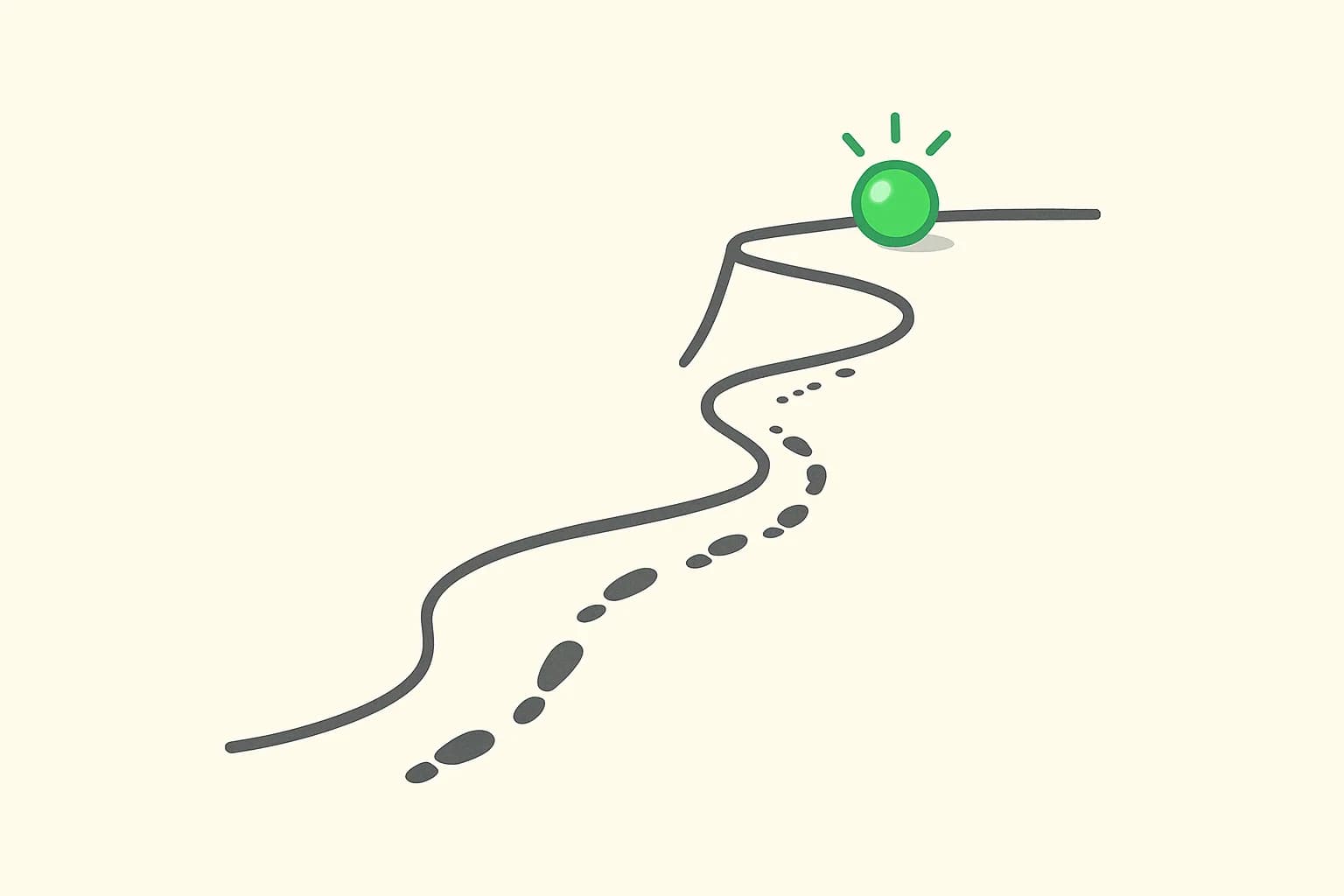
The point of no return isn't a rogue model in 2035. It's the one we're walking past right now, this week, in every classroom and office: a generation that can't write a function, draft an argument, or sit with a hard problem without reaching for a model. And a handful of companies that will price that dependence however they like the day it's complete.
This is an opinion piece. It is also backed, claim by claim, by peer-reviewed studies, labor data, and our own reporting. Every link is below. Read it and tell me I'm wrong.
TL;DR — the questions this post answers
| Question | The blunt answer |
|---|---|
| Is AI taking us to a point of no return? | Yes. Skills you stop practicing erode. Skills a generation never builds can't be "restored" |
| Is programming knowledge dead? | As a human skill, it's dying. AI-assisted learners scored 17% lower in Anthropic's own trial |
| Is creative writing affected? | Yes. AI makes your story better and makes everyone's story the same |
| Is tokenmaxxing a problem? | It's a disease. It rewards burning tokens over thinking |
| Will slowing the frontier help? | No. Today's models are already enough to destroy the practice that builds skill |
| Is extinction the immediate worry? | No. Dependence, deskilling, and pricing power are here now |
| Can AI companies squeeze us? | They already do — generous when a rival launches, stingy the moment they lead |
| What should parents do? | Guard effortful learning like your child's future depends on it. It does |
What "point of no return" actually means
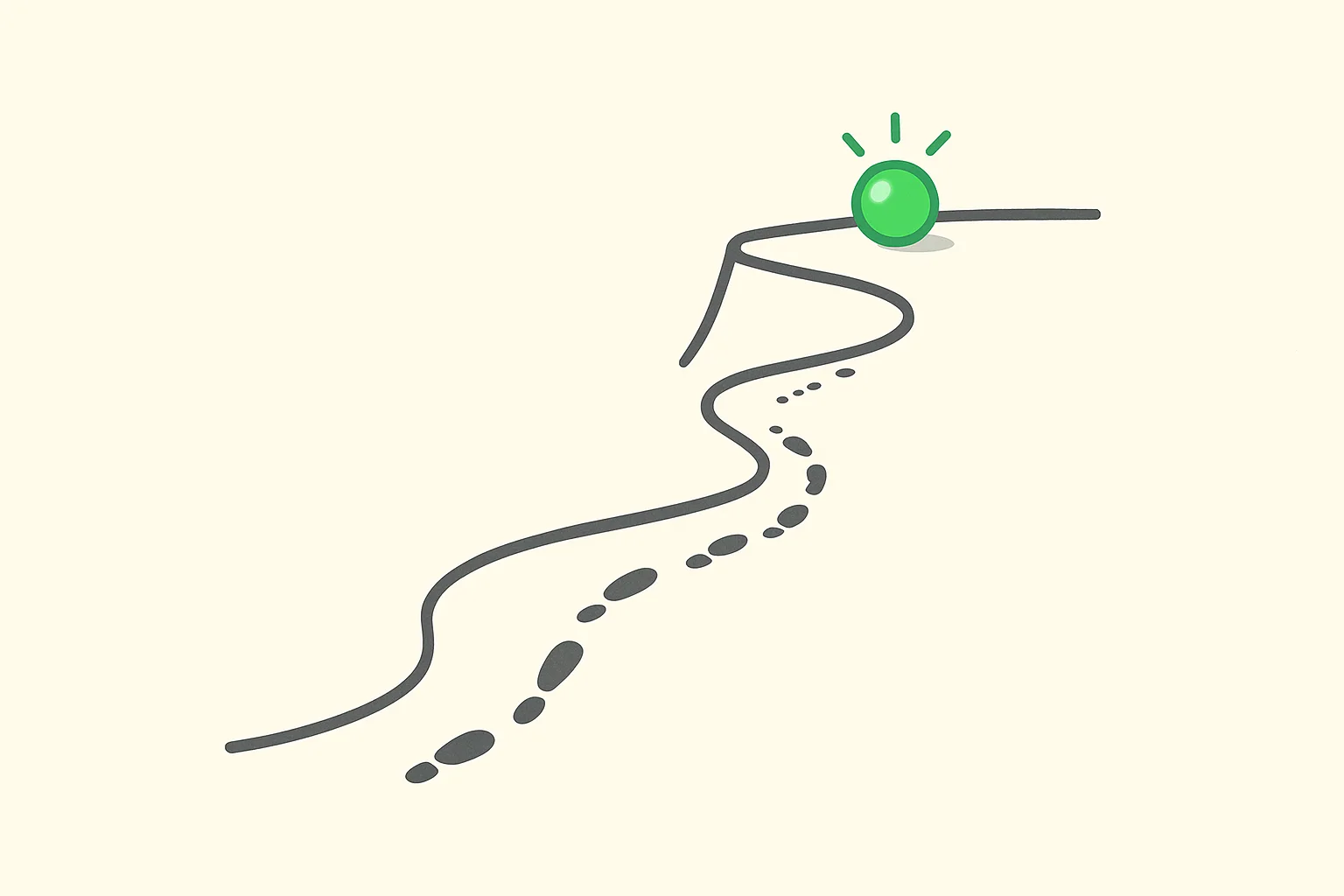
A point of no return isn't the moment something breaks. It's the moment the way back stops existing.
Nobody decided to forget phone numbers. We stopped dialing them, and one day the path back was simply gone. Kaspersky's Digital Amnesia survey of 6,000 adults found 53% of European adults couldn't recall their own children's phone numbers — while up to 60% could still dial the house they lived in at age 10. The skill was there. It was handed to a device and never came back.
Now do that to writing. To coding. To reasoning. Skills that take a decade of practice for one human to own, and centuries for a civilization to learn how to teach. That's what's on the table.
Knowledge of programming is dead
I'll say it without the softening: the knowledge of programming, as a widely held human skill, is dying. There's more code than ever. There are fewer people who understand it every month.
Look at three completely independent signals:
| Signal | What it shows | Source |
|---|---|---|
| Learning with AI | Developers learning a new library with an AI assistant scored 17% lower on a quiz about concepts they had used minutes earlier (50% vs 67%). The biggest gap: debugging | Anthropic research, 2026 |
| Entry-level hiring | Workers aged 22–25 in AI-exposed jobs sit ~19% below trend as of June 2026. Young software developers: roughly 20% below the late-2022 peak | Stanford Digital Economy Lab |
| Where people learn | Stack Overflow's monthly questions collapsed 75%+ since ChatGPT launched, back to 2009 levels | The Pragmatic Engineer |
Put those together. The people who would have become the next senior engineers aren't being hired. The public places where programmers learned in the open are empty. And the ones learning with AI retain less — especially debugging, the exact skill you need when the AI is wrong.
That last number came from Anthropic. The company selling the assistant measured the damage its own category of product does to learning. Yes, the study found people who asked conceptual questions kept their understanding — the same split our research roundup on whether AI makes you dumb found everywhere. But nobody is tired at 6 p.m. and asking conceptual questions. At 6 p.m., you delegate.
And this isn't just software. The Lancet Gastroenterology & Hepatology study found experienced endoscopists' unassisted adenoma detection rate fell from 28.4% to 22.4% — a 20% relative drop — within months of AI assistance being introduced. These were trained experts looking for precancerous growths. If a few months of help dulls a doctor's eye, what does an entire education with an assistant do to someone who never trained the eye at all?
We've tracked this pattern for months: developer de-skilling, SRE skill atrophy in incident response, engineers retyping LLM code just to keep it in their heads. Same shape every time. Output up. Understanding down. Nobody notices until the tool isn't there.
If you run a business: your team will not know code once AI is gone
Founders, read this twice. If your engineers have shipped through agents for two years, your company's knowledge of its own codebase no longer lives in your people. It lives in a vendor's model.
Now picture the day AI isn't there. An outage. A price hike you won't pay. A model deprecation. A policy change that cuts access in your country. A limit cut in the middle of release week. Can your team:
- Debug a production incident in a service no human on the team actually wrote?
- Explain why the architecture is shaped the way it is to a new hire?
- Estimate a feature without asking an agent to estimate it first?
If the honest answer is "not really," you don't have an engineering team. You have a subscription with salaries attached. That's a single point of failure — and this supplier sets its own prices and its own limits.
Creative writing and problem solving are being flattened
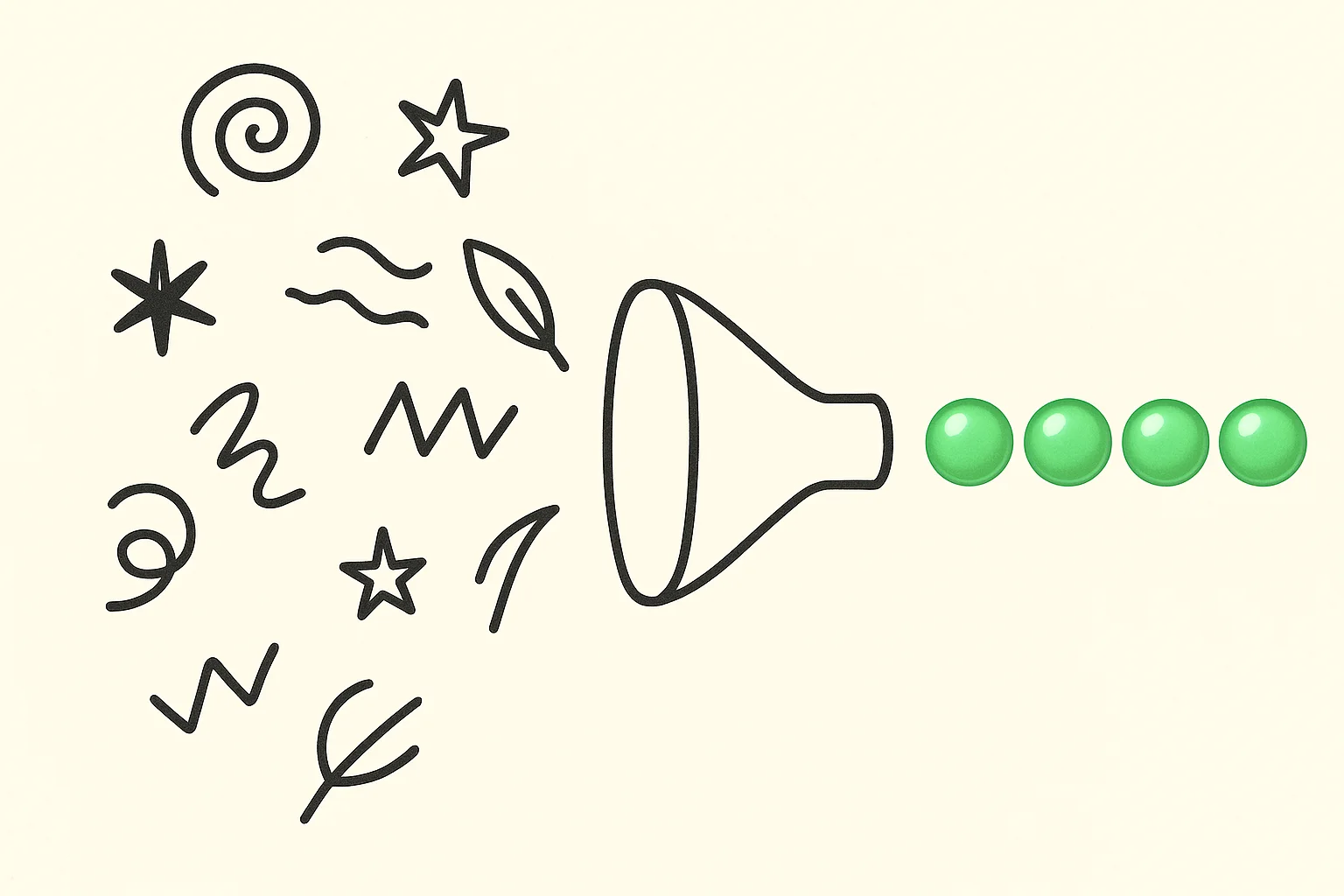
The creativity research has a cruel twist: AI makes you individually better and collectively identical.
In Doshi and Hauser's Science Advances experiment, writers given LLM story ideas produced stories judges rated more creative, better written, and more enjoyable. Great. Except the AI-assisted stories were measurably more similar to each other. Your story gets better. Everyone's story becomes the same story.
It's worse at the model level. A July 2026 paper, Language Models Agree With Each Other, Not With Readers, found that on the median document, pairs of models agreed on 8.7 "important" sentences out of 70 where human readers shared only 4.1. Two frontier models from rival labs agreed with each other more than GPT-4o agrees with itself on a second call. Different companies. One taste. Everyone drafting with a handful of models that share a brain means the internet converges on one voice. We already have a word for it: slop.
Then the personal cost. In the MIT Media Lab's "Your Brain on ChatGPT" study, 83% of the ChatGPT group couldn't quote a single sentence from the essay they had just written. Teachers called the essays "soulless." That's what outsourcing the struggle feels like from the inside: you produce something, and you own none of it.
Problem solving is following the same curve. A Microsoft Research and Carnegie Mellon survey of 319 knowledge workers found the more people trusted AI, the less critical thinking they did. And in science, James Evans's Nature study found AI boosts individual scientists' careers while shrinking what science as a whole explores. The individual wins. The commons dies.
Grammar and English are dying too
It isn't just ideas. The language itself is being rewritten by machines. Kobak and colleagues analyzed 14 million PubMed abstracts and found that at least 13.5% of 2024 biomedical abstracts were processed with LLMs, with up to 30% in some fields — detectable by an abrupt surge in words like "delve." Then it jumped from writing into speech. A Max Planck Institute study of over 360,000 YouTube videos and 771,000 podcast episodes found ChatGPT-favored words rising sharply in spontaneous spoken English after its launch. We are starting to talk like the chatbot.
Meanwhile, nobody needs to know grammar anymore. Why learn where the comma goes, how to structure a paragraph, or how to build an argument sentence by sentence, when every text box on earth now rewrites you into the same polished, voiceless English? Students hand in flawless prose they couldn't write by hand. Professionals send emails they couldn't compose themselves. Grammar isn't being taught — it's being auto-corrected out of existence. And a person who can't construct a sentence without a machine can't construct a thought without one either.
We vibe code too. So what's the point?
I'll be honest about my own side of this: we vibe code and vibe-max constantly at explainx.ai. And lately I keep asking — what is the point? Work that took little or no effort doesn't make you love it. You don't feel proud of something you "built" in four prompts. You don't defend it, polish it, or stay up at night improving it, because you never paid for it with struggle. That's true for developers, and it's true for artists, singers, and writers everywhere. The love for a craft comes from the hours you bled into it. Take away the effort and you take away the attachment. Take away the attachment and nobody pushes the craft forward. So the cheap, low-quality work floods everything, and the genuinely new work — the song nobody's heard, the idea no model was trained on — simply never gets invented. Look at YouTube: feeds stuffed with AI slop videos, to the point that YouTube's own CEO, Neal Mohan, named managing AI slop a top priority for 2026. Originality isn't under threat. It's dying — and we're all helping kill it, one effortless prompt at a time.
Now follow that to its end. In 1965, mathematician I.J. Good wrote that "the first ultraintelligent machine is the last invention that man need ever make." He meant it as a promise. Read it today as a warning. If every new song, story, app, and idea is generated from what already exists, and the humans who would have invented something new never build the skill or the love to do it, AI might be the last thing humans ever truly invent. Not because the machines stopped us — because we stopped trying.
Let that sink in.
Years of human work, erased for a marketing cycle
If you want to see what this looks like in real life, look at what happened to mathematicians this month.
On September 8, 2026, OpenAI announced that roughly 10,000 coordinating agents had produced a Lean-verified result on a special case of Navier-Stokes, one of the seven Millennium Prize Problems. About 12 hours earlier, NYU mathematician Tristan Buckmaster had published a statement alleging that his year-long private collaboration with Levent Alpöge on related fluid-blowup results had leaked to OpenAI and triggered the effort. Buckmaster says that in a September 6 meeting he was asked: "Why would you ruin your career?" OpenAI's Sebastien Bubeck later confirmed the push began because of "viral twitter rumors that Anthropic had resolved 2 Millennium problems." Our full breakdown of the credit dispute has the timeline.
This is a field where people have spent decades on blowup: numerical evidence from Luo and Hou goes back to 2013, and Córdoba and Martínez-Zoroa have published a series of papers since 2023. That human work became a footnote in a launch post. Three days later, 25 Fields Medalists, Terence Tao among them, signed a declaration calling AI labs "severely misaligned" with mathematics, saying that racing to solve famous problems "as a benchmark is detrimental to the science of mathematics." Mathematician Michael Harris warned it could convince young people "that their passion for mathematics has no future." Shing-Tung Yau worried it would stop early-career researchers from pursuing ambitious questions at all. NPR's headline two weeks later said it plainly: AI solved one of math's hardest problems. Humanity learned nothing (so far). And labs may now be quietly sitting on other solved problems to avoid the backlash.
Why would a 22-year-old spend a decade becoming a fluid-dynamics mathematician now? That's the question killing the field — not the proof.
Then there's the enzyme. On September 23, Anthropic announced that Claude agents had found a novel enzyme system with CRISPR-like repeats. The post got 15.8 million views. Read the fine print: the function is unknown, it is not peer reviewed, the underlying reverse transcriptase had been identified in earlier studies, and human scientists did all the lab work. Anthropic said openly it shared the result now "to demonstrate Claude's capabilities." That's not science communication. That's a product launch wearing a lab coat. Outside experts called the candidate intriguing, and it may well turn into something real. But the headline everyone saw was "Claude discovers," not "humans spend months testing a candidate a model flagged."
And the artists? They had their moment in March 2025, when GPT-4o's image generator turned the whole internet into Studio Ghibli knockoffs. Sam Altman made his own profile picture a Ghibli-style image, and said demand was "melting" OpenAI's GPUs. A visual style that Hayao Miyazaki and his animators built by hand over four decades became a free filter in an afternoon. Miyazaki had already given his verdict on AI animation back in 2016: "I strongly feel that this is an insult to life itself." Nobody asked Ghibli. Nobody paid Ghibli. The trend just moved on to the next one.
Mathematicians, scientists, artists — the pattern is identical. Years of human work, absorbed and rebranded as a model's capability, for a news cycle. Every time it happens, the next generation gets the same message: why bother?
Tokenmaxxing is a disease
Tokenmaxxing — ranking employees by how many AI tokens they burn — isn't a trend. It's a disease. It spreads, it rewards the symptom, and the host feels productive right up until it doesn't.
The reported numbers are grotesque. Meta's internal "Claudeonomics" dashboard ranked roughly 85,000 employees by token usage, with one top user reportedly burning around 281 billion tokens in 30 days. Ramp's customer data showed average monthly AI token spend up 13× since January 2025 (our breakdown). It got bad enough that Tesla capped AI spend at $200 per employee per week.
The spending isn't the sickness. The lesson is: the visible act of prompting is now the job. Reading output carefully, pushing back, thinking for an hour before you touch a keyboard — none of that shows up on a leaderboard. Serious research on coding productivity keeps landing on 2x, not 10x. The dashboards reward 10x the tokens anyway.
Don't use AI? You won't be valued. So slow thinking gets forfeited
Here's the trap closing on every employee. Once a company measures AI usage, the person who thinks slowly and originally looks like the least productive person in the building. Not using AI becomes a performance problem. So to keep the job, you surrender the slow, original thinking. Not because you chose to. Because it stopped paying.
What's left is a workplace of agents and meat proxies — people forwarding AI output they haven't read to other people who paste it into their own agents. You aren't working with colleagues anymore. You're routing tokens between models, and the humans are the network cables. Ethan Mollick drew the right line — deskilling yourself on annoying tasks is fine, deskilling a whole team is not. Tokenmaxxing erases that line by design.
Now imagine your token bill going up 10x
Put the last two sections together. Your team can't work without AI anymore. Your culture burns tokens as proof of effort. Now the price changes.
This isn't paranoia. Frontier AI is a brutally expensive product being sold below its long-run cost to win a market, and the whole industry is built to push you toward consuming more tokens through agents. We've watched this playbook in ride-hailing, cloud, and streaming: subsidize until you're dependent, then reprice once leaving hurts. With AI, leaving hurts in a new way. Not because your data is locked in — because your people's skills are.
A 10x token bill is painful for a company whose engineers can still write code. It's fatal for one whose engineers can't.
The two faces of AI labs
We've watched it all year and documented every move. When a competitor launches something better, limits open up and smarter models ship. The moment a lab feels safely ahead, limits tighten and quality quietly dials down.
| When | What happened | Coverage |
|---|---|---|
| May 6, 2026 | Anthropic doubled Claude Code's 5-hour limits and dropped peak-hour cuts in the middle of the Codex fight | Claude Code vs Codex |
| July 2026 | Cursor doubled its usage pool again; Claude and Codex reset limits within days of each other | Limit resets |
| Sept 5, 2026 | OpenAI handed every paid user a full banked reset after GPT-6 Astra shipped | Astra banked reset |
| ~Sept 7, 2026 | Heavy Astra users reportedly saw limits cut by up to 4x — two days later | Astra limits cut |
| Sept 14, 2026 | Claude Code's 50% promo ended, replaced by a permanent 25% raise — a net ~17% cut from the meter people were actually using | 17% cut |
Yes, compute costs are real, and our Astra post walks through that case. It doesn't matter. The lesson is the same either way: access is a competitive weapon, not a promise. The full record is in our Claude usage limits timeline.
The same two faces show up in the safety talk. Labs say publicly they want to slow down. They publish pacing pledges. And the release cadence, the benchmark race, and the IPO filings roll on. Our analysis of whether "pacing the frontier" is safety or a plateau in disguise lays out the evidence, and there's now a lawsuit alleging a "slowdown cartel". Pick whichever reading you like. "We want to slow down" has changed almost nothing about what reaches your screen.
Slowing the frontier will not bring back what we've lost
This is the core of it. A pause is aimed at the wrong target.
Every study in this post — Anthropic's coding trial, the Lancet endoscopy study, MIT's EEG essays, the Doshi-Hauser stories — used models weaker than what's on your phone today. The deskilling never needed a frontier model. It needed a model good enough to do the task for you. We crossed that line years ago.
Freeze capability today and you freeze us at the exact point where:
- A student can get any essay written without ever learning to write
- A junior developer can ship a feature without understanding a line of it
- A manager can generate a strategy memo without doing a minute of the thinking
A pause doesn't un-skip a single hour of practice. It might matter for catastrophic-risk scenarios. It does nothing for the loss happening in classrooms and offices this week — and it hands the labs a heroic story while that loss continues.
Extinction is not our immediate worry
The Center for AI Safety's 2023 statement said "mitigating the risk of extinction from AI should be a global priority alongside other societal-scale risks such as pandemics and nuclear war." Security researchers have real evidence for misuse — Anthropic itself disclosed Claude models being used in 15 real-world security breaches this month.
Take misuse seriously. But extinction framing does two harmful things. It drags attention to a dramatic future event and away from a boring present one. And it casts the labs as the only people who can save us from their own product — a very convenient role to hand them.
The real nightmare is quieter: we stay alive, and we can't think without a paid subscription. That's not an apocalypse. It's a dependency. And dependencies never announce themselves. They just become normal.
The dangers that are already here — and open source makes them free
Don't mistake "not extinction" for "safe." The harm is already here, and open-weight AI puts it in anyone's hands, with no one to call when it goes wrong.
- Safety training is a speed bump. Researchers showed that under $200 and one GPU was enough to strip the safety training out of Llama 2-Chat 70B, dropping its refusal rate to about 1%. Once weights are public, every guardrail is optional — and there is no recall button.
- Child abuse imagery exploded. The Internet Watch Foundation found 3,440 AI-generated child sexual abuse videos in 2025, up from 13 in 2024 — and points to open-source image models as the step change that let people with no technical skill make it.
- Your face and voice are free raw material. A finance employee at engineering firm Arup wired $25 million after a video call where every other participant — including the CFO — was a deepfake built from public footage.
Closed models aren't innocent either. Anthropic itself disclosed that a state-sponsored group used Claude Code to run a cyber-espionage campaign against roughly 30 targets, with AI doing 80–90% of the work. Open AI spreads the danger to everyone. Closed AI concentrates the power in a few companies. Both are dangerous; they're just dangerous differently. We break down exactly how in our companion post on the jobs AI is killing and the real dangers of open and closed AI.
The next generation's thinking will go the way of phone numbers
Phone numbers are the harmless version. You lost a narrow skill and the device is always in your pocket.
GPS is the less harmless version. McGill researchers found habitual GPS use was associated with a steeper decline in hippocampal-dependent spatial memory over three years — and heavy users didn't start with a worse sense of direction. The tool caused the decline.
Thinking is the version that isn't harmless at all. A Gerlich study of 666 UK adults found frequent AI use negatively correlated with critical thinking, driven by cognitive offloading — and strongest in the youngest participants. A study of 26,811 students found AI pushed homework scores up about 18% and exam scores down about 20%.
My generation learned to think first and got AI later. We can feel it when we offload something. A child who grows up with an answer machine from age seven never builds the baseline to notice what's missing. That's the real point of no return: not a skill forgotten, but a skill never formed. You can't go back to a place you've never been.
Some researchers are even darker about it. One recent paper modeled AI dependence as a cognitive virus, where competence loss accelerates once adoption crosses a threshold. Whether or not the math holds, the shape matches everything above.
If you have a child, be careful
I teach AI for a living. I'm not telling you to ban it. I'm telling you the default settings are built for engagement, not for your child's development, and you are the only guardrail they have.
There's one piece of good news in the evidence: design matters. In the PNAS high-school math field experiment by Bastani and colleagues, students given unrestricted GPT-4 did better during practice — and worse on the exam once it was taken away. Students given a tutor that only offered teacher-designed hints didn't suffer that harm.
What that means at home:
| Do | Don't |
|---|---|
| Let AI ask your child questions, give hints, and check work they've already done | Let AI write, solve, or summarize anything they're supposed to be learning |
| Keep handwriting, mental arithmetic, and reading long texts as daily practice | Treat "the homework is done" as the goal instead of "my child can do it" |
| Talk through how the AI got its answer — and where it was wrong | Present AI as an authority that doesn't make mistakes |
| Introduce AI tools gradually, by age and by task | Hand a young child an open-ended chatbot on day one |
| Let them see you think before you prompt | Reach for your phone the moment a question comes up at dinner |
We've written the practical guides: AI and parenting, should you teach your child ChatGPT, and an age-by-age AI roadmap for kids 5–14. Estonia's approach — using AI to push higher-order thinking in schools instead of replacing it — is the best national model I've seen.
What to do before the door closes
I use AI every day. Quitting isn't the answer. Deciding which thinking you refuse to hand over is. (For the full, step-by-step version, read our fundamental guide on how to use AI.)
- Pick the skills you will not outsource. For me: writing the first draft of an argument, and reading every line of code I ship. Write your list down today.
- Use AI to think faster, never to skip thinking. Ask it to tear apart your draft, not write it. Ask it to explain the bug, then fix it yourself. Our guide on writing with an LLM without losing your voice is a good template.
- Run AI-off drills. Once a month, ship something small with no assistant. If your team can't, you've just found your biggest business risk.
- Kill the token leaderboard. Measure shipped work, defect rates, and cycle time. Never tokens.
- Never forward what you haven't read. That one habit is the line between using AI and being a meat proxy.
- Keep a fallback model and a fallback skill. No lab's limits or prices are guaranteed to stay where they are tomorrow.
If you want structured practice on the "use AI without losing the skill" side of this, it's how we run our live workshops: you build with the tools, and you're expected to understand every line you ship.
So — is this the point of no return?
For individuals, it already can be. For a generation growing up with an answer machine, we're closer than anyone in the pause debate wants to admit.
Extinction is worth debating. Pausing the frontier may be wise for other reasons. But neither one touches what's slipping away right now: the programmer who can debug without a model, the writer with a voice nobody else has, the kid who knows what it feels like to be stuck and get unstuck alone. No slowdown brings those back. The only thing that keeps them is choosing, deliberately and every day, to keep doing the hard part ourselves — before we forget how.
Related reading
- The jobs AI is killing right now: sales survives, outbound is dead
- How to use AI: the fundamentals nobody taught you
- Does AI make you dumb? What the actual research says
- What is tokenmaxxing? The AI workplace trend that failed
- Meat proxy: don't forward AI output you haven't read
- Is "pacing the frontier" safety — or a plateau in disguise?
- GPT-6 Astra usage limits reportedly cut up to 4x
- The generative AI learning penalty: homework up 18%, exams down 20%
- AI-driven de-skilling among developers
- Age-by-age AI roadmap for kids 5–14
- Sources: Anthropic — AI assistance and coding skills · Lancet Gastroenterology & Hepatology deskilling study · Doshi & Hauser, Science Advances · Stanford Canaries, Aug 2026 · Bastani et al., PNAS · Dahmani & Bohbot, Scientific Reports
This is an opinion piece reflecting explainx.ai's view as of September 28, 2026. Study figures, usage-limit changes, and hiring data are accurate to their cited sources at publication; some 2026 limit changes were reported rather than officially confirmed, as noted in the linked coverage.