



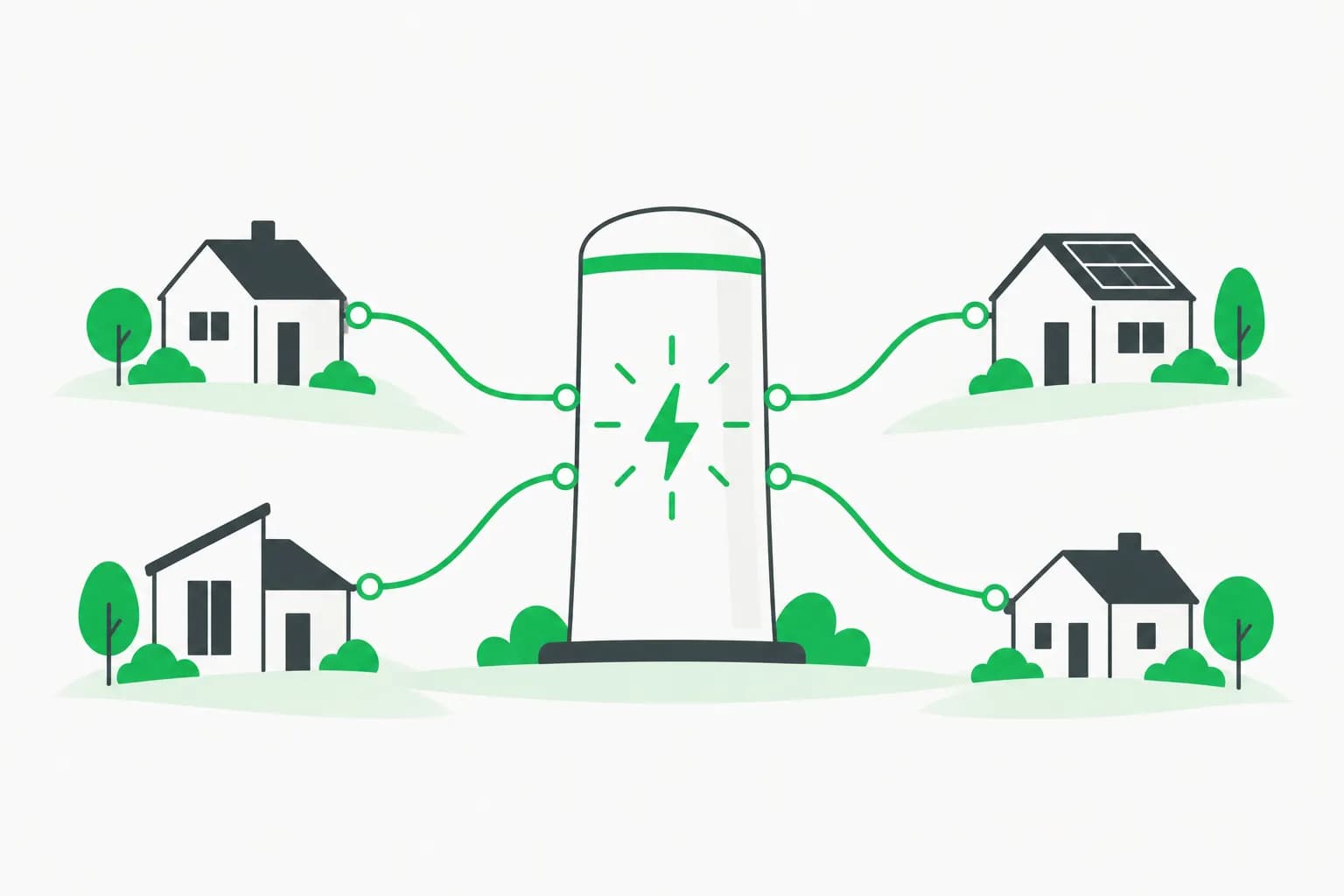
The International Energy Agency says investors will put about $4 trillion into data centers worldwide by 2030, after $565 billion in 2025. In its annual World Energy Outlook, the agency also warns that planned AI projects could stretch power grids to their limits. Fewer than 100 major AI projects would need a combined 50 gigawatts, about the peak electricity demand of Great Britain.
We could not open the IEA's own report page, which returned an access error from our fetcher. The figures below come from Bloomberg's report of the outlook, republished by Energy Connects, and from the IEA's earlier published work. Check the full outlook on the IEA reports page before you quote a number in a contract or a filing.
The numbers at a glance
| Item | What the IEA says (as reported) |
|---|---|
| Global data center investment by 2030 | About $4 trillion |
| Investment in 2025 | $565 billion |
| Share of growth that is AI-dedicated | Around three quarters |
| Power need of fewer than 100 major AI projects | About 50 GW, similar to Great Britain peak demand |
| Satellite-tracked AI data centers | 93 major sites |
| Capacity growth in tracked sites | 10-fold in two years |
| Data center emissions by 2030 | Up 70% |
What does the 50 GW figure mean?
Fifty gigawatts is the combined demand of fewer than 100 projects. That is a small number of sites with a very large load. Bloomberg reports that in some major growth markets, planned developments would exceed current peak power demand if they all came to fruition.
The word to hold on to is "planned." The IEA is describing what would happen if announced projects were built. Many announced projects do not reach completion, change size, or move. The figure is a stress test for grids, not a forecast that 50 GW will be switched on.
It still tells you where the pressure is. A handful of sites can reshape a regional grid, and that is why power queues, local permits and transmission costs now sit next to chip supply in every AI infrastructure story we cover.
Why the satellite tracking matters
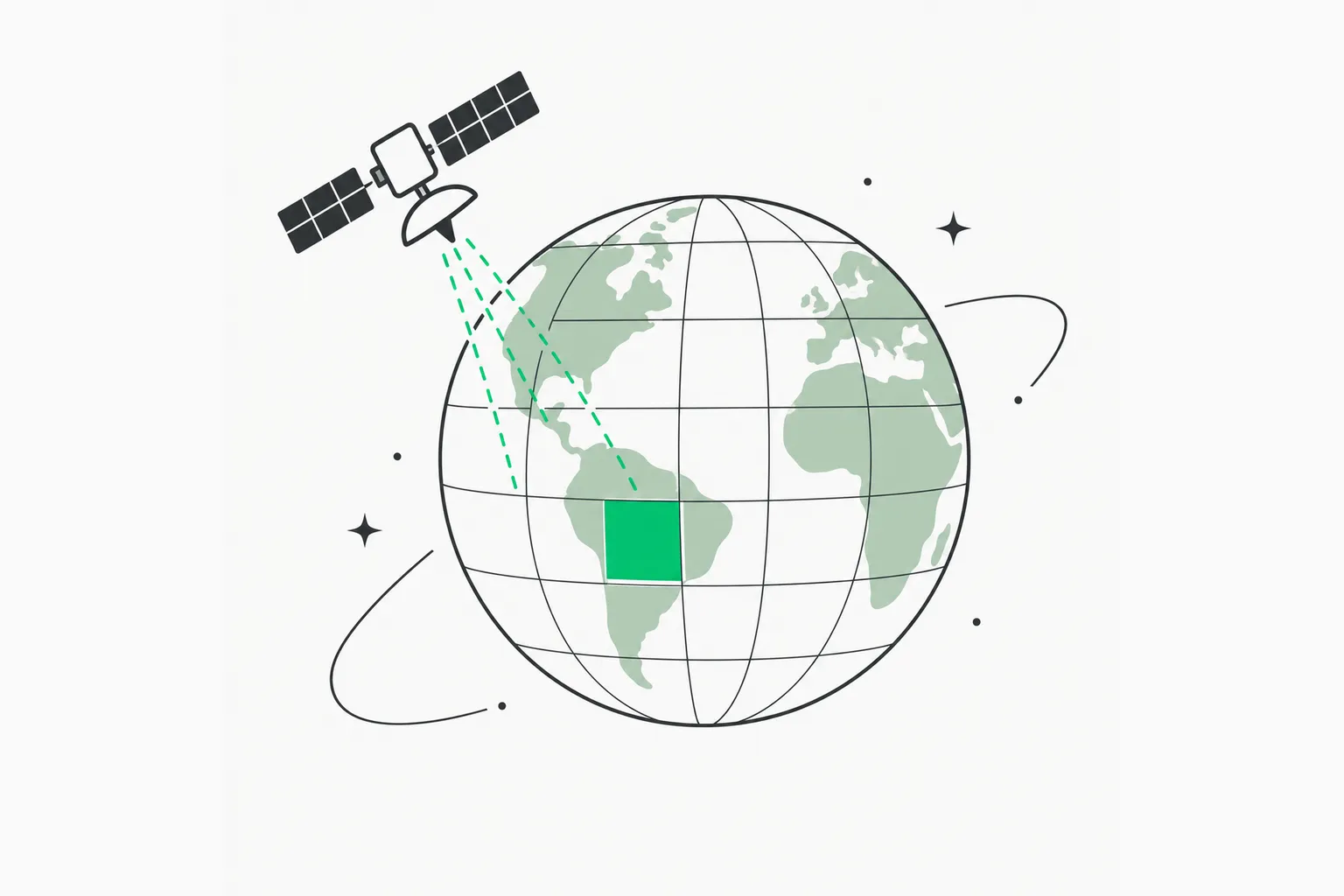 A planet with a grid and one highlighted square, standing for IEA satellite tracking of 93 AI data centers
The IEA has begun to monitor the construction of 93 major AI data centers with satellite imagery. According to the Bloomberg report, that analysis shows a 10-fold rise in data center capacity in two years.
Satellite monitoring matters because company announcements and real construction often differ. Imagery shows what is being built, not what is promised. We saw the same logic in a local dispute, where satellite images of gas turbines at a SpaceX Texas site became part of a permit story. An international agency now uses the same tool at global scale.
Why would emissions rise 70%?
The IEA found that data center carbon emissions are set to rise 70% by 2030. Bloomberg gives the reason: more electricity from plants that burn natural gas and coal. Tech companies are by far the largest corporate buyers of green electricity, but growth is outrunning clean supply.
That fits what we have seen in company deals. Anthropic's gas generator deal with OnePWR shows labs turning to on-site gas to get power faster than the grid can deliver it. Speed to power often beats the cleanest source, and the emissions number reflects that trade.
 A leaf-shaped bead on a clear track illustrating carbon-aware data center emissions planning
How does this connect to the local backlash?
Bloomberg notes the boom is fuelling a backlash in communities worried about electricity costs. We have covered how that plays out in politics: data center ballot measures in Ohio, the midterm races where moratoria were an issue, and a poll finding majority opposition to local data centers.
A $4 trillion plan only works if grids, permits and voters allow it. The IEA numbers give both sides data. Supporters can point to demand. Opponents can point to the strain.
How do other forecasts compare?
The IEA is not the only forecaster, and any single forecast of the AI buildout is one input among several. We did not check other agencies' or companies' estimates for this post, so we make no claim about how the IEA number compares with them.
For a different view of power supply, see our check of China's claimed grid buildout for AI, and the story of OpenAI's grid protectors program, which tries to make data center demand flexible instead of fixed.
How to read a number like "$4 trillion"
Investment forecasts bundle very different things. A data center budget covers land, buildings, cooling, power connection, networking and the servers inside. Chips usually take the largest single share in an AI site, and chips are also the part that ages fastest. So a four-trillion-dollar total does not mean four trillion dollars of long-lived concrete and steel. A large part is equipment that will be replaced within a few years.
Three questions help when you meet a figure like this one:
- Who is spending? The Bloomberg report says tech companies are by far the largest corporate buyers of green electricity, so they are large players in this buildout. A forecast that depends on a few buyers carries concentration risk. If a handful of firms change plans, the total moves.
- Over what period? The IEA figure runs to 2030, and it is compared with 2025 spending of $565 billion. The jump implies annual spending several times larger by the end of the decade. That only holds if demand for AI services keeps growing at the same pace.
- What does it exclude? Grid upgrades paid by utilities, new generation and transmission lines are often counted elsewhere. The cost of the power system around a data center can be a separate bill, and consumers often pay part of it. That is why the electricity-cost backlash Bloomberg mentions is not a side issue.
None of this makes the IEA number wrong. It means the number is a scale marker, not a budget you can audit.
What to watch after this report
The outlook is a snapshot. These are the signals that will show whether the 50 GW worry turns into real constraints:
- Grid interconnection queues. Long waits for a connection are the earliest sign that a region is full.
- Permit disputes. Air permits for on-site turbines and water permits for cooling are where local opposition has real legal teeth, as the Texas turbine story showed.
- Flexible demand. Programs that let data centers reduce load at peak times, like the one in our OpenAI grid protectors post, could cut the real peak need below the headline figure.
- Satellite and filing data. Agencies and analysts now cross-check announcements against imagery. Expect more reports that compare what was promised with what exists.
- Efficiency gains. Smaller models, better chips and smarter scheduling can reduce the electricity needed per task. If they outpace demand growth, the 50 GW figure shrinks. If demand grows faster, it rises.
Treat any single forecast, including this one, as one input. The IEA's value is that it is a public agency with a long track record in energy statistics, and its numbers are widely quoted by regulators. That is also why it is worth reading the primary document when it is available.
What this means for builders and founders
Builders. Where your model runs may depend on where power is available. Expect regional price differences, capacity limits and more interest in efficient inference. Smaller models and better utilisation are not just cost choices; they reduce your exposure to a constrained grid.
Founders. If your product depends on a single cloud region or one provider's capacity, ask how that provider is getting its power. Delays in grid connection can show up as waitlists or price rises for GPU capacity.
Marketers and communicators. Claims about green or low-power AI will be tested against the IEA numbers. Do not publish an emissions or efficiency claim without a source you can show.
What is confirmed and what is not
Reported from the outlook:
- About $4 trillion in data center investment by 2030, after $565 billion in 2025.
- Around three quarters of the growth is AI-dedicated.
- Fewer than 100 AI projects would need about 50 GW.
- 93 AI data centers tracked by satellite, with 10-fold capacity growth in two years.
- Data center emissions set to rise 70% by 2030.
Not confirmed here:
- The IEA's full methodology, which we could not read.
- How many of the planned projects will be built.
- Regional breakdowns beyond what Bloomberg mentions.
If you need the exact wording, open the outlook itself and the IEA's earlier energy and AI work. A key-questions PDF on energy and AI is hosted on the IEA's site, but we could not extract its text, so we do not quote it here.
Our read
The headline number is large, but the more useful figure is the 50 GW concentrated in fewer than 100 projects. It shows how a small set of sites can shape national grids. The 70% emissions rise shows the cost of building fast. Both are projections from one agency, reported second-hand. Read them as a map of the pressure points, then watch local permits, grid queues and satellite data to see which projects are real.
Related reading
- Anthropic and OnePWR gas generators for data centers
- SpaceX Starbase air permit and AI campus
- Ohio data center ballot measures
- Data center backlash in the midterms
- China's claimed $3.9 trillion grid buildout
- OpenAI grid protectors program
- Poll: 66% oppose local data centers
Figures reflect Bloomberg's report of the IEA World Energy Outlook as of November 19, 2026. The IEA's own text may differ in detail.