




President Trump says large data centers are now "mandated" to make their own electricity. In a Truth Social post on October 21, 2026, reported by Reuters, he wrote that "New and large, in some cases gigantic, Data (centers) are mandated by me to make their own electricity, and give or sell any excess back to the local community, or grid." In the same post he said companies that want their data centers to be popular should pay a "dividend" to the surrounding community.
The statement is real. The word "mandated" is the part that needs checking. In the Reuters report and the earlier coverage we read, no rule text, order number or agency guidance is cited. This post separates what was said, what has been established, and what readers who live near a planned data center, pay a power bill or build on AI infrastructure should watch.
TL;DR: claimed versus verified
| Claim | What we found |
|---|---|
| Trump posted that large data centers are "mandated" to make their own power | Confirmed as a quote, per Reuters |
| Excess power goes back to the community or grid | Part of the same quote; no mechanism described |
| Companies should pay a community "dividend" | Confirmed as a quote; no formula, amount or program described |
| A binding federal rule exists | Not established in the sources we read |
| Trump said earlier that tech companies must build their own plants | Confirmed: Reuters says he said so in February |
| The earlier pledge is enforceable | Disputed: a Harvard electricity-law expert called it unenforceable |
What exactly did Trump post?
Reuters quotes two lines. The first is about dividends: "I have watched the process closely, and data centers that were highly unpopular in a certain area, have become extremely popular when a financial deal is struck." The second is the mandate line quoted above.
Reuters adds context: data centers that power the rise of AI "have become a political flashpoint in communities across the country given the high quantities of water and power they require," with opposition uniting voters across ideological lines, and the administration has noted the shift in sentiment. It also says Trump said in February that major technology companies must build their own power plants for their data centers to protect consumers from rising bills.
Reuters also places the post next to two other "share the spoils" moves: Anthropic's pledge of 5% of its shares to a new fund for the public good, which we covered in Anthropic's public benefit fund, and Elon Musk's pledge on Monday to give one SpaceX share to every kid in America.
How the position has evolved in 2026
The October post follows earlier statements, and its wording is firmer than the February one.
- February 2026, State of the Union. Trump said he had negotiated a "ratepayer protection pledge" and that tech companies would provide their own power. No agreements were published.
- October 21, 2026. The Truth Social post moves from "pledge" to "mandated by me," and adds the dividend idea.
The shift from voluntary to mandatory language is the news. What has not shifted, in anything we read, is the legal machinery behind it. A pledge that companies sign voluntarily and an order that regulators must enforce are different instruments, and the wording of the post does not say which one this is.
Reuters also notes that the administration "has prioritized rapid AI development to compete with China" and has noted shifting voter sentiment. That framing explains the timing: with the midterms approaching, data-center electricity bills are a campaign-trail issue as well as an infrastructure one.
Is "mandated" legally real?
This is the central question, and the honest answer is that we do not know yet.
The February statement came at the State of the Union, where, according to WHYY's report, Trump said he had negotiated a "ratepayer protection pledge" under which tech companies would supply their own power, possibly by building plants at their data centers. He gave no details of the agreements and called it a "unique strategy."
WHYY quotes Ari Peskoe, director of the Harvard Electricity Law Initiative, calling the pledge "an unenforceable corporate commitment that has no details." Peskoe said the president cannot unilaterally change how data centers get their power, because those contracts are overseen by state and federal utility regulators; any change would have to go through those processes. He also noted utilities hold significant leverage, because they are building billions of dollars of transmission to serve data centers and spreading those costs across all ratepayers.
Nothing we read shows that the October 21 post changed that. If an executive order, agency rule or regulator action follows, its text would settle the question. Until then, "mandated by me" reads as a statement of policy intent rather than a published rule.
Why electricity regulation makes this hard
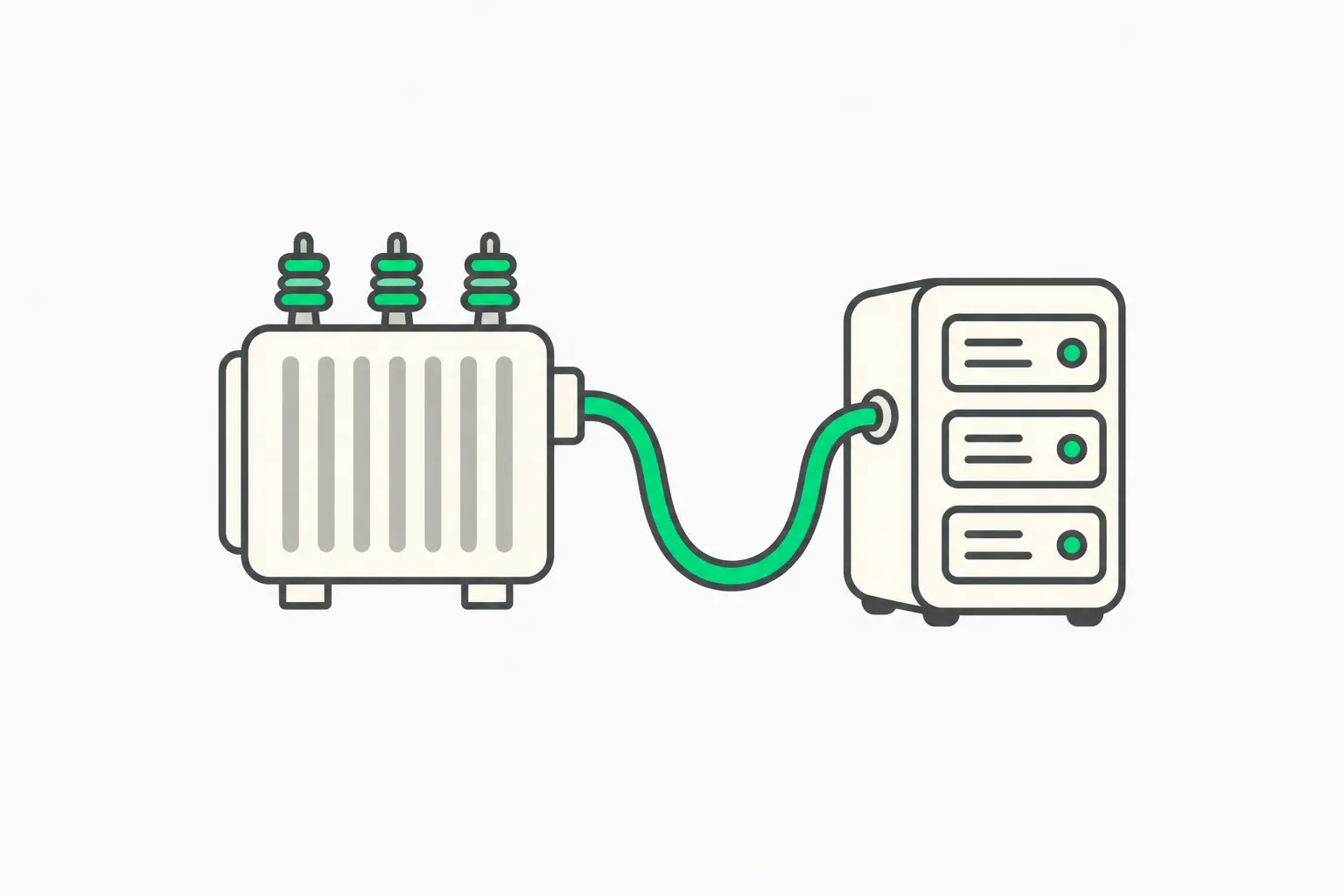 Transformer linked to a server cabinet, showing why data center electricity falls under utility regulators rather than a presidential post
Power in the United States is split between federal and state authority. Retail rates, utility siting and interconnection of local generation are mostly state matters, while wholesale markets and transmission are overseen federally. That is why a presidential post cannot by itself make a data center build a plant in a given county.
Our earlier coverage shows how contested the details are:
- A federal regulator rejected PJM's plan to curtail data centers first, a reminder that grid operators and regulators, not the White House, set these rules.
- Virginia's approach to charging data centers for power shows how states are acting on their own.
- Hyperscaler nuclear deals show some companies already contracting for dedicated generation.
On-site generation is also not a simple fix. A data center that produces its own power still needs fuel, permits and often a grid connection for backup, and the "excess" Trump mentions would have to be sold through whatever market or utility sits next to it.
What would a "dividend" look like?
Trump gave no amount, recipient or funding rule. The idea echoes real deals already on the table. We covered a per-household payment tied to a Kansas data center and Amazon's Built Together pledge of $1 billion alongside dropping data center NDAs with government agencies. In those cases the money came from the developer's own commitments, not a federal formula.
For communities, the open questions are practical. Who gets paid: the municipality, a school district or households directly? Is the payment a one-time sign-on or recurring? Does it replace or sit on top of property tax? Does accepting it limit a local government's ability to impose conditions later? None are answered in what has been published.
Why this matters beyond politics
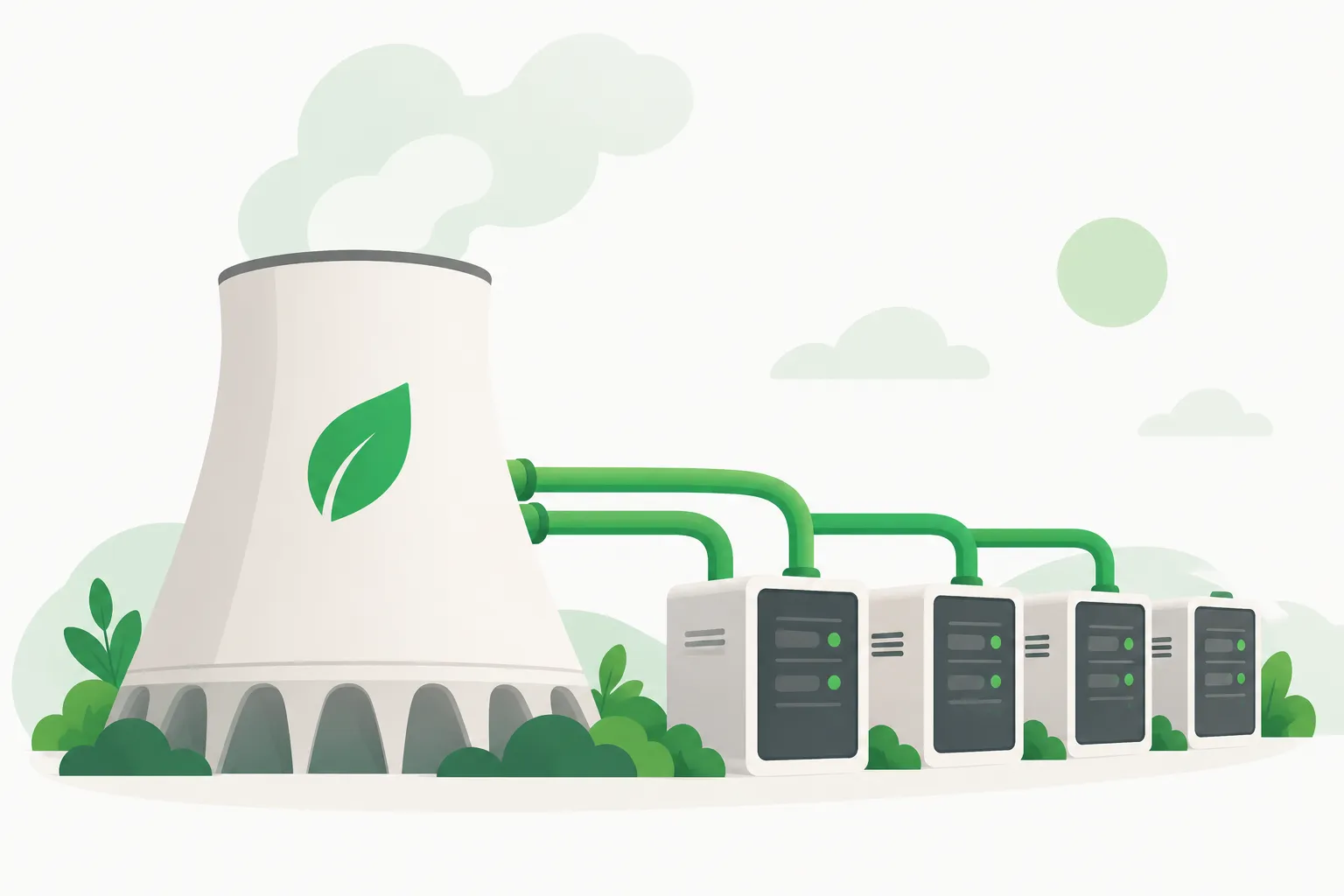 Cooling tower feeding server blocks, illustrating on-site data center power generation for AI
Siting is now a gating factor for AI. Local opposition has produced moratoriums, lawsuits and protests; see our AI data center backlash map and the Senate investigation into whether hyperscalers misled the public about costs. A federal signal that favors self-generation and community payments could change how projects are proposed, even if the legal force is unclear.
Two practical effects are plausible, though neither is established yet:
- More behind-the-meter generation proposals, because developers know the White House favors it.
- More community-benefit agreements, because the President publicly endorsed payments as a way to win acceptance.
Neither is a prediction we can source. They are what to watch in permit filings and local hearings.
How to read a claim like this one
A social media post from a president is a real signal, but it is not the same as a legal instrument. A few checks help separate the two. First, look for a document: an executive order has a number and is published in the Federal Register, and an agency rule has a docket. Second, look for a named enforcer: a mandate needs a regulator, such as a state utility commission or a federal energy agency, that can penalize non-compliance. Third, look for definitions: terms like "large" and "own electricity" have to be written down before anyone can comply with them.
As of the sources we read, none of those three checks has been met for the October 21 statement. That does not make the post meaningless, since developers and utilities often adjust to signals before rules arrive, but it does mean the claim sits in the "stated intent" category until a document appears.
What readers can do
- If you live near a proposed data center: ask the developer whether it plans on-site generation, what fuel it uses, and whether any community payment is in writing. A verbal promise is not a contract.
- If you pay a power bill: check your state utility commission's dockets for large-load tariffs. Those, not Truth Social posts, decide who pays for new capacity.
- If you build on AI infrastructure: watch for an actual order or rule. When one appears, read its definition of "large" and what counts as "own electricity."
What to watch next
- Publication of any executive order, agency guidance or regulator filing that implements the post.
- A definition of "new and large": the post gives no megawatt threshold.
- Whether major developers confirm that they will generate on-site, and at which sites.
- State-level actions in Pennsylvania, New Jersey and Delaware, where lawmakers have proposed consumer protections against data-center-driven rate increases, per WHYY.
Follow @explainx_ai as we track whether this becomes a rule.
Related reading
- AI data center backlash map
- Virginia's data center power tax and your AI bill
- FERC rejects PJM's curtail-first data center plan
- Hyperscaler nuclear deals for AI data centers
- Digital Realty's $1,000 per household offer in Kansas
- Senate investigation into hyperscaler data center costs
- Sources: Reuters via U.S. News, WHYY
Accurate as of October 21, 2026. This post summarizes public reporting and is not legal advice.