




Google will spend $17 billion on its first data center in Wyoming, and says it will power part of it with the largest planned natural gas fuel cell development with carbon capture to date. The announcement came on November 5, 2026, in a Google blog post by Steve Walter. The site is in Laramie County, near Cheyenne. Google says it will pay for 100% of the power it uses, air cool the facility, and fund a community council with its partners.
This post separates what Google confirms from what only trade reports say, explains the power plan in plain terms, and places the project in the wider fight over data center siting that has just played out at the ballot box.
TL;DR: questions and answers
| Question | Answer | Source |
|---|---|---|
| How much is Google investing? | $17 billion | |
| Where? | Laramie County, near Cheyenne, Wyoming | |
| Partners? | Tallgrass Energy, Black Hills Energy, AEP, Related Digital | |
| Main power source? | 702 MW fuel cell development contracted with AEP, Bloom Energy cells, natural gas | |
| Carbon capture? | Capture and geologic storage of a large majority of that plant's emissions at Tallgrass's sequestration hub | |
| Cooling? | Air cooled | |
| Who pays for power? | Google says 100% of what it uses | |
| Total campus power? | Not stated by Google. 2.7 GW appears in other reports | Reports |
| Opening date? | Not stated in the post | Unknown |
What Google says it is building
Google's post makes four commitments.
Responsible growth. "We will pay for 100% of the power we use," it says, and it will cover infrastructure needs "directly driven by our growth."
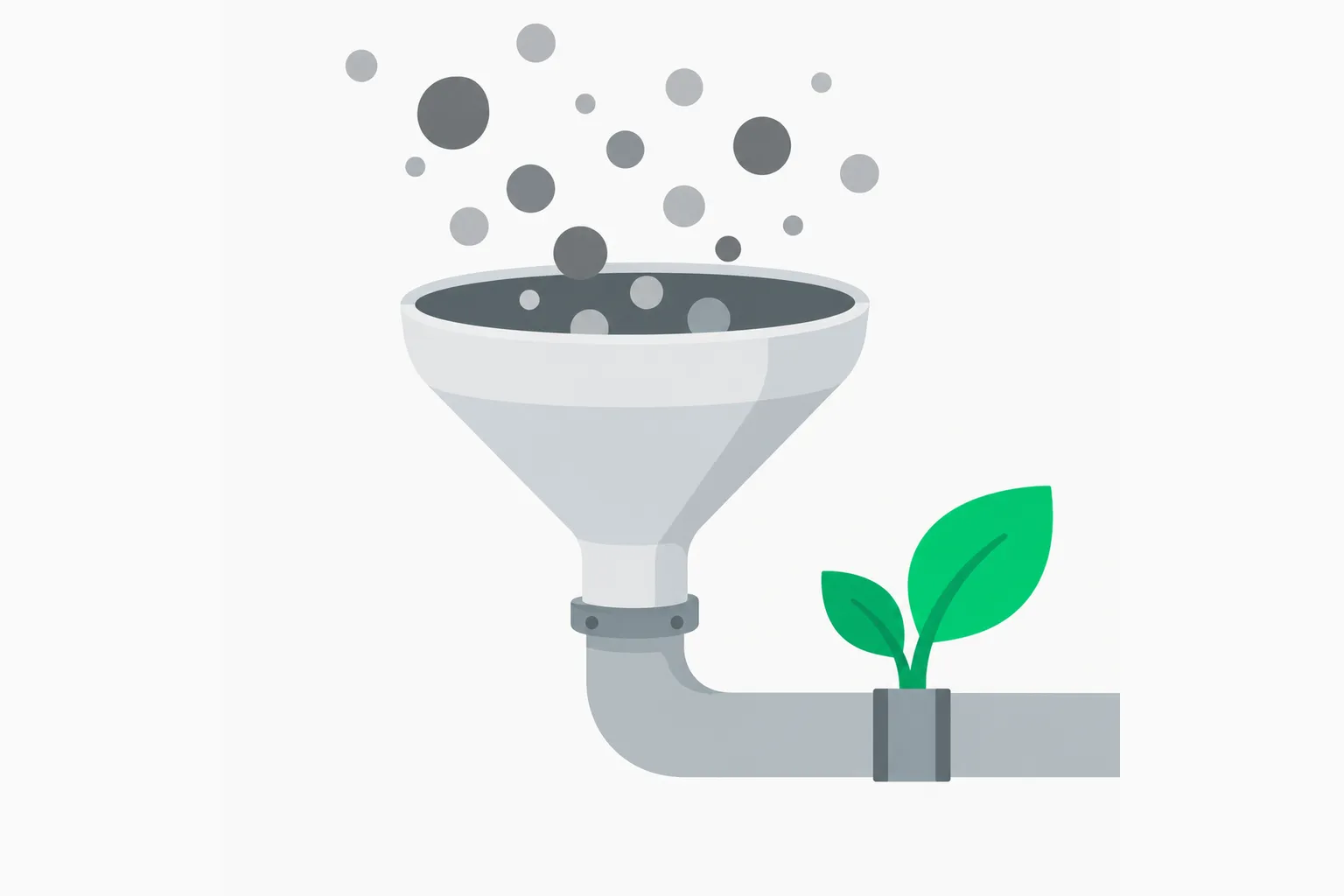
A fuel cell plant with carbon capture. The project is contracted with AEP to include a "first-of-its-kind, commercial-scale, 702 MW fuel cell development with carbon capture and storage (CCS)". Google calls it the largest planned development of its kind to date. The fuel cells will be made in America by Bloom Energy. Fuel cells convert natural gas into electricity through an electrochemical reaction instead of combustion.
Storage nearby. The CCS will capture and permanently store "a large majority" of the plant's carbon emissions at Tallgrass's Eastern Wyoming Sequestration Hub. Google says this builds on its first US CCS project, announced last fall, and brings its total contracted CCS capacity to nearly 1 gigawatt.
More gas, with a study. Google is also sourcing power from gas generators operated by Tallgrass Energy and Black Hills Energy. It is running a front-end engineering and design (FEED) study on fitting Tallgrass's combined cycle turbines with CCS. So the capture promise applies to the fuel cell plant, while capture on the turbines is still a study.
The power math: what 702 MW means
702 MW is a power plant, not a data center. For scale, a gigawatt-class AI campus can draw as much as a mid-sized city. Google's post does not say how much of the campus load the fuel cells will cover, nor what the total capacity of the campus will be.
Trade reports filled in the larger picture before the announcement. Data Center Dynamics reported a 20-year power agreement between Google and AEP for the 702 MW fuel cell project, put its cost at about $4 billion, and cited full operation by the end of 2028. Another trade report said Black Hills lined up up to 590 MW toward a 2.7 GW supply plan for the site. We have not seen the contracts. The 2.7 GW number is a power supply total reported by others, and it is not in Google's post. Readers should not treat 2.7 GW as the data center's confirmed load.
Why gas fuel cells at all? Grid connections for large loads can take years. On-site or nearby generation can come online faster. Fuel cells also produce less local air pollution than gas turbines and need little water. The trade-off is that they burn natural gas, so the climate case rests on the carbon capture working at scale. That is why the "large majority" wording matters, and why a measured capture rate would be the figure to ask for.
 Funnel pulling gray dots into a pipe, illustrating carbon capture for the Google Wyoming data center fuel cell plant
Water, cooling and the community
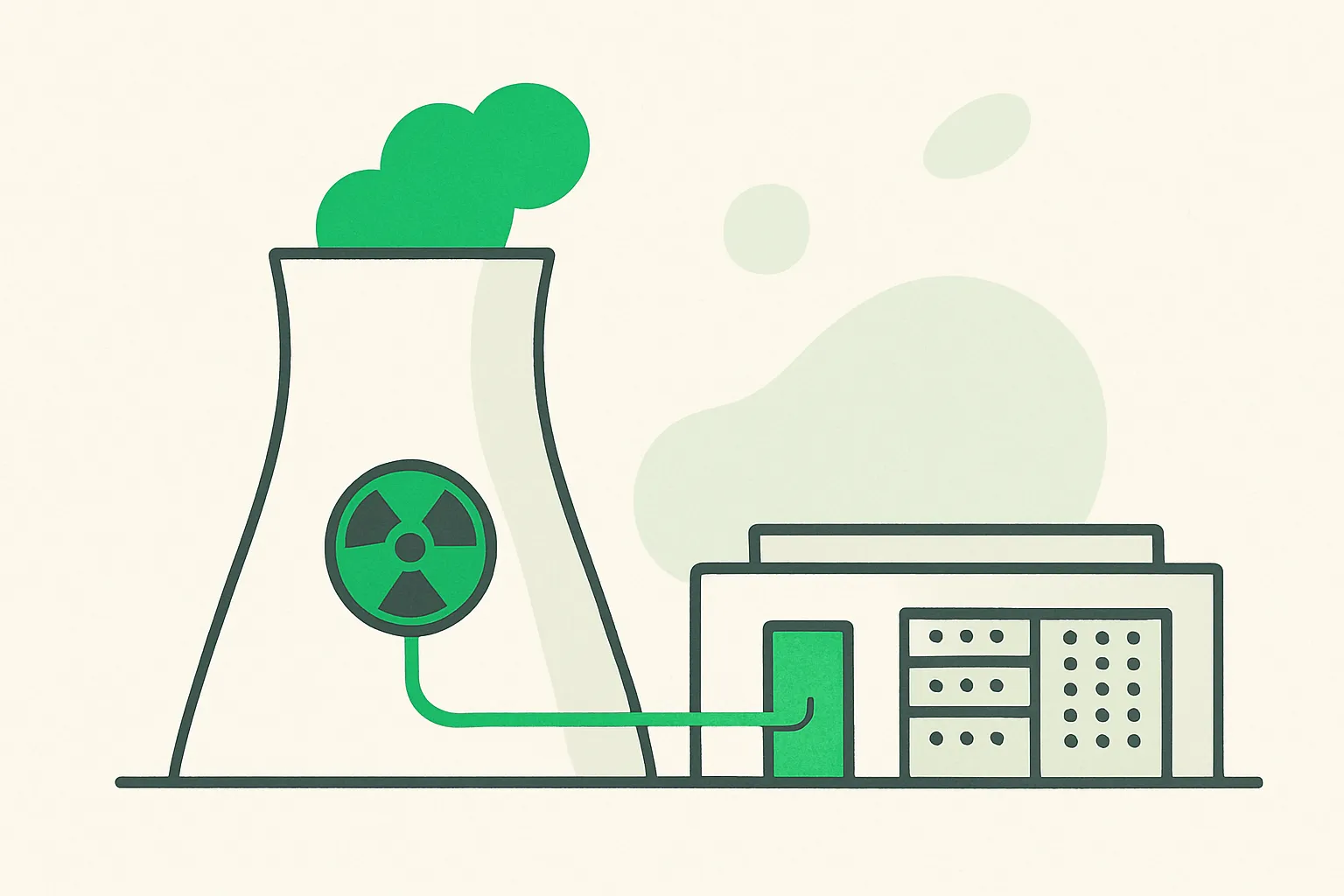
Google says the data center will be air cooled, "to minimize strain on local water resources", and repeats its commitment to local water replenishment. Air cooling uses little water but more electricity, especially in hot weather, which raises the power demand the fuel cells and gas plants must meet. The post does not discuss that trade-off.
On community relations, Google says it hosted a meeting in downtown Cheyenne with more than 200 Laramie County residents. It lists three concerns it heard:
- Economic benefits. Google expects the project to generate "hundreds of millions of dollars" in local property taxes for Laramie County and School District 1, plus community investment in K-12 education, workforce development and economic pathways.
- Jobs and skills. Google says it will fund grants for STEM education, entrepreneurs and skilled trades training.
- Wider growth pressure. A key concern was how data center growth affects Cheyenne beyond Google's own project. In response, Google, Tallgrass, Black Hills, Related Digital, AEP and Bloom are standing up a Community Council to develop "common-sense solutions."
Google's post does not give a job count for construction or permanent operations. Job figures that appear in aggregator articles are not in Google's post, and we could not verify them.
Why this lands now: the siting fight
The announcement arrives one day after Election Day, when data center limits were on ballots across the country. See our coverage of data center election night and the Ohio municipal bans. It also follows a report that Google stopped using NDAs with local officials, a step that fits the community-first language here.
The package Google describes matches what other developers now say communities want: pay your own power, keep water use low, share tax revenue, and talk early. Meta's president made a similar point on the same day, which we cover in a companion post on Meta's warning about the election backlash. The pledge to pay for all power is also close to the policy ideas in OpenAI's compact compute campus blueprint.
 Cooling tower linked by a green power line to a data hall, showing the air-cooled Google Wyoming data center
What Google did not say
- Total power capacity of the campus, and how much each source supplies.
- Timeline for construction and for first capacity. Trade reports point to late 2028 for the fuel cells, but Google's post gives no dates.
- Carbon capture rate. "A large majority" is not a number, and the post gives no monitoring or verification plan.
- Methane leakage. Natural gas supply chains leak methane. The post does not discuss upstream emissions.
- Cost split. "Pay 100% of the power we use" does not say who bears grid upgrade costs, or how contracts treat price risk for other Wyoming ratepayers.
- AI use. The post does not say which workloads will run there.
What this means for people who build with AI
For most builders, the effect is indirect. Compute supply for AI is limited by power as much as by chips, and a $17 billion site with dedicated generation is Google betting that it can add capacity without waiting for the grid. If the plan works, it is a template other hyperscalers will copy, and it adds Gemini and Cloud capacity in the central US over the next few years. If carbon capture falls short or local opposition rises, the project is also a clear example of the risks we flagged in our look at Google's other large power deals and its virtual power plant with Voltus.
How to follow the story
- Read Google's post for the commitments and compare later filings against them.
- Watch Laramie County and Wyoming regulators for permits, tax agreements and air permits.
- Watch AEP, Bloom Energy and Tallgrass statements for dates and capture performance.
- Ask the first community council meeting what it will publish.
Bottom line
Google's own post confirms a $17 billion investment, a 702 MW gas fuel cell plant with carbon capture, an air cooled design and a pledge to pay for all the power it uses. It does not confirm the 2.7 GW figure, a schedule, a capture percentage or a job split. The project is a notable attempt to answer the siting backlash with a concrete power and community package. Whether it holds up depends on filings and measured results over the next few years.
Related reading
- Google's EUR 13B bet on Finland: nuclear power meets AI data centers
- Google's $15B Malaysia data centers: what is confirmed
- Google Constellation: 890 MW nuclear uprates for AI data centers
- Google and Voltus: a 1 GW virtual power plant
- Google stops NDAs with local officials on data centers
- Data center election night: claimed vs verified
Details are accurate as of November 5, 2026, based on Google's announcement and earlier trade reports. Figures may change as filings appear.