



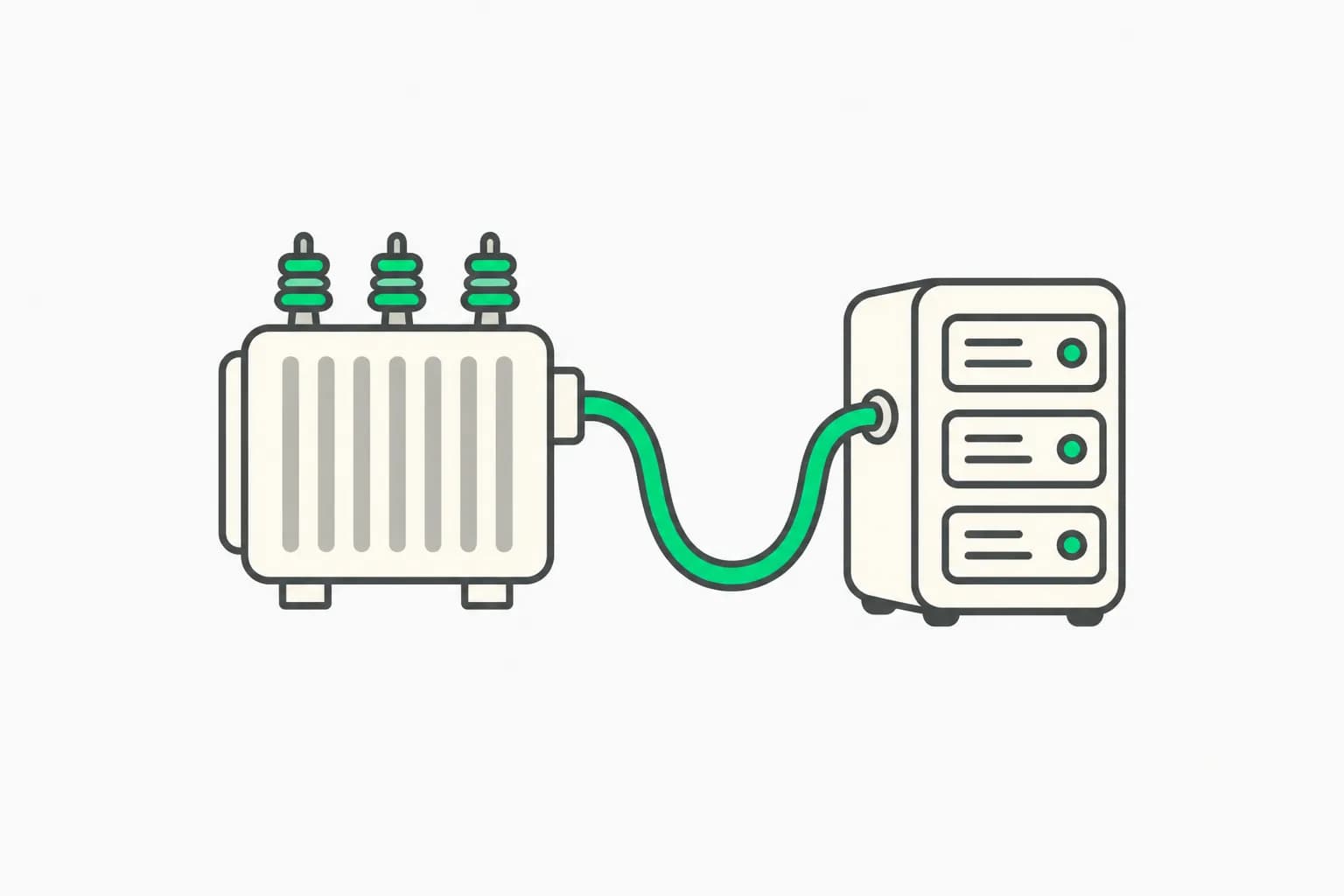
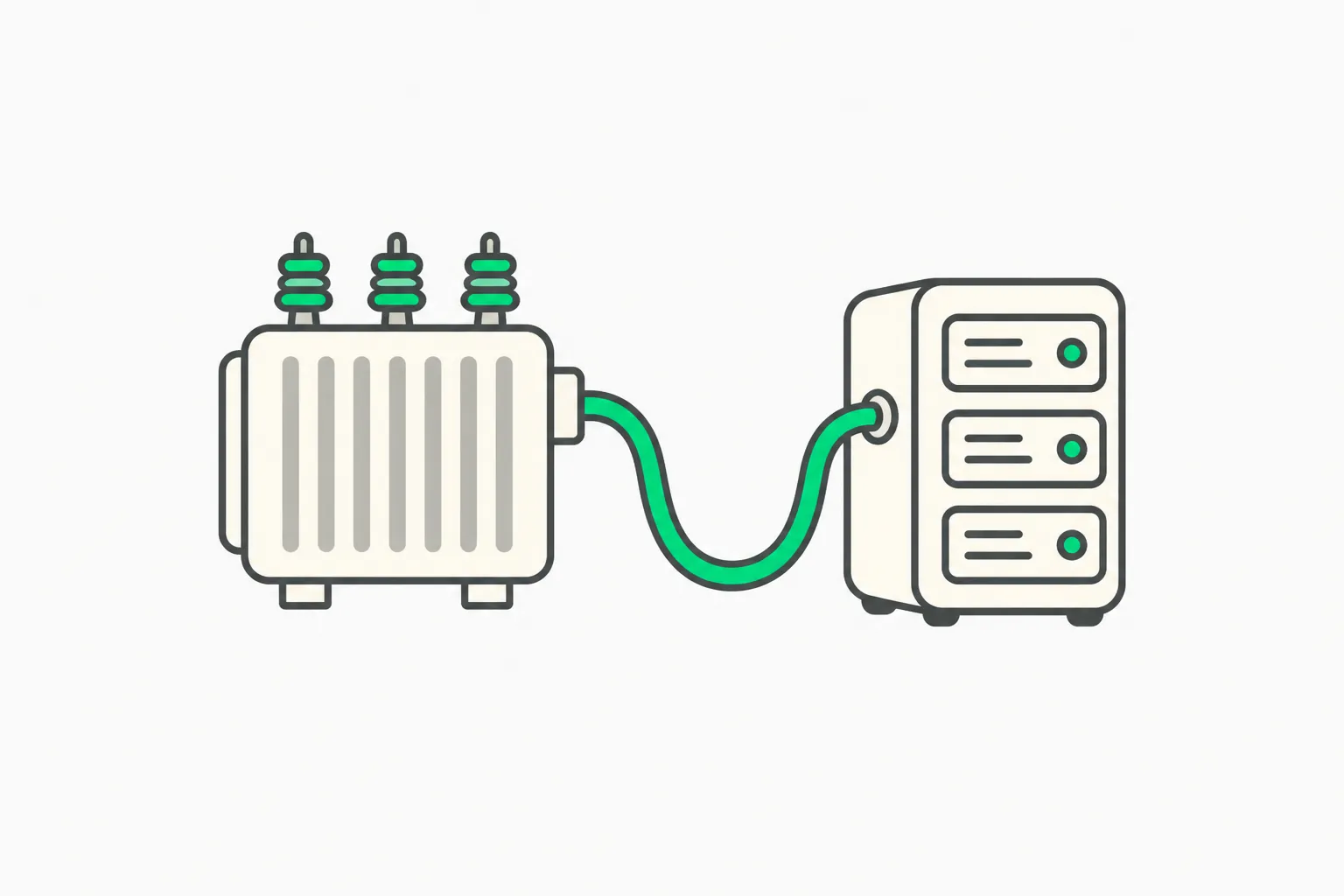
Google has signed a deal that makes it the anchor customer for 890 megawatts of nuclear uprates at Constellation Energy plants, announced October 6, 2026. The 20-year agreement covers 11 Constellation nuclear units in Illinois, Pennsylvania and New Jersey, serves the PJM grid, and is paired with a separate 15-year supply agreement for another 2,700 MW. It is the latest entry in a pattern we track in our hyperscaler nuclear table.
The detail that matters is the instrument. This is neither a reactor restart nor a bet on a future design. It is financing for extra output at plants that already run, which is the lowest-risk way to add nuclear capacity.
TL;DR
| Question | Answer |
|---|---|
| Who signed? | Google and Constellation Energy |
| What is the headline? | 890 MW of new firm nuclear capacity on the PJM grid |
| What kind of deal? | A 20-year power purchase agreement funding uprates at operating plants |
| Where? | Constellation units in Illinois, Pennsylvania and New Jersey |
| Money? | More than $4.3 billion of new investment by Constellation |
| Timeline? | First uprate delivery by 2028; all 890 MW before the end of 2032 |
| Anything else? | A separate 15-year energy supply agreement covering 2,700 MW, plus a technology collaboration |
| Is this new reactors? | No. Uprates add output to existing units |
What exactly was announced?
According to the joint announcement, the 20-year power purchase agreement enables investments in new equipment and technology at 11 Constellation-owned units. The upgrades raise thermal and electrical efficiency to unlock additional reliable power. Before the end of 2032 the projects are expected to add 890 MW of firm, around-the-clock clean power to the grid.
The release also cites about 4,400 existing jobs sustained and roughly 7,200 construction jobs during the build period. Google's global head of energy and power, Amanda Peterson Corio, is quoted saying: "We're committed to meeting our growth responsibly by actively investing in clean, reliable power."
Google's own post, Why we're backing America's existing nuclear plants, frames the role plainly: by serving as the anchor customer, Google says it provides "the long-term revenue certainty Constellation needs to invest in upgrades for 11 of their nuclear reactors." That post also says Google has now enabled about 1.5 GW of new nuclear capacity through uprates and restarts.
One small inconsistency is worth flagging. The press release counts 11 units, while Google's blog summary refers to six operating plants. These are compatible, since a plant can host more than one unit, but treat unit and plant counts carefully when repeating them.
What is an uprate, and why do hyperscalers like it?
An uprate increases the electrical output of an existing reactor. The announcement describes modernizing turbines, steam generators and digital control systems so a unit converts more of its heat into electricity. Nothing about the fuel concept changes. The plant already has a license, a site, a workforce, and a grid connection.
That is why uprates are attractive for AI demand. The announcement calls them a practical, near-term mechanism that avoids the multi-year timelines and interconnection bottlenecks of greenfield construction. For a company that needs power in this decade, not the 2030s, adding megawatts behind an existing interconnection is much faster than waiting in a queue.
The tradeoffs are real:
- Regulatory work remains. Uprates generally need regulator review, even though the plant is operating.
- Outage scheduling. Hardware changes happen around refueling and maintenance windows, so delivery is staggered, which is consistent with the 2028 first delivery and 2032 completion.
- Capacity is bounded. An uprate adds percentages to a unit, not a new plant. 890 MW across 11 units is meaningful, but it works out to roughly 80 MW per unit on average, by simple division.
Where this sits among hyperscaler nuclear deals
Our earlier table of hyperscaler nuclear deals split the market into four buckets: operating power under contract, restart or uprate, development and offtake option, and technology partnership. This announcement lands in the second bucket, with a clear funding mechanism.
| Deal | Type | Risk profile |
|---|---|---|
| Google and Constellation (this deal) | Uprates at operating US plants, 20-year PPA | Moderate: engineering and approvals, no new reactor design |
| Google and Fortum, Finland | Up to 50% of Loviisa output, 22-year contract | Low: existing operating plant, see our Finland breakdown |
| Microsoft and Constellation, Crane | 835 MW restart PPA | Moderate to high: restart and NRC approval |
| Google and Kairos or Elementl | Future advanced reactors and options | High: first-of-a-kind reactors |
The Constellation deal also matches a pattern in the announcement language: it is paired with a technology collaboration. The release describes a five-year alliance in which Constellation uses Google Cloud's Gemini Enterprise agentic workflows to speed up delivery of power, optimize generation and protect critical infrastructure. That is a software tie-in, and it should be counted as zero purchased megawatts, in line with the convention in our table.
Constellation is also the counterparty on the Microsoft Crane restart. The supplier is therefore becoming a central node in how AI demand reaches the nuclear fleet.
Why PJM, and why now?
PJM is the largest US grid operator, covering about 67 million people according to the announcement. It is also one of the regions where data center load growth has been most debated, from capacity prices to local siting fights. Our coverage of Virginia's data center electricity tax and the data center backlash map shows how politically charged that load growth has become.
Google's pitch in the announcement is that it is bringing new supply, not just drawing existing supply. Google's blog post addresses that objection directly, saying the structure ensures "other grid customers bear none of the associated costs." Funding new capacity rather than buying output from the existing fleet means a data center contract does not simply move existing electrons from households to servers. Whether the claim holds in practice depends on how much of the new output is tied to Google's own load and how the grid operator accounts for it, which the announcement does not detail.
The 2.7 GW supply agreement: what we do and do not know
The separate 15-year energy supply agreement covers 2,700 MW within PJM's fleet. The public summary describes it as an expansion in addition to the uprate deal. We have not seen contract prices, delivery points, or whether the supply is matched hourly to specific Google facilities. Absent those details, avoid reading it as 2.7 GW dedicated to one campus. It is better understood as an energy supply commitment on the grid that Google serves.
Likewise, no price per megawatt-hour has been disclosed. The $4.3 billion figure is Constellation's investment, not Google's payment. Do not equate it with the cost of the power to Google.
What this means for people building with AI
This is infrastructure news, so the practitioner angle is indirect but real.
- Capacity is the constraint, and it is being financed years ahead. The sequence of deals, Meta, Microsoft, Amazon and now Google, suggests the largest buyers expect AI demand to stay high through the 2030s. Plan for compute to remain a priced resource, not a free one. Our AI token pricing explainer covers how those costs reach API bills.
- Near-term pricing will not move because of this. First uprate delivery is 2028 and completion is 2032. Today's inference prices reflect today's grid and chip supply. Efficiency is still the fastest capacity source, which is why right-sizing your model matters now.
- Region matters. If you run workloads in PJM-region cloud zones, such as Virginia, Ohio, Pennsylvania or Illinois, grid constraints are a live factor in future capacity and pricing. This deal is a signal that Google intends to keep growing there.
- Energy claims deserve scrutiny. When a vendor says a data center is nuclear-powered, ask what the instrument is: operating plant, uprate, restart, or option. Our environmental impact explainer lists other questions worth asking, including water.
Open questions
- Regulatory approvals. Uprate timelines depend on regulator review for each unit. The public summaries give dates but not approval status.
- Cost allocation. Google says other grid customers bear none of the costs, but the mechanics are not described.
- Which units and when. The announcement gives states and totals; per-unit sizes and schedules would let observers track delivery. We will update this post if Constellation or Google publishes them.
- Matching. Whether Google claims the 890 MW against specific load, and on what accounting basis, is unspecified.
The bottom line
The Google and Constellation agreement is a strong example of the low-drama end of nuclear for AI: pay an existing operator to squeeze more firm power out of reactors that already run, using a 20-year contract to justify the capital. It does not replace the longer-dated advanced-reactor bets, but it is far more likely to deliver on schedule. For readers, the practical takeaway is that firm power, not just chips, now determines how quickly AI capacity grows, and the biggest buyers are locking it in for decades.
Figures and dates reflect the October 6, 2026 announcement and Google's accompanying blog post and may change as approvals proceed. Contract prices were not disclosed.
Related reading
- Every hyperscaler has a nuclear deal: what each actually bought
- Google bets 13B euros on Finland: nuclear power meets AI data centers
- The AI data center backlash, mapped
- Virginia's data center electricity tax and AI pricing
- What is the real environmental impact of AI data centers?
- AI energy and sustainability guide
- Choosing the right-sized model: the AI energy math
- AI token pricing, explained
- Official: Google and Constellation announcement, Google's blog post