



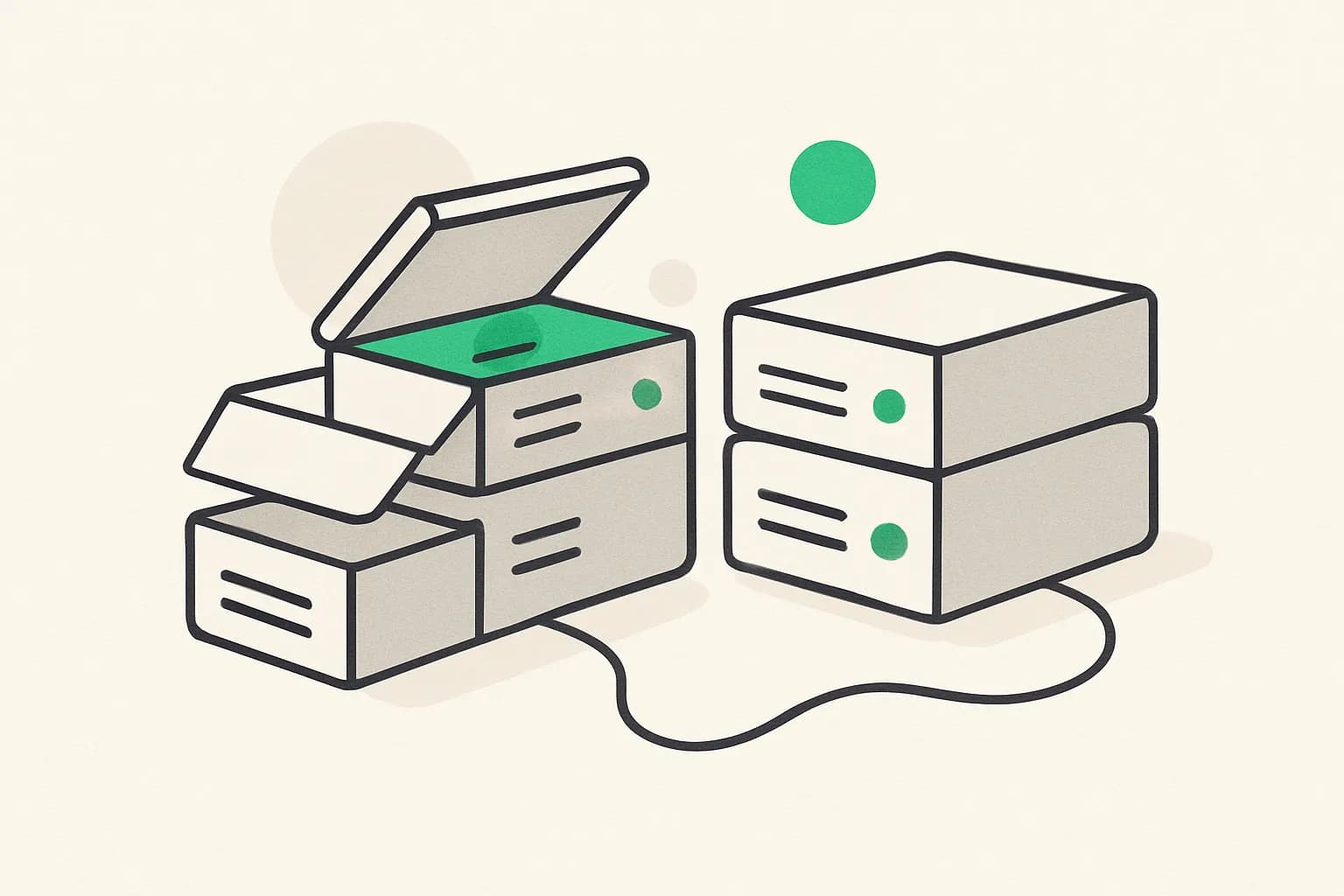
Google Cloud is bringing NVIDIA's newest rack-scale platform to customers. According to NVIDIA's October 21, 2026 announcement, general availability of Google Cloud A5X instances, accelerated by NVIDIA Vera Rubin NVL72, is coming next month, with planned expansion to Europe. Google Cloud also plans to scale its Vera Rubin infrastructure to as many as 960,000 Rubin GPUs across multiple sites. The news was timed to Jensen Huang's GTC Berlin keynote the same day.
This article explains what A5X is, why reinforcement learning is the workload NVIDIA and Google lead with, what the Confidential Computing news adds, and which parts are confirmed versus planned.
TL;DR: what is confirmed and what is planned
| Question | Answer from the announcement |
|---|---|
| What is it? | A5X instances on Vera Rubin NVL72, ConnectX-9 SuperNICs, Google Virgo Network, fourth-generation liquid cooling |
| When? | General availability "next month" (November 2026) |
| Where? | Planned expansion of availability to Europe; regions not listed |
| Scale? | Plan for as many as 960,000 Rubin GPUs across multiple sites; no date |
| First customer | Ineffable Intelligence (David Silver) |
| Agent safety demo | WPP creative agents on A5X with Nemotron and OpenShell |
| Confidential Computing | Rack-scale on bare metal A4X Max (GB300 NVL72); GA on G4 VMs with RTX PRO 6000 Blackwell |
| Pricing | Not stated |
What is A5X, and what is inside it?
A5X brings Vera Rubin into Google Cloud's AI Hypercomputer "as an integrated system, combining compute, networking and storage," in NVIDIA's words. The listed ingredients are Vera Rubin NVL72 racks, NVIDIA ConnectX-9 SuperNICs for the scale-out network, Google's Virgo Network and Google's fourth-generation advanced liquid-cooling technology.
The target workloads are "demanding agentic inference and reinforcement learning workloads at scale." For background on the platform itself, see NVIDIA's Vera Rubin full-production announcement, our measurements-based piece on the Vera CPU's memory bandwidth and latency, and the earlier AI Infra Summit preview.
The announcement does not give per-instance specs such as GPUs per VM, memory, interconnect bandwidth figures or hourly prices. Expect those on Google Cloud's documentation and pricing pages at launch. Until then, any cost-per-token comparison with Blackwell or TPU instances is speculation.
Why does reinforcement learning drive this launch?
 A ball following a curved track toward a reward, illustrating reinforcement learning workloads on Google Cloud A5X
NVIDIA frames the infrastructure around a loop: "generating experience, evaluating outcomes and updating models." Reinforcement learning at scale needs the part that generates experience (inference, simulation, agent rollouts) tightly connected to the part that trains on it. That is why the pitch stresses the Vera CPU to Rubin GPU connection and the GPU-to-GPU bandwidth within the rack, rather than raw FLOPs alone.
The first customer shows the use. Ineffable Intelligence, the London company founded by AlphaGo creator David Silver, was the first to access A5X. Silver said in NVIDIA's post: "We're building superlearners that continually improve through their own experience. That demands both substantial compute and a tight connection between generating experience and training on it." We explained his thesis and why it competes with the language-model approach in David Silver's Ineffable superlearner plan.
This matters beyond one lab. As coding agents and tool-using models are trained with reinforcement learning, the bottleneck shifts from pretraining clusters to systems that run enormous numbers of rollouts and learn from them. A cloud instance type designed around that loop is a signal about where hyperscalers expect demand.
What did WPP show on A5X?
WPP demonstrated a creative agent reference architecture on A5X using NVIDIA Nemotron models and NVIDIA OpenShell, part of the OpenShell Reference Architecture for safe AI agents. The agents turn conversational requests into multistep creative workflows, such as video generation, upscaling and restyling, and ask for human approval before execution. OpenShell provides governed sandboxes that control access to sensitive brand assets and creative tools.
The performance claim is modest and specific: in WPP's initial tests, workloads that typically required a multi-node cluster ran on a single A5X instance. That is a vendor-reported initial test, with no workload description or numbers published, so treat it as an indication rather than a benchmark. For the OpenShell background, see NVIDIA's open agent safety platform.
What changes with Confidential Computing?
 A locked box with gears turning inside, showing how Vera Rubin confidential computing protects data in use
The second half of the announcement concerns protecting models and data on infrastructure you do not own. Google Cloud says it will be among the first providers to offer NVIDIA Confidential Computing at rack scale on bare metal instances such as A4X Max, powered by GB300 NVL72. It is also making Confidential Computing generally available on G4 VMs with RTX PRO 6000 Blackwell Server Edition GPUs, for confidential inference and fine-tuning.
Named users are Vertebrae (conversational privacy), Polaris Cloud (verifiable agent execution) and Confidential Core AI (policy-governed enterprise intelligence). The broader industry context is a push toward hardware-attested AI, visible in Anthropic's Opaque Systems licensing deal and in questions about client data reaching a rival AI company. Confidential computing narrows who can see data in use, but it does not by itself prove what code ran or stop a model from leaking data in its outputs.
What about power and the 960,000-GPU figure?
Google Cloud and NVIDIA say they are "exploring" NVIDIA DSX MaxLPS capabilities for Vera Rubin infrastructure to optimize performance per watt within available data-center power budgets. "Exploring" is the operative word: it is not a shipped feature. Power is the real constraint on any plan of this size, and the same week brought a reminder of how fragile capacity can be in the Google Cloud London power event.
The 960,000 figure is a ceiling Google says it plans to scale toward across multiple sites. No date, site list or financing was given. Compare it with the 100,000-GPU Vera Rubin deal covered in Figure and Nscale and the first production cluster at CoreWeave to see how the scale claims line up.
How does A5X fit with the other ways to get Vera Rubin?
A5X is one of several routes to the same silicon, and they differ in who carries the build risk.
| Route | Who builds and runs it | Example in our coverage |
|---|---|---|
| Hyperscaler instances | Google Cloud operates racks, network and cooling; you rent by the hour or commit | A5X, this article |
| GPU cloud specialists | A neocloud stands up clusters and sells capacity | CoreWeave's first Vera Rubin cluster |
| Large reserved deals | A customer signs for a very large block of GPUs | Figure and Nscale, 100,000 GPUs |
| Own the factory | Partners build containerized AI factories to NVIDIA's reference design | DSX POD |
For most teams the hyperscaler route trades flexibility and integrated networking and storage for less control over hardware choices. Google's argument, reflected in the announcement, is the integrated stack: compute, Virgo Network, storage and cooling designed together inside AI Hypercomputer, so reinforcement learning jobs do not have to be stitched together from separate parts.
What should you ask Google Cloud before committing?
The announcement is a platform headline, so the practical questions are still open. If you are evaluating A5X, these are the ones worth putting to your account team before you move any workload.
- Which regions at launch? NVIDIA says Europe is planned. If you need data to stay in the EU, ask for the region list and the date, not the direction of travel.
- What is the quota process? New accelerator generations are usually allocation-limited at first. Ask how long a quota request takes and whether reservations are required.
- What is the price per GPU-hour, and what does the network cost? The post gives no rates. Compare against A4X Max on the same workload, measuring cost per training step or per rollout, not just list price.
- Which software versions are supported? Check CUDA, driver and framework support, and whether your reinforcement learning stack has been tested on NVL72 topologies.
- How is Confidential Computing attested? If you plan to use the G4 or A4X Max confidential options, ask what the attestation proves, who verifies it, and what is excluded.
A short timeline of how we got here
Vera Rubin moved quickly from roadmap slide to rentable hardware. NVIDIA presented the rack-scale roadmap at its infrastructure events, announced full production and open reference designs, and saw the first production cluster come online at a GPU cloud. The Google Cloud announcement is the first time one of the largest hyperscalers has put a general-availability month on its own Vera Rubin instance type, and it arrived on the same day NVIDIA used its Berlin keynote to show the containerized factory design.
That sequence matters for planning. Hardware that is generally available at a hyperscaler becomes the default reference for pricing and benchmarks, which pushes rivals, including Google's own TPUs and other clouds, to publish comparable numbers. Watch for independent measurements on real training and rollout workloads after launch; the vendor figures so far are limited to WPP's single-instance claim.
What does it mean for what you build or pay?
- Training or RL teams: if you rent GPU hours, A5X gives a first hyperscaler route to Vera Rubin NVL72 next month. Ask Google for regions, quotas and pricing before planning migrations.
- European buyers: the announcement says Europe is planned, not live. If data residency matters, wait for region names.
- Teams handling sensitive data: the G4 confidential VMs are generally available now per the announcement; the rack-scale bare-metal option is described as arriving among the first.
- Everyone else: prices for Blackwell-class capacity may shift as Rubin lands, but nothing in the post commits to that.
All of this comes from NVIDIA's post; Google's own documentation will be the source for specs and rates once published.
Related reading
- GTC Berlin 2026: everything announced
- NVIDIA DSX POD and the 14-day claim
- CoreWeave's first Vera Rubin cluster
- Open Vera Rubin MGX designs and DSX grid resilience
- Google Cloud agent sandboxes: five things on isolation
Details reflect NVIDIA's announcement of October 21, 2026; availability, regions and pricing may change.