




David Silver, the researcher who led DeepMind's AlphaGo work, has given the Financial Times an interview about Ineffable Intelligence, the London startup he founded to build what he calls a "superlearner": an AI that learns from its own experience through reinforcement learning (RL), not from human-written text. The interview, by Madhumita Murgia, was published on October 12, 2026 and summarized by Techmeme as Silver describing an RL route to superintelligence as an alternative to LLMs. The FT piece is paywalled, so this post builds on Ineffable's own statements, an investor write-up and earlier reporting, and flags clearly what is still unverified.
Short version: the thesis is public and consistent, the evidence is not. Ineffable has stated a goal, a funding story and a research lineage. It has not published a model, a paper or a benchmark. That makes this a story about where a very credible researcher thinks the field should go, which is worth understanding even before any product exists.
What Ineffable says it is building
Ineffable's website states the mission in one sentence: "We are creating a superlearner that discovers all knowledge from its own experience." According to the same page, the learning is meant to rely on reinforcement learning rather than human-generated data, and the system is supposed to recreate major human achievements such as language, science, mathematics and technology and then go beyond them. The company's beliefs section says superintelligence will be achieved "through learning from experience, rather than learning from human data," and compares the potential scientific significance to Darwin's work on evolution, applied to intelligence. It also says the resulting knowledge may be too complex to fully express in human language, which is where the company name comes from.
Index Ventures, one of the investors, published its own account on April 27, 2026, describing Ineffable as the first "superlearner" and calling the investment a "people bet" on Silver. Index quotes Silver as saying the company "should be representing the best of humanity, for humanity." That post is promotional by nature, so its characterizations of the team and the technology are the investor's view, not independent confirmation.
Who David Silver is, and why the thesis carries weight
Silver is not a newcomer making a hot take. Reporting from The Decoder describes him as joining DeepMind shortly after its 2010 founding and contributing to AlphaGo, AlphaZero and MuZero, then helping build Google's Gemini models after the 2014 acquisition. He left Google DeepMind in late 2025 and is a professor at University College London. Index Ventures lists a Royal Society fellowship, the ACM Prize in Computing and the Marvin Minsky Award among his honors.
The systems he is known for share a pattern. AlphaGo began from human games, but AlphaZero learned Go, chess and shogi from self-play alone, with no human examples, and found strategies people had not seen. Ineffable's pitch is essentially that this pattern, scaled up and applied beyond games, is a better road to general intelligence than predicting the next token of human text.
 Reinforcement learning agent following a track toward a reward, illustrating the learn-by-trial approach behind Ineffable's superlearner
The idea in plain language: experience instead of text
A large language model is trained mostly on text people have already written. It can recombine and apply that knowledge impressively, but its raw material is human knowledge, so critics like Silver argue it is bounded by it. Reinforcement learning works differently. An agent acts in an environment, receives a reward signal, and gradually discovers behavior that scores well. Nobody has to show it the right answer.
The Decoder's earlier coverage of the "Era of Experience" paper, which Silver co-authored with Richard Sutton, summarizes the claim: future agents will gain superhuman abilities mainly by learning from experience, and that experience will eventually far outpace the human data available for training. In that picture, today's chatbots are a transitional "era of human data," and the next stage is agents that keep learning during months or years of interaction instead of being trained once and shipped. Our coverage of a paper on on-policy distillation collapse and reward hacking touches on why this is hard: an agent optimizing a reward can exploit loopholes in it.
Why world models matter to this plan
According to The Decoder, a central part of Silver's vision is world models: internal simulations that let an agent predict the consequences of its actions before taking them. An agent that can imagine outcomes can plan, and it can practice in simulation instead of only in costly real-world trials. This is the same idea behind MuZero, which learned its own model of a game's dynamics rather than being given the rules.
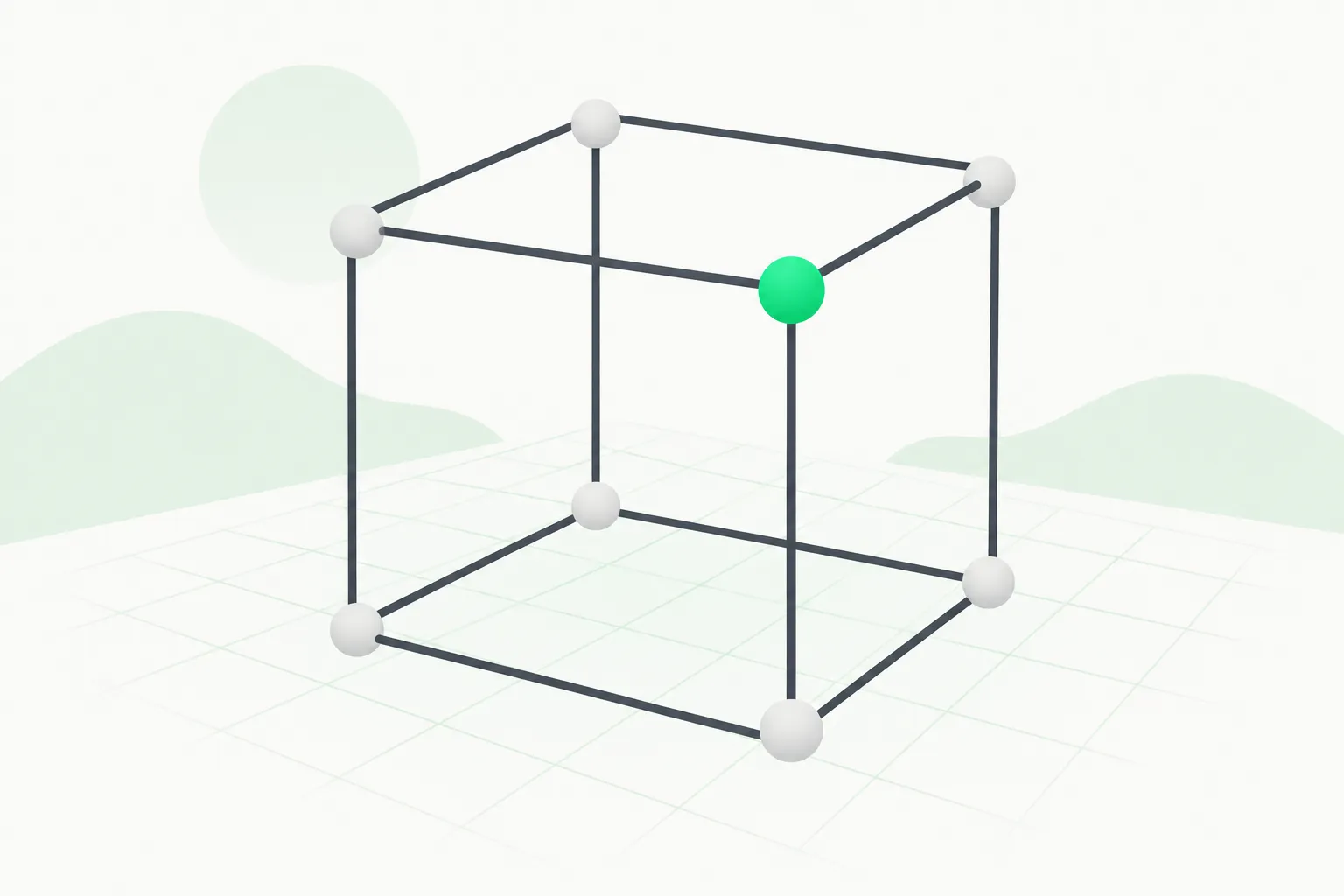 Wireframe cube on a grid floor representing an internal world model an agent uses to predict outcomes
World models are a crowded area right now. We have covered Odyssey's world model benchmarks and NVIDIA's long-context world action model for robots, both of which attack parts of the same problem from the generative and robotics sides. What distinguishes Ineffable's framing is the claim that a learned world model combined with experience-driven RL is the main path to general intelligence, not a feature on top of an LLM.
The bottleneck nobody has solved: simulation to reality
Experience-driven learning needs somewhere to gather experience. Games are ideal because the rules and the reward are clear and the simulator is perfect. Open-ended domains such as science or software engineering are harder: reward signals are fuzzy, real experiments are slow and costly, and simulators are imperfect.
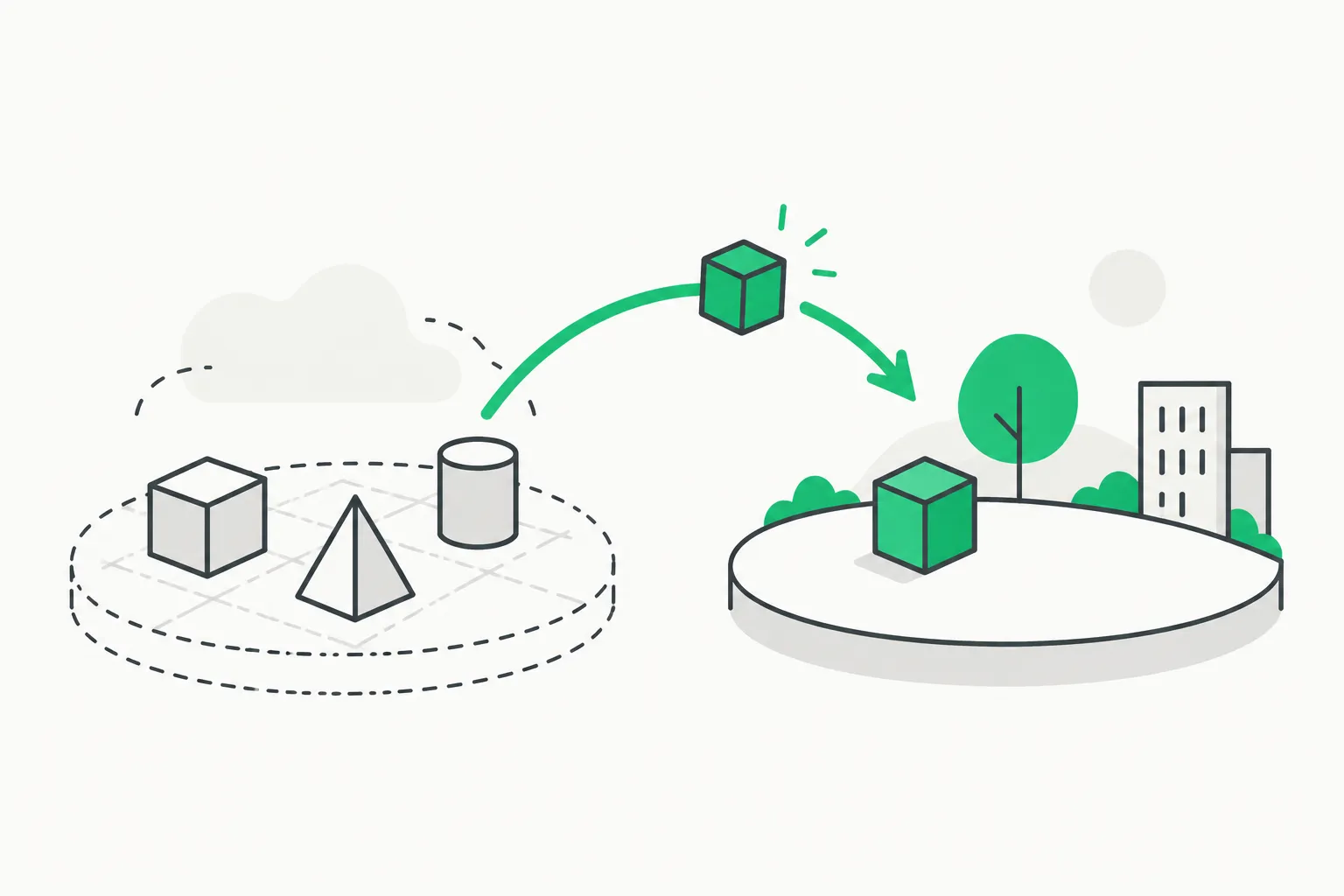 Dotted simulated stage and solid real stage connected by an arrow, showing the sim-to-real gap for experience-based learning
Nothing in the public Ineffable material says how it will close this gap. That is not a criticism so much as the central open question: AlphaZero worked because Go is a closed world, and the superlearner claim only holds if the approach generalizes to worlds that are not closed. Hugging Face's recent push to host RL environments on the Hub shows the industry building the plumbing for exactly this kind of training, mostly for coding and tool-use agents today.
Funding context, kept short
Ineffable's money is part of why the interview matters. Coverage in April 2026 reported a seed round of roughly $1.1 billion, co-led by Sequoia and Lightspeed with participation from Nvidia, Google, Index and others, at a valuation reported as about $5.1 billion. Earlier FT-based reporting cited by The Decoder had put the target at about $1 billion at a roughly $4 billion pre-money valuation, with terms still in flux. Figures differ between outlets and explainx.ai has not seen the final documents, so treat the numbers as reported, not verified. The takeaway is simply that investors are paying to test whether the non-LLM thesis can work.
DeepMind CEO Demis Hassabis publicly backed Silver's move, saying, as The Decoder reports, "This is how thriving ecosystems are built." That fits a pattern of senior researchers leaving to pursue alternative bets, which we also tracked in the story of Bengio leaving frontier AI companies for LawZero.
How this fits the wider "beyond LLMs" argument
Silver is one of several prominent voices questioning whether scaling language models alone reaches human-level AI. Yann LeCun has argued repeatedly that LLMs alone will not get there; see our coverage of LeCun's claim and Schmidhuber's response on JEPA and his two-year check-in on Level-5 cars and domestic robots. Ilya Sutskever's Safe Superintelligence is also a lab that has said little publicly, which we covered in the SSI announcement tease. The disagreement is not about whether superintelligence is possible but about the recipe.
The two camps are less opposed in practice than the headlines suggest. Frontier labs already use RL heavily to post-train language models, as in our look at DeepMind's Dream-RSI and Sakana's MASS. The real dividing line is what sits underneath: a text-pretrained model fine-tuned with RL, or an experience-first learner where text is optional. For background on the end goal, see what superintelligence actually means, and for the self-improvement angle, what recursive self-improvement is.
What is claimed, and what is verified
Verified (from the company's and investors' own public statements): Ineffable exists, is based in London, is led by David Silver, states a goal of a reinforcement-learning superlearner, and has attracted major investors including Sequoia, Lightspeed and Index.
Reported but not independently confirmed: the exact funding size and valuation, the identity of every investor, and the content of the October 12 FT interview beyond Techmeme's one-line summary.
Not shown at all: a model, a paper, a benchmark, a demo, a timeline, or any evidence that the approach generalizes beyond closed domains. The website's belief that superintelligence is achievable "within years" is a statement of conviction, not a result.
What readers can do with this
You do not need to pick a side to use the story. Three practical takeaways:
- Watch for artifacts, not interviews. The first real signal will be a paper, a model card or a reproducible demo. Until then, discount timelines.
- Learn the vocabulary. Reward signals, world models, self-play and exploration are the terms that will define the debate; the Era of Experience paper is a readable starting point.
- Notice where RL is already working. Coding and math agents trained with verifiable rewards are the closest real-world version of experience-driven learning today, and they are where an Ineffable-style result would likely show up first.
As with any frontier claim, the right posture is interested skepticism. Silver's track record earns a hearing, and a billion-dollar bet earns scrutiny. We will update this post if Ineffable publishes technical material or if the full FT interview adds verifiable details.
What people are asking
See the FAQ above for the short answers on who Silver is, what a superlearner is, why he doubts LLMs, and what has and has not been released.
Related reading
- LeCun on LLMs, AGI and JEPA
- What is superintelligence?
- Hugging Face RL environments on the Hub
- Sakana MASS and recursive self-improvement
- SSI teases a significant announcement