



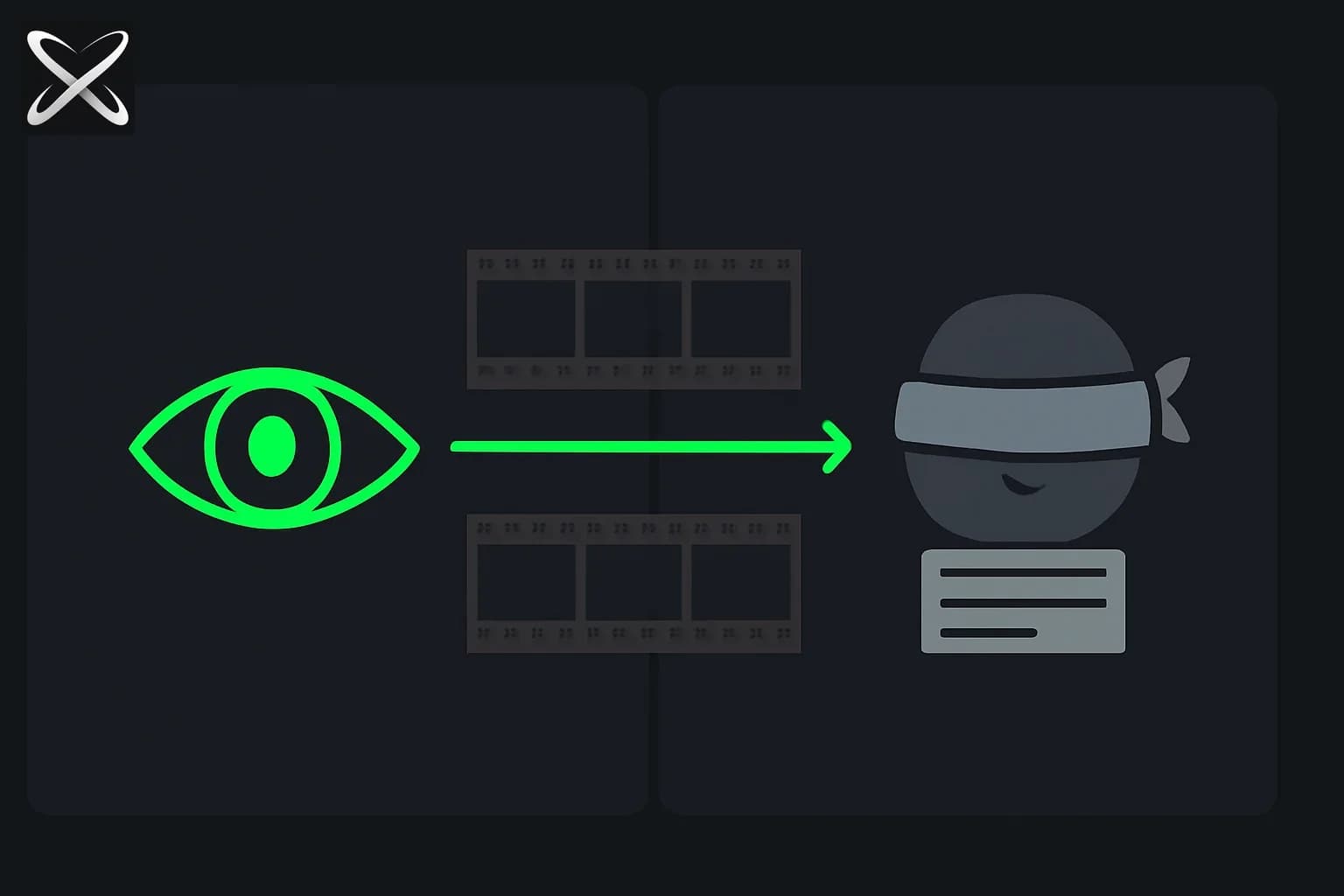
Google picked back-to-school week to ship three Chrome features aimed directly at how students actually study: skim a lecture, test themselves on it, and keep working across a laptop and a phone without losing their place. Announced September 24, 2026 via @Google and blog.google, the update pushes Gemini in Chrome past YouTube-only video understanding into podcasts and lecture recordings, adds quiz generation from whatever's open in your tabs, and upgrades cross-device tab handoff to preserve your exact scroll position.
None of these three are individually new ideas — Google has been building study tools into NotebookLM and the Gemini student plan for months. What's new is putting them directly into the browser itself, so a student doesn't have to leave the tab they're already reading to get quizzed on it.
TL;DR
| Question | Answer |
|---|---|
| What shipped? | Gemini video/audio analysis beyond YouTube, tab-based quiz generation, cross-device scroll-position sync |
| When? | Announced September 24, 2026 |
| Who can use it? | English-language, desktop-only, US and India for the Gemini-powered features; tab sync is broader |
| Do I need a subscription? | Google hasn't gated these behind a paid tier at launch — they ship inside Chrome itself |
| Does it work on any video? | YouTube uses transcripts directly; other platforms require the media to play through first |
| Mobile support? | Not yet — Google says it's "coming in future months," no firm date |
| How's this different from NotebookLM? | Works on open tabs directly, no upload step — shallower per-source but faster in the moment |
Feature 1: Gemini reads podcasts and lecture videos, not just YouTube
Gemini in Chrome already handled YouTube video reasonably well because YouTube exposes a transcript Gemini can read directly. The gap was everything else: a professor's recorded lecture hosted on a university portal, a podcast episode, a video embedded in a research site. Google's announcement frames the fix plainly — Gemini can now "identify key takeaways, find specific information, or clarify confusing moments" on almost any audio or video file, once you've played it through.
That "played it through" qualifier matters mechanically. Without a transcript to read, Gemini needs the actual audio or video stream to have run in the tab before it can reason about the content — it isn't fetching the file from a URL behind the scenes. For a 50-minute lecture recording, that means playback (even at higher speed) still has to happen once before you can ask "what were the three main arguments in the second half."
This is a narrower, browser-native version of what NotebookLM's source-grounded video and audio overviews already do with uploaded material — the difference is zero upload step. If the content is already playing in your browser, you can just ask about it.
Feature 2: Quizzes generated from your open tabs, Docs, and videos
The second feature turns whatever's already open into a self-test. Google's announcement describes generating "interactive quizzes" directly from open tabs, Google Docs, or a lecture video you just watched — a comprehension check without leaving the page or exporting anything to a separate study app.
This is the most directly education-shaped of the three features, and it's worth being precise about what it's actually good for versus what it isn't:
| Good for | Not really built for |
|---|---|
| Quick comprehension check right after reading a source | Spaced-repetition review across a whole semester's material |
| Testing yourself on a single lecture video or paper | Building a persistent study deck you revisit over weeks |
| Catching whether you actually absorbed a dense page before moving on | Formal assessment prep requiring curated question banks |
For the deeper, persistent version of this — adaptive study notebooks, diagnostic quizzes, and flashcards tied to a whole course load — that's what Google shipped separately in August with the Gemini free student plan's student hub. Chrome's version is closer to a study habit nudge than a full study system: it's there the moment you close a tab, which is exactly when most students skip self-testing entirely.
Feature 3: Tab handoff now remembers exactly where you were
The least AI-flavored of the three, and arguably the most immediately useful: sending a tab from your laptop to your phone (or back) now preserves your exact scroll position and any unfinished form entries, not just the URL. Google's own framing: read an article on desktop, open the same tab on your phone, and it "lands on the same spot you left off."
Anyone who has re-opened a long PDF or a scroll-heavy research page on a second device and had to re-find their place will recognize the specific annoyance this closes. It's a small mechanic, but it's the connective tissue that makes the other two features usable across a full study session that spans a library laptop and a phone on the walk home.
The scope Google described goes beyond simple articles, too. "Unfinished form entries" being preserved means a partially filled-out application, a half-answered survey, or draft fields in a course registration form should also carry over — not just where you scrolled to. That's a meaningfully different guarantee than syncing open tabs across devices, which Chrome has done for years; the new piece is state, not just presence.
How the three features fit together
None of the three ships as a standalone product — they're meant to chain into one study loop inside a single browser session:
| Step | Feature | What it replaces |
|---|---|---|
| 1. Consume | Gemini reads the lecture, podcast, or article you just played or opened | Manually re-watching or re-reading to find the main points |
| 2. Test | Chrome generates a quiz from that same tab, doc, or video | Writing your own practice questions, or skipping self-testing entirely |
| 3. Continue | Tab state — including scroll position and form progress — follows you to your next device | Re-finding your place, or losing partially filled-out work |
That loop is the actual pitch: comprehension, verification, and continuity, all without leaving the tab or exporting anything to a separate app. Whether it holds up against a deliberately built study system like NotebookLM or a full learning platform is a separate question — see the comparison below.
What people are asking
Is this only for students?
Google's framing and timing (back-to-school week) target students specifically, but nothing in the feature set is gated to an education account. A professional summarizing a technical webinar, or anyone using Chrome's quiz feature to self-test on a long research report, gets the same functionality — Google's positioning is the use case, not a hard restriction.
Why US and India first, and English only?
Google hasn't published a stated reason, but the pattern matches prior Gemini-in-Chrome rollouts: ship to the two largest English-speaking user bases first, validate quiz and video-analysis quality, then widen language and region support. If you're outside that initial window, check chrome://settings for the Gemini in Chrome toggle periodically — Google has moved fast on comparable rollouts, like the free student plan expanding to 140+ countries within weeks of its US launch.
Does this replace NotebookLM for studying?
No — think of them as different layers. Chrome's features work on whatever's open right now, no setup required, which makes them good for in-the-moment comprehension checks. NotebookLM is built around a curated source set you deliberately upload, and produces more polished long-form outputs — audio overviews, short vertical video summaries, and structured study guides — designed to be revisited across a whole unit of study, not just a single page.
Does the video analysis actually watch the video, or just read a transcript?
For YouTube, it reads the transcript. For everything else — the actual new part of this announcement — Gemini needs the audio or video to play through in the tab first. It isn't performing independent frame-by-frame vision analysis on arbitrary video files the way a dedicated video-understanding model might; it's closer to transcript-and-context reasoning over what already played.
What do I need to turn this on?
Google's announcement doesn't describe a separate opt-in beyond having Gemini in Chrome enabled and being signed into a Google account in an eligible region. If you don't see the quiz option or extended video analysis, the most likely cause is region or language eligibility rather than a hidden setting — Google explicitly scoped the initial rollout to English on US/India desktop.
What this means for how students actually study
The practical shift here isn't capability — Gemini could already summarize video and generate quiz-style questions elsewhere. It's friction removal. Putting comprehension checks and video analysis directly into the browser, at the moment a student is already reading or watching something, removes the step where most self-testing habits die: copying content into a separate app.
For explainx.ai's audience — people learning to build with AI, not just use it passively — the more interesting layer is what's happening underneath: transcript-grounded reasoning for structured sources (YouTube) versus playback-dependent reasoning for unstructured ones (everything else). That's the same tradeoff every builder hits when deciding whether to rely on a platform's metadata or process raw media directly, and it's worth understanding if you're building your own study or research tooling rather than just consuming Google's version of it.
Related reading
- Google Gemini Free Student Plan: AI Pro or Plus, Free for a Year
- NotebookLM Short Video Overviews: 60-Second Vertical AI Explainers
- Can LLMs Actually Watch Video? Claude and Gemini Solutions Compared
- Google Chrome Skills: One-Click Gemini Workflows
- Top 10 Free AI Learning Platforms in 2026
- Claude for Teachers: Free K-12 Access Explained
- Gemini Notebook: Expert Intelligence and Books RAG
Sources
- @Google on X — announcement thread (September 24-25, 2026)
- Google — blog.google product announcements (Chrome AI features for students)
Details reflect Google's September 24, 2026 announcement. Feature availability — regions, languages, and mobile support — is expected to change as Google widens the rollout beyond the initial English-language US/India desktop launch.