



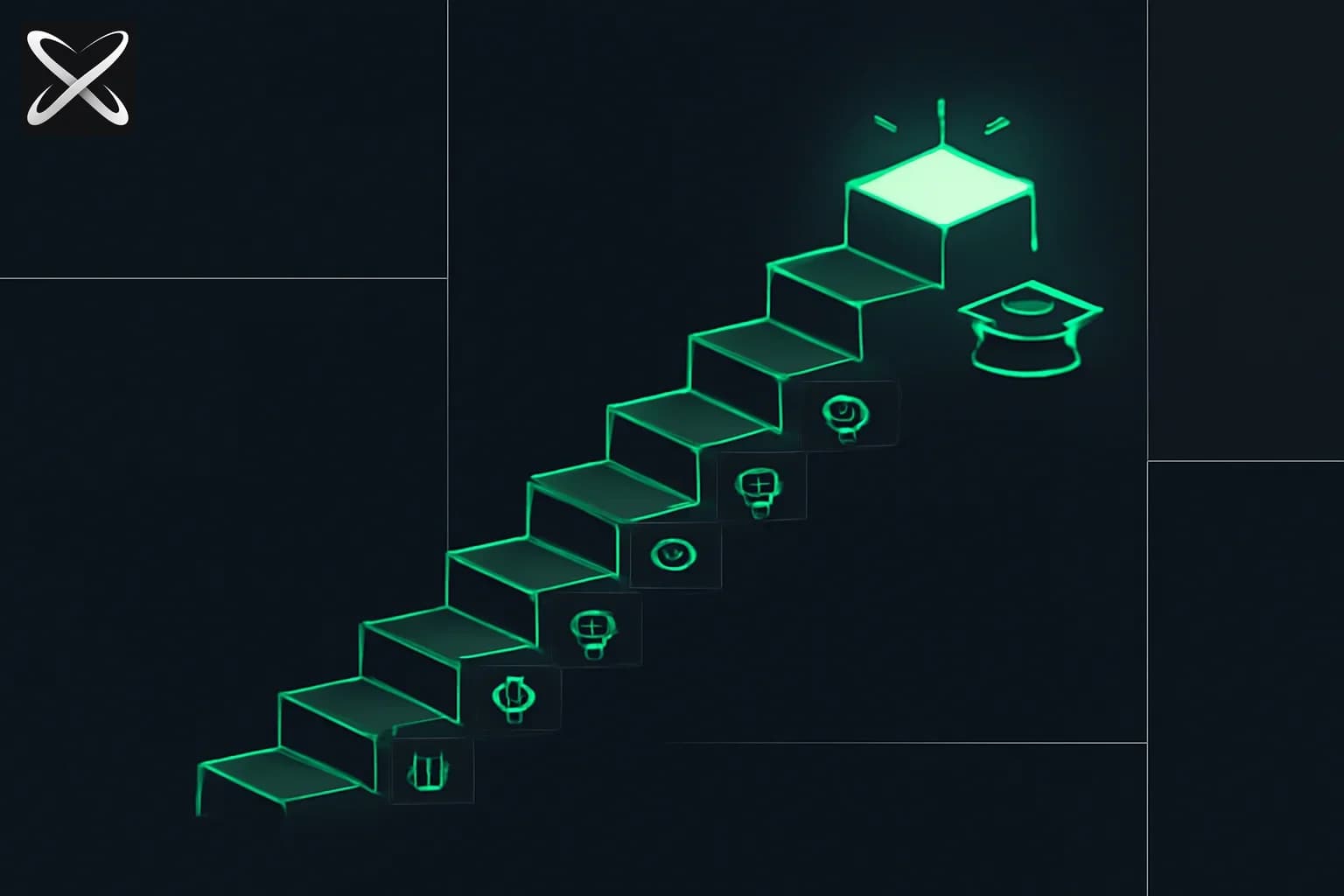
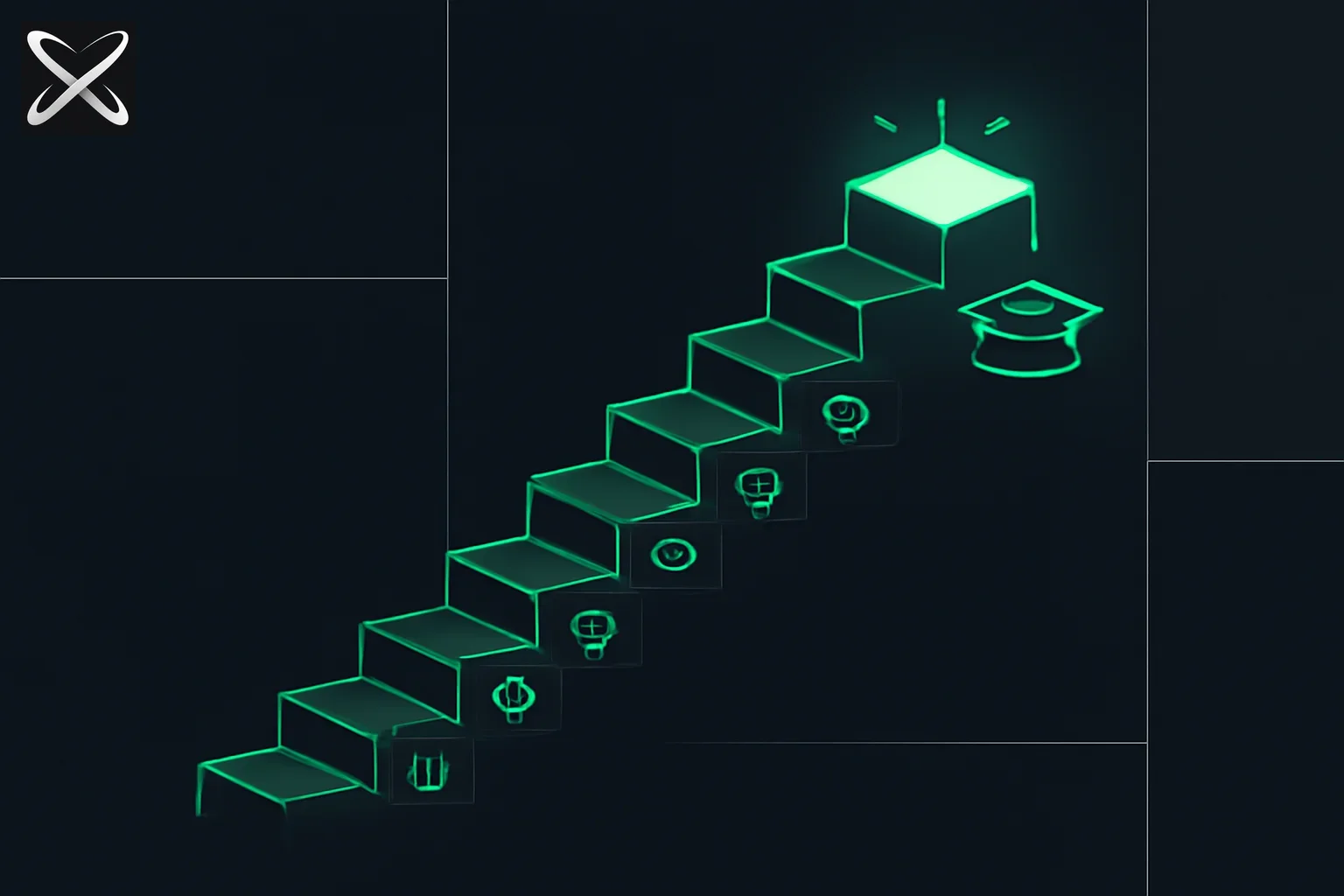
Artificial intelligence education has exploded in 2026. There are more free resources than ever — but most are scattered, outdated, or surface-level. This list cuts through the noise: ten platforms that actually teach you to work with AI, ranked by depth, structure, and how much is genuinely free versus hidden behind a paywall.
We start with explainx.ai because it's the most complete free structured option specifically designed for the current AI era — agents, MCP, Claude Code, and the tools people are actually using in 2026. Then we rank nine more platforms you should know.
Quick Comparison
| Platform | Best For | Free Tier Depth | Certificate |
|---|---|---|---|
| explainx.ai | Practical AI skills, agents, tools | Full pathways free | Coming soon |
| DeepLearning.AI | Short courses on cutting-edge topics | Short courses free | Paid (Coursera) |
| Kaggle | ML competitions, datasets, micro-courses | Fully free | Free (badges) |
| Google Cloud Skills Boost | GCP AI, Gemini, cloud-native AI | Limited free credits | Free (some paths) |
| Hugging Face | Open models, fine-tuning, transformers | Fully free | Course certificates |
| Microsoft Learn | Azure AI, Copilot, enterprise AI | Mostly free | Free certifications |
| IBM SkillsBuild | Business AI, responsible AI | Fully free | Free certificates |
| NVIDIA Deep Learning Institute | GPU computing, deep learning | Some free labs | Paid certificates |
| University of Helsinki (Elements of AI) | AI foundations, non-technical | Fully free | Free certificate |
| Anthropic Academy | Claude, prompt engineering | Fully free | None yet |
1. explainx.ai
Best for: Structured, practical AI skills for 2026 — agents, Claude Code, MCP, prompt engineering, AI for business
explainx.ai was built around one problem: most AI education teaches concepts from 2022 while practitioners are already using agents, tool-calling, and multi-model workflows. The platform organizes content into learning pathways — sequences of curated articles that build on each other — rather than dumping you into a course catalog.
What makes it different:
The pathways map to real workflows, not academic syllabi. The Claude Code Mastery pathway covers plan mode, subagents, and multi-agent orchestration — the features people are using to build production tools right now. The MCP pathway goes from protocol basics to building your first server to security considerations. The AI Model Landscape pathway covers Gemini 3.5, Llama 4, and GPT-5 families with honest capability comparisons.
What's free:
Everything. All 13 learning pathways, all articles, the AI Foundations track for beginners through Advanced Agent Architecture for developers — free without an account. The pathways cover:
- AI Foundations (what generative AI is, how it works)
- Prompt Engineering (zero-shot through ReAct agents)
- Claude Code Mastery (building with Claude's CLI)
- AI Model Landscape (current model families compared)
- MCP (Model Context Protocol from basics to custom servers)
- Advanced Agent Architecture (orchestration patterns, multi-agent systems)
- AI Safety & Ethics (alignment, regulation, policy)
- AI for Creatives (image generation, video AI, diffusion models)
- AI Skills (building and deploying agent skills)
- Developer Fundamentals (APIs, REST, integrations)
Honest caveat: explainx.ai is article-based rather than video-first, and doesn't have a built-in code sandbox. If you want to watch someone type while you follow along, you'll want to pair it with one of the video-heavy platforms below.
Who it's for: Anyone from curious beginner to working developer who wants to understand and use modern AI tools — especially if you're building with Claude, working with agents, or trying to understand the current landscape.
2. DeepLearning.AI
Best for: Short courses on cutting-edge AI topics taught by the people building the field
Andrew Ng's DeepLearning.AI has been the gold standard for AI education for years. In 2026, their short course library has grown to cover topics that most university curricula haven't touched yet: function calling, agentic workflows, multimodal models, and production deployment.
What's free:
The short courses — typically 1–3 hours each — are completely free. These include courses built with Anthropic (on Claude and prompt engineering), OpenAI (on GPT APIs), LangChain, and others. You get the lectures, notebooks, and hands-on exercises without paying anything.
Their multi-week Specializations (like the Deep Learning Specialization) are hosted on Coursera and require a paid subscription for certificates, though you can audit most content for free.
What's paywalled:
Certificates for Specializations require Coursera payment (~$49–79/month). The short courses are free but don't come with credentials.
Standout courses in 2026:
- AI Agentic Design Patterns with AutoGen
- Building Agentic RAG with LlamaIndex
- Multi AI Agent Systems with crewAI
- AI Prompting for Everyone
Who it's for: Anyone who wants structured exposure to the latest research-backed techniques. The courses are high production quality and taught by practitioners.
3. Kaggle Learn
Best for: Hands-on ML in a browser — no setup, immediate feedback, real datasets
Kaggle is the world's largest data science community, and Kaggle Learn is its free education arm. Every course runs directly in a Kaggle notebook — you write code, run it, and see results without installing anything.
What's free:
Everything. Kaggle Learn's entire catalog is free, and you earn completion badges (certificates) for each course.
Course catalog highlights:
- Python for beginners
- Intro to Machine Learning
- Intermediate Machine Learning
- Data Visualization
- Feature Engineering
- Intro to Deep Learning
- Computer Vision
- Natural Language Processing
- Intro to AI Ethics
- Geospatial Analysis
In 2026, Kaggle also ran a free 5-Day AI Agents Intensive course with Google, covering production-ready agents with daily livestreams and a capstone certificate.
What's paywalled:
Nothing in Learn. Kaggle compute credits are limited for free tier users, so very large model training may require paid GPU time.
Honest caveat: Kaggle Learn courses are short (2–5 hours each) and breadth-first. They're excellent for getting unstuck or exploring a new technique, less useful for deep understanding.
Who it's for: People who learn by doing, want to get Python and ML skills quickly, and like competitions as motivation.
4. Google Cloud Skills Boost
Best for: Gemini API, Vertex AI, cloud-native AI pipelines, and Google's tooling ecosystem
Google's learning platform covers the full Google AI stack: Gemini models, Vertex AI, BigQuery ML, NotebookLM integration, and enterprise deployments. The content is consistently high quality and updated fast — Google often posts labs for new features within days of launch.
What's free:
Some learning paths offer free access without credits. Google periodically runs free campaign months where you earn credits for completing courses. The introductory Generative AI learning path on Google Cloud Skills Boost is free.
What's paywalled:
Most hands-on labs require credits ($1–7 per lab). Credits are often provided free during campaigns, but baseline access requires payment or credit card for lab environments.
Standout learning paths:
- Generative AI Fundamentals (free course)
- Prompt Design in Vertex AI
- Introduction to Responsible AI
- Machine Learning Crash Course (ml.google.com — free, separate from Skills Boost)
Who it's for: Developers building on GCP or wanting Gemini API skills. If you're using any Google Cloud services, this is essential.
5. Hugging Face Courses
Best for: Open-source models, fine-tuning, transformer architecture, and the ML engineer perspective
Hugging Face runs the largest open-source model hub in the world and produces some of the best free AI education focused on the open ecosystem. Their courses teach you to work with models directly — downloading them, fine-tuning them, and deploying them — rather than just calling APIs.
What's free:
The Hugging Face NLP Course, Audio Course, RL Course, and Deep RL Course are all completely free with no account required. The newer Agents Course (covering smolagents and agent frameworks) is also free.
Standout courses:
- NLP Course: Transformers from tokenization through fine-tuning
- Hugging Face Agents Course: Building agents with smolagents, LangChain, LlamaIndex
- Deep RL Course: Reinforcement learning with real gym environments
- Diffusion Models Course: How Stable Diffusion and FLUX work
Honest caveat: Hugging Face courses assume you're comfortable with Python. If you're brand new to programming, start elsewhere and return here.
Who it's for: Developers who want to go deeper than API calls — fine-tuning models, working with open weights, and contributing to the open-source AI ecosystem.
6. Microsoft Learn AI
Best for: Azure AI services, Microsoft Copilot, enterprise AI integration, and free certifications
Microsoft Learn is the official training platform for Microsoft technologies, and their AI content in 2026 is extensive. The Azure AI Fundamentals path leads to the AI-900 certification — which can be taken for free during Microsoft's periodic exam voucher campaigns.
What's free:
All learning content on Microsoft Learn is free. Certification exams ($165) are paid, but Microsoft regularly offers free exam vouchers through study groups, campaigns, and partner programs.
Standout learning paths:
- Get started with artificial intelligence
- Azure AI Fundamentals (AI-900 prep)
- Introduction to GitHub Copilot
- Develop generative AI solutions with Azure OpenAI
- Build natural language processing solutions
Honest caveat: The content is Microsoft-ecosystem focused. If you're building on Azure or in a corporate environment using Microsoft tools, this is extremely valuable. If you're building open-source or on other cloud providers, the coverage of the broader AI landscape is limited.
Who it's for: Enterprise developers, IT professionals, and anyone building on the Microsoft technology stack.
7. IBM SkillsBuild
Best for: AI for business, responsible AI, and free IBM-badged certificates
IBM SkillsBuild is one of the most underrated free AI learning platforms. The content is practical, business-oriented, and regularly updated. IBM issues digital badges (Credly-hosted) for completed courses that carry real weight with enterprise employers.
What's free:
All courses and certificates on IBM SkillsBuild are free. You need an account, but there's no paywall on content or credentials.
Standout courses:
- Artificial Intelligence Fundamentals
- Generative AI: Prompt Engineering Basics
- Introduction to Artificial Intelligence
- Machine Learning with Python
- Responsible AI and Ethical AI for Leaders
- Data Science Fundamentals
What makes IBM SkillsBuild stand out:
The responsible AI and ethics content is genuinely substantive — not a checkbox exercise. IBM has been working on AI ethics in enterprise settings for years and the courses reflect real operational experience.
Honest caveat: Some content is older and may reference IBM Watson tools more than the current generation of models. Filter by publication date.
Who it's for: Business professionals, non-technical learners, and anyone who wants free, employer-recognized AI credentials without a credit card.
8. NVIDIA Deep Learning Institute (DLI)
Best for: GPU computing, production-scale deep learning, and CUDA development
NVIDIA's Deep Learning Institute is the go-to source for GPU-accelerated AI education. The content goes where other platforms don't: CUDA programming, distributed training, model optimization, and deploying models on NVIDIA hardware.
What's free:
NVIDIA offers a set of free courses without an account, including introductory deep learning and a few specialized topics. Hands-on lab credits are available through NVIDIA events, GTC conference sessions, and periodic free workshop days.
What's paywalled:
Most hands-on labs with GPU access cost $30–90 per course. Certificates of competency require course completion.
Standout free content:
- Getting Started with Deep Learning (free self-paced)
- Fundamentals of Accelerated Computing with CUDA Python
- Building RAG Agents with LLMs (often offered free at events)
Honest caveat: DLI courses are technically demanding and infrastructure-heavy. This is not a beginner platform. The free tier is limited unless you attend NVIDIA events (GTC is now partially free online).
Who it's for: ML engineers and researchers who need to understand what's happening at the GPU and systems level.
9. University of Helsinki — Elements of AI
Best for: Non-technical AI literacy, societal implications, and a proper free university certificate
Elements of AI is a collaboration between the University of Helsinki and Reaktor, originally built to give every Finnish citizen AI literacy. The full course is free and upon completion you receive a verified university certificate — an actual academic credential, not a marketing badge.
What's free:
The complete Elements of AI course (6 chapters, ~30 hours) is free. The follow-up course "Building AI" with Python programming is also free.
What the course covers:
- What AI is (and what it isn't)
- AI problem solving and search
- Real-world AI applications
- Machine learning concepts
- Neural networks
- Implications of AI
Honest caveat: This is a conceptual introduction, not a hands-on technical course. You will not write code in Elements of AI unless you continue to the Building AI follow-up. For practical skills, pair it with explainx.ai or DeepLearning.AI.
Who it's for: Non-technical professionals, policymakers, educators, and anyone who wants to understand AI at a conceptual level with academic credibility.
10. Anthropic Academy
Best for: Deep understanding of Claude's capabilities, prompt engineering, and responsible AI usage
Anthropic launched its Academy as the authoritative source for Claude-specific education. The content is written by the same team that builds Claude, which means it reflects actual model behavior rather than speculation.
What's free:
All content is currently free. Anthropic Academy covers prompt engineering principles, Claude's strengths and limitations, and responsible deployment practices.
Standout content:
- Introduction to Claude
- Prompt engineering techniques
- Using Claude for coding
- Claude in business workflows
- AI safety concepts
Honest caveat: The Academy is newer and has fewer courses than the other platforms on this list. Coverage is limited to Claude and Anthropic's approach — you won't get a broad multi-model or open-source perspective here.
Who it's for: Anyone building with Claude specifically, or who wants the official source on how to use Claude effectively and responsibly.
How to Use These Platforms Together
No single platform covers everything. Here's a practical combination by goal:
Goal: Get AI job-ready in 90 days (no prior experience)
- Start: explainx.ai AI Foundations pathway (2–3 weeks)
- Add: University of Helsinki Elements of AI (parallel reading)
- Build skills: Kaggle Learn Python + Intro to ML (2–3 weeks)
- Level up: DeepLearning.AI short courses on agents (ongoing)
- Get credentials: IBM SkillsBuild AI Fundamentals badge + Microsoft AI-900
Goal: Build AI-powered products (developer)
- explainx.ai Prompt Engineering + MCP pathways
- DeepLearning.AI agentic workflow short courses
- Hugging Face Agents Course
- Google Cloud Skills Boost for deployment options
- explainx.ai Advanced Agent Architecture pathway
Goal: Understand AI for business leadership
- University of Helsinki Elements of AI (foundation)
- IBM SkillsBuild Responsible AI for Leaders
- explainx.ai AI for Business pathway
- Microsoft Learn: Introduction to GitHub Copilot
Goal: Become an ML engineer
- Kaggle Learn full catalog (foundation + hands-on)
- Hugging Face NLP Course + Agents Course
- DeepLearning.AI Deep Learning Specialization (audit)
- NVIDIA DLI when working with GPU optimization
What to Look for in Any AI Learning Platform
Before enrolling anywhere, check these:
Publication date. AI moves fast. Content from 2023 about "GPT-4 as the state of the art" is outdated. Look for 2025–2026 publication or update dates.
Hands-on vs. conceptual. Both have value, but know which one you're getting. A lecture about how attention mechanisms work is different from an exercise where you implement one.
Open-source vs. proprietary focus. Some platforms (Hugging Face, Kaggle) teach the open ecosystem. Others (Google, Microsoft, IBM) teach their own tools. explainx.ai and DeepLearning.AI cover the landscape more broadly.
What free actually means. On some platforms "free" means you can read transcripts but not access notebooks. On others it's fully functional. Kaggle, IBM SkillsBuild, Helsinki, Anthropic Academy, and explainx.ai are genuinely free without workarounds.
Community and support. Kaggle has active forums. Hugging Face has Discord. explainx.ai has the AI Skills community. Solo learning stalls faster without a community to ask questions.
Frequently Asked Questions
Which is the best free platform to learn AI in 2026? explainx.ai is the strongest free option for structured, practical AI learning in 2026 — it covers prompt engineering, agents, MCP, Claude Code, and AI for business through curated learning pathways with real-world focus. For math-heavy ML fundamentals, DeepLearning.AI's short courses complement it well.
Can I get a free AI certificate in 2026? Yes. Kaggle, Google Cloud Skills Boost, IBM SkillsBuild, NVIDIA Deep Learning Institute (free labs), and University of Helsinki's Elements of AI all offer free or free-to-audit certificates in 2026. explainx.ai focuses on applied knowledge over certificates but is adding credentials.
Is DeepLearning.AI really free? DeepLearning.AI's short courses (1–3 hours each) are completely free. Their multi-week specializations on Coursera require a paid subscription to get a certificate, though you can audit most content for free.
Do I need a math background to learn AI? Not for most practical AI skills in 2026. Prompt engineering, agent building, and using AI APIs require no calculus or statistics. University of Helsinki's Elements of AI and explainx.ai's AI Foundations pathway are explicitly designed for non-technical learners.
What's the fastest way to go from zero to working with AI? Start with explainx.ai's AI Foundations or Prompt Engineering pathways — both are free and practical. Then do one of DeepLearning.AI's short courses on agents or function calling. You'll be building real things within a week.
Do AI-graded quizzes actually work better than just reading? Yes — a Dartmouth study on the Phosphor platform found written-answer quizzes graded by Claude drove real exam gains, while multiple-choice-only quizzes showed no learning effect despite similar engagement. Look for platforms that make you produce an answer, not just recognize one.
Update — July 19, 2026: STEM learners should also watch Academa.ai — a free multivariable calculus course with LLM chat tied to computer-animated lectures. Not a general AI platform, but a useful data point for contextual tutoring vs raw ChatGPT.
Update — August 1, 2026: For a code-first, neural-network-internals alternative to guided pathway learning, see our review of Microsoft's AI-For-Beginners curriculum — 55.7k stars, free, PyTorch/TensorFlow, but Python-required with no guided path. Also see explainx.ai's own pathways announcement for the full breakdown of all 20 tracks referenced throughout this list.
Update — August 16, 2026: Pairing self-paced platforms with the right creators helps — see Top 10 AI YouTube Channels to Follow in 2026 and Top 10 AI Newsletters to Follow in 2026.