



On September 13, 2026, Peter Steinberger — the creator of OpenClaw — posted a two-line tweet that racked up 235,000 views by lunchtime: "Anyone got an invite code for Meta's Muse? 👉👈 I saw their Soul.md file and now i'm curious." A few hours later he followed up: "all sorted out. they defo been cookin!"
That's the entire spark. No press release, no docs page — just a builder who works on agent identity files for a living noticing that Meta's new AI companion app has one of its own, and reacting the way builders react to a well-made thing: by wanting to poke at it. If you saw that tweet and are now typing "what is Soul.md" into a search bar, this is the answer, including what's actually confirmed versus what's still speculation.
TL;DR
| Question | Answer |
|---|---|
| What is Soul.md? | A markdown file inside Meta's Muse app that configures the AI companion's persona/identity |
| Who spotted it publicly? | Peter Steinberger (@steipete), OpenClaw's creator, on September 13, 2026 |
| Is it officially documented by Meta? | No — nothing beyond the fact that it exists and Steinberger found it worth commenting on |
| Is this a new pattern? | No — it's the same convention as CLAUDE.md and AGENTS.md, applied to a consumer AI companion instead of a coding agent |
| Does it resemble OpenClaw? | One X reply (Michael Guo) claims Muse ships "almost the exact same 5 Markdown files" as OpenClaw — unverified beyond that claim |
| Do I need an invite to see it? | Yes, as of Sep 13, 2026 Muse access still ran through Facebook-issued invite codes for some users |
| Can I build my own Soul.md-style file? | Yes — see the practical section below |
What sparked the buzz
Meta's Muse launched September 8-9, 2026, as a 24/7 personal AI agent for iOS, Android, web, and WhatsApp, built on Muse Spark 1.3. By September 13, invite access was still rolling out unevenly — several replies in Steinberger's thread describe finding an invite inside the Facebook app itself rather than through a public signup flow. Stephen Gibler (@StephenJGibler) wrote: "Ya I went into Facebook and an invite was there and I was in. Have it on my cellphone. No desktop yet." Saul (@shittyevals) offered Steinberger a spare invite directly in the replies — a small detail that tells you how the app was actually spreading in its first week: peer-to-peer invite scarcity, not an open waitlist.
Steinberger's phrasing is what turned a routine invite request into a talked-about tweet: the emoji "👉👈" (widely read as a shy, slightly self-conscious "please") next to a very specific technical detail — "I saw their Soul.md file." As 16-year-old builder Arsh (@be_arsh) put it in a reply: "the 👉👈 is doing all the work here." It's a small, human moment layered on top of a real technical observation, which is exactly the kind of tweet that travels.
What a "soul file" actually is
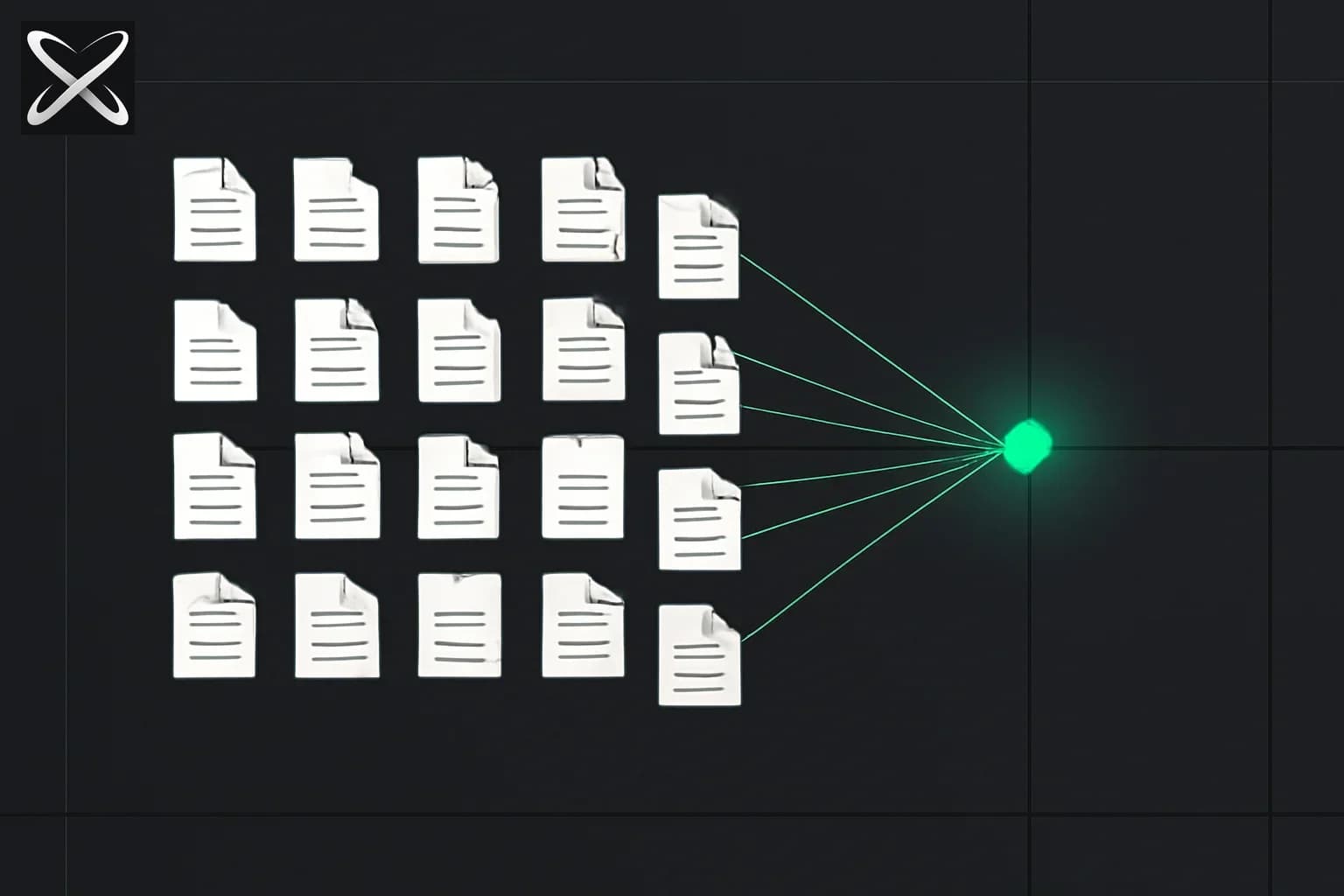
Strip away the cute name, and Soul.md is doing a job that's become extremely familiar to anyone who's worked with coding agents in 2026: it's a plain markdown file that tells an AI system who it is and how to behave, read at runtime instead of being baked into model weights.
This is not a new idea in the agent-tooling world — it's the same convention explainx.ai has covered extensively on the coding-agent side:
- CLAUDE.md — a project-level file that gives Claude Code persistent instructions: your stack, your conventions, what to remember between sessions.
- AGENTS.md — the vendor-neutral, cross-tool version of the same idea, so Codex, OpenCode, Gemini CLI, and other harnesses can read one committed file instead of a vendor-specific one. explainx.ai's complete guide to agent markdown files catalogs more than a dozen of these — SKILL.md, MEMORY.md, DESIGN.md, WORKFLOW.md — each carving out a specific slice of an agent's behavior into a human-readable, version-controllable text file.
- OpenClaw — the open-source personal-agent project Steinberger created — reportedly uses its own small family of markdown files to configure agent identity and capabilities, which is the direct point of comparison in this story.
Soul.md appears to extend that same pattern to a new category: a consumer AI companion's persona, rather than a coding agent's engineering conventions. Where CLAUDE.md answers "how should this agent write code in this repo," a file named Soul.md is clearly reaching for something more identity-flavored — tone, personality, the boundaries of what the companion is willing to say or do. That's a reasonable reading of the name and Steinberger's reaction, but it's worth being precise about what's confirmed: neither Steinberger nor Meta has published Soul.md's schema, field names, or actual contents. What's confirmed is narrower — the file exists, it's part of Muse's configuration, and someone who builds agent identity files for a living looked at it and came away impressed enough to tweet about it twice.
The OpenClaw comparison, and what's actually claimed
The most specific claim in the whole thread comes from a reply, not from Steinberger or Meta. Michael Guo (@Michaelzsguo), quote-tweeting his own earlier post (translated from Chinese), wrote: "Just like OpenClaw, [Muse] also has almost the exact same 5 Markdown files. Little Z couldn't buy OpenClaw, but evidently carried forward the essence of the 'little crawfish' quite well, and lowered the entry threshold by quite a bit."
Read literally, Guo is making three separate claims:
- Muse ships roughly five markdown files, mirroring OpenClaw's own multi-file convention.
- Meta ("Little Z," a nickname for Mark Zuckerberg) reportedly tried and failed to acquire OpenClaw outright.
- Muse nonetheless converged on a similar configuration pattern, packaged for a much larger, less technical audience — Facebook-scale distribution instead of an open-source CLI a developer has to install.
None of this is independently verified by explainx.ai, and it shouldn't be treated as more solid than it is: it's one person's reply, based on what they could see through their own invite access, translated from another language. What can be said with confidence is narrower and more useful — the underlying convention Guo is describing (an agent's identity split across a handful of named markdown files rather than crammed into one system prompt) is a real, well-established pattern in 2026 agent tooling, and Muse having a file literally named Soul.md is consistent with Meta adopting some version of it.
Why this matters for builders, not just Muse users
The headline here isn't really "Meta Muse has a file called Soul.md." It's that the practice of giving an AI agent its identity in a plain, human-readable markdown file has now crossed from developer tooling into a consumer product used by people who will never open a terminal.
That crossover matters for a few concrete reasons:
It's becoming the default way to specify agent identity, full stop. A year ago, "prompt engineering" mostly meant crafting one long system prompt. In 2026, the more durable pattern — visible across CLAUDE.md, AGENTS.md, and now apparently Soul.md — is to split identity, memory, and capability into separate, named, versionable files. That's a discipline any builder can copy today, regardless of which company's product they're using.
Markdown-as-config is now genuinely cross-category. CLAUDE.md and AGENTS.md answer "how should this agent behave in this codebase." Soul.md, on current evidence, answers "who is this agent, personality-wise." Same mechanism (a plain-text file the runtime reads), different job. If you're building any kind of agent — coding assistant, customer-facing companion, internal ops bot — the lesson is the same: write down identity and behavior in something a human can read and diff, not just in a prompt buried in code. explainx.ai's AGENTS.md code-quality guide makes a related point for the coding side: decide what belongs in the markdown file versus what belongs in CI or tooling, rather than dumping everything into one growing document.
The convention isn't fully settled, and that has real costs. Ecommerce platform Shopify's Tobi Lütke publicly threatened to ban Claude Code over a split-brain problem between CLAUDE.md and AGENTS.md inside the same monorepo — two files claiming the same job, drifting out of sync. A consumer app introducing yet another named convention (Soul.md) is a reminder that "give the agent a markdown identity file" is now common enough to be genuinely useful, but the file names themselves are still fragmenting company by company. If you're standardizing this across your own team or tools, AGENTS.md is the closest thing to a vendor-neutral choice right now.
A companion's persona file raises different stakes than a coding agent's. CLAUDE.md misconfiguration produces bad code. A companion app's persona file governs tone, boundaries, and what the AI will and won't say to someone who may be treating it as an emotional confidant — a category explainx.ai flagged in its Muse safety analysis around the app's Sentinel permission architecture and data-access scope. The mechanism (a markdown file) is the same low-risk pattern either way; what changes is how much scrutiny the content of that file deserves before millions of people are talking to whatever it configures.
What's confirmed vs. what's still speculation
It's worth separating fact from inference cleanly, because most of the online reaction blurs the two:
Confirmed, from the tweets themselves:
- A file named Soul.md exists inside Meta's Muse and is part of its configuration.
- Peter Steinberger, an experienced builder of agent tooling, saw it after getting an invite and described Meta as having "defo been cookin" — a positive signal about engineering quality, not a technical spec.
- Muse invite access was still distributed unevenly via Facebook as of September 13, 2026, a few days after the app's broader launch.
- Michael Guo publicly claimed a resemblance to OpenClaw's multi-file convention ("almost the exact same 5 Markdown files").
Not confirmed — treat as speculative:
- Soul.md's exact schema, field names, or file format.
- Whether it is literally one of five files, or how those files map onto OpenClaw's own convention field-for-field.
- Any claim about how Soul.md content is actually used at inference time (whether it's injected as a system prompt, used for fine-tuning, or something else).
If and when Meta documents Soul.md officially, or someone with deeper access publishes its actual structure, that's a distinct, separate story from this one — this piece describes the moment as it stood on September 13, 2026.
The takeaway
Soul.md is best understood not as a Meta product feature to memorize, but as another data point in a trend explainx.ai has tracked all year: agent behavior is increasingly specified in small, named, human-readable markdown files rather than hidden system prompts or model weights. CLAUDE.md did it for Claude Code. AGENTS.md generalized it across coding harnesses. OpenClaw applied its own version to personal agents. Now a mainstream consumer app from Meta appears to be doing the same thing for AI companion persona. Whatever Soul.md's contents turn out to be, the pattern it represents — write your agent's identity down in a file you can read, version, and diff — is one every builder can start using today, with or without a Muse invite code.
Related reading
- What is CLAUDE.md? Persistent Memory That Transforms Claude Code Sessions
- Agent Markdown Files: The Complete Guide to SKILL.md, AGENT.md, CLAUDE.md, and More
- CLAUDE.md vs SKILL.md vs MCP: The Modern Agent Stack Explained
- What is OpenClaw? A Complete Guide to the Personal AI Assistant
- Is OpenClaw Safe? Anthropic's Ban, Peter Steinberger's Suspension, Explained
- Meta Launches Muse: The Personal Agent With a Sentinel Security Architecture
- Tobi Threatens Claude Code Ban Over AGENTS.md — Shopify Split-Brain Problem
- AGENTS.md for Code Quality: What Belongs in the File vs CI
This post reflects publicly available information as of September 13, 2026. Soul.md's exact structure has not been officially documented by Meta; details will be updated if that changes.