



Search is splitting into two surfaces. SEO still means earning visibility in ranked results on Google and Bing. GEO—Generative Engine Optimization—means earning citations inside AI-generated answers from ChatGPT, Perplexity, Claude, Gemini, Google AI Overviews, and Copilot.
When someone asks ChatGPT “what’s the best project management tool for a remote team of five?” they do not get ten blue links. They get a synthesized answer built from a handful of sources the model trusts. You are either in that answer, or you are invisible.
This guide explains what SEO-GEO is, why it matters in 2026, and how to apply it—grounded in the Princeton GEO paper (KDD 2024), platform behavior, and the same workflow practitioners use in the field. For agent-installable automation, see our companion post on the seo-geo skill on explainx.ai.
Key takeaways
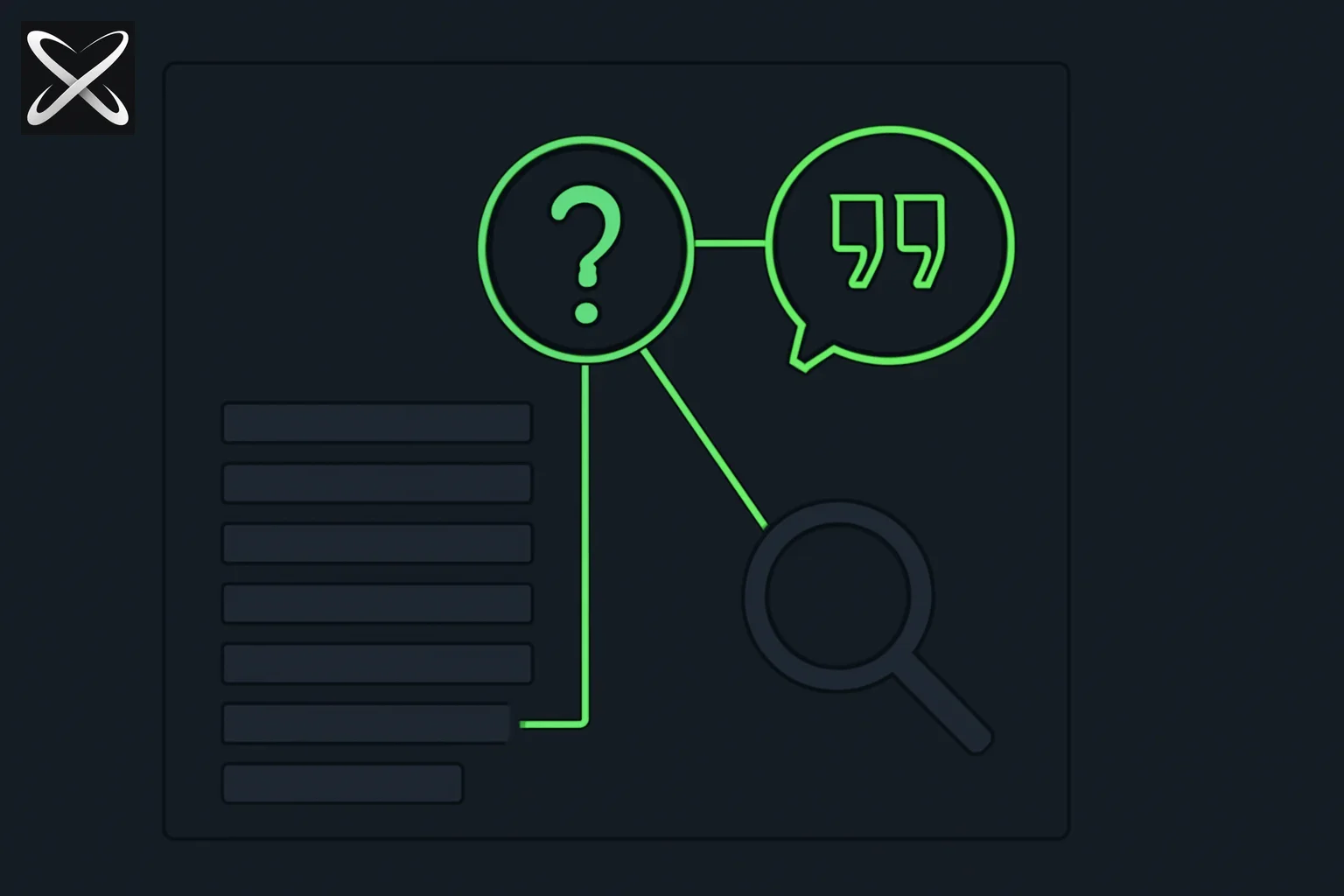 SEO-GEO explained — one question splitting into a direct AI citation beam and a longer ranked-results search path
-
GEO is not a replacement for SEO. It is the parallel discipline of earning mentions in AI answers. You need both as search behavior splits.
-
The core mental model: AI search engines don’t rank pages—they cite sources. Being cited is the new ranking #1.
-
Citation is scarce. Research cited in industry analyses suggests average AI responses draw from roughly two to seven domains—not ten blue links. Wikipedia alone has accounted for nearly half of factual ChatGPT citations in large-scale studies (Frase analysis, widely cited in GEO literature).
-
Mechanics matter. AI engines use RAG (retrieval-augmented generation), query fan-out (multiple sub-searches per question), and passage-level chunking (citation decisions happen at the paragraph level, not the page level).
-
Four filters decide who gets cited: extractability, factual density, entity clarity, and cross-source corroboration.
-
Evidence-backed content tactics work. The Princeton GEO study found citing sources, adding statistics, and expert quotations among the highest-impact modifications; keyword stuffing reduced visibility.
-
Write BLUF, not bury-the-lead. Bottom Line Up Front—answer in the first sentence of each section so chunks survive out-of-context retrieval.
-
Technical gates are non-negotiable. If GPTBot, PerplexityBot, or ClaudeBot are blocked in
robots.txt, your content cannot be retrieved—nothing else matters. -
Off-site presence is part of GEO. AI engines “shop” at Reddit, YouTube, G2, LinkedIn, and Wikipedia. Corroboration across platforms raises confidence.
-
Measure share of voice. Run the same prompts weekly across engines and track whether your brand is named, linked, or absent. Treat single-run ranks as noisy — see AI visibility measurement critique (July 2026).
What is Generative Engine Optimization (GEO)?
Generative Engine Optimization is the practice of improving how your content and brand appear in responses from generative search engines—systems that retrieve web sources, synthesize them with a large language model, and return a direct answer.
The term was formalized in the paper “GEO: Generative Engine Optimization” by researchers from Princeton University, IIT Delhi, Georgia Tech, and the Allen Institute for AI, presented at KDD 2024. They introduced GEO-bench—thousands of queries across domains—and measured how content modifications change visibility inside generated answers.
For practitioners, GEO answers one question:
When a user asks an AI engine about my category, will my brand or content be among the sources it trusts?
That is a different optimization target than classical SEO, which asks:
When a user searches Google, will my URL appear high enough to earn a click?
SEO vs GEO: same web, different game
| Dimension | SEO (traditional) | GEO (generative) |
|---|---|---|
| Output | Ranked list of links | Synthesized answer |
| User action | Scan results, choose a click | Read answer; maybe click a citation |
| Success metric | Rank position, CTR, organic sessions | Citation, named mention, share of voice |
| Competition width | ~10 results per page | Often 2–7 cited domains per answer |
| Primary optimizer | User selects from list | Model selects sources |
| Content unit | Page-level relevance | Passage/chunk-level extractability |
| Link building | Authority for rankings | Corroboration for trust |
The two overlap heavily in execution. Google’s Search Liaison Danny Sullivan has summarized the relationship as: “Good SEO is good GEO.” Google Search Central guidance in 2025–2026 similarly warns against “GEO hacks” (keyword-stuffed llms.txt, artificial chunking) and points back to technical health, helpful content, clear authorship, and entity signals—the same foundation strong SEO has always required.
GEO adds a layer: answer-first writing, entity optimization, AI bot access, platform-specific citation habits, and prompt-based measurement.
Why GEO matters now: the shift in numbers
Several public data points explain why marketing and product teams are prioritizing GEO alongside SEO. Treat percentages as directional—engines and studies evolve—but the pattern is consistent:
| Signal | Approximate figure | Why it matters |
|---|---|---|
| ChatGPT weekly users | 800M+ (mid-2025) | Largest conversational AI surface |
| Gemini app monthly users | 900M+ (Google I/O 2026) | Google-scale distribution |
| Google AI Mode monthly users | 1B+ (Google I/O 2026) | AI answers embedded in search |
| Google zero-click pressure | ~58% of clicks kept in-interface (Ahrefs, 2026) | Fewer classic SERP clicks |
| AI-referred session growth | ~527% YoY (Previsible / Search Engine Land) | Traffic exists—but unevenly distributed |
| Traditional search volume | −25% forecast (Gartner) | Answer engines substitute for queries |
AI-referred visitors also show stronger conversion intent in multiple industry analyses—Semrush has cited roughly 4.4× conversion value versus standard organic in some contexts, because the AI pre-qualifies the recommendation before the click.
GEO is therefore not only defensive (don’t lose visibility) but offensive (capture high-intent traffic from a new channel).
The mental model: citation is the new ranking #1
Memorize this sentence—it is the compass for every GEO decision:
AI search engines don’t rank pages. They cite sources. Being cited is the new ranking #1.
Three ways you can appear in an AI answer
- Direct citation with link — “According to [Brand]’s 2026 report…” with a footnote URL
- Named recommendation — “Tools like [Brand] are commonly used for…”
- Implied authority — your content shaped the answer without visible credit (detect via prompt testing and content fingerprinting)
All three have value. Named recommendations often matter most for brand discovery when the user never clicks.
What citation looks like in practice
Traditional SEO success: your blog ranks #3 for “best CRM for startups.” Some users click.
GEO success: ChatGPT answers “best CRM for startups” and names your product among two alternatives, citing your comparison guide—or pulls a statistics-rich chunk from your docs that anchors the recommendation.
There is no page two. There is barely a page one. There are the sources the model selected.
GEO vs AEO vs LLMO: the acronym soup
Industry terms overlap. Do not let naming slow you down.
| Term | Meaning |
|---|---|
| GEO | Generative Engine Optimization — academic term from the Princeton paper |
| AEO | Answer Engine Optimization — emphasizes the answer output |
| LLMO | Large Language Model Optimization — developer-facing framing |
| LLM SEO / AI SEO | Practitioner shorthand: “SEO for AI engines” |
| GSO | Generative Search Optimization — emerging enterprise synonym |
Same underlying shift: users ask questions; engines synthesize answers; your job is to be trusted, extractable, and citable.
This article uses SEO-GEO to mean doing both—classic search and generative citation surfaces.
How AI engines pick sources (under the hood)
GEO tactics only make sense once you understand retrieval mechanics.
1. RAG — Retrieval-Augmented Generation
Engines like ChatGPT, Perplexity, Claude, and Google AI Mode do not answer solely from static training memory. They retrieve fresh web content, read relevant passages, and generate answers grounded in that retrieval.
Your page must be crawlable, indexable, and retrievable at query time—not merely present in historical training data.
2. Query fan-out
A single user question often becomes multiple sub-queries run in parallel.
Example: “Best influencer platform for a DTC brand with a small team?” might fan out to:
- best influencer marketing software 2026
- influencer tools for small teams
- DTC brand influencer platform comparison
Implication: one page rarely covers every branch. Content clusters—pillar page plus FAQs, comparisons, use cases—cover more fan-out paths. In Perplexity, sub-queries are sometimes visible above the answer—use them as a keyword map.
3. Passage-level chunking
Engines evaluate chunks—often two to five sentences—not whole pages. A brilliant article with a vague third sentence in paragraph two may lose that chunk even if the page ranks well in Google.
Implication: every paragraph should survive being lifted out of context—self-contained, concrete, answer-first.
The four filters
Every major platform applies variations of these filters:
| Filter | Question |
|---|---|
| Extractability | Can a chunk be quoted cleanly without surrounding context? |
| Factual density | Does the passage contain verifiable claims, stats, named sources? |
| Entity clarity | Does the AI know who you are (schema, Wikidata, consistent NAP)? |
| Corroboration | Do independent sources agree with your claims? |
When you audit content, score each URL against all four. When you build schema (Section below), you solve entity clarity. When you invest in Reddit, G2, and press, you solve corroboration.
Platform personalities (where to prioritize)
Same filters, different weights:
| Platform | Distinctive signals |
|---|---|
| ChatGPT | Consensus across Wikipedia, Reddit, G2; domain authority; fresh content (~30 days) |
| Perplexity | Open citations; freshness; PDF assets; FAQ schema; requires PerplexityBot access |
| Claude | Brave Search index; structural clarity; transparent sourcing; epistemic honesty |
| Gemini / AI Mode | Schema markup, E-E-A-T, named Person schema; overlaps with strong Google SEO |
| Google AI Overviews | ~76% URL overlap with top organic results (Ahrefs)—ranking still matters |
| Copilot | Bing indexing; HowTo step content; fast pages (<2s) |
Practical priority if time is limited:
- Fix universal foundations (bots, schema, BLUF content, statistics)
- Optimize for ChatGPT + Google AI Overviews (volume)
- Add Perplexity tactics (FAQ schema, freshness, PDFs)
The Princeton GEO methods (evidence-based tactics)
The Aggarwal et al. paper tested nine modifications on GEO-bench. Treat percentage lifts as research directional estimates, not guarantees on your site—but the priority order is validated by subsequent practitioner work.
| Method | Reported lift (paper) | Application |
|---|---|---|
| Cite sources | ~+40% | Name institutions, studies, reports—not “research shows” |
| Statistics addition | ~+37% | Specific numbers: “9.3 days → 3.7 days,” not “faster” |
| Quotation addition | ~+30% | Named expert with title inline |
| Authoritative tone | ~+25% | Direct claims; remove empty hedging |
| Easy to understand | ~+20% | Plain definitions; short sentences |
| Technical terms | ~+18% | Domain vocabulary where it signals expertise |
| Unique words | ~+15% | Avoid repetitive template phrasing |
| Fluency optimization | ~+15–30% | Read aloud; remove friction |
| Keyword stuffing | ~−10% | Avoid — hurts AI visibility |
Notable finding: lower-ranked pages in traditional search often gained more from GEO methods than already-dominant pages—GEO can be a breakthrough path for challengers, not only incumbents.
Our seo-geo agent skill encodes these methods for Claude Code and other agents. Our AI slop post inverts the same table—slop is what happens when you skip citations, stats, and structure.
Writing for citation: BLUF and structure
BLUF — Bottom Line Up Front
Military briefings state the conclusion first. GEO writing does the same.
Every H2, H3, and FAQ answer should:
- Lead with the direct answer (20–40 words)
- Support with evidence (2–4 sentences)
- Close the section before starting a new idea
Before (traditional SEO intro): three sentences of preamble, zero citable claims.
After (GEO), illustrative wording: “The platform centralizes campaign briefs, reviews, and sign-offs in one approval queue. Teams can inspect outstanding decisions without reconstructing email chains.” Use measured figures only when you have evidence for them.
Run the 20-word test: if the first sentence exceeds ~40 words and does not contain the answer, rewrite it.
Structural elements that help retrieval
- Question-shaped H2/H3 headings — match how users prompt AI
- FAQ blocks with FAQPage JSON-LD — answers in BLUF format
- Tables and lists — comparison data AI can extract cleanly
- One idea per section — improves chunk boundaries
Avoid AI slop patterns: vague authority, repetitive cadence, claims without receipts. GEO and quality converge.
Princeton methods in practice: before and after
The Princeton paper tested abstract modifications; practitioners translate them into sentence-level patterns. Here are three high-impact rewrites:
Cite sources (+40%)
| Before | After |
|---|---|
| Research shows that brands using influencer marketing see higher engagement than those relying on paid ads alone. | A 2025 Influencer Marketing Hub study of 3,500 brands found influencer-driven campaigns produced 11× higher ROI than traditional digital advertising over the same period. |
Statistics addition (+37%)
| Before | After |
|---|---|
| Our customers see faster content approval times after switching to our platform. | Teams using automated approval workflows reduce average content approval cycles from 9.3 days to 3.7 days — a 60% reduction — within the first 90 days of onboarding. |
Quotation addition (+30%)
| Before | After |
|---|---|
| Customers consistently tell us that managing campaigns has become much easier. | "Before we centralized briefs and sign-offs, I was managing 12 creators across four WhatsApp groups and a spreadsheet," says Priya Mehta, Head of Marketing at Zivame. "Now the entire brief-to-approval cycle is in one place and takes half the time." |
Five targeted changes to one high-traffic page often outperform five new pages written quickly.
GEO article skeleton
A structure that consistently performs across ChatGPT, Perplexity, and AI Overviews:
- H1: The full question the article answers
- Intro: BLUF answer in ~30 words, then setup
- H2s: Sub-questions phrased as users ask them
- Body: BLUF + 2–4 paragraphs of evidence per H2
- Comparison table: real, verifiable data where relevant
- FAQ block: 5–8 questions with FAQPage schema
- Conclusion: restate the answer; add a next step
Pull all H2 headings out of context and read them as a list. If they do not tell the story of the article, rewrite them.
Run your first GEO content audit
Before creating new content, audit what you already have. Score priority pages against the four filters:
| Column | What to score |
|---|---|
| Extractability | 1–5: Does each H2 lead with a direct answer? Do paragraphs stand alone out of context? |
| Factual density | 1–5: Specific claims, statistics, and attributed quotes per section |
| Entity clarity | Yes/No: Organization schema, consistent brand naming |
| Corroboration | Yes/No: External sources confirm key claims |
Start with: homepage, top 3–5 traffic pages, primary product/feature pages, and any existing FAQ URLs.
Scoring extractability: Read the first sentence under every H2. Score 1 if it is preamble, 5 if it answers the heading immediately. Then copy one mid-page paragraph into a blank document—score 1 if it needs surrounding context, 5 if fully self-contained.
Scoring factual density: Count specific claims (stats, named sources, quotes) and divide by the number of H2 sections. Fewer than one claim per section scores 1; four or more scores 5. Most marketing pages score 1–2; high-performing GEO content scores 4–5.
Sort by lowest combined score. Write one specific fix per page—not "improve this page," but "rewrite H2 intros to BLUF" or "add two statistics to the features section." A 20–30 page audit takes two to three hours; rerun it after 90 days to measure progress.
Technical and entity foundations
Great writing hits a ceiling if machines cannot crawl or identify you.
Allow AI crawlers in robots.txt
Check yoursite.com/robots.txt. Common bots:
| Bot | Engine |
|---|---|
GPTBot, ChatGPT-User | OpenAI / ChatGPT |
PerplexityBot | Perplexity |
ClaudeBot, anthropic-ai | Anthropic / Claude |
GoogleOther | Gemini, AI Overviews |
Bingbot | Copilot |
Applebot | Apple Intelligence |
Critical mistakes: Disallow: / for all agents, or explicit blocks on GPTBot / PerplexityBot left over from 2023 training concerns. For citation, you need retrieval access.
Schema markup (JSON-LD)
Schema is how you declare entities in a machine-native format.
Minimum GEO stack:
- Organization on homepage —
name,url,logo,foundingDate,founder,description,knowsAbout,sameAs[] - FAQPage on FAQ sections — questions must match visible content
- Article on blog posts — link to author via
@id - Person on author pages —
jobTitle, credentials,sameAs[],worksFor
Validate at Google Rich Results Test and Schema.org Validator.
Entity consistency
Align facts across LinkedIn, Crunchbase, G2, Wikidata, and your site. AI systems build knowledge graphs—inconsistent founding dates or product names reduce entity clarity and make models default to better-known competitors.
Wikidata: the underused GEO lever
Wikidata is the open knowledge base behind much of Google's Knowledge Graph—and many AI systems query it directly. Every entity gets a Q-number (e.g., Q312 for Apple Inc.).
Creating a sourced Wikidata entry shifts your brand from an ambiguous text string to a structured entity with verifiable facts. The bar is lower than Wikipedia: any real business with a website, founding date, and public presence can qualify if statements are referenced.
Minimum statements to add:
- Instance of (P31) — business type
- Founded by (P112) — linked to founder if possible
- Inception (P571) — founding date
- Headquarters location (P159)
- Official website (P856)
- Industry (P452)
Add a reference URL for each statement (your site, press, LinkedIn, Crunchbase). Then add your Wikidata URL to Organization schema sameAs[]. Initial citation improvements often appear within one to two weeks of clean entity setup; compounding effects build over three to four months.
Entity consistency audit
Run the same facts across five platforms and fix discrepancies:
| Platform | What AI engines cross-check |
|---|---|
| LinkedIn Company | Name, industry, founding year, employee count, URL |
| Crunchbase | Founding date, founder, HQ, funding, category |
| G2 / Capterra | Product name, category, features, reviews |
| Wikipedia | Editorial facts if an entry exists |
| Wikidata | All structured statements |
If your site says founded 2021, LinkedIn says 2020, and Crunchbase says 2019, models often skip the claim or skip you entirely. Fix your website first (canonical source), then LinkedIn, Crunchbase, and G2. Update all profiles in the same week when milestones change.
Off-site authority: where LLMs “shop”
GEO is not only on-site. AI engines trust platforms with structural credibility:
- Wikipedia — dominant for factual citations; requires notability and editorial standards
- Reddit — product recommendations; genuine community participation beats promo posts
- YouTube — how-to and explainer queries; transcripts and show notes get indexed
- G2 / Capterra — B2B comparisons; fresh, specific reviews are extractable
- LinkedIn — professional and founder verification
- Trade press — independent editorial coverage as corroboration
Playbook headline: Get mentioned in things that get cited—third-party “best of” lists, HARO/Qwoted expert quotes, original survey data, podcast transcripts, and maintained review profiles.
When your site and a Reddit thread and your G2 page agree on the same verifiable claim, corroboration filters strengthen.
The “get mentioned in things that get cited” playbook
You do not always need to be the directly cited source. Appearing inside sources AI already trusts often moves the needle faster.
| Tactic | Who it fits | What to do |
|---|---|---|
| Third-party “best of” listicles | Almost everyone | Identify top roundup articles in your category; pitch authors with a data point, case study, or feature gap you fill |
| Expert quotes (HARO / Qwoted) | Founders, executives | Respond within ~2 hours with specific, data-backed quotes—not generic PR |
| Original data-led PR | Teams with proprietary data | Publish a survey or benchmark with methodology; email journalists as a resource, not a press blast |
| Active G2 / Capterra management | B2B SaaS | Fresh reviews with specific use cases; update category tags quarterly; consider comparison pages for “A vs B” queries |
| Podcast appearances | Founders, experts | Prioritize shows with indexed transcripts and show notes—that text is what gets cited |
| Reddit contribution | Consumer and prosumer categories | 30 minutes weekly in relevant subreddits; answer questions helpfully; avoid promo-only accounts |
Monthly rhythm: Week 1 — journalist queries; Week 2 — review requests and profile checks; Week 3 — Reddit; Week 4 — one pitch or data asset to three journalists. One listicle placement or podcast per quarter; one original data publication every six months.
E-E-A-T for AI: authors matter
AI engines assess who wrote the content, not only the page. Pages with strong E-E-A-T signals are cited at materially higher rates in AI Overviews and similar surfaces.
Every article needs a named author with:
- Full name and specific title (not "Marketing Professional")
- Verifiable experience ("10 years in product management across fintech and SaaS")
- Links to LinkedIn, published work, and external profiles
- Person schema with
jobTitle,knowsAbout,sameAs[], andworksForpointing to your Organization@id - Article schema linking each post to the author
@id
Experience—first-hand, specific, verifiable knowledge—has become a top driver of AI citation trust. Founders and practitioners have an advantage generic content teams do not.
Add a visible Last Updated date and refresh statistics quarterly. Stale pages lose citations over time as engines favor fresher retrieval candidates—especially on Perplexity.
Measurement: share of voice in AI engines
GEO without measurement is guesswork.
Prompt-testing tracker (weekly)
- List 20–50 prompts your buyers actually ask (category, comparison, “best X for Y,” troubleshooting).
- Run them across ChatGPT, Perplexity, Gemini, and Copilot.
- Record: cited with link, named without link, competitor cited, no relevant citation.
- Track share of voice over time—not single runs.
Optional: monitor AI-referred sessions in GA4 (referrers from chat.openai.com, perplexity.ai, etc.)—growth is uneven but directional.
90-day GEO plan (week by week)
| Weeks | Actions |
|---|---|
| 1–2 | Audit robots.txt; unblock AI crawlers. Add Organization + FAQPage schema on homepage and top 3 URLs. BLUF-rewrite your highest-traffic page. Run baseline prompt tests (20 prompts × 4 engines). |
| 3–4 | GEO content audit on homepage + top 5 pages. Apply cite-sources and statistics patterns to money pages. Create or claim Wikidata entry; link Q-number in schema. |
| 5–6 | Build FAQ cluster (5–8 questions) on primary category page. Entity consistency audit across LinkedIn, Crunchbase, G2. Fix any founding-date or name mismatches. |
| 7–8 | Launch G2 review campaign (target 5+ fresh reviews with specific use cases). First HARO/Qwoted responses. Add Person schema to author/about page. |
| 9–10 | Publish comparison table or "X vs Y" page with verifiable data. 30-minute Reddit contribution sessions in 2–3 relevant communities. |
| 11–12 | Re-run prompt tracker; calculate share-of-voice delta. Refresh stale statistics. Identify fan-out gaps from Perplexity sub-queries; add one supporting page per gap. Re-score GEO audit spreadsheet. |
By day 90 you should have: open bot access, validated schema, BLUF money pages, a Wikidata-linked entity, corroboration on at least one off-site platform, and a baseline share-of-voice trend—not a one-time snapshot.
What to track in your prompt tracker
For each prompt, log date, engine, and outcome:
| Outcome | Meaning |
|---|---|
| Cited with link | Best case—direct traffic potential |
| Named without link | Strong brand discovery |
| Competitor cited | Gap to close—study their chunk structure |
| No relevant citation | Category not covered or filters failed |
Segment by platform. ChatGPT may cite you while Perplexity does not—platform-specific tactics from the table above apply. Track trend, not single runs; engines vary day to day.
Install the seo-geo skill if you want an agent to run audits, schema templates, and checklists programmatically:
npx skills add https://github.com/whyashthakker/agent-skills-marketing --skill seo-geo
Browse the listing: seo-geo on explainx.ai.
SEO-GEO checklist (start this week)
Technical
-
robots.txtallows major AI crawlers - Sitemap submitted; core pages return 200
- Organization + FAQPage schema validated
Content
- Top page rewritten with BLUF intros
- At least three named citations or statistics on primary URL
- FAQ section with genuine Q&A—not boilerplate
Entity
-
sameAslinks to LinkedIn, Crunchbase, G2 - Author bios with credentials + Person schema
Off-site
- G2/Capterra profile current (B2B)
- One corroboration target identified (listicle, press, Reddit thread)
Measurement
- Prompt list documented; baseline share-of-voice captured
Common mistakes (and fixes)
| Mistake | Fix |
|---|---|
| Blocking AI bots while optimizing content | Unblock retrieval crawlers; separate training vs citation policy deliberately |
| Writing long intros before the answer | BLUF every section |
| “Studies show” without naming the study | Cite sources method (+40% in paper) |
| Single page for a whole category | Build clusters for query fan-out |
| Ignoring entity signals | Organization/Person schema + Wikidata path |
| Keyword-stuffed legacy content | Rewrite for fluency and facts; stuffing hurts |
| Treating GEO as hacks | Follow Google guidance: helpful content, real expertise |
| No off-site corroboration | Invest in G2, press quotes, community presence |
How SEO-GEO connects to explainx.ai
explainx.ai sits at the intersection of AI tooling and discoverability:
- Skills registry — install seo-geo for agent-driven audits
- Blog posts — technical content structured for citation (this article follows the same BLUF + FAQ + table patterns)
- MCP servers — structured tool surfaces agents and search systems can reason about
If you publish agent skills, docs, or technical guides, SEO-GEO is how practitioners find you in both Google and ChatGPT—not only how end-users run your software.
Related reading
- Hanover Institute: GEO built to get cited by chatbots (Aug 18, 2026) — the same citation playbook at nation-state volume, with FARA attached
- As AI eats the web, the internet is losing its memory — why owning your canonical URL and archive is now a durability question
- Markdown for Agents — content negotiation, token savings, and the cloaking debate
- The seo-geo agent skill — install, workflow, Princeton methods table
- What is AI slop? — inverse of GEO-quality content
- AI alignment intro — why “aligned” metrics still need human verification
- Magnifica Humanitas — Vatican AI encyclical — stakeholder framing for truth and governance
- GEO for marketers: get cited by AI answer engines — GEO applied to marketing team workflows and brand voice
- Reddit's ChatGPT citations collapsed 86% on August 14 — citation share moving overnight, in practice
- Google AI Mode shows the same products 21.6% more expensive — AI Mode's selection logic diverges from traditional search on price, seller, and product mix, not just citations
- ChatGPT Maps: local discovery at chatgpt.com/maps — a dedicated ChatGPT surface for place search; visibility still flows from structured attributes and third-party records, not a separate Maps listing
Primary research: GEO: Generative Engine Optimization (arXiv) · ACM KDD 2024 proceedings
Summary
SEO-GEO means optimizing for ranked search and AI citation at the same time. SEO chases clicks from blue links; GEO chases inclusion in synthesized answers where models pick only a handful of sources. The mental model is simple: citation is the new ranking #1.
Mechanically, GEO success requires retrievable content (RAG), extractable passages (chunking), credible claims (statistics, quotes, citations), clear entities (schema, Wikidata, consistent profiles), and corroboration across the web. The Princeton paper gives an evidence-backed priority list; BLUF writing and AI bot access are the highest-leverage starting moves.
Good SEO remains the foundation. GEO is the layer you add when your customers stop googling—and start asking AI.
Statistics and platform behaviors cited here reflect public reports and research through mid-2026; re-verify against primary sources (Ahrefs, Gartner, Google I/O, arXiv) before board-level commitments.