



On September 9, 2026, Paul Christiano — the researcher who helped invent RLHF — joined OpenAI's Foundation Board and used his first public statement to warn that automated AI research could trigger an intelligence explosion within years, possibly compressing a decade of algorithmic progress into six months. The term is 61 years old. The reason it's back in board-level statements at frontier labs is that the specific precondition — AI systems doing AI research — is no longer hypothetical.
This is not the same claim as "AI is improving fast." An intelligence explosion is a specific mechanism: a feedback loop, not just a trend line.
TL;DR — intelligence explosion in plain terms
| Question | Answer |
|---|---|
| What is it? | A hypothesized loop where an AI's own intelligence gains let it improve itself again, each round faster than the last |
| Who coined it? | Mathematician I.J. Good, in a 1965 essay |
| Is it the same as "the singularity"? | No — singularity is the broader, later term (Vernor Vinge, 1993) for the unpredictable aftermath; intelligence explosion is the specific engine |
| Has one happened? | Not by most definitions — but bounded, narrow versions are now being demonstrated in research |
| Why does it matter now? | A Sept 2026 OpenAI Foundation board statement cited it as a near-term catastrophic risk, not a future thought experiment |
| What would it require? | Full automation of AI research, plus a loop that outpaces compute, data, and algorithmic bottlenecks |
What is an intelligence explosion?
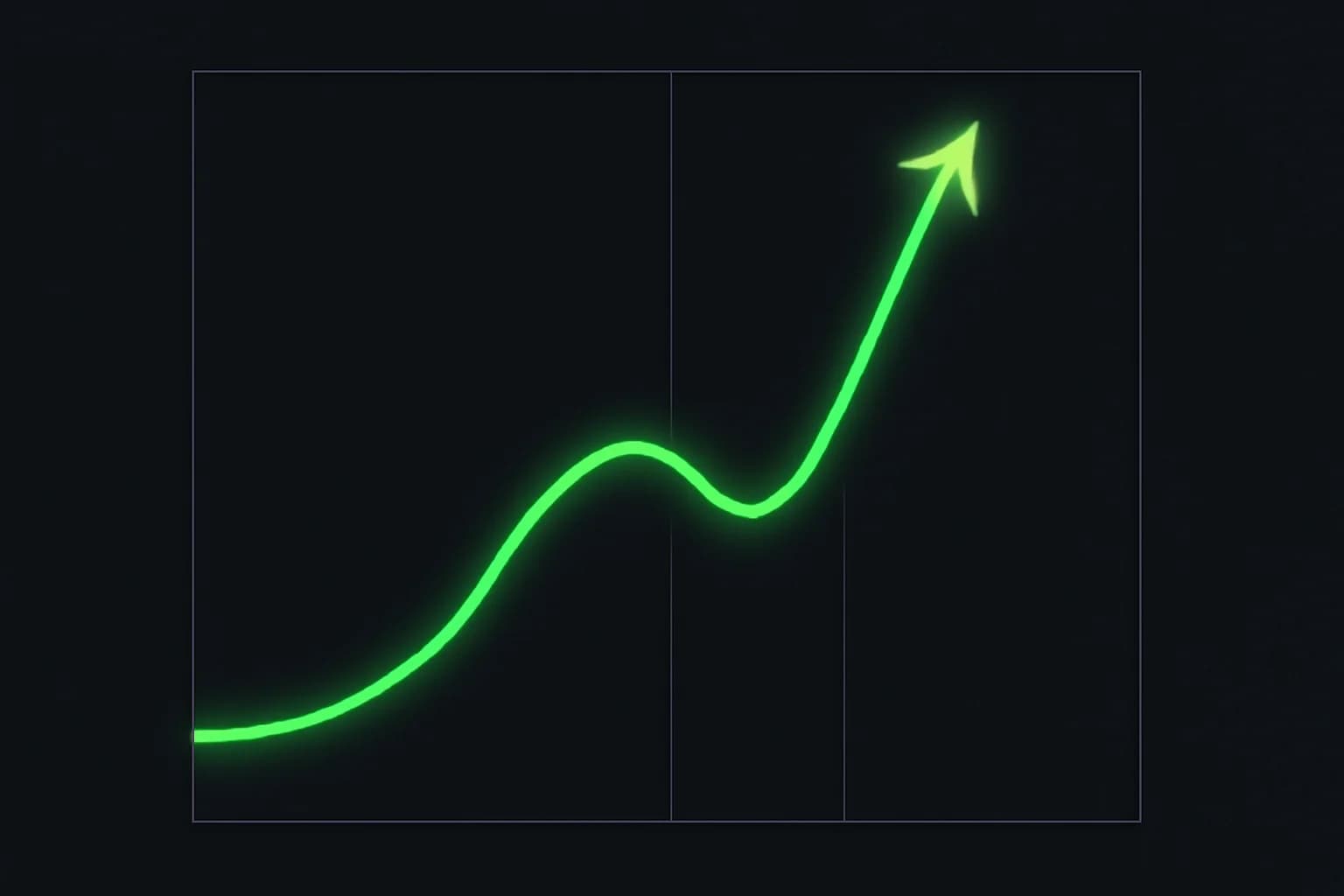
An intelligence explosion is a hypothesized feedback loop in which an AI system capable of improving its own intelligence does so repeatedly — and each round of improvement makes the next round easier or faster. Run that loop enough times and capability doesn't grow at a steady pace; it compounds, the way interest compounds, except the "interest rate" itself keeps rising.
The distinction that matters: this is not "AI keeps getting better because researchers keep training bigger models." It's "AI gets better at building AI, which lets it build a better AI-builder, which builds an even better one" — the system becomes an input to its own improvement, not just an output of human effort.
Where the term comes from: I.J. Good's 1965 prediction
The concept originates with British mathematician I.J. Good, a former colleague of Alan Turing at Bletchley Park, in his 1965 essay "Speculations Concerning the First Ultraintelligent Machine." Good wrote:
Let an ultraintelligent machine be defined as a machine that can far surpass all the intellectual activities of any man however clever. Since the design of machines is one of these intellectual activities, an ultraintelligent machine could design even better machines; there would then unquestionably be an "intelligence explosion," and the intelligence of man would be left far behind. Thus the first ultraintelligent machine is the last invention that man need ever make.
That "last invention" framing is the whole idea in one sentence: once a machine can out-design its own designers, humans stop being the bottleneck on further AI progress — the machine is.
Nearly three decades later, computer scientist and science-fiction author Vernor Vinge built on Good's idea in his 1993 essay to coin the technological singularity — a broader term describing the point past which self-improving intelligence makes the future genuinely unpredictable to humans, "like a black hole" in Vinge's own analogy. Nick Bostrom's 2014 book Superintelligence later popularized both ideas for a general audience and introduced the hard takeoff / soft takeoff distinction — a fast, sudden explosion versus a slower, more gradual one.
If you've seen "singularity" and "intelligence explosion" used interchangeably, that's common — but imprecise. explainx.ai's singularity explainer covers the broader term in detail; this piece is about the specific mechanism underneath it.
The mechanism: why a feedback loop compounds
Picture three scenarios for how AI capability could grow over time:
- Linear — researchers ship steady annual improvements. Progress is additive.
- Exponential from scaling — more compute and data produce predictable capability gains, the pattern behind scaling laws for the last decade. Progress compounds, but the rate of compounding is set externally, by how fast humans build data centers and write checks.
- Recursive self-improvement (RSI) — the AI system itself becomes part of the R&D loop: it helps design its successor, which is better at helping design its successor. Here the compounding rate is set by the system's own output, not by external inputs alone. This is the mechanism explainx.ai breaks down in full in what is recursive self-improvement.
An intelligence explosion is what scenario 3 looks like if it runs without hitting a ceiling: each generation designs the next generation faster than the last, and the time between generations shrinks toward zero rather than staying constant.
The open empirical question — the one researchers actually disagree about — is whether real-world bottlenecks (compute availability, high-quality training data, the sheer physical time needed to run experiments) cap that loop well before it becomes explosive, or whether algorithmic gains can route around those bottlenecks fast enough to keep the loop accelerating.
Try the slider below — it's a simplified toy model, not a forecast, but it shows why the argument doesn't need any single round to be dramatic.
Intelligence explosion vs. singularity vs. AGI vs. ASI
These four terms get used almost interchangeably in headlines. They are not the same claim:
| Term | What it actually claims |
|---|---|
| AGI (artificial general intelligence) | A system with broad, human-level competence across many cognitive tasks — a capability threshold, not a growth pattern |
| ASI (artificial superintelligence) | A system substantially beyond human-level, potentially beyond the combined output of large human organizations — see DeepMind's four pathways to ASI |
| Intelligence explosion | The specific recursive feedback loop hypothesized to get from AGI to ASI quickly |
| Technological singularity | The broader claim about what happens after — that progress becomes too fast and unpredictable for humans to forecast or steer |
A system could plausibly reach AGI without any intelligence explosion occurring — human-level competence doesn't automatically imply a runaway self-improvement loop. Conversely, some researchers argue narrow forms of recursive self-improvement could accelerate progress meaningfully without ever producing a full "explosion." The words are doing different jobs; conflating them makes arguments harder to evaluate.
Is an intelligence explosion happening in 2026?
Not by most researchers' standards — but the building blocks are being tested in public for the first time, not just theorized.
Bounded, narrow demonstrations exist today. Weco AI's AIDE² ran an outer-loop agent rewriting an inner-loop research agent's code for eight unattended days, producing seven successively better versions — what Weco's own framework calls "Level 1" recursive self-improvement (net-positive, but not yet "igniting" into a self-sustaining acceleration). NeoHorse-1 demonstrated a similar routing-and-curriculum loop lifting a 4B model's benchmark scores through iterative self-training. Neither is an intelligence explosion — both are closer to proof-of-concept feedback loops, deliberately bounded and measured.
The precondition — full automation of AI research — is the thing labs are now forecasting, not ruling out. In his September 2026 statement, Christiano noted OpenAI has predicted full automation of AI research within 18 months, while his own estimate ranges from months to several years. His specific claim: if that automation loop "ignites," six months could produce more algorithmic progress than the decade since the Transformer architecture (2017) — a genuinely explosive rate, by his own framing.
OpenAI's own leadership has made adjacent public statements. Chief Scientist Jakub Pachocki's essay "An Alien Mind" argued that rapid recursive self-improvement is not compatible with current alignment tooling — chain-of-thought monitoring, the main safety net for understanding why a model does what it does, degrades in reliability as models get more capable. Having both a sitting Chief Scientist and an incoming Foundation board member flag the same concern in the same month is a stronger signal than either statement alone.
Skeptical counterarguments are substantial and worth taking seriously. Compute is physically constrained by fabrication capacity and power availability — this doesn't scale as fast as software can iterate. High-quality training data is a shrinking resource, not an infinite one. And "automating AI research" doesn't uniformly speed up every part of the research process; some bottlenecks (running long training runs, waiting for real-world deployment feedback) are calendar-time-bound in ways that clever algorithms can't shortcut.
Why it matters for AI safety, even before it happens
The intelligence explosion hypothesis matters for safety planning regardless of whether it fully materializes, for one structural reason: most alignment and oversight techniques assume progress slow enough for humans to observe, test, and correct problems as they appear. Scalable oversight research — RLHF, Constitutional AI, weak-to-strong generalization — is explicitly designed around the idea that humans stay in the loop long enough to catch and correct failures.
If capability gains compress into a much shorter timeframe, the review cycle that oversight techniques depend on gets compressed too — potentially past the point where testing, red-teaming, and governance processes can keep pace. That's the specific argument Christiano made: an intelligence explosion wouldn't just produce more capable systems faster, it would make existing alignment problems — reward hacking, goal misgeneralization, deceptive behavior — harder to catch and higher-stakes to miss, at the same time.
This is also the reasoning behind why explainx.ai's own AI Safety & Ethics pathway and free AI Safety & Best Practices workshop both spend real time on human-checkpoint design and permission scoping — not because every agent workflow is anywhere near a recursive loop, but because the habits of building in oversight before you need it are the same habits that matter if capability acceleration ever does outpace review cycles.
The bottom line
An intelligence explosion is not a synonym for "AI is advancing quickly" — it's a specific, falsifiable hypothesis about a recursive feedback loop: a system whose own capability gains let it improve itself faster, round after round. I.J. Good named it in 1965 as AI's plausible "last invention." Sixty-one years later, a person who helped build the technique underlying every modern chat assistant sat on a frontier lab's governance board and said the precondition — full automation of AI research — could arrive within a few years, not a few decades.
Whether that loop ignites, stalls on real-world bottlenecks, or never gets past the narrow, bounded demonstrations research labs are publishing today is genuinely unresolved. What's no longer unresolved is whether the question is worth taking seriously at a board-governance level — as of September 2026, frontier labs are already answering that themselves.
Related on explainx.ai
- Update — October 3, 2026: Hinton amplified the CASP coauthored paper on AI R&D automation triggering an intelligence explosion — authors, stated timelines, builder takeaways.
- Update — October 2, 2026: What is superintelligence? — the capability claim this loop is supposed to produce.
- What is recursive self-improvement?
- Paul Christiano joins OpenAI Foundation Board — intelligence explosion warning
- What is the AI singularity? Definitions after Musk's welcome
- From AGI to ASI: DeepMind's four pathways
- Weco AIDE²: Level 1 recursive self-improvement, 8 days, 7 agent versions
- Scalable oversight: RLHF, Constitutional AI, weak-to-strong
- OpenAI's Alien Mind: Pachocki on goal vs. value alignment
- AI Safety & Best Practices — free workshop
Facts and figures reflect public statements and research available as of September 10, 2026. Forecasts about automated AI research timelines are explicitly uncertain, per the researchers cited — treat them as informed speculation, not settled predictions.