



The Washington Post asked six popular chatbots to write voter guides for addresses in every US county, then checked more than 3,000 of them. The finding: chatbots failed to say which congressional district an address was in 48% of the time, and when they did, they were wrong 22% of the time. Many of the errors traced back to small voter-information sites that appear to be built with AI help, according to the Post's October 28 analysis (republished by DNYUZ).
For a story about midterm information, that is the point worth understanding: the chatbots did not only hallucinate. They sometimes faithfully repeated mistakes from sources that were themselves machine-made.
TL;DR: the test in numbers
| Question | Answer, per the Post |
|---|---|
| What was tested? | Six popular chatbots asked for voter guides, addresses in every US county |
| How many guides? | More than 3,000 |
| District missing | 48% of the time |
| District wrong, when given | 22% of the time |
| Worst on wrong districts | Claude and Alexa+, each wrong for more than 1 in 5 addresses |
| Best on paper | ChatGPT, Google AI Mode, Perplexity, "but only because they typically did not respond with a district at all" |
| Where did errors come from? | Often websites with wrong information that also appeared AI-assisted |
| Company reactions | Amazon paused Alexa voter guides; others pointed to safeguards |
What did the chatbots get wrong?
The Post gives concrete examples. Asked for a Missouri address, ChatGPT listed a US Senate seat that is not on the ballot this year. For an address in Wyoming, Claude named two politicians as Senate candidates when neither is on that ballot; the Post says one is running for state treasurer and the other for superintendent of public instruction. Amazon's Alexa wrongly listed the seat of Sen. Chuck Schumer as up in 2026.
In Maryland, Google's AI Mode placed an address in the wrong district and said Rep. Steny Hoyer faced a Republican challenger, although Hoyer announced his retirement in January, the Post reports.
Senate seats follow a six-year cadence, which makes a model's mistake here notable. Jevin West, co-founder of the University of Washington's Center for an Informed Public, told the Post that voting is "not something that's changing that quickly," so the failures are not simply about stale data. He added that right now the chatbots are "far from reliable."
How AI-built websites fed the errors
The more interesting finding is the supply chain. The Post says the chatbots repeatedly cited a small set of sites:
- myvotega.com, which labels much of its content as AI-generated, put Burke County, Georgia in the wrong congressional district, and ChatGPT repeated it. Its operator, Kevin Cronin, told the Post: "I'm just a guy with a laptop," and said he has since fixed the error.
- theballotbrief.com, described by the Post as largely produced by AI tools. It lets users look up ballots by Zip code. Political boundaries do not line up with postal codes, and the Post found multiple instances of wrong Zip-to-district translations that chatbots then passed on. Copilot, Perplexity and ChatGPT each cited it substantially. Founder Ben Torres Ezrick said the site draws on official government sources and that "accuracy is incredibly important."
- ivoterguide.com, a Christian voter guide that Copilot and Perplexity relied on heavily, per the Post.
The mechanism matters. When a chatbot retrieves from a web page, the user sees the answer without the context of the site: its labels, its beta notice, or the fact that a single person runs it. A tiny site becomes an authority simply because a retrieval system ranked it.
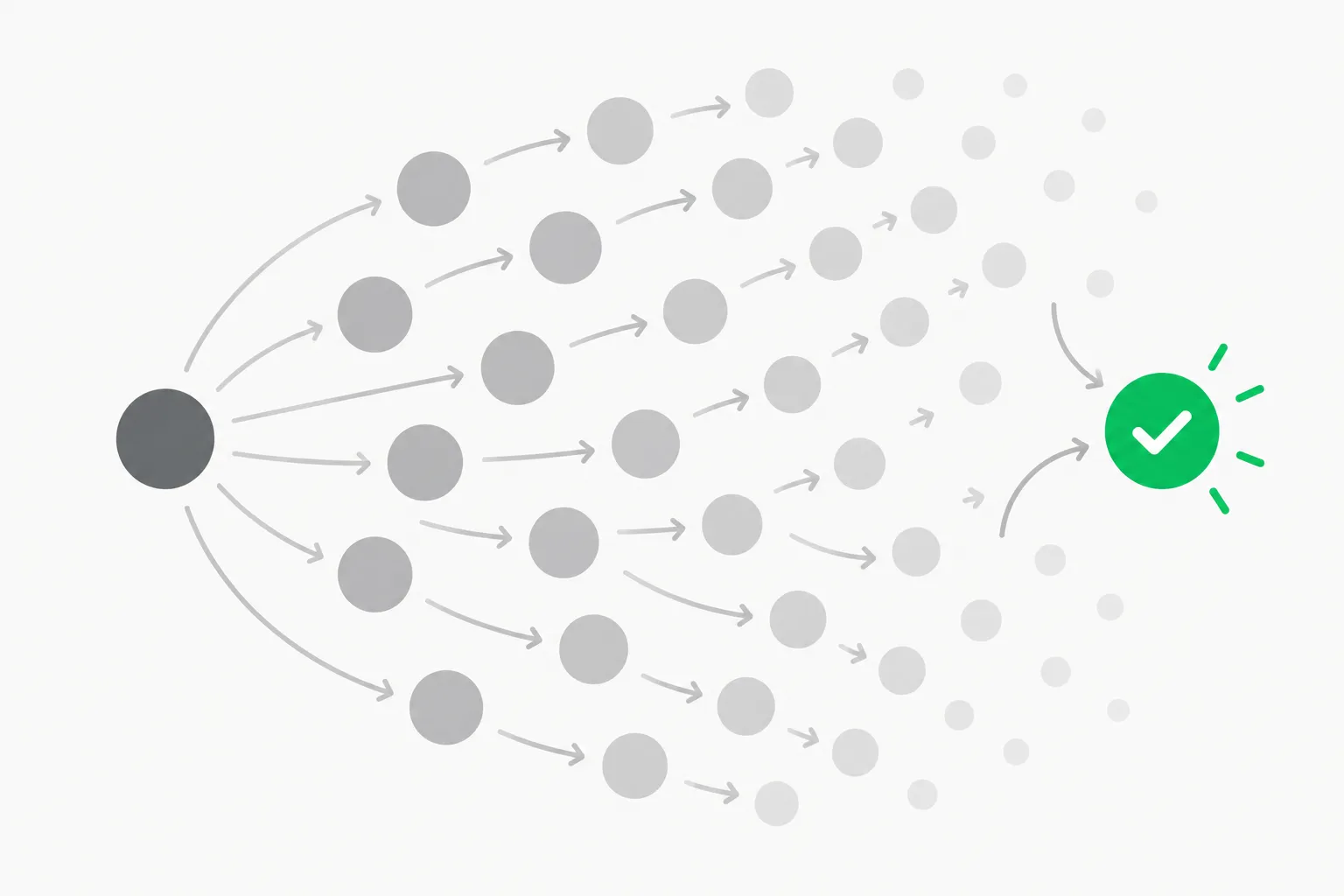 A single gray dot spreading ripples of copies, showing how one wrong source spreads through chatbot voter guide answers
What did the AI companies say?
Per the Post, the responses differed:
- Amazon: said Alexa is designed to draw on sources like the Associated Press, RealClearPolitics and Ballotpedia, identified the cause of the errors, and paused Alexa's ability to create voter guides. The Post notes Amazon's executive chairman, Jeff Bezos, owns The Post.
- Microsoft: said it is looking into the results and is committed to "accurate, high authority election information" for Copilot.
- Anthropic: pointed to safeguards and its Democracy Works partnership; see our coverage of Anthropic's midterm safeguards.
- OpenAI: said it fixes issues when made aware and also announced a Democracy Works partnership. The Post says OpenAI and Amazon appeared to change how their chatbots answer after being contacted. We covered the company's plans in the OpenAI election war room post.
- Google: said its systems corroborate claims against trusted sources. See also how AI Mode treats election questions.
- Perplexity declined to comment and SpaceXAI did not respond. The Post says it has partnerships with OpenAI and Perplexity.
Disclaimers were present, the Post says, but usually sat below hundreds of words of confident, partly incorrect detail. West said disclaimers have limited effect because consumers "will claim something's true because they Googled it, or a chatbot told them."
Why this is an AI-quality story, not only an election story
There are two separate failures in the test. One is model behavior: asked for a district it cannot compute, a chatbot should say so, and the Post found the best-scoring bots were "right" mostly because they declined. The other is source quality: retrieval pulled from pages that look polished but are thin, machine-produced and unaudited.
That second problem is likely to grow. Cheap AI site builders mean anyone can launch a plausible voter guide in a weekend. If retrieval systems reward fresh, well-structured pages, tiny sites can capture citations on high-stakes queries. Our earlier coverage of AI-generated campaign ads and the Russia-linked AI celebrity videos shows the supply side of election content; this test shows the answer side.
The same lesson applies to builders. If you ship a retrieval-based assistant, log which domains your answers cite, set an allowlist for civic and medical topics, and prefer a refusal with an official link over a confident guess. Where the right answer needs an exact address lookup, hand the user to the authoritative tool.
What people are asking
Does this mean chatbots should never be used for voting questions? Not necessarily. They are reasonable for explaining what a ballot measure means or how early voting generally works. They are a poor tool for the one thing the Post tested: a precise, address-specific list of races and candidates, where one wrong district changes every line below it.
Why would a chatbot cite a "beta site run by one person"? Retrieval systems rank pages by relevance and freshness signals, not by who stands behind them. Cronin's remark that he is "just a guy with a laptop" captures the gap: the model has no way to weigh an operator's credentials unless the product builds that check in. This is a form of what search specialists call generative engine optimization, where content is shaped to be picked up by AI answers, intentionally or not.
Are the partnerships with Democracy Works enough? The Post says ChatGPT and Claude add a separate link to a trusted partner site below many election answers, and West called that a step in the right direction. But the Post also found that partnership "did not prevent significant errors" in the guide-style answers, because the long answer is still generated from whatever the model retrieved.
Will the fixes hold? Amazon paused the feature and OpenAI appeared to adjust its behavior after being contacted. Pausing is the cleanest fix because it removes the risky output entirely. Others have said they investigate; with the midterms days away, readers should assume no vendor has fully solved address-level accuracy.
What does this mean for teams building assistants? Treat civic information like medical or legal information. Restrict citations to an allowlist of official domains, require an exact-address lookup tool instead of free-form generation for district questions, and test the product the way the Post did: sample many real addresses across regions, and measure how often the assistant answers versus abstains. An assistant that abstains 48% of the time is not accurate, it is just quiet, and the metric should capture both.
How to check your ballot safely
- Go to your state or county election office and use its official ballot lookup with your full street address.
- Do not rely on Zip codes. They cross district lines.
- If a chatbot lists candidates, check each against the official candidate list, especially for Senate seats, which come up on a six-year cycle.
- Treat a chatbot's "verify with official sources" note as the actual instruction, not the fine print.
- Check the cited site: who runs it, whether it labels AI content, and whether it links to official sources.
What is verified and what is not
Verified from the Post's published analysis: the six-chatbot, 3,000-guide design, the 48% and 22% district figures, the named examples, the company statements, and the named sites. Not verified by us: the Post's data and per-chatbot tables, which we could not access beyond the article text; and whether the sites have been corrected since. Ezrick's and Cronin's statements are their own. We link to the republished text because the Post's page was not reachable in our fetch; check the original on washingtonpost.com.
NPR reported in early October that voters are already asking chatbots how to vote, which is why the stakes for these errors are real this cycle.
Related reading
- Anthropic's US midterms safeguards and Democracy Works partnership
- OpenAI election war room: what is confirmed
- Google AI Mode and the 2020 election question
- AI-generated campaign ads: claimed vs verified
- Russia-linked AI celebrity videos and Senate candidates
- AI PACs and the 2026 midterms
Figures reflect the Washington Post analysis of October 28, 2026 as republished, and may change as companies fix their products.