



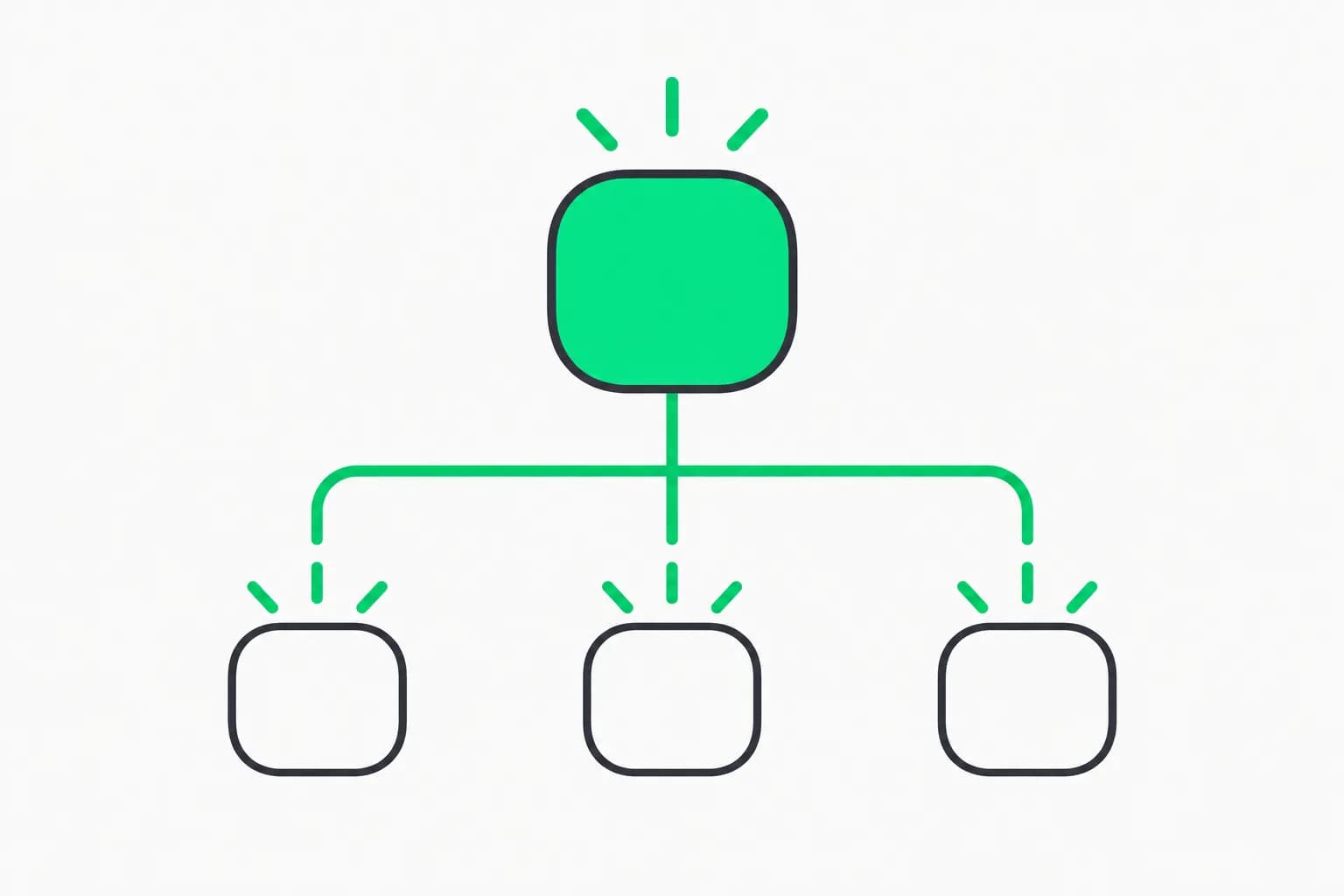
Roast Room is a Claude Code project that stages a debate. You type /roast-room plus a business decision, a chair agent asks clarifying questions, seven sub-agents modelled on famous founders argue it out, and you get a scored verdict and a PDF. The repository has about 1,200 stars, 282 forks and an MIT license.
It is a fun idea and a genuinely instructive example of how sub-agents and skills compose. It is also a simulation, and the README is upfront about that. This post covers how it works, how to run it, what it costs, and how much to trust the output.
TL;DR: questions readers ask first
| Question | Answer |
|---|---|
| What does it do? | Runs a chair plus up to nine advisor sub-agents through rounds of debate, then scores options |
| Who are the advisors? | Default board of seven: Bezos, Paul Graham, Alex Hormozi, Gary Vaynerchuk, Dan Martell, Gino Wickman, Warren Buffett |
| Needs an API key? | No, it runs in Claude Code under a Claude plan; an optional API mode bills your Anthropic account |
| Cost? | About 21 sub-agent runs for a full council, so a meaningful slice of plan usage; --quick is cheaper |
| License? | MIT |
| Are the advisors real? | No. Simulations from public work, not affiliated or endorsing |
How does Roast Room work?
Per the README, Claude Code acts as the Chair. It runs the rounds, scores the options and writes the verdict. Each advisor is a sub-agent with its own "brain": a set of frameworks, positions and quotes drawn from that person's public work.
Scoring is weighted by how relevant an advisor's domain is to your question, so Buffett's view on capital counts for more on a pricing-and-cash question than Vaynerchuk's on attention. The Chair also caps the verdict when an advisor flags serious downside risk, and it pushes back when everyone agrees too quickly, which is a deliberate guard against the sycophancy that plagues multi-agent setups.
The repo structure shows the pattern clearly:
.claude/skills/roast-room/holds the protocol, prompts, scoring and one brain per advisor.claude/skills/newroaster/holds the scripts that build a new advisor.claude/agents/holds one agent file per advisorapp/holds a small Node server, a web page and the PDF buildersessions/holds saved councils, including three examples
The web app only plays back saved session files and makes no AI calls itself. The thinking all happens in your Claude Code session.
The advisors
The default board has seven seats, each tied to a domain:
- Jeff Bezos: strategy and reversibility
- Paul Graham: product and startups
- Alex Hormozi: offers, pricing and sales
- Gary Vaynerchuk: marketing and attention
- Dan Martell: people, hiring and founder time
- Gino Wickman: operations and scaling
- Warren Buffett: money and capital
Five more are on call and get pulled in by the Chair when a question fits: Naval Ravikant, Codie Sanchez, Leila Hormozi, Sara Blakely and Elon Musk. You can also build your own with /newroaster <name>, which assembles a brain from public sources and costs roughly 8 to 10 runs.
How to run it
Requirements are Claude Code and Node.js 20 or newer. Optional extras are yt-dlp for YouTube transcripts, Poppler for PDFs, and a kie.ai key plus Python with opencv-python for cartoon portraits.
- Clone the repo (or ask Claude Code to).
- Run
npm startand open localhost:4730. Leave it open. - In the same folder, run
claude. - Type
/roast-roomfollowed by your decision. - Answer the Chair's questions and watch the debate.
- Download the PDF. The full report is also saved under
sessions/.
Useful flags: --quick seats four advisors for two rounds, --seats name,name picks specific advisors, ask <name> gets one advisor's answer, --all seats everyone (up to nine), and board views or changes the default board. Board selection lives in roster.json as ask, auto or default.
What does a council cost?
This is the part most people will feel. The README says a full seven-advisor council uses about 21 sub-agent runs, which takes a meaningful share of a plan's usage. Sub-agents each carry their own context, so costs add up faster than the number of advisors suggests. Our sub-agent token cost analysis and the Claude Code token efficiency guide explain why, and what prompt caching changes.
Practical advice: start with --quick, save full councils for decisions that justify them, and avoid --all unless you are curious. If you set up the optional API mode, remember it bills your Anthropic API account rather than your plan.
Why the sub-agent design is worth studying
Even if you never ask Warren Buffett's simulation about your pricing, Roast Room is a clean template for a pattern we cover in Claude Code subagents and multi-agent workflows: a coordinator, specialist workers with distinct instructions, a scoring step, and a guard against premature consensus. The Anthropic docs on sub-agents in Claude Code describe the agent-file format it relies on.
Three design choices are worth copying:
- One file per specialist. Each advisor is a separate agent file with its own brain, so you can edit one without disturbing the rest.
- Weighted scoring by relevance. Votes are not equal; a specialist's opinion counts more inside their domain.
- A chair that argues back. Pushing back on fast agreement counters the tendency of language models to converge politely.
It also connects to the persona-style skills we have looked at before, such as founder-skill and its simulated buyers, and to how heavy Claude Code users structure work, as in Gary Tan's Claude Code workflow.
What a good question looks like
The council works best on decisions with real trade-offs and a clear set of options, not on open-ended "what should I build" prompts. A few shapes that fit the advisors' strengths:
- Pricing change. "Should we move from 29 dollars a month to usage-based billing for a developer tool with 400 paying users?" Hormozi's offer lens, Buffett's capital view and Bezos's reversibility test each have something concrete to say.
- Hiring versus tooling. "Do I hire a part-time support person or spend the same money on an AI support agent?" Martell's founder-time framing and Wickman's operations lens pull in different directions, which is where a debate earns its cost.
- Kill or continue. "Our second product has 40 users after six months. Do we stop?" Graham's focus on users and Bezos's two-way-door test make this a useful stress test.
Give the Chair numbers: revenue, churn, runway, team size and what you have already tried. The more specific the inputs, the less the advisors fall back on generic quotes. After the run, open the saved report under sessions/ and read the dissenting positions, not just the final score. The disagreements, where a risk-flagging advisor capped the verdict, are usually the most valuable output, and they tell you which assumption to test with real customers next.
Privacy and trust notes
Everything runs locally in your Claude Code session, and the README says raw fetched sources stay on your machine, with only the distilled brains meant to be committed. That is a sensible default, but remember that the text you give the Chair is sent to Anthropic like any other Claude Code prompt. If you build custom advisors from YouTube transcripts or PDFs, check the licensing of what you feed in before you commit the resulting brains to a public repository.
Limits and caveats
- Simulations, not people. The brains are built from public work. The advisors do not speak for the people, who are not affiliated with the project. Do not quote their output as something they said.
- No evaluation. We found no benchmark showing the verdicts improve decisions. A scored verdict looks rigorous, but the scores come from a language model role-playing, so false precision is a risk.
- Quote checking is partial. A script checks quotes against the brains, and each brain lists its sources, which is good practice, but it checks consistency with the brain, not truth.
- Garbage in, garbage out. The Chair's questions help, but the debate is only as good as the facts you supply about your market and numbers.
- Cost. About 21 runs per full council is not free in plan terms.
- Maturity. Nine commits mean it is early. Expect changes.
- Portraits need a paid key. Without kie.ai, a placeholder is shown.
Should you try it?
Yes, as a thinking tool and as a learning project. Use it the way you would use a rubber duck that happens to argue: it can surface angles you missed, such as reversibility, unit economics or hiring load. Do not use it as a substitute for talking to customers or a real advisor, and do not feed it confidential figures you would not put in a Claude Code session anyway.
If you want to learn the pattern, read .claude/skills/roast-room/ before running anything. The protocol and scoring files are the transferable part, and swapping the founders for roles in your own domain (a security reviewer, a performance engineer, a product manager) gives you a council that fits a code-review or architecture decision just as well.
Related reading
- Claude Code subagents and multi-agent workflows
- Do subagents use more tokens?
- founder-skill: eleven free Claude skills with simulated buyers
- Gary Tan's Claude Code workflow
- Claude Code token efficiency and prompt caching
- Claude Code commands reference
- What are Agent Skills?
- Official: the Roast Room repository
Star counts, flags and requirements are accurate as of October 27, 2026 and may change as the repository evolves.