



Qwen4 Max is Alibaba's new flagship model, and it is closed. Alibaba released it on November 16, 2026 as a sparse mixture-of-experts model with 2.4 trillion total parameters and a 1M-token context window. On November 21, Together AI added it as a serverless model at $1.50 per million input tokens and $4.50 per million output tokens, with a 30% sale through November 22.
Quick answer
| Item | Detail | Source |
|---|---|---|
| Release | November 16, 2026 | Alibaba Cloud |
| Architecture | Sparse MoE, 2.4T total, about 71B active per token | Alibaba Cloud |
| Context | 1M tokens | Alibaba Cloud, Together AI |
| Input / output | Text and image in, text out | Together AI |
| Weights | Not open; API only | Alibaba, outlets |
| Together list price | $1.50 in, $0.075 cached, $4.50 out per 1M | Together AI |
| Together sale price | $1.05, $0.0525, $3.15 until Nov 22 | Together AI |
| Model string | Qwen/Qwen4-Max | Together AI |
Why the release timeline matters
Qwen4 Max did not arrive from nowhere. Alibaba opened a limited preview on November 11, then released the model on November 16, and Together AI followed five days later. Earlier traces of the Qwen4 name showed up in code repositories and tooling before any official post, which is why we labeled those posts as claimed versus verified. The official Alibaba post and the Together AI article are the two sources that now confirm the core facts: the parameter counts, the context window, the price and the access path.
Readers who track the Qwen line should note the pattern. Alibaba shipped the biggest model first and promised the smaller open ones later, with no dates. The change matters most to teams that picked Qwen precisely because they could run it themselves.
How mixture-of-experts pricing works in practice
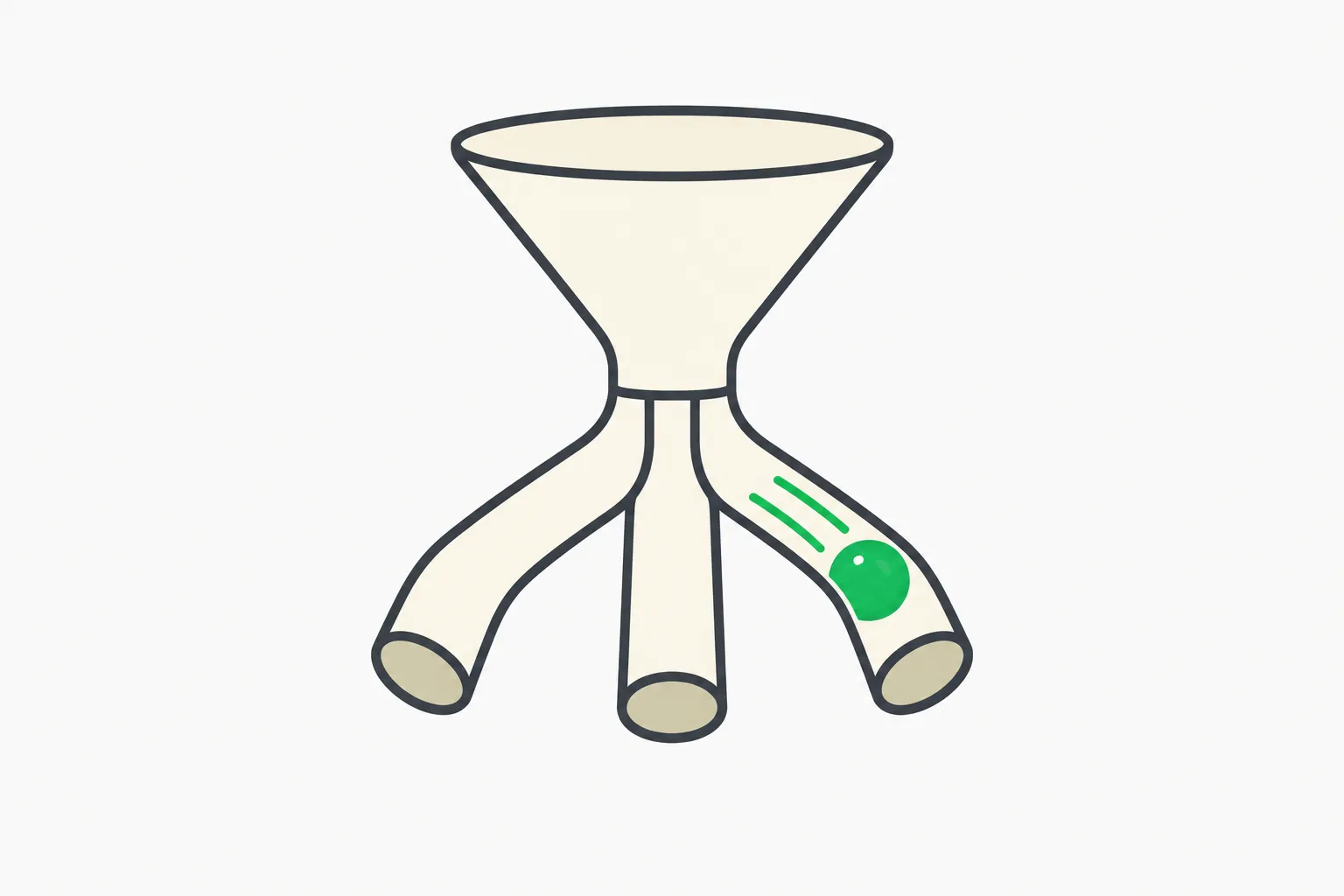 Diagram of a router sending one token through a few chosen experts, as in a Qwen4 Max sparse mixture-of-experts model
A 2.4 trillion parameter model sounds expensive to serve, but only about 71 billion parameters are active for each token. That ratio is roughly 3%. In general, a mixture-of-experts model costs compute in proportion to its active parameters, not its headline total, which helps explain a $1.50 per million input price for a model this large. Neither Alibaba nor Together has published their cost structure, so treat that as a general rule, not a statement about this price. Together lists the model as serverless only, with no dedicated endpoints.
For you, the practical effects are three. First, latency on a very long prompt is dominated by prefill, so the 54-second first token in Together's Tornado test is the number to plan around, not the per-token speed after that. Second, caching changes the economics: the repeat request returned its first token in 8 seconds. Third, thinking tokens bill as output, so a hard problem with reasoning_effort set to "max" can cost several times a short answer. Set a budget per request and log token counts from day one.
What Alibaba says Qwen4 Max is
Alibaba's press post calls Qwen4 Max "the most capable model in the Qwen family to date," aimed at work, creativity and research. It is a sparse mixture-of-experts design. Only a fraction of the weights run for each token: about 71 billion of 2.4 trillion. Alibaba says that is roughly 25% fewer active parameters than Qwen3.8 Max at the same scale.
The model has native vision and a one-million-token context window. Alibaba lists availability through the Token Plan and API on QwenCloud, and through its QwenWork and QwenStudio products. Together AI says the model is built for long agent work, including coding across large repositories.
For the previous flagship that Alibaba compares against, see our earlier coverage of the Qwen3.8 Max coding and cowork release.
The benchmark claims, and whose they are
Alibaba reports that Qwen4 Max ranks 6th on Code Arena and shows strong results on Agents' Last Exam, Vals Index, JobBench and Chartography. The press post gives no score tables for those in the text we read.
The headline numbers come from Work360, Alibaba's own benchmark covering industry tasks across 721 specialized fields. On it, Alibaba says Qwen4 Max:
- outperforms Qwen3.8 Max overall,
- uses 35% fewer tokens in high reasoning effort mode,
- cuts average cost per task by about 60%.
Treat all three as vendor claims. Work360 is Alibaba's proprietary test, and this post found no independent run of it. The 60% cost figure is also not a price cut: it mixes the per-token price with how many tokens the model spends on a task. Together AI's own article reports no standard benchmark scores at all.
Alibaba's showcase results
Alibaba lists several application results. Each is Alibaba's report, not an independent test:
- Cloud resource scheduling: about 9% lower data-annotation model call costs and more than 14x faster offline CPU rescheduling in benchmark tests.
- Automotive manufacturing: a showcase that cut manual workpiece programming from roughly 475 minutes to 24, a 95% reduction.
- Scientific discovery: a continuous 48-hour agent run that produced an experimentally validated coolant molecule for chip cooling, and an Alzheimer's research experiment with 454 tool calls and 3,239 metric evaluations across 24 candidate molecules.
These show the long-horizon agent use that Alibaba is selling. They do not tell you how the model performs on your own tasks.
Together AI's long-context test
Together AI ran one concrete test. It sent a bug report plus the full Tornado Python repository (344 files, 652,519 tokens) in a single request, with no tools and no retrieval.
- First token arrived at 54 seconds and the full reply at 72 seconds.
- The patch passed the maintainers' two regression tests and the full 1,673-test suite.
- The model pointed to a precedent in
tornado/iostream.pythat the maintainers also cited. - The run cost about $0.69 at the sale price, or $0.98 at list price.
- A repeat of a roughly 630,000-token request was mostly cached: first token in 8 seconds and input cost near 3 cents.
Together presents this as one example. It is a useful data point for repository-scale work, but it is a single bug on a single project.
How to call it
Together AI serves Qwen4 Max serverless only, with no dedicated endpoints and no fine-tuning. The practical details from its post:
- Model string:
Qwen/Qwen4-Max. - You must set
stream=True. Non-streaming requests return a 400 error withstreaming_required. - Thinking is on by default and streams in
delta.reasoningbefore the answer. Turn it off withreasoning={"enabled": False}. Settingreasoning_effortto"max"gives more thinking on hard problems. - Thinking tokens count as output tokens, so they appear on the $4.50 line.
- Tool calling works through the standard
toolsparameter, including multiple calls per turn. - Prompt caching is automatic but best effort.
Because output tokens cost three times input tokens, long-context workloads that reuse a prefix benefit most. Cached input at $0.075 per million is a twentieth of the list input price.
Closed, not open: what that changes
Alibaba's Qwen line built its reputation on open weights. Our coverage of the Qwen 3 download milestone shows how far that reach goes. Qwen4 Max breaks from that pattern: it is API only. Alibaba's press post says "open-weight, smaller-scale models from the Qwen4 series will soon be released to developers worldwide," with no dates.
The Qwen Code repository already carried Qwen4 traces before launch; we covered what was and was not verified there in Qwen4 in Qwen Code: 1M context and the Coder Plus and Omni names. The earlier OpenCode Qwen 3.8 Flash and Qwen4 preview post shows the same family hints months ahead.
For builders, the takeaway is simple. If you need to self-host, you wait. If you can use an API, Qwen4 Max is now a priced option beside the other frontier models. For a wider comparison of that field, see Frontier AI Models Compared and the Gemini 4 Neon comparison with Opus 5.5 and GPT-6 Astra. Neither includes Qwen4 Max yet, and this post does not rank it against them, because no independent shared-benchmark table exists.
Which jobs fit
| Job | Fit | Why |
|---|---|---|
| Whole-repository bug fixing | Worth testing | Together's Tornado run passed the full suite; one case only |
| Repeated queries over one large prefix | Strong on cost | Cached input is $0.075 per 1M at list |
| Short chat or simple extraction | Probably overkill | Output at $4.50 per 1M plus thinking tokens adds up |
| Self-hosted or air-gapped use | Not possible | No open weights |
| Fine-tuning | Not possible on Together | Serverless only at launch |
What is still unverified
- Independent results on shared benchmarks. Only Alibaba's Work360 and Code Arena rank are public.
- Whether the 60% cost-per-task claim holds outside Work360.
- The dates and sizes of the promised open Qwen4 models.
- What the price becomes after the Together sale ends on November 22.
Check Alibaba's launch post, our QwenCloud GA pricing coverage and Together's model page before you budget, and rerun your own evaluation before you switch.
What this means for what you build or pay
At list price, a 650,000-token repository request costs about $0.98 on Together, per its own test. That makes whole-repo prompts affordable for occasional use, and cheap with cache hits. Start with one real bug from your own codebase, record tokens and cost, and compare against your current model. If you are learning to build agent workflows with long-context models, explainx.ai's workshops cover the practical side.
Reading gets you the idea. Building it with feedback gets you the skill.