



Gemini 4 Neon is the cheapest of these four models per token, and the scores on shared benchmarks are close, but the numbers come from different labs. Neon costs $3 per million input tokens and $15 per million output tokens. Claude Opus 5.5 costs $4 and $20. GPT-6 Astra costs $10 and $50. Google's launch post says Neon scores 61 on the Artificial Analysis Intelligence Index, "just behind larger, slower models."
Google's post names no competitor, so a fair comparison has to be assembled from other sources. This post does that and labels each number. For the launch details alone, read our Gemini 4 Neon launch post.
Neon vs Opus 5.5 vs Astra vs Carbon at a glance
| Question | Gemini 4 Neon | Claude Opus 5.5 | GPT-6 Astra | Gemini 4 Carbon |
|---|---|---|---|---|
| Lab | Google DeepMind | Anthropic | OpenAI | Google DeepMind |
| Price per 1M tokens (in / out) | $3 / $15 | $4 / $20 | $10 / $50 | $4 / $20 ($2 / $10 promo through Nov 30) |
| Context window | 1M tokens | Not stated in our sources | Not stated in our sources | Not stated in our sources |
| Artificial Analysis index | 61 (Google, xhigh, AA Index v5.01) | 58 (AA v5) | 57 (AA v5) | 59 on v5, 60 on Google's slide |
| Public access | API, AI Studio, Antigravity, Gemini app | API, Claude apps | ChatGPT, API | Selected cyber defenders only |
Prices for Opus 5.5, Astra and Carbon come from our earlier frontier model comparison. Neon's price and the 61 score come from Google. The index scores are not strictly comparable: Google cites a version labeled v5.01 and a thinking level of xhigh, while the other scores are from the v5 index. A one- or two-point gap should be read as a tie.
Which benchmark numbers can you actually line up?
Only a few benchmarks appear in both Google's Neon post and Anthropic's earlier table, which put Opus 5.5, Astra and Carbon on the same rows. Here they are, with the source of each column.
| Benchmark | Neon (Google) | Opus 5.5 (Anthropic table) | Astra (Anthropic table) | Carbon (Anthropic table) |
|---|---|---|---|---|
| FrontierCode 2.0 | 46.2% (high effort) | 45.5% | 42.8% | 41.1% |
| AutomationBench | 56.3% | 42.5% | 41.4% | 53.9% |
| Terminal-Bench Science | 70.5% | 58.7% | 68.1% | 64.8% |
| Chartography | 73.5% | 64.4% | 71.0% | 72.5% |
Read this table with three cautions.
- Two labs ran two sets of tests. Anthropic published the Opus, Astra and Carbon columns in its Fable 5.2 launch material. Google published the Neon column. Each lab chooses settings, harnesses and prompts. The benchmark names match, but the setups may not.
- Each lab picks the benchmarks it wins. Anthropic left out rows it did not win, and Google calls several of its results best in class. Absence from a table is information.
- Some of Neon's results are internal. Google's post describes the Antigravity testing and the agentic safety suite as internal, with no external verification.
On this slice, Neon is at or above the other three on all four shared rows. The margin is small on FrontierCode and Chartography and larger on AutomationBench, where Neon is about 14 points above Opus 5.5 on these numbers. Our own Carbon vs Opus 5.5 vs Astra vs Grok 4.7 post shows how independent boards ranked the older Carbon against the same rivals.
Is Neon cheaper per task, not just per token?
Google says so. At its default high thinking level, Neon costs 32% less per task than Carbon. Against "top competing frontier models," Google reports roughly 50% to 80% lower cost per task on the Vals Index and Agent Arena Pareto charts, and "36%+ less per task" than competitors at their highest setting. The post does not name those competitors in the text, so you cannot map the claim onto Opus 5.5 or Astra from the words alone.
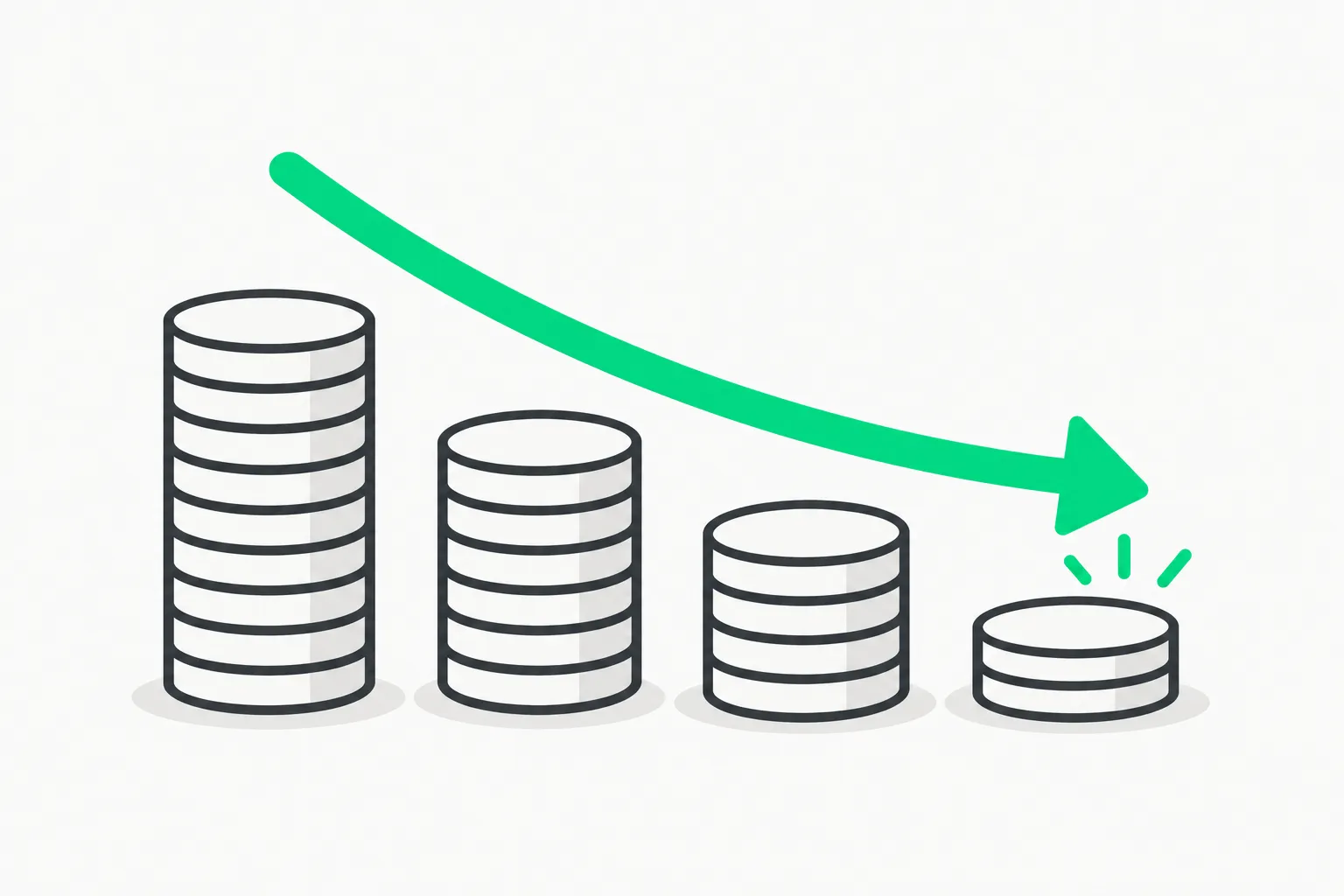 A coin stack shrinking step by step, showing lower cost per task for Gemini 4 Neon against Opus 5.5
Per-token price is only half the cost. Reasoning models spend tokens thinking, and the number varies by model and effort level. Simon Willison's single-prompt test in our launch post showed Neon at high thinking using 9,691 output tokens for 14.55 cents, against 20,305 tokens and 20.31 cents for Carbon. That is one prompt, not a benchmark. It does show why a cheaper list price and a lower cost per task can differ.
For a rough budget, use this approach on your own workload:
- Pick 20 to 50 real tasks from your repo or pipeline.
- Run each model at the same effort level and with the same tools.
- Log input tokens, output tokens and pass rate.
- Divide total cost by tasks passed, not tasks attempted.
A model that is 25% cheaper per token but fails 15% more tasks can cost more per working result.
Gemini 4 Neon vs Opus 5.5: how do they differ in practice?
Price. Neon is $3 and $15. Opus 5.5 is $4 and $20. Neon is 25% cheaper on both sides of the meter. Neon's cached-input price is $0.15 per million tokens, a 95% discount, per Google. Check Anthropic's pricing page for Opus caching rates before you compare the two.
Context. Neon has a 1 million token window with four thinking levels: low, medium, high and xhigh. Our sources do not give Opus 5.5's window, so check Anthropic's documentation.
Agents. Google pitches Neon as an orchestrator that directs parallel Hydrogen subagents in Antigravity. Anthropic's Opus 5.5 is its mid-priced coding workhorse. For routing advice between Anthropic's models see Fable 5.2 vs Opus 5.5: benchmarks, cost and routing.
Access. Neon is available now in AI Studio's paid tier, Antigravity for paid Pro and Ultra subscribers, and the Gemini app. Opus 5.5 is available in the API and Claude apps.
Gemini 4 Neon vs GPT-6 Astra: premium versus mid-tier
Astra is priced at $10 and $50, more than three times Neon on both sides. On the four shared rows above, Astra trails Neon on every one, though Astra is close on Terminal-Bench Science (68.1% against 70.5%) and Chartography (71.0% against 73.5%). If Astra's higher price buys you something, it has to be something these rows do not measure, for example the research and science tasks where OpenAI has published its own results. See GPT-6.2 Astra and Sol power-user reviews versus benchmarks for how users judged it outside the lab tables.
Gemini 4 Neon vs Carbon and Hydrogen
Inside Google's own family, the lineup slide has Carbon at 60, Neon at 61 and Hydrogen at 54 on the Artificial Analysis index. Carbon is for the hardest long-horizon work, Neon for general deep reasoning, and Hydrogen for speed. Carbon has a promotional price of $2 and $10 through November 30, which makes it cheaper than Neon per token until then, but it is not publicly callable. Our Hydrogen vs Argon vs Carbon comparison covers the cheap end.
 A three-step pricing ladder with the middle step highlighted, showing Gemini 4 Neon between Hydrogen and Carbon
Which model for which job?
| Job | Suggested pick | Why, and where the evidence comes from |
|---|---|---|
| Default coding agent on a budget | Neon, then test Opus 5.5 | Close FrontierCode scores, Neon cheaper per token (Google and Anthropic tables) |
| Business workflow automation | Neon | 56.3% on AutomationBench against 42.5% for Opus 5.5 (different labs) |
| Science and terminal tasks | Neon or Astra | 70.5% against 68.1% on Terminal-Bench Science; Astra costs far more |
| Hardest multi-day agent work | Test Anthropic's top model | Anthropic's table shows its Fable 5.2 ahead on most of its chosen rows; see our frontier post |
| High-volume, simple tasks | Hydrogen | Lowest price in the Gemini 4 line |
| Cyber defense | Wait for access | Neon for cyber is rolling out to Fairwind Program members; Carbon is limited to selected defenders |
If you want real builds with Neon rather than numbers, see Gemini 4 Neon use cases and demos.
What is still unknown?
- Named-rival cost per task. Google gives ranges, not model names. Independent cost-per-task runs from third parties have not been published for Neon in our sources.
- Opus 5.5 and Astra on Neon's other benchmarks. Terminal-Bench 4.1, SWE-sweep and WebExploitBench appear in Google's post without rival scores in our sources.
- Context windows and cache rates for the rivals. Not in the sources used here, so check each vendor's pricing page.
- Independent index placement. Google says Neon is #3 on the Artificial Analysis index. Check the live leaderboard, since index versions change.
Bottom line
Neon looks like a strong mid-priced choice: Google's numbers put it level with or above Opus 5.5 on shared rows at a lower per-token price, and well below Astra on price. The comparison is not clean, because the scores come from different labs, different settings and, for some rows, internal runs. Run your own tasks at equal effort, and compare cost per passed task. Treat every table here as a starting hypothesis.
Related reading
- Gemini 4 Neon launch: price, benchmarks and where it sits
- Gemini 4 Neon use cases and demos
- Frontier AI models compared: Fable 5.2, GPT-6 Astra, Carbon, Grok 4.7, Kimi K3.1, DeepSeek
- Gemini 4 Carbon vs Opus 5.5 vs GPT-6 Astra vs Grok 4.7
- Fable 5.2 vs Opus 5.5: benchmarks, cost and routing
- Gemini 4 Hydrogen vs Argon vs Carbon
- Official: Google's Gemini 4 Neon announcement, Simon Willison on Gemini 4 pricing
Prices, scores and availability are as stated by Google, Anthropic and Artificial Analysis as of November 20, 2026, and may change.