



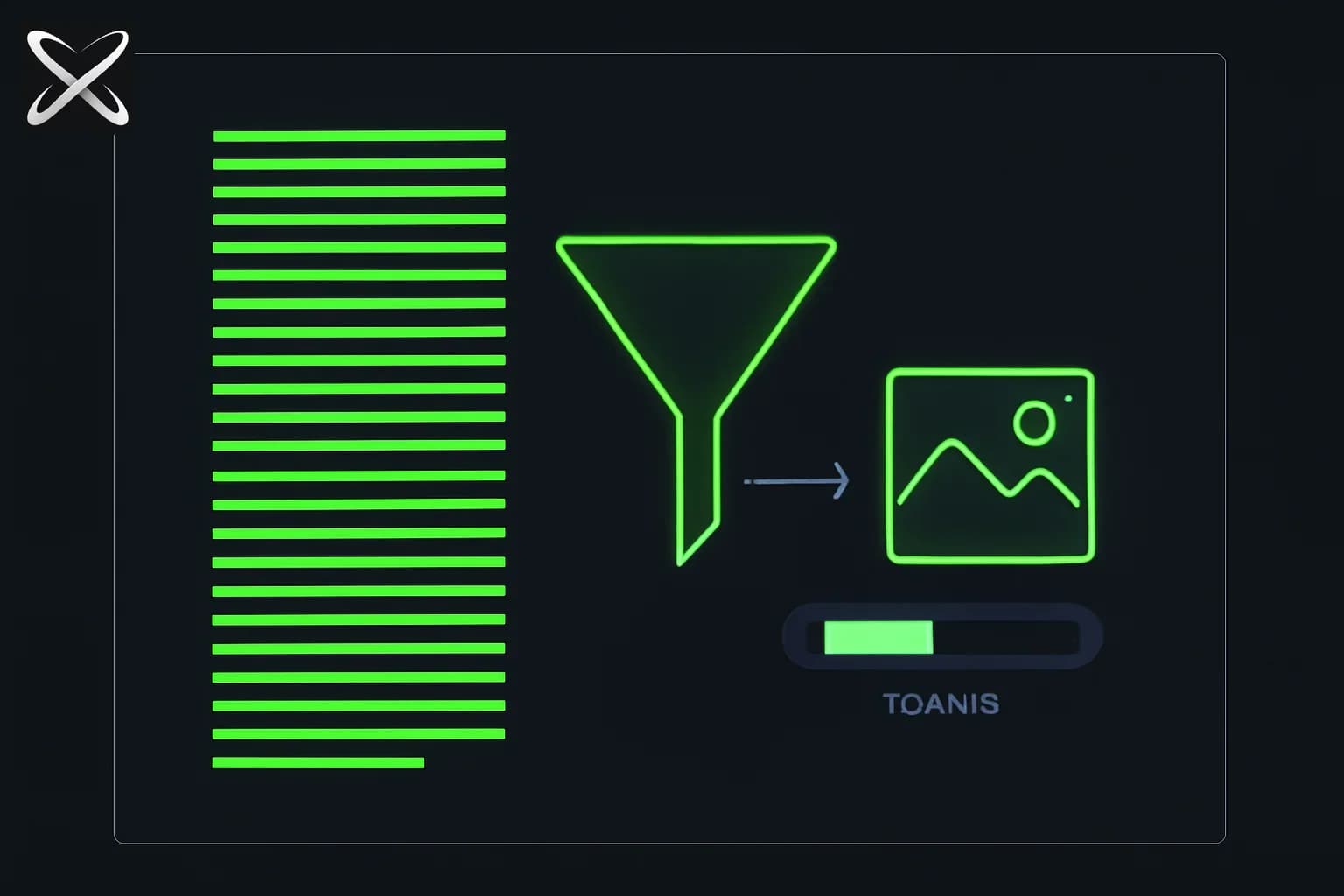
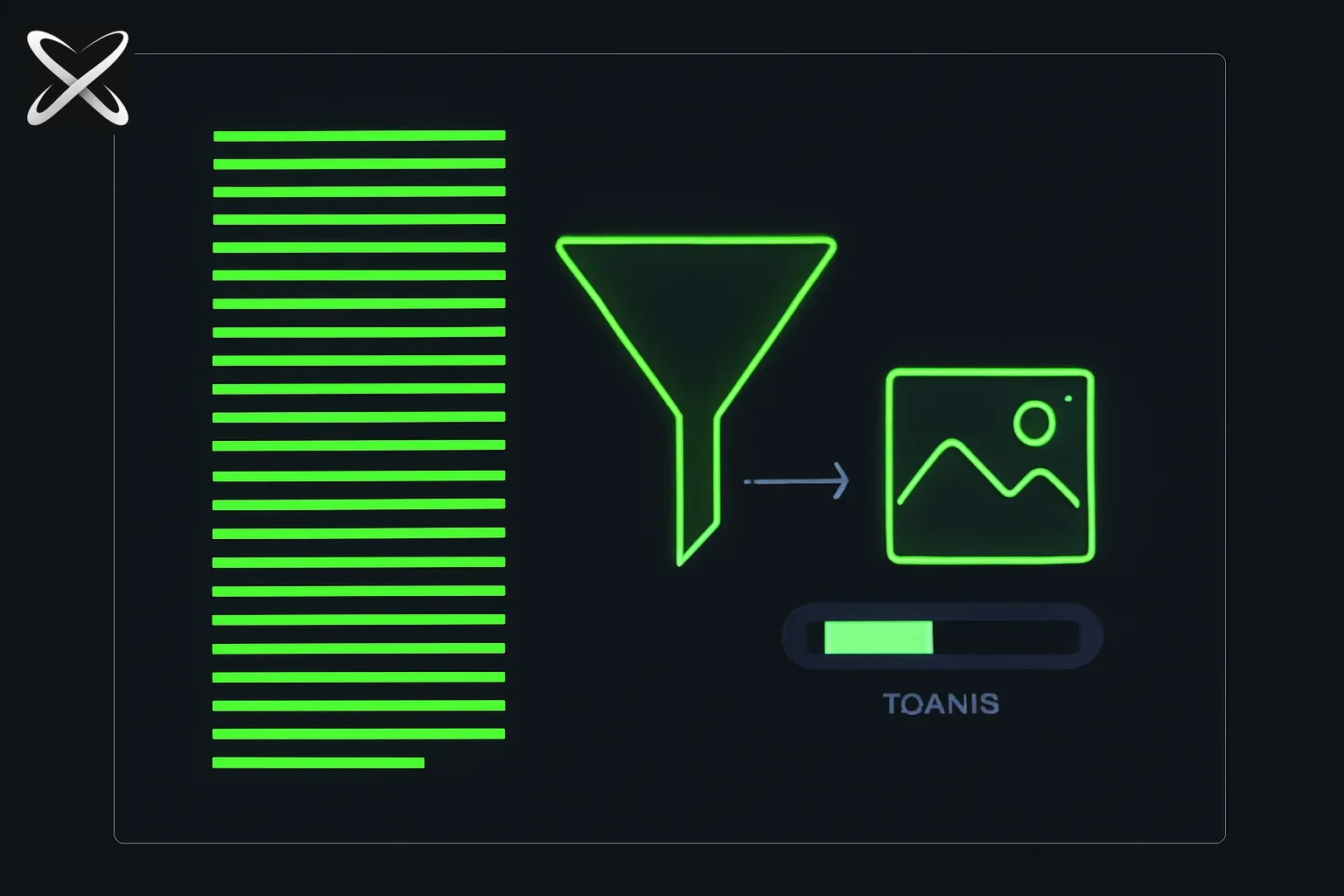
What if your system prompt cost 2,700 tokens instead of 25,000 — and the model still read every line? pxpipe (pxpipe-proxy on npm) is a local proxy that does exactly that: it intercepts Claude Code requests, reflows bulky text context into dense PNG pages, and forwards the rest unchanged. Same session. Same tools. Fraction of the input tokens.
The repo hit 2.2k GitHub stars with v0.8.0 shipping July 2026. The headline claim: ~59–70% lower end-to-end bills on Fable 5 list pricing — but the authors are explicit that workloads differ and the durable number is measured token cut per request, not marketing math.
TL;DR — what developers ask first
| Question | Answer |
|---|---|
| What is it? | Local HTTP proxy — text → PNG for bulky context |
| Run how? | npx pxpipe-proxy → ANTHROPIC_BASE_URL=http://127.0.0.1:47821 claude |
| Dashboard | http://127.0.0.1:47821/ — savings, conversions, kill switch |
| Default models | Fable 5 + GPT 5.6 only · Opus/GPT 5.5 opt-in |
| Savings | ~59–70% end-to-end on measured Fable traffic (varies) |
| Lossy? | Yes — hex/IDs not byte-safe in images |
| Output touched? | No — compresses request only |
| License | MIT · TypeScript · Node + Cloudflare Workers |
The insight — pixels, not characters
LLM providers bill text tokens by tokenizer chunk count. Vision billing is different: an image costs tokens from resolution, not how many characters you painted into the PNG.
pxpipe's README states the gap on real Claude Code traffic:
| Mode | Dense content efficiency |
|---|---|
| Text tokens | ~1 char per billed token |
| Image tokens (dense render) | ~3.1 chars per vision token |
A 1928×1928 page ≈ 4,761 vision tokens and holds ≈ 92,000 characters of wrapped monospace text. Text only wins above ~19 chars per text-token — Claude Code sessions average ~1.91 (N=391 production rows), so imaging wins often.
Concrete example from the repo: ~48k characters of system prompt + tool docs → ≈25k text tokens as plain text, ≈2.7k image tokens as one 1573×1248 page. That is the visual the model sees — instruction banner on top, ↵ marking original newlines.
If you are new to how providers count units, start with what are LLM tokens — pxpipe games the input side of that ledger.
Try it in 30 seconds
npx pxpipe-proxy
ANTHROPIC_BASE_URL=http://127.0.0.1:47821 claude
Open http://127.0.0.1:47821/ for:
- Tokens saved (running total)
- Every text → image conversion side by side
- Kill switch to pass through byte-identical
- Live model allowlist chips
Responses stream normally — pxpipe never compresses the model's reply. Recent conversation turns stay text; static system prompt, tool docs, and older collapsed history are the usual imaging targets.
What actually gets compressed
Three buckets, each behind a profitability gate (sparse prose stays text):
| Bucket | Rule of thumb |
|---|---|
Large tool_result bodies | File reads, logs, command output above ~6k chars of token-dense content |
| Older history | Turns behind the live tail → image pages; recent turns always text |
| System prompt + tool docs slab | Static prefix reflowed into page(s), cache-friendly splice |
Passes through unchanged: your latest messages, small blocks, sparse prose, models outside allowlist, and all model output.
GPT path note: tool definitions stay native JSON; no Anthropic cache_control markers on OpenAI transforms.
Set PXPIPE_MODELS=off to disable imaging entirely. Default: claude-fable-5,gpt-5.6.
How the pipeline works
tool_result string
    → wrap at 1928px-wide columns
    → pack ~92,000 chars/page
    → PNG[]
    → splice into /v1/messages (cache-friendly)
    → forward to Anthropic
Events log to ~/.pxpipe/events.jsonl. Each row records:
- Counterfactual — free
count_tokenson the original uncompressed body (parallel probe) - Actual — billed
usagefrom the real response
That is how the README avoids inflated "savings on the slice we touched" — end-to-end denominator includes requests pxpipe correctly left alone, cache reads/writes, and all output tokens.
Dollar math in docs uses Fable 5 list ratios (input ×1.0, cache write ×1.25, cache read ×0.1, output ×5) applied identically to both sides so cache discounts cancel.
Demo results — Fable vs Opus
Fable 5 (default, 100/100 reader)
Side-by-side A/B demo (plain left, pxpipe right):
- Token count 10/10 across 39 imaged filler files (grep line-for-line match)
- Multi-step ledger arithmetic correct
- Session end: $6.06 with 73.5k/1M context left vs $42.21 at 96% full on plain text
- Caveat: pxpipe arm needed a nudge to match requested one-line output format
Opus 4.8 (disabled by default)
- Text needles read fine on both arms
- Imaged phrase-count misread on Opus — pxpipe reports failure instead of fabricating
- Why Opus is opt-in only
Benchmarks (from repo — reproducible evals)
| Test | N | Text arm | pxpipe (image) | Token Δ |
|---|---|---|---|---|
| Novel arithmetic, Fable 5 | 100 | 100% | 100% | −38% |
| Novel arithmetic, Opus 4.8 | 100 | 100% | 93% | −38% |
| Gist recall A/B (15k–45k char sessions), Fable 5 | 98/arm | 98/98 | 98/98 | — |
| State tracking (mutations), Fable 5 | 18/arm | 18/18 | 18/18 | — |
| Confabulation on never-stated facts (lower better), Fable 5 | 16/arm | 0/16 | 0/16 | — |
| Verbatim 12-char hex, dense render, Opus | 15 | 15/15 | 0/15 | — |
| Verbatim 12-char hex, dense render, Fable 5 | 15 | — | 13/15 | — |
SWE-bench Lite pilot: 10/10 both arms at −65% request size.
SWE-bench Pro: 14/19 ON vs 15/19 OFF at −60%; verdicts agree 18/19; single split re-resolved 3/3 on replication (variance, not compression failure per FINDINGS.md).
Receipts: eval/swe-bench/, eval/swe-bench-pro/, eval/needle-haystack/, eval/gist-recall/ on GitHub.
The honest limitations
pxpipe's README leads with failure modes — unusual and worth copying:
Lossy by design
- Exact strings in images are not byte-safe — SHAs, API keys, precise counts
- Documented real-world miss: model recalled a person's name from imaged chat history wrong, confidently
- Coding tolerates this because agents re-read files; pure chat recall does not
Escape hatches
- Route byte-exact work to subagents on non-allowlisted models (
CLAUDE_CODE_SUBAGENT_MODEL=claude-sonnet-4-6) keepSharp(block)in library API pins blocks as text- Recent turns never imaged
Other costs
- PNG encoding latency on large requests before forward
- ASCII/Latin-1 well tested; CJK works conservatively
- No dedicated verbatim-risk guard shipped yet (roadmap item)
Workload-dependent economics
Wins on token-dense content (~1 char/token). Can lose money on sparse prose (~3.5 chars/token). Profitability gate calibrated on N=391 production rows.
Library use — no proxy required
import { renderTextToImages, transformAnthropicMessages } from "pxpipe-proxy";

const { pages } = await renderTextToImages(toolResultText);
// pages[i].png: Uint8Array

const { body, applied, info } = await transformAnthropicMessages({
  body: requestBytes,
  model: "claude-fable-5",
});
options.keepSharp(block) forces text; options.emitRecoverable returns originals of imaged blocks. Pure JS runtime (Node + edge Workers); @napi-rs/canvas is build-time only.
pxpipe vs /compact vs smaller context windows
| Approach | Mechanism | Trade-off |
|---|---|---|
/compact | Summarize + drop history | Fast, but deletes detail |
| Smaller model | Cheaper per token | Less capability |
| pxpipe | Full content as images | Lossy on exact strings; PNG CPU cost |
| Shorter prompts | Human discipline | Free, but fights agent harness growth |
After Meta's 73.7T token month and Tesla's $200/week caps, input compression is no longer a hobby project — but end-to-end measurement matters. pxpipe's events.jsonl counterfactual pattern is the right audit habit.
Pair with Claude usage limits timeline so you know when burn is plan-gated vs dollar-gated.
Update — August 8, 2026: Databricks' engineering team published a detailed breakdown of how it and peers like Stripe, Coinbase, Uber, and Ramp manage AI coding spend at scale — see Databricks on managing AI coding costs at scale. Its "reducing token overhead" lever names the same root cause pxpipe attacks: most of the cost of a simple coding request comes from context-gathering and tool output, not the user's actual words. Databricks reports tuning harness chattiness and prompt-caching settings cut generated tokens by almost 50% — a different mechanism than pxpipe's image-rendering trick, but the same underlying insight that context shape, not just model choice, drives the bill.
Meta note — agents documenting themselves
From the README:
"Why does the README read like an AI wrote it? Because one did. Most of this repo's commits — the code and the docs — were authored by Opus/Fable agent sessions running behind pxpipe itself, reading their own collapsed history as image pages while they worked."
That is either the best dogfooding story of 2026 or the most recursive disclaimer — possibly both.
Roadmap (hypotheses, not promises)
- Sharper glyph rendering (
eval/glyph-matrix/) - Whether imaged bulk stretches effective context (~2× content in same 1M window)
- Whether smaller active context improves long-task accuracy
Each ships with an n or gets cut, per maintainers.
FAQ — quick answers
Does pxpipe work with Cursor / other Claude clients?
Anything that respects ANTHROPIC_BASE_URL can route through it — Claude Code is the documented path.
Is this cheating prompt cache?
Repo claims cache-friendly splice — static prefix preserved so Anthropic prompt caching keeps working. Verify on your traffic via events.jsonl.
Should enterprises run this?
Pilot on non-production repos first. Lossy compression + silent hex misses is a governance conversation — especially for regulated IDs and audit trails. See enterprise token governance.
Stars / releases?
~2.2k stars, 135 forks, v0.8.0 (July 2026), MIT license, teamchong/pxpipe.
Related Reading
- Databricks on managing AI coding costs at scale
- What Are LLM Tokens?
- Claude Usage Limits Timeline (2026)
- Meta 73.7T Tokens — Cost Math
- Claude Code Commands Reference
- Context Engineering vs Prompt Engineering
- PixelRAG — Visual RAG via Screenshots
- pxpipe GitHub
pxpipe v0.8.0 as documented July 2026. Savings figures from project FINDINGS.md and README — re-derive on your own ~/.pxpipe/events.jsonl before budget decisions.