



Short answer: On November 19, 2026, after a trilateral meeting with Xi Jinping and Donald Trump in Shenzhen, Vladimir Putin said Russia has AI technologies to share, that Sberbank and Yandex are active in the field, and that Russia has enough electrical power for AI development, Sputnik reports. Those are claims. Moscow Times reporting from eight days earlier describes near-full grids in the two cities that host most data centers, a shortage of advanced chips, and drone damage to about 11% of capacity.
Below: what Putin said, what the record shows on each point, and how to read a leader's AI claim without repeating it as fact.
TL;DR: claim vs record
| Claim | What the record shows | Verdict |
|---|---|---|
| Russia has enough power for AI | Moscow and St. Petersburg grids near capacity; shortfall up to 300 MW a year; Yandex says power is not allocated | Contradicted by reporting; no independent surplus data found |
| Sberbank is working extensively on AI | Sber is a major Russian AI developer; its data centers were struck in October | Consistent |
| Yandex is involved | Yandex runs large AI infrastructure; it lost some cloud data after a strike | Consistent |
| Russia has a global advantage in AI | Sber's own CEO says Russia trails China on capacity; chips are scarce | Unverified, doubtful |
| Russia has AI to share with partners | No product, model or deal named in the report | Unspecified |
What exactly did Putin say?
Sputnik's account, dated November 19 from Shenzhen, has Putin speaking to reporters after the three-leader meeting on the sidelines of the APEC summit. It reports that he said: "We have something to present, something to share with our partners." He named Sberbank and Yandex ("Sberbank is working extensively in this area, Yandex is involved"), said Russia has enough electrical power for AI development and presented that as an advantage, and said AI "offers various opportunities and pose[s] various threats." He added that the three leaders agreed some aspects of AI use deserve attention from a security perspective.
Sputnik presents these as Putin's claims and does not verify them. Nor do we. No number, program or target was given, so there is little to check except the underlying facts about Russia's AI capacity.
Does Russia have enough power for AI?
This is the claim with the most evidence against it. The Moscow Times of November 11 reports:
- Concentration. Moscow and St. Petersburg host about 80% of Russia's data centers, and their power grids are nearing capacity.
- Shortfall. Russia faces an estimated annual shortfall of up to 300 MW. The Moscow region is expected to add only 66 MW in 2026, down from 199 MW planned, and St. Petersburg about 15 MW.
- Yandex's view. Alexander Kraynov, Yandex's head of AI development, said: "The capacity simply isn't there. You won't be allocated as much power as you need." Some developers are building their own power plants.
Russia may have power generation elsewhere in the country; the issue the reporting describes is where data centers sit and what the local grid can deliver. We found no independent figure for a national surplus. Putin's statement could be true in a narrow sense (total generation) and still not help a data center in Moscow that cannot get a connection. Our earlier coverage of the underground data center plan, Rostelecom and Norilsk shows the state itself is looking at siting alternatives.
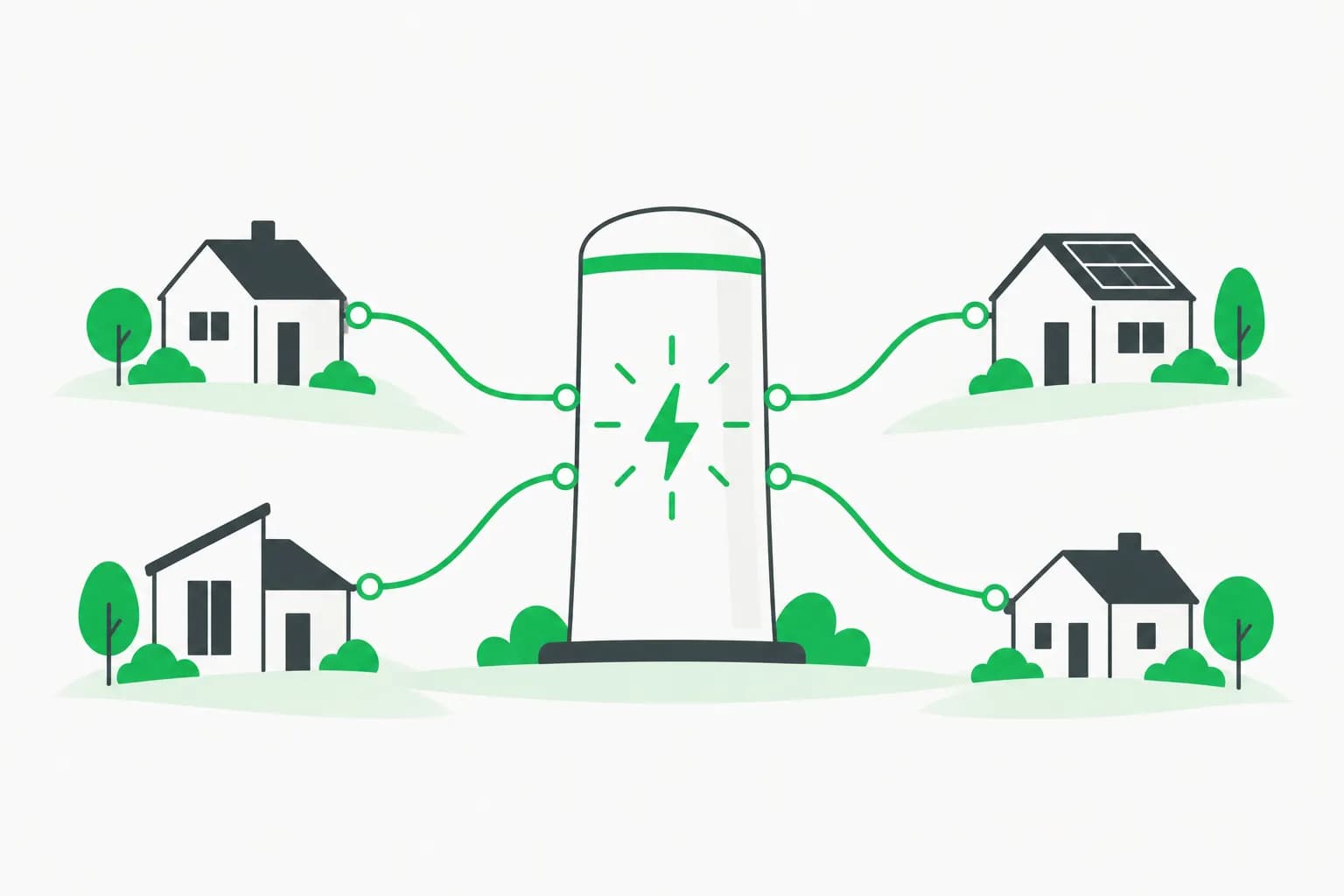
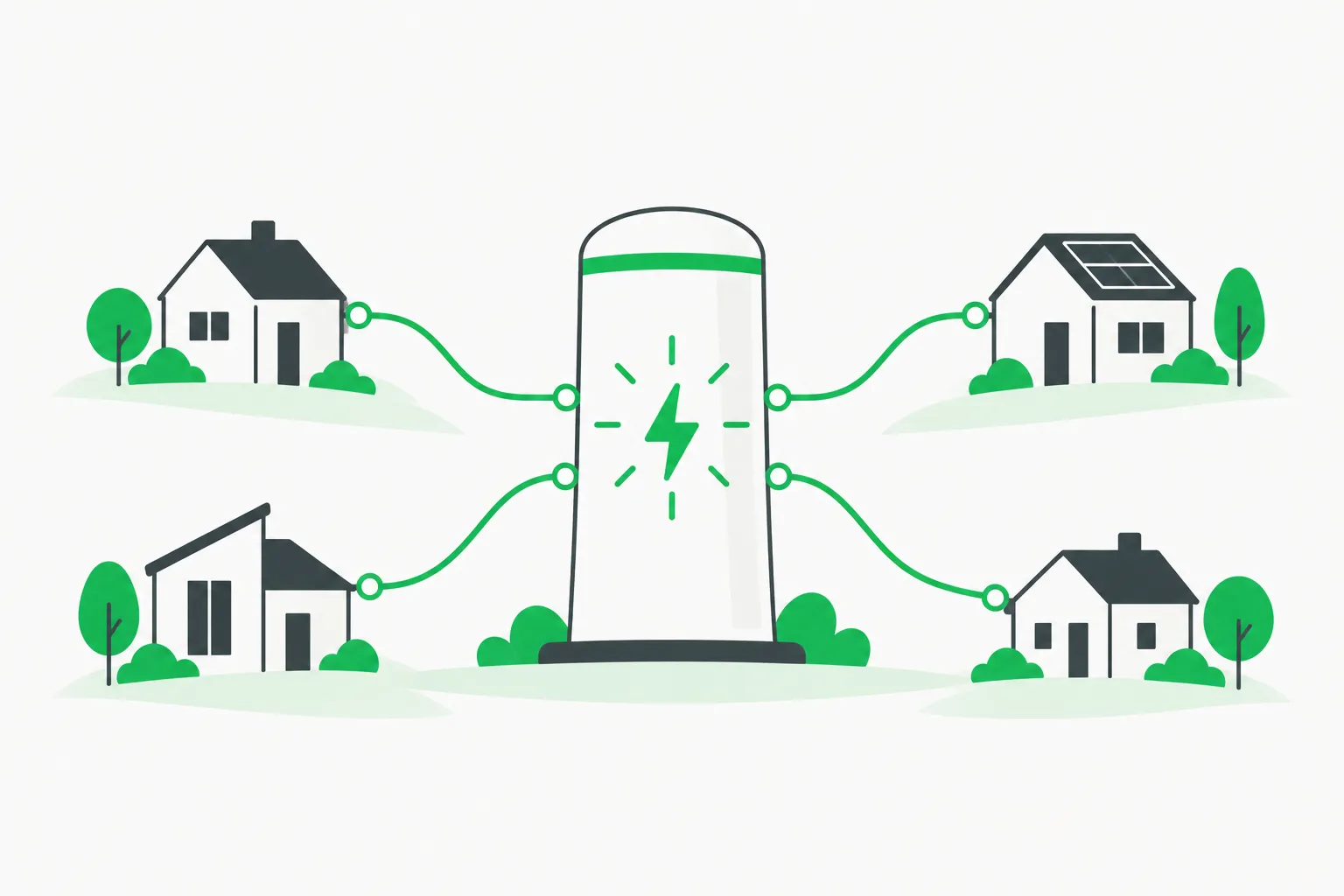 Electric pylon with lines to small houses, representing Russia's grid limits for AI data centers
What did the drone strikes do?
The Moscow Times reports that Ukrainian drone strikes in October on Sber and Yandex data centers affected facilities making up roughly 11% of Russia's data center capacity, and that Kommersant said full repairs could take up to six months. Yandex said it restored about 97% of affected cloud customer data and that the remaining 3% was permanently lost.
For the details of the Yandex incident and the disputed GPU count, see our Yandex Sasovo claimed-versus-verified post. The relevant point here: the two firms Putin named as engines of Russia's AI work are the same two whose facilities were hit.
What about chips and equipment?
Power is only one input. The Moscow Times says Russia lacks large-scale domestic production of advanced processors, including GPUs, that sanctions complicate foreign equipment imports, and that a weaker ruble has raised costs. It cites CNews that Russian-made equipment is just 15% to 20% of data center engineering equipment, and that server rack output reportedly fell to 5,000 in 2025 from 14,000 the year before. These are reported figures we have not independently checked.
How does Sber's own CEO describe the gap?
In September, Sber CEO Herman Gref said: "We are not on an equal footing with Chinese companies, which today face virtually no constraints on capacity," as quoted by the Moscow Times. That sits awkwardly beside a claim of a "global advantage." It is the head of one of the firms Putin named, speaking in public.
Why would Putin say this, and why does it matter?
The setting helps explain it. The remarks came at a summit of the three largest powers, where AI was on the agenda. A statement that Russia has power, firms and technology to offer is a bid for standing and for partners, especially in Asia. That is a reasonable thing for a leader to say. It is not an audit.
For readers who build with AI, the lesson is about how to treat national AI claims. Ask four questions: where is the capacity (a map, not a total), what chips run in it, how much of it is working today, and what independent data exists. Power, chips and uptime are measurable. A statement of advantage is not.
For related reading on how leaders' AI claims have been tested, see our posts on Russian army AI battlefield videos and on the Qiushi article on AI existential risk and global governance.
What are people asking?
Is Russia ahead of anyone in AI? Nothing in the reporting we read supports "ahead." Gref's own comparison with China, the chip shortage and the grid limits all point to a country working under constraints. Russia does have large domestic AI developers, which is a real asset, and Sberbank and Yandex ship models and cloud services to Russian customers. Having firms is not the same as having a lead.
Could Russia still have spare power somewhere? Yes, it could. The reporting is about the places where AI data centers are concentrated and about connection allocations, not about national generation. A Siberian site with cheap power could host more compute, but it would need chips, networks and staff, and the state's own interest in siting data centers far from the front shows planners know this. That is the context for the underground and remote-siting ideas we covered earlier.
Does the claim change anything for buyers of AI services? For almost every reader, no. Russian AI services are used inside Russia and by some partners. What the claim does show is the line Moscow will use in talks with Asian partners: electricity and software expertise in exchange for hardware and investment.
How can you check a national AI capacity claim?
A short method works for any country's statement, and it is useful whenever a leader's quote spreads on social media.
- Find the unit. Is the claim in megawatts, GPUs, tokens per day or models released? "Enough power" with no figure cannot be tested.
- Find the place. Capacity is local. Ask which grid and which city.
- Find the chips. Power without accelerators does nothing. Look for import data, domestic output and sanctions status.
- Find the uptime. Look for outages and attacks, since a facility that is down adds nothing.
- Find a neutral source. Grid operators, regulators and independent researchers, not only the speaker or a friendly outlet.
Applied here, the claim fails at step 1 (no figure), and the reporting we found fails it at steps 2, 3 and 4.
What to watch next
- Specifics. A named program, a power-purchase figure or a model release would turn the claim into something checkable.
- Grid data. Russian energy authorities or regional operators could publish connection figures for data centers.
- Repairs. Whether the Sber and Yandex sites return on the six-month schedule Kommersant cites.
- Partners. Any Asia-Pacific deal that names Russian AI products.
How we checked this
We read Sputnik's account of the November 19 remarks and the Moscow Times article of November 11. We did not find a transcript from the Kremlin in the sources we reached, so quotes follow Sputnik's English. We found no independent data on a Russian power surplus, and we say so. We will update this post if a transcript or new data appears.
Related reading
- Russia wants data centers underground
- Yandex Sasovo drone strike: 2,700 GPUs claimed, what is verified
- Russian army AI battlefield videos: what FT and ISW confirm
- Qiushi on AI existential risk and global governance
- US hyperscale data centers and fossil power: Harvard study
- Trump on Blackwell and China
Details are accurate as of November 19, 2026. Figures come from the cited reports and were not independently audited.