



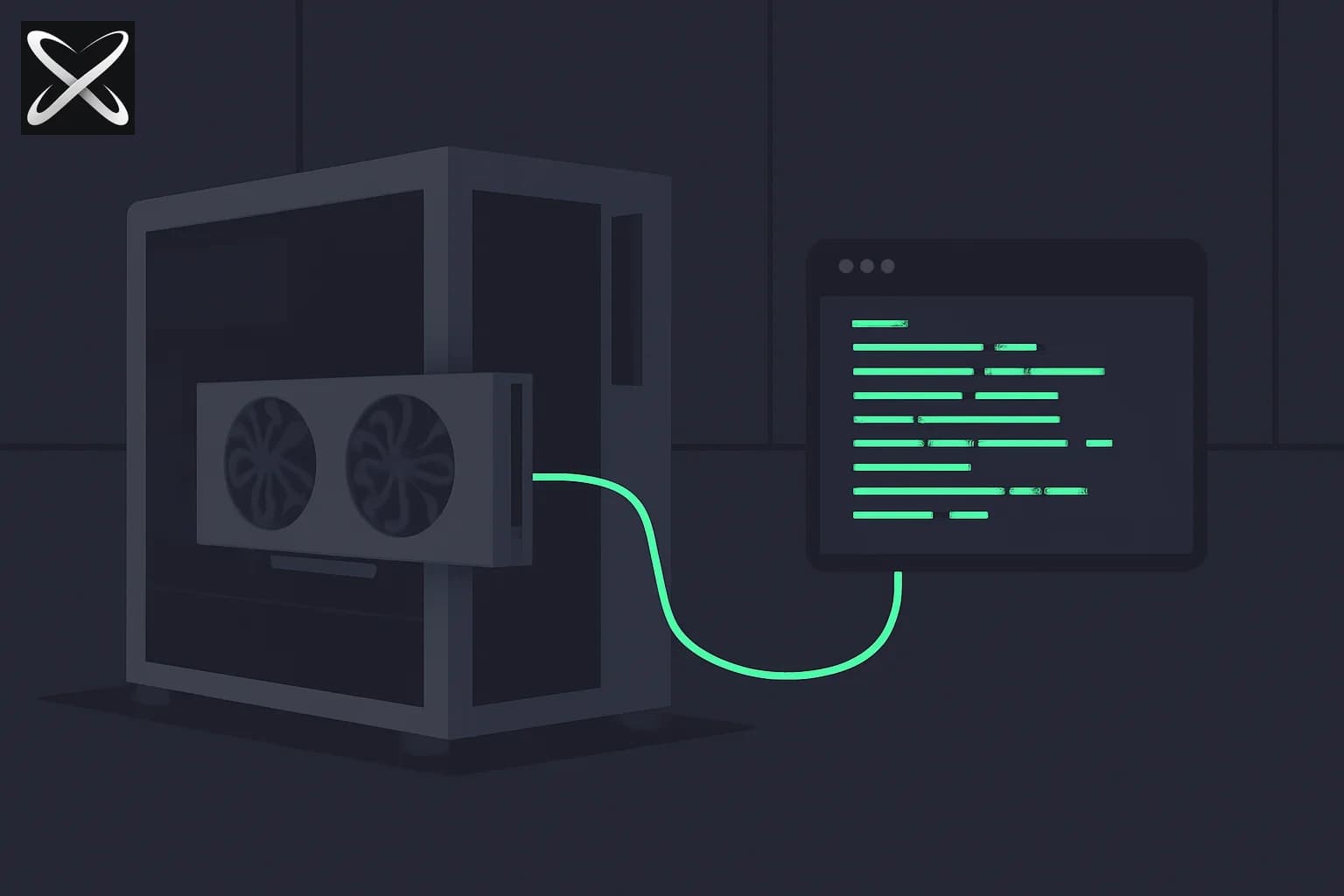
Perplexity's Portable Computer — a fully local version of its agentic Computer platform — launched on August 25, 2026 with a hardware detail that got less attention than it deserved at the time: it doesn't require the $4,679 NVIDIA DGX Spark. Any Linux machine with an RTX GPU carrying at least 24GB of VRAM — an RTX 3090 or newer — clears the bar. explainx.ai covered the DGX Spark demo when it first showed up, treating the RTX path as a plausible-but-unconfirmed alternative. Early-September hands-on reviews have since confirmed it: the cheaper GPU route actually runs the full local agent stack, not just a stripped-down preview.
That confirmation lands in the same week Perplexity open-sourced Lily, a custom inference engine for Apple Silicon, and rolled hybrid compute to every Mac app user. Three local-compute stories, one company, one week — worth naming as a pattern even though, as this post lays out, it's not quite the single unified strategy it looks like from a distance.
Update — September 14, 2026: Windows support shipped. Portable Computer is now available on Windows PCs with a qualifying NVIDIA RTX GPU (same 24GB+ VRAM floor as Linux), adding local MCP connections and scheduled tasks — see Perplexity Portable Computer comes to Windows RTX PCs.
TL;DR — what people are asking
| Question | Direct answer |
|---|---|
| What shipped, and when? | Portable Computer, a fully local Perplexity Computer, launched August 25, 2026 |
| What's new this week? | Early-September reviews confirm the RTX-GPU path works, not just DGX Spark |
| Minimum hardware? | Linux + Nvidia RTX GPU with ≥24GB VRAM (RTX 3090 or newer) — or a DGX Spark |
| Do I need DGX Spark? | No — it's one of two supported paths, not a requirement |
| Windows support? | Announced for September 2026, not yet shipped |
| Mac / Apple Silicon? | Not on this product's roadmap — separate track (Lily, hybrid compute) |
| Local models at launch | PPLX 27B, Qwen 3.8 27B; Nemotron 3.5 Lightning coming soon |
| Subscription required? | Pro, Max, Enterprise Pro, or Enterprise Max — hardware is on top of that |
| Token cost for local steps? | Zero cloud token cost; cloud fallback is user-gated |
The actual news: RTX GPU support isn't a rumor anymore
When Perplexity first showed Portable Computer on August 25, the demo video and most coverage centered on DGX Spark — NVIDIA's $4,679 desktop supercomputer with 128GB of unified memory. explainx.ai's own coverage at the time flagged the RTX question directly, in a "what people are asking" section: "Can I use a 4090 instead of DGX Spark? Perplexity specified DGX Spark in the demo." That was accurate as of the demo, but incomplete — Perplexity's actual launch documentation and Nvidia's joint announcement specified the RTX path from day one, and it just took independent reviewers running it on real RTX 3090 and RTX 4090 boxes through the first week of September to confirm it wasn't a footnote.
VentureBeat's launch coverage quotes Nate, Perplexity's VP of engineering for infrastructure and enterprise, describing the goal plainly: "We've basically brought the exact same UI to a fully local app." The RTX floor is what makes that goal reachable for people who don't want to buy dedicated AI hardware — a 24GB card is a normal high-end gaming GPU, not a workstation purchase.
TL;DR: DGX Spark vs RTX 3090/4090
| Dimension | DGX Spark | Linux + RTX GPU (24GB+) |
|---|---|---|
| Hardware cost | ~$4,679 | ~$700-1,500 (used RTX 3090 to new RTX 4090 box) |
| Memory | 128GB unified | 24GB VRAM (card-dependent) |
| Scaling | Two units run frontier-class models; four run GLM 5.2-class | Single-card ceiling; no documented multi-GPU path yet |
| Subscription | Pro/Max/Enterprise (same either way) | Pro/Max/Enterprise (same either way) |
| Best for | Headroom for future larger local models | Lowest-cost entry into fully local Computer |
| OS support | Linux (Windows coming Sept) | Linux (Windows coming Sept) |
The trade is straightforward: DGX Spark buys headroom — enough unified memory that connecting two units can run frontier-class models, and four can run something in GLM 5.2's weight class, per Perplexity's own framing. A single RTX 3090 has none of that scaling story; it is a floor, not a growth path. But 24GB is exactly enough to run the two launch models — PPLX 27B and Qwen 3.8 27B — at the quantization levels Perplexity ships, which is why the floor is realistic rather than a marketing minimum nobody actually hits.
Why the RTX floor matters more than the DGX Spark ceiling
For the DGX Spark version of this story, the pushback was predictable: local-AI builders saw validation, but casual Max subscribers asked whether their $200/month plan now implicitly requires a $4,679 hardware purchase. It doesn't, and the RTX confirmation is the actual answer to that objection. A used RTX 3090 — the exact card explainx.ai's MacBook vs. dedicated GPU comparison already treats as a practical local-LLM baseline — now runs the identical harness DGX Spark runs: orchestrator LLM, subagent LLM, tool calls, and the same Computer UI, with zero cloud token cost on local steps and cloud fallback gated behind explicit user approval.
That's a materially lower bar than "own a Grace Blackwell superchip." It puts fully local Computer in reach of anyone who already has, or can cheaply assemble, a Linux gaming tower — the same audience explainx.ai has tracked running Qwen and other open-weight models locally in OpenCode and via llama.cpp.
Who should actually care
Not everyone benefits equally from a dedicated Linux box over laptop-based local inference:
- Developers who want zero cloud dependency and don't mind a dedicated machine — this is the target user. A Linux tower with a 24GB RTX card, sitting under a desk or in a closet, running Portable Computer's full harness continuously, is a genuinely different posture than opening a laptop app.
- Laptop-first users chasing local inference on Apple Silicon — Portable Computer isn't for you yet. Perplexity's own statement that it's "very focused right now on Nvidia hardware" means Mac users stay on hybrid compute — selective routing inside the existing Mac app, not a fully local agent harness. Lily makes that Mac-side local slice faster, but it doesn't turn a MacBook into a Portable Computer box.
- Teams needing multi-user local deployment — still not covered. Portable Computer, on either hardware path, is a one-box, one-operator pattern; shared access needs either multiple boxes or cloud Computer with Projects.
- Anyone who just wants cheaper cloud tokens — this isn't that. Zero-token local inference only applies to steps that stay local; cloud fallback for frontier reasoning is unchanged pricing.
The honest read on "one strategy, every platform"
It's tempting to describe Lily, Mac hybrid compute, and Portable Computer's RTX confirmation as three legs of one coordinated local-compute strategy, and the underlying thesis — reduce how much of an agent's work has to trust Perplexity's cloud, whether for cost or privacy — really is shared across all three. But Nate's quote is worth taking at face value rather than smoothing over: Portable Computer's team said Apple Silicon isn't on their roadmap, full stop, while a separate part of the org shipped Lily and hybrid compute specifically for Apple Silicon the same week. That's two hardware-vendor-specific tracks pursuing a shared goal in parallel, not one unified local-compute product spanning every chip. The pattern is still notable — a company this size making simultaneous, real (not vaporware) local-inference investments on both Nvidia and Apple hardware in a single week is unusual — but it's two bets, not one.
Honest limitations
- No multi-GPU documentation yet for the RTX path — DGX Spark's multi-unit scaling story (two units for frontier models, four for GLM 5.2-class) has no published RTX equivalent. Treat single-card 24GB as the practical ceiling for now.
- 27B is not frontier. Both PPLX 27B and Qwen 3.8 27B will fail harder reasoning tasks that Perplexity's cloud orchestrators handle; that's why cloud fallback exists, gated behind user approval.
- Windows isn't shipped yet — announced for September 2026, not confirmed live as of this writing. Don't plan around it until Perplexity confirms general availability.
- Exact pricing tiers are unconfirmed — Perplexity ties Portable Computer to Pro, Max, Enterprise Pro, and Enterprise Max subscriptions but hasn't published a separate local-hardware pricing page; verify current terms before buying hardware specifically for this.
- "24GB VRAM" as a floor, not a guarantee of comfortable headroom — a bare RTX 3090 running a 27B model plus tool-call context and agent state leaves less margin than DGX Spark's 128GB unified pool. Expect tighter context windows or quantization trade-offs versus the DGX Spark experience.
What builders should do this week
- If you already own a 24GB+ RTX GPU on Linux, this is close to a free trial of fully local Computer — the marginal cost is a Pro/Max subscription you may already have.
- If you're choosing between an RTX box and DGX Spark, decide based on whether you expect to run larger local models later — DGX Spark's unified memory and multi-unit scaling are the reasons to pay the premium, not raw performance on today's 27B launch models.
- If you're on a Mac, don't wait for Portable Computer — track hybrid compute and Lily instead; they're the actual Apple Silicon path Perplexity is investing in.
- Compare against a DIY stack before committing to Perplexity's harness specifically — see building a personal local AI system if you want full control over which models run instead of Perplexity's fixed launch lineup.
Related on explainx.ai
-
Surface RTX Spark Dev Box at $5,999 and Surface Laptop Ultra
-
Pamir AI's Lapis One: a $359 Linux computer built for AI agents
-
Perplexity Portable Computer on DGX Spark (original coverage)
-
Lily — Perplexity's custom inference engine for Apple Silicon
Official: Perplexity Portable Computer announcement · VentureBeat launch coverage
Hardware requirements, pricing, and platform availability reflect Perplexity's August 25, 2026 launch and early-September hands-on coverage. Verify current supported GPUs, Windows availability, and subscription pricing against Perplexity's own documentation before buying hardware.