



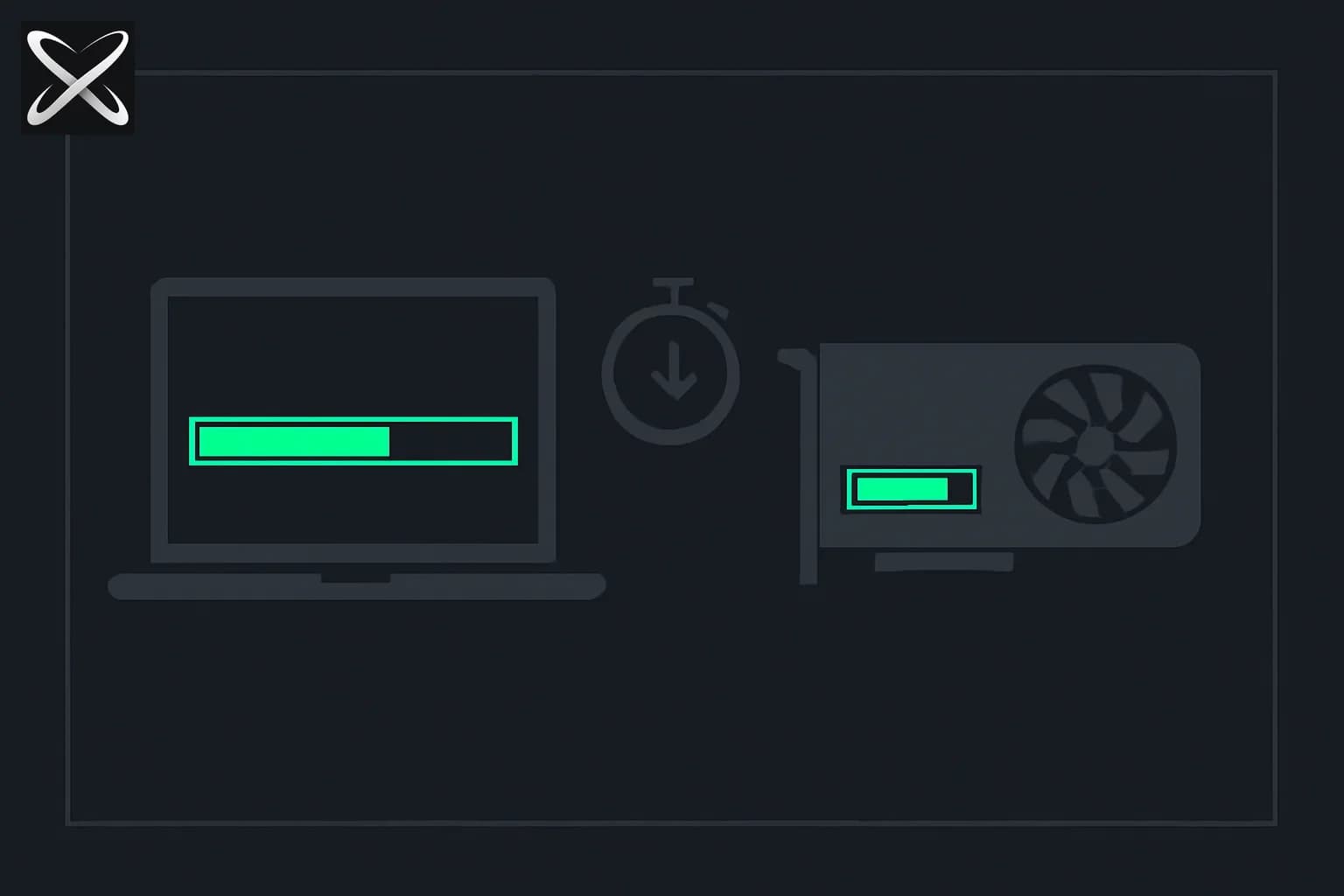
Aravind Srinivas announced hybrid compute for all Perplexity Mac app users on September 1, 2026: Computer can now orchestrate local models on Apple Silicon for agent steps that touch sensitive private files — bloodwork, tax returns, litigation documents — while cloud models handle everything the router marks as safe to send upstream.
It is the consumer-scale counterpart to August's DGX Spark local Computer demo, but inverted: instead of buying $4,679 hardware to run the whole stack locally, Mac users get selective local routing inside the app they already have. Perplexity also open-sourced the PII classifier that makes the routing decision and published PII-TRACE research explaining how it was built.
TL;DR — what people are asking
| Question | Direct answer |
|---|---|
| What shipped? | Hybrid compute in the Perplexity Mac app — all users |
| Who announced it? | Aravind Srinivas, September 1, 2026 |
| What runs locally? | Agent steps involving sensitive/private files flagged by a PII classifier |
| What stays in cloud? | Non-sensitive orchestration, search, and reasoning steps |
| Local token cost? | None on cloud — Apple Silicon consumes tokens on-device |
| Routing model? | Open-source pplx-pii-masking (~600M Qwen3, BIOES + sensitivity head) |
| Research? | PII-TRACE blog on perplexity.ai |
| Demo video? | Srinivas announcement on X |
Why hybrid compute matters for agent builders
Most agent stacks today are cloud-first: the orchestrator, subagents, tool calls, and file reads all route through hosted inference. That is fine for public research tasks. It breaks down the moment Computer opens a medical PDF, a tax return, or litigation discovery — the exact workflows Srinivas named in the announcement.
Hybrid compute is Perplexity's answer: keep the agent OS in the cloud, but move inference for flagged steps to local Apple Silicon so sensitive bytes never hit the cloud path for those operations. For builders evaluating agent harnesses and MCP connectors, the design pattern is worth studying even if you do not use Perplexity: a lightweight on-device classifier gates routing, not a binary "local-only vs cloud-only" product split.
How routing works: pplx-pii-masking
Perplexity did not describe hybrid compute as manual user toggles alone. The routing layer is a PII classifier the company open-sourced on Hugging Face:
- Model: ~600M parameter Qwen3 bidirectional encoder
- Tagging: BIOES schema across nine PII categories
- Extra head: Sensitivity classifier that scores whether content should stay local
- Repo: perplexity-ai/pplx-pii-masking
- Backbone:
pplx-embed-v1-0.6bwith bidirectional attention - Heads: token classification (1024 → 37 BIOES labels) + sensitivity (1024 → 1)
- Categories:
private_person,account_number,private_url,private_date,private_address,private_email,private_phone,other_pii,secret
Minimal usage from the repo:
from huggingface_hub import snapshot_download
import sys

repo = snapshot_download("perplexity-ai/pplx-pii-masking")
sys.path.insert(0, repo)
from example_usage import PiiMasker

masker = PiiMasker(repo)
print(masker.mask("Contact Jane Doe at jane@acme.com or 415-555-0123."))
# Contact [PRIVATE_PERSON] at [PRIVATE_EMAIL] or [PRIVATE_PHONE].
When Computer prepares an agent step, the classifier inspects the content. High-sensitivity hits route to a local Mac model. Lower-sensitivity or non-PII steps continue on Perplexity's cloud stack — the same GLM and Sol orchestrators Projects and Brain memory layers already use.
Open-sourcing the classifier matters for two reasons:
- Auditability — security teams can inspect weights and run the model offline before trusting routing claims.
- Reusability — other agent products can adopt the same BIOES + sensitivity pattern without rebuilding from scratch.
Perplexity's PII-TRACE research post (on perplexity.ai) documents evaluation methodology — read it alongside the weights if you are implementing similar routing in your own agent stack.
Apple Silicon as the local inference plane
Srinivas framed Apple Silicon as the practical local backend: Mac users already have an NPU/GPU unified memory pool capable of running smaller open-weight models for agent sub-steps. Local steps consume on-device tokens at no Perplexity cloud token cost — a meaningful economic shift for Max subscribers who meter Computer credits.
This is not the same as running Qwen locally in OpenCode or building a personal local AI system from scratch. Perplexity owns orchestration, UI, tool routing, and the PII gate. You supply the Mac and accept their local model choices for sensitive steps.
Tradeoffs to expect:
| Dimension | Hybrid compute (Mac app) | DGX Spark demo (Aug 2026) | DIY local stack |
|---|---|---|---|
| Hardware | Apple Silicon Mac you own | ~$4,679 DGX Spark + Pro/Max | Your choice |
| Scope | Sensitive steps local; rest cloud | Full orchestrator local | Full control |
| PII routing | Open-source classifier | User-gated cloud fallback | You build it |
| Integration | Perplexity Computer UI | Perplexity Computer UI | OpenCode / Claude Code / etc. |
What hybrid compute is not
Honest limitations keep this from reading like a press release:
- Not full offline Computer. Cloud orchestration and Search API paths still exist for non-sensitive work.
- Not a substitute for enterprise DLP. A classifier can miss novel PII formats or mis-tag benign content. Compliance teams should run their own evals on representative documents.
- Not Windows or Linux yet. The September 1 announcement scoped Mac app users specifically.
- Not the same as Brain or Projects memory policy. Brain's overnight context graph and Projects' shared file system are separate layers — hybrid compute governs where inference runs, not what gets remembered.
What builders should do this week
- Read Perplexity's hybrid compute docs — confirm supported Mac models, local model list, and opt-out behavior.
- Pull
pplx-pii-maskingfrom Hugging Face — run it against sample bloodwork, tax, and legal redacted docs to see false positive/negative rates on your data. - Compare to your agent harness — if you use Claude Code or Cursor with cloud models, ask whether a local routing gate belongs before file-read tools fire.
- Track cloud vs local in logs — Perplexity may expose step-level routing in Computer UI; if not, infer from latency and offline behavior during testing.
# Illustrative — inspect the open-source classifier locally
pip install transformers torch
# Load perplexity-ai/pplx-pii-masking per model card on Hugging Face
Hybrid compute in the Perplexity product arc
September's hybrid compute sits between two earlier moves:
- July 2026 — Projects: multiplayer agent context with shared files and Brain loops
- August 2026 — DGX Spark demo: fully local orchestrator stack for power users with hardware budget
- September 2026 — Mac hybrid compute: selective local inference for everyone on Mac without new hardware
The through-line is Computer as an agent OS that must handle real workplace documents, not just web search. Hybrid compute is the privacy primitive that makes "analyze my bloodwork" a plausible Computer prompt instead of a compliance incident waiting to happen.
Update — September 3, 2026: Perplexity open-sourced the engine that powers the local side of this feature — see Lily: Perplexity's custom inference engine for Apple Silicon for the architecture, the measured optimization gains, and the honest failure (speculative decoding) Perplexity published alongside them.
Update — September 4, 2026: On the Nvidia side of the company, Portable Computer's RTX-GPU support is now confirmed — a Linux box with a 24GB+ VRAM RTX card runs the fully local agent harness for a fraction of DGX Spark's price. Apple Silicon stays off that product's roadmap, which is why hybrid compute and Lily remain the Mac-side path.
Update — September 5, 2026: Perplexity also published the serving-infrastructure story behind the cloud-side embedding and ranking models this routing decides between — see Fast Embeddings on GPUs: Ivy, Tulip, ROSE.
Related on explainx.ai
- Perplexity Fast Embeddings on GPUs — Ivy, Tulip, ROSE serving stack
- Lily — Perplexity's custom inference engine for Apple Silicon
- Perplexity portable Computer on DGX Spark
- Perplexity Computer Projects — multiplayer agentic OS
- Perplexity Brain — self-improving memory
- Perplexity Search API and index debut
- Perplexity Computer GLM 5.2 orchestrator
- MacBook vs dedicated GPU for local LLMs
- Perplexity Portable Computer: RTX GPU support confirmed on Linux
- Build a personal local AI system
- Parallel web search eval for AI agents
Official: Srinivas announcement video · pplx-pii-masking on Hugging Face · Perplexity hybrid compute docs
Hybrid compute availability, local model list, and PII routing scope reflect Perplexity's September 1, 2026 announcement. Verify current behavior in the Mac app and official documentation before processing regulated data.