



OpenAI is reportedly building a data platform codenamed Athena — a semantic layer so ChatGPT Work agents stop guessing what revenue, customer count, and similar metrics mean. The Information broke the story in late November 2026; OpenAI has not announced Athena on its own site.
If you searched what is semantic layer in AI, the practical answer here is shared business definitions sitting between your warehouse and the model. Athena, if it ships as reported, would be OpenAI's attempt to own that layer — not just the LLM.
TL;DR
| Item | Status (Nov 27, 2026) |
|---|---|
| Athena exists as a product | Unverified — codename in The Information only |
| Problem it solves | Reported — data agent accuracy for enterprise metrics |
| Mechanism | Reported — agents that collect and update business rules |
| Competitive set | Snowflake, Databricks, Palantir ontologies (analyst framing) |
| OpenAI-confirmed related features | Workspace analytics, plugins, connected apps in Enterprise release notes |
| Timeline / price | Unknown |
What is claimed about Athena
Secondary summaries of The Information's Applied AI newsletter (Kevin McLaughlin and Laura Bratton) converge on these points:
- Customer accuracy gap. At least one customer found ChatGPT Work's data analysis agent — launched last fall per those reports — not accurate enough for wide deployment.
- Semantic layer shape. Athena would resemble software that standardizes definitions (examples repeated across outlets: gross vs net revenue, active vs paying customers).
- Agent-to-agent context. A person familiar with plans said OpenAI wants agents that document and update business rules so other agents do not re-derive context from scratch each task.
- Competitive moat. A consultant quoted in relay coverage called semantic layers harder to switch than models, which would deepen enterprise lock-in if Athena works.
- Early stage. No public timeline or pricing in any summary we read.
What is not claimed in those relays: a benchmark, a schema language, or which warehouses Athena would natively read. Treat those as open until OpenAI publishes docs.
What OpenAI has verified separately
Athena may be unannounced, but enterprise data adjacency is not:
Workspace analytics (Nov 2026)
OpenAI's ChatGPT Enterprise and Edu release notes document Workspace analytics spanning Usage and Insights in Admin Console, including Workplace health tracking and exports. October 23, 2026 entries describe moving Benchmarks and User surveys under Insights — the same admin surface where data-heavy teams watch adoption.
That is verified product, not proof of Athena. It shows OpenAI already sells measurement to CFO-aligned buyers.
Plugins and connected data (Oct–Nov 2026)
The same release log shows plugin management (bulk edit up to 25 plugins on October 15, 2026), role-based plugin access (October 8), and connected apps for Sites (October 29) where workspace connections gate what a task can read.
For builders, the verified path today is: configure plugins + connections, then test answers — similar hygiene we describe for Amazon Bedrock tokenomics lakes and serverless MCP on Fargate (note: AWS Athena the query engine is unrelated to this codename).
GPT-6.2 in Work (November 17, 2026)
Release notes add GPT-6.2 Astra and Sol in Work and Codex with admin-controlled previews. Faster models do not fix wrong JOINs if metric definitions drift. Athena, as reported, targets definition drift, not tokens per second.
What is semantic layer in this context?
| Concept | Plain-language meaning | Example failure mode |
|---|---|---|
| Semantic layer | Approved metric formulas and dimensions | Marketing counts MAU; finance counts paying accounts |
| Agent without layer | Model guesses from column names | "Customers" table with invoice rows |
| Ontology (Palantir-style) | Formal object graph of business | Heavy upfront modeling |
| MCP / Skills (Anthropic-style) | Tool docs and procedures | Great for workflows, not always finance SQL |
Reporting positions Athena closer to Snowflake/Databricks semantic layers than to Anthropic Skills — but OpenAI has not shown architecture diagrams.
Competitive landscape (verified vendors)
| Vendor | Verified semantic / metrics surface | Implication for Athena |
|---|---|---|
| Snowflake | Semantic layer for governed metrics | Customers may duplicate spend if Athena re-implements |
| Databricks | Unity Catalog + metric views in product marketing | Same governance conversation |
| Palantir | Ontology-first apps | Different implementation cost |
| OpenAI (today) | Plugins + admin analytics | Inference + connectors, not a named metrics repo |
Our Databricks GPT-6 Astra coding spend piece shows how labs centralize AI spend; Athena would centralize meaning, which can be stickier.
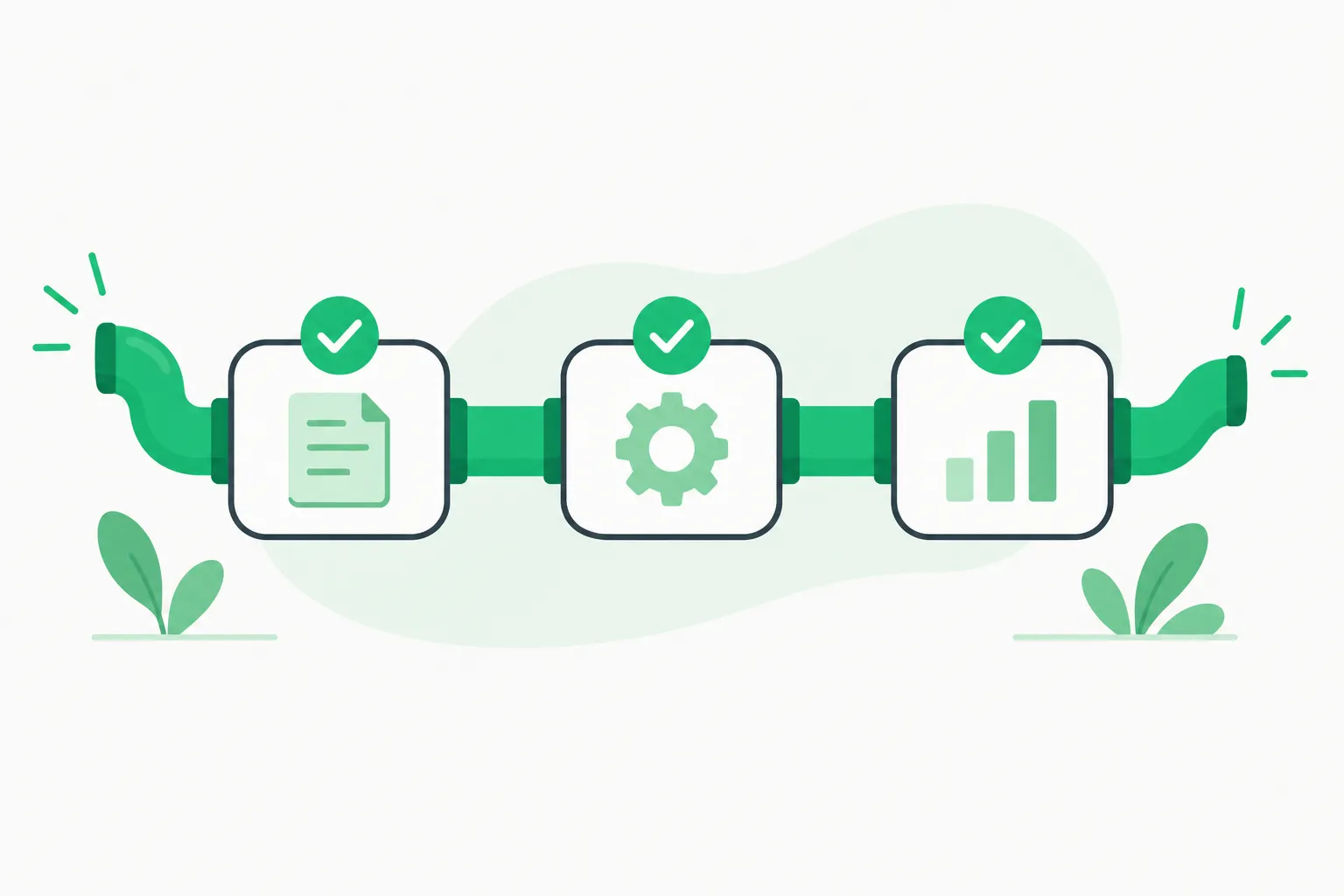 Release pipeline diagram illustrating how a semantic layer sits between warehouse tables and AI agents
What enterprises should do now
- Write metric dictionaries in dbt, Looker, or your warehouse — do not wait for OpenAI.
- Regression-test ChatGPT Work answers with known SQL weekly; log definition mismatches.
- Contract review: if Athena launches inside existing Enterprise agreements, ask whether it is included or metered.
- Training: teams rolling out Work + Codex benefit from corporate AI training that covers data governance, not only prompts.
Claimed vs verified table
| Statement | Verdict | Source type |
|---|---|---|
| OpenAI builds Athena | Claimed | The Information (paywalled primary for reporters) |
| Accuracy complaints on data agent | Claimed | Same |
| Early development, no date | Claimed | Same |
| Enterprise analytics exist | Verified | OpenAI Help Center release notes |
| Plugin / connection governance | Verified | Same |
| Athena competes with Snowflake layer | Analyst inference | Secondary articles |
How ChatGPT Work data flows work today (verified)
Understanding Athena requires separating three layers OpenAI already documents:
Identity and admin. Enterprise owners manage SSO, external member exemptions (November 19, 2026 notes), and role-based model access. Data agents inherit whichever plugins a role may install.
Connections. Real-time Google Drive, SharePoint, and Microsoft Teams apps replaced legacy sync connectors in October 2026. Each user's Microsoft or Google permissions still bound what ChatGPT can read — the model does not bypass ACLs.
Execution surfaces. Work, Codex, and ChatGPT Sites can call connected tools. Sites added tunnel support for private services in October. None of those release-note bullets names Athena, but they are the rails a semantic layer would sit on.
Builders wiring MCP servers for warehouses should read our Bedrock FinOps lake pattern: one JSON metadata file beats ad-hoc prompts. Athena, if real, would be OpenAI-hosted metadata with stronger switching cost.
Questions procurement should ask OpenAI reps
Use this list on existing Enterprise calls even before Athena ships:
- Where do metric definitions live — customer-controlled YAML, or OpenAI-managed store?
- Do answers cite the definition version used for each number?
- How do you audit when a plugin issues SQL or Python against a warehouse?
- What happens on offboarding — export of semantic definitions and agent-authored rules?
- Does Athena duplicate features we already license from Snowflake or Databricks?
Absent written answers, treat Athena stories as roadmap signaling, not a commitment.
Why semantic layers matter more with agents than with BI tools
Classic BI assumed a human analyst who notices when two dashboards disagree. Agents narrate confidently. A wrong active user definition propagates into emails, Board decks, and automated actions.
That is why reporting ties Athena to agent accuracy, not chart cosmetics. It also explains overlap with OpenAI Codex billing mistakes anxiety: enterprises already watch usage meters; they will watch definition meters next.
Palantir, MCP, and Skills — three context strategies
| Strategy | Strength | Weakness for finance metrics |
|---|---|---|
| Palantir ontology | Rich object graph | Expensive to bootstrap |
| Anthropic MCP + Skills | Great for tools and procedures | Needs customer discipline on SQL |
| Reported Athena layer | Could lower time-to-first-correct-KPI | Unverified; risks vendor lock-in |
Teams standardizing on Claude Code should still read Obsidian official Skills; teams on ChatGPT Work should mirror that discipline with plugin allowlists today.
Security note: definitions are sensitive
Metric definitions leak business structure — churn formulas, discount policies, cohort rules. If Athena stores them centrally, your threat model must include prompt injection via connected docs and over-privileged plugins, same class as Notion–Fireworks transcript exposure.
Run least-privilege connections, locked chats where release notes allow (October 20, 2026), and periodic connector reviews.
Will Athena replace Snowflake Cortex or Databricks AI?
Not based on public evidence. Snowflake and Databricks market in-warehouse governance plus model routing. OpenAI's moat is ChatGPT distribution. Athena, if launched, likely sits above warehouses OpenAI already connects to — similar to how Wiz sits across clouds for security, not instead of them.
Watch contract bundles: Enterprise ELA expansions could bundle Athena seats before competitors match.
Timeline watchlist
| Signal | What it would mean |
|---|---|
| OpenAI Help Center names Athena | Productization |
| Admin Console metric-definition UI | Feature ready for preview |
| Snowflake joint press release | Partnership not replacement |
| Pricing page for data governance add-on | GA near |
Until then, file this story under claimed roadmap, not shipping feature.
Related reading
- Wiz Red Agent and Snowflake supply-chain lessons
- Databricks engineers on GPT-6 Astra coding spend
- Serverless MCP and data-lake agents (AWS Athena engine)
- OpenAI GPT-6.2 Astra Sol billing and limits
- Microsoft 365 agent configuration as persistence
Sources: The Information, Applied AI newsletter link; OpenAI ChatGPT Enterprise release notes.
Reading gets you the idea. Building it with feedback gets you the skill.