




ChatGPT Enterprise is now listed on AWS Marketplace, OpenAI announced on November 9, 2026. The change is procedural, not a new model tier: teams keep ChatGPT, ChatGPT Work, Codex, and dots with the same release cadence as direct customers, but procurement and invoices run through Amazon Web Services. For AWS-heavy enterprises, that can matter as much as a benchmark bump, because it aligns seat spend with existing cloud vendor management and, where contracts allow, eligible AWS commitment consumption.
The listing sits beside a pattern explainx.ai has tracked for agent vendors on AWS, including Cognition's Devin purchasable through AWS Marketplace. OpenAI's move scales the same idea to the widest enterprise AI surface it operates.
TL;DR
| Question | Answer |
|---|---|
| What changed? | ChatGPT Enterprise is available via AWS Marketplace |
| When? | November 9, 2026 |
| Same product as direct OpenAI? | OpenAI says same models, features, and release timing |
| Bedrock vs Enterprise? | Bedrock for builders; Enterprise for employee-facing ChatGPT stack |
| Vertical SKUs? | Healthcare and Financial Services also via Marketplace for eligible buyers |
| How to start? | Contact OpenAI or AWS account team for eligibility |
What OpenAI announced
 Enterprise building with a gated procurement entrance
Illustration: explainx.ai — Marketplace adds a procurement gate inside AWS accounts.
OpenAI's November 9 post frames Marketplace access as simplifying discovery, purchase, and management under an existing AWS relationship. It also says customers can apply eligible spend toward AWS commitments, language procurement teams watch closely when annual cloud deals cap how much third-party software can count.
The post repeats Enterprise scope: ChatGPT, ChatGPT Work, Codex, and dots, with more than 1.2 billion weekly ChatGPT users cited as context for how familiar the interface already is. OpenAI stresses parity with direct sales: no delayed feature tier for Marketplace buyers.
Chris Grusz, OpenAI managing director for cloud partnerships, said enterprises "increasingly rely on both AWS and OpenAI," and that joint customers can bring ChatGPT to teams through a provider they already trust. Sophos CTO John Peterson is quoted saying a single channel and commitment eligibility removes friction that slows rollout.
Bedrock builders vs Enterprise seats
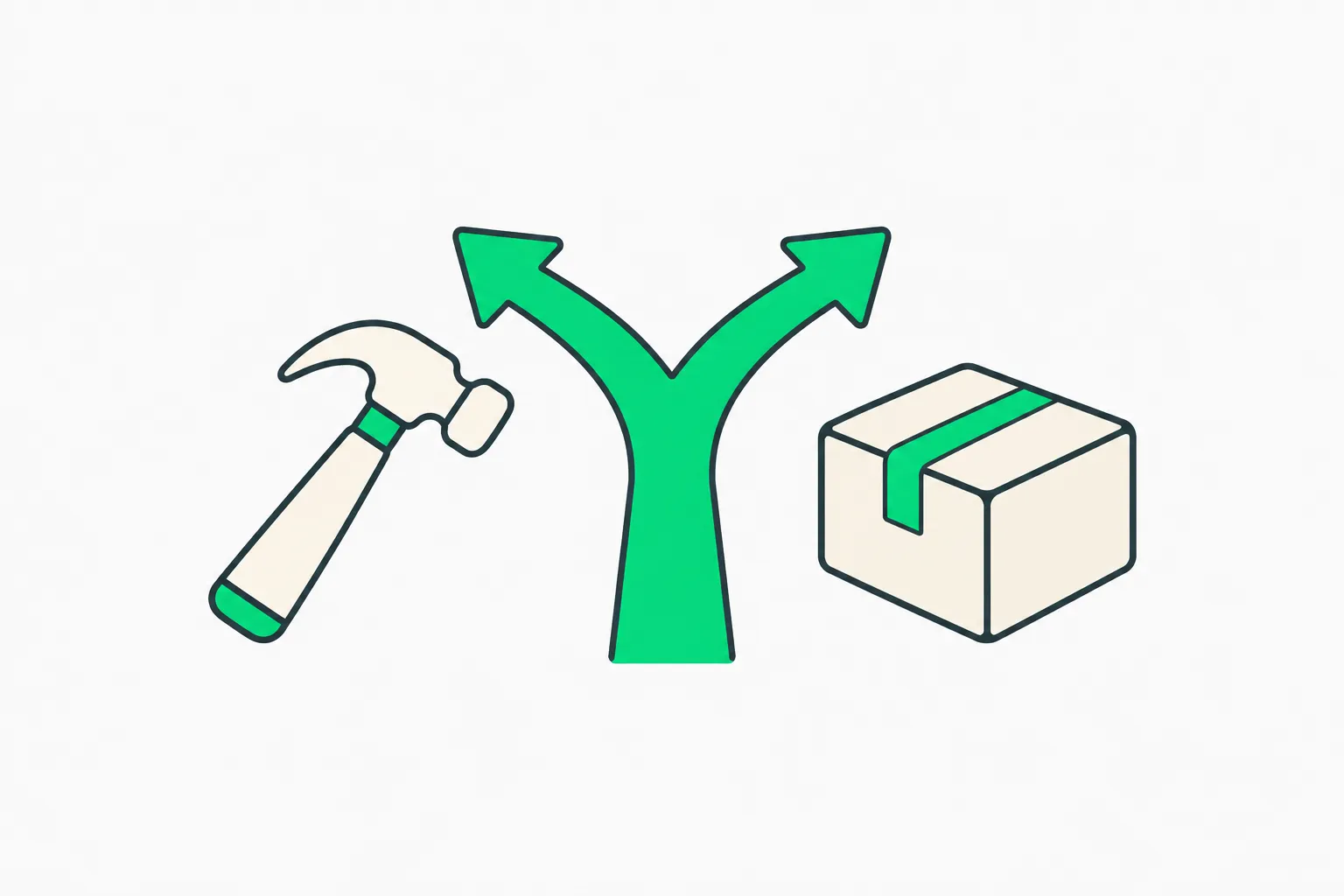 Build path versus buy path for enterprise AI
Illustration: explainx.ai — Bedrock is build; Enterprise seats are buy.
OpenAI draws an explicit line in its announcement. OpenAI models in Amazon Bedrock are for developers building applications and agents. ChatGPT Enterprise is for organization-wide daily use. That mirrors how many Fortune 500 structures split platform engineering from workplace productivity.
If you already run agents on Bedrock, see our Agentic Retrieval CDK blueprint and AgentCore payments patterns for the builder side. The Marketplace listing does not replace Bedrock endpoints, which The Stack reported AWS is opening to OpenAI models and Codex after Microsoft and OpenAI amended their exclusivity terms; it changes how seat-based Enterprise contracts flow.
Hybrid shops should map data boundaries:
- Bedrock applications often embed retrieval, IAM, and logging in your AWS account.
- ChatGPT Enterprise carries its own admin, SSO, and compliance tools OpenAI documents separately.
Our ChatGPT Enterprise EU agentic usage report shows how heavily some regions lean on Codex and Work inside Enterprise accounts already. Marketplace billing does not change those product names, but it may change who signs the order form.
Procurement mechanics teams should verify
Marketplace listings shift work from legal to cloud economics. Before you assume commitment eligibility, confirm with AWS finance:
- Whether ChatGPT Enterprise SKUs count toward your EDP or private pricing tier.
- How Marketplace invoices reconcile with cost allocation tags you use for AI spend.
- Whether healthcare or financial services vertical packages require separate attestations even when bought through AWS.
OpenAI's federal posture is a useful contrast. We covered the ChatGPT Enterprise $1 federal offer and procurement gates like DHS restrictions on other vendors. Marketplace does not automatically satisfy agency authority to operate; it only changes commercial routing.
For comparison with Anthropic's cloud distribution, see Claude on AWS and Google Cloud, which lists multiple hosting paths for API customers. OpenAI's November move is the seat product analog on AWS, not a new Claude competitor announcement.
What this means for builders and buyers
If you procure AI: treat the listing as a third purchase rail next to direct OpenAI and resellers. Run a short table with finance: commitment credit, payment terms, support escalation, and data processing terms. Marketplace does not magically unify Bedrock inference bills with Enterprise seats.
If you build on OpenAI APIs: unchanged. Marketplace targets Enterprise admins, not API keys in your CI pipeline.
If you standardize on AWS for agents: you might still buy Devin or other agent tools via Marketplace while keeping ChatGPT Enterprise on the same invoice family. That can simplify vendor review cycles your security team already completed for AWS.
If you compete with OpenAI inside AWS: Bedrock-hosted models from other labs remain separate SKUs. Enterprise Marketplace strengthens OpenAI's distribution moat inside AWS accounts without altering model cards in Bedrock.
Governance and security checklist
Enterprise buyers should re-read controls before flipping procurement switches:
- SSO and SCIM still live in OpenAI's admin surfaces; confirm Marketplace purchase does not skip identity integration steps.
- Retention and training defaults follow Enterprise agreements, as described in our private safety processing coverage for API ZDR, which is a different product line.
- Agent features such as Codex inside Enterprise need the same change management you would apply to ChatGPT desktop Codex remote sessions elsewhere in your estate.
For agent-specific guardrails when employees chain Marketplace-bought ChatGPT to internal tools, review Okta and AgentCore Gateway policies on the infrastructure side even if the chat UI is separate.
Industry context: marketplace as enterprise AI default
AWS Marketplace became a recurring pattern in 2026 agent news. Cognition emphasized Devin availability there in its September AWS strategic collaboration. Specialized vendors such as Theorem's verification offering also referenced Marketplace distribution for niche models.
OpenAI joining at Enterprise scale signals that procurement friction, not model capability, is now a launch event worth its own headline. That fits OpenAI's push for Work and Codex adoption in the EU and vertical packages like ChatGPT for financial services.
Step-by-step procurement path (what teams usually do)
Enterprise AWS buyers rarely click buy on day one. A typical path, inferred from how similar Marketplace SKUs such as Devin rolled out, looks like this:
- Account team qualification. OpenAI explicitly routes Marketplace buyers through OpenAI or AWS account managers. Security questionnaires start here.
- Architectural split. Platform engineering confirms whether workloads stay on Bedrock while employees use Enterprise chat, or whether teams consolidate vendors.
- Contract overlay. Legal compares Marketplace order terms with any existing OpenAI Enterprise agreement to avoid duplicate minimums or conflicting data-processing addenda.
- Identity integration. IT provisions SSO and SCIM before broad rollout, mirroring steps in ChatGPT Business plugin policies.
- Commitment accounting. Finance models whether Marketplace invoices draw down committed spend; this is the quote Sophos emphasizes in OpenAI's post.
- Feature parity monitoring. Release managers watch OpenAI changelogs to ensure Marketplace tenants receive Codex and dots updates simultaneously, as OpenAI promises.
None of those steps appear in the announcement itself. They are operational requirements explainx.ai readers reported on earlier Enterprise rollouts.
Comparison table: three ways to buy OpenAI at work
| Path | Best for | Billing owner | Builder surface |
|---|---|---|---|
| Direct OpenAI Enterprise | Teams already onboarded with OpenAI legal | OpenAI | ChatGPT stack + API if bundled |
| AWS Marketplace Enterprise | AWS-centric procurement | AWS invoice | Same ChatGPT stack per OpenAI |
| Amazon Bedrock OpenAI models | Custom apps and agents | AWS inference metering | APIs and agents you host |
The table explains why this news is not redundant with Bedrock launches. Marketplace is a channel; Bedrock is a runtime.
Regional and vertical notes OpenAI mentions
OpenAI says ChatGPT for Healthcare and ChatGPT for Financial Services can also route through Marketplace for eligible customers. Those verticals carry extra compliance packaging, as we detailed for financial services GPT-6 Astra and healthcare-adjacent deployments. Marketplace does not replace vertical attestations; it may simplify who signs the check.
Global enterprises should reconcile Marketplace purchases with EU agentic adoption patterns. Country-level Codex intensity varies; procurement centralization on AWS does not homogenize usage.
Security review talking points for CISOs
Use these questions in your own review, independent of OpenAI marketing:
- Does Marketplace purchase change subprocessor lists or only commercial terms?
- Are Codex and dots in scope on the same DPA as ChatGPT chat, or do they require addenda?
- How do admin retention controls compare between direct and Marketplace contracts?
- If developers also use Bedrock, do logging and VPC endpoint policies align with Enterprise admin settings?
For agent abuse scenarios, cross-read November 2026 cyberattack tracker notes on fake AI bots and ensure employees can distinguish official clients from phishing installs after a high-profile Marketplace push.
Why OpenAI announced this now
OpenAI's partnership quote stresses enterprises that already standardized on AWS. That matches macro patterns: hyperscalers want AI revenue inside existing EDPs, while labs want distribution without rebuilding billing. Cognition pioneered the narrative for coding agents; OpenAI scales it to the widest enterprise SKU.
The 1.2 billion weekly ChatGPT users statistic in the post is consumer scale signaling. For Enterprise buyers the relevant number is how many employees already use consumer ChatGPT informally. Marketplace procurement gives IT a sanctioned path to absorb that shadow usage under managed tenants, similar to how regulated firms approached Amex intent controls for agent purchases.
FAQ-style scenarios readers asked us before
We already bought Enterprise direct. Can we migrate to Marketplace? OpenAI did not say. Ask account teams whether mid-contract moves are supported or whether Marketplace is net-new customers only.
Does this include ChatGPT Team or Business? The announcement names Enterprise, Work, Codex, and dots only.
Will AWS PrivateLink apply? Not stated. Bedrock customers use VPC endpoints; Enterprise data paths may differ.
Limitations and open questions
OpenAI's post does not publish Marketplace SKU IDs, list prices, or regional availability. Eligibility requires account team contact, so public self-serve pricing remains opaque.
It also does not specify whether ChatGPT Business or lower tiers will follow on Marketplace, or how Marketplace purchases interact with existing Enterprise agreements mid-contract.
Commitment eligibility language is strategic; actual counting rules vary by enterprise agreement vintage. Treat OpenAI's wording as directional until AWS account managers confirm in writing.
Related reading
- Cognition and AWS: Devin on Marketplace
- EU ChatGPT Enterprise agentic usage patterns
- Agentic retrieval on Bedrock knowledge bases
- Claude Fable 5.2 hosting paths on AWS
- ChatGPT financial services vertical launch
- DHS procurement bans and enterprise AI sourcing
Listing details reflect OpenAI's November 9, 2026 announcement. Confirm eligibility, pricing, and commitment treatment with your AWS and OpenAI account teams before purchase.