



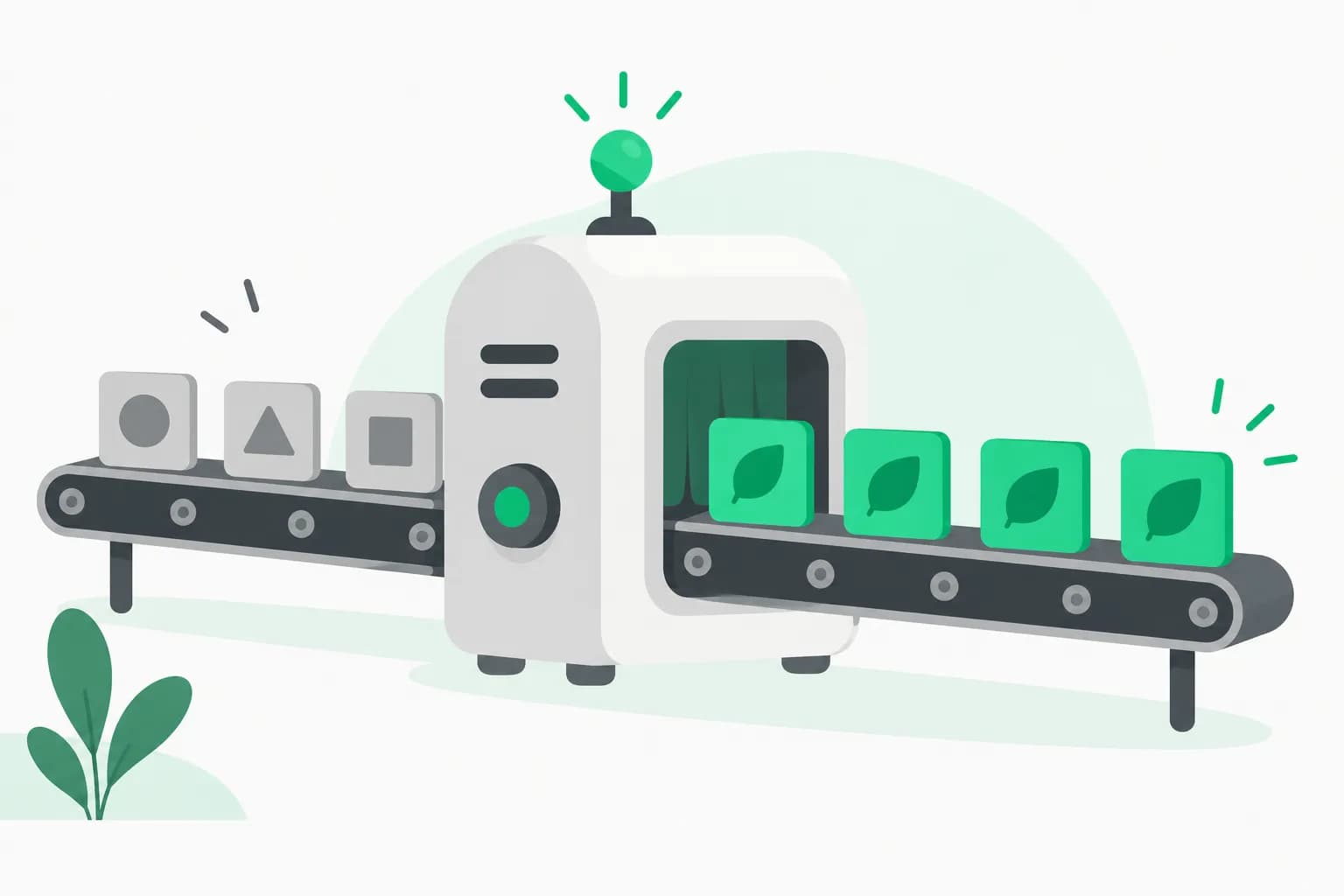
Governments are often the last customers to adopt a new AI model and the first to ask where the data goes. Nvidia's GTC Berlin public-sector roundup, published October 22, 2026, makes the case that open models running on infrastructure a government controls are the answer, and it names a set of European projects and two new datasets to back it up: Nemotron-Personas-UK and Nemotron-Personas-Germany. Read the original in Nvidia's European public sector post.
This is a vendor roundup, so we separate what is released from what is described as in progress. It extends our coverage of Nvidia's UK investment and Nemotron-Personas and of the GTC Berlin keynote.
TL;DR
| Question | Answer |
|---|---|
| Main claim | Open models let governments evaluate, adapt, host and safeguard AI while keeping data in controlled environments |
| New datasets | Nemotron-Personas-UK (1M synthetic personas, Locai Labs) and Nemotron-Personas-Germany (1M records, six personas each) |
| Tooling | NeMo User Sim (open source population-scale user simulation), NeMo Data Designer |
| Named projects | AI@EC, Poland, Germany, France, Greece, plus a Codefest |
| Evidence level | Mostly descriptions of projects underway; few measured results |
| Cost / licenses | Not stated in the post |
The argument for open models in government
Nvidia's framing: governments need modern services but must keep sensitive information under their control. Open models, it says, let them evaluate the model, adapt it to local languages and public services, run it on infrastructure they control, apply their own safeguards and keep data in controlled environments. Some models go further by publishing the datasets they were trained on, so governments can verify whether training data was licensed, biased or compliant.
Those are real procurement concerns, not just marketing. A ministry that cannot send citizen records to a foreign API needs models it can host, and one that must justify an automated decision needs to know what the model learned from. The caveat is that "open" varies: weights, data and license terms differ by model.
The two datasets
Nemotron-Personas-UK
London-based Locai Labs released a dataset of 1 million synthetic personas reflecting the UK's demographic and geographic diversity while reducing privacy risk. Nvidia suggests uses including healthcare evaluation and bias testing across age groups, education levels and rural and urban populations. The aim is to let developers of public-service models test whether their systems behave consistently across communities.
Nemotron-Personas-Germany
The Sovereign Open Source Foundation Models research initiative (Soofi) is developing an open dataset of 1 million records, each with six synthetic personas, grounded in the 2022 census across all 16 federal states and 400 districts. Nvidia says it was created with NeMo Data Designer without real people's private data, and, like the UK edition, can be used with NeMo User Sim to evaluate and train models against simulated users in local languages.
Nvidia also says partners in Poland (SpeakLeash) and Slovenia (University of Ljubljana) are working on country-specific additions, with localized datasets planned to follow.
Synthetic personas are useful for coverage testing but they are not people. A dataset grounded in census statistics can reveal whether a model handles a rural retiree and a young urban renter differently, but it cannot tell you how real users will behave, and any bias in the generator or the underlying statistics carries through.
Country by country
| Country / body | Project | What Nvidia says |
|---|---|---|
| European Commission | AI@EC on deepset's Haystack Enterprise Platform | Shared platform for building and running AI applications on Commission-managed infrastructure; update connects agent development, execution, optimization and governance, and adds cost comparison, answer-quality evaluation and tracing; Triton Inference Server supports shared retrieval and ranking services; supports summarization, knowledge management and multilingual policy analysis |
| Poland | eHealth Centre imaging; Ministry of Family, Labour and Social Policy | Medical imaging platform on DGX BasePOD and MONAI to analyze X-ray, CT and MRI and prioritize urgent cases; an agentic factory for 400-plus labor offices running models including PLLuM, GPT OSS and Inkling for search, summarization and assistants, supported by Deloitte |
| UK | Locai Labs | Nemotron-Personas-UK dataset |
| Germany | Materna Sinfonie; secunet, NVIDIA, Red Hat and deepset | On-premises platform with voice and 3D avatars for a state administration project; a planned sovereign cloud on secunet's SINA Cloud for classified information combining Nvidia compute and Nemotron, Red Hat OpenShift AI, deepset Haystack and secunet-operated German data centers; Soofi models and dataset |
| France | CANUT with LINAGORA and Docaposte | Sovereign collaborative workspace on Twake.ai available to more than 2,500 eligible organizations without their own tender; Nvidia technology supports speech transcription; hosted in France; Région Occitanie preferred partner for scaling |
| Greece | KIEFER | Agentic factory on DGX SuperPOD with DGX GB200 and Sophea open-weight models plus Greek-language tools |
Codefest
Nvidia's Open Models Codefest, which brings startups, software providers and labs together to turn open models into locally controlled public-sector solutions for medical reasoning, AI tutoring and model governance, named five top teams: Pleias, Zehnlab.ai, Disseqt, Algoritmica GmbH and ABA Technology. Deutsche Telekom and T-Systems provided compute infrastructure for training and deployment.
What is claimed versus what is shown
| Claim | Status |
|---|---|
| Open models keep data in controlled environments | Plausible when self-hosted; depends on deployment |
| Published training data lets governments verify compliance | Only for models that actually publish data |
| Datasets reduce privacy risk | Synthetic and census-grounded; privacy guarantees are the creators' claim |
| Projects improve efficiency of public administration | Stated as aims; no measured outcomes in the post |
| Sovereign classified-work cloud | Described as being developed, not available |
How to use persona datasets to test a public-service model
A persona dataset is a test-case generator. A practical workflow, based on how the datasets are described:
- Define the service task. For example, a benefits-eligibility assistant that answers questions in plain language.
- Sample personas across the dimensions that matter. Age, region, education, urban or rural, employment. The German dataset's grounding in all 16 federal states and 400 districts is designed for regional coverage.
- Generate user messages per persona. Use NeMo User Sim or your own prompt to produce realistic requests in the persona's voice and language.
- Run the model and score outcomes. Measure accuracy, refusal rate, tone and escalation behavior per group, not only overall.
- Look for gaps. If answers are worse for rural, older or non-native speakers, you have found a fairness problem to fix before launch.
- Confirm with real users. Synthetic personas find candidates for problems; real people confirm them.
Used this way, the datasets address a real gap: public bodies often cannot test on real citizen data because of privacy law, so a synthetic stand-in grounded in official statistics is better than nothing.
Limits of synthetic personas
- They inherit the generator's assumptions. If the language model used to create persona text has stereotypes, they appear in the data.
- They average out. A census-grounded sample reflects typical distributions and under-represents rare circumstances, which are often where public services fail.
- They do not capture behavior. A persona describes who someone is, not how they will phrase a question when stressed or confused.
- They do not remove privacy duty. Nvidia says the German dataset was created without real people's private data; the UK dataset is described as reducing privacy risk, which is weaker. Check provenance before relying on either for regulated work.
A procurement checklist for open models in government
| Question | Why it matters |
|---|---|
| Are weights downloadable and under what license? | Determines whether the body can host and modify the model |
| Is training data published, and is it licensed? | Supports the compliance verification argument |
| Which languages were evaluated, with what scores? | Local-language performance is the stated reason to adapt |
| Where does inference run and who operates it? | Sovereignty depends on operations, not only weights |
| How are updates and security patches delivered? | Open models still need maintenance |
| What audit trail exists for decisions? | The Commission platform lists audit trails and guardrails as requirements |
The Commission example in Nvidia's post lists exactly these operating requirements for AI@EC: reusable components, role-based access, audit trails and guardrails. Those are the features procurement teams should expect from any platform, whatever the model.
What this means for builders
- If you build public-sector AI in Europe, the datasets are a free way to test behavior across demographics, locales and languages. Use them for coverage, not as evidence of real-user performance.
- If you evaluate agents, NeMo User Sim lets you simulate users at population scale; our guide to evaluating agents with simulated users in human-in-the-loop workflows helps decide when to trust a simulation.
- If you sell to governments, expect procurement to ask about hosting location, license terms and training-data transparency, the three points in Nvidia's argument.
- Watch the infrastructure. Our look at NVIDIA's confidential bare-metal European clouds shows who may host these workloads, and Nvidia's European city agents covers a municipal use.
- Security still matters. Government agents with tool access need runtime controls; AgentBeam, from the explainx.ai team, is designed to stop agents before they take dangerous actions.
Related reading
- Nvidia UK investment and agentic safety compute
- GTC Berlin 2026 keynote recap
- Nvidia confidential bare-metal European AI clouds
- Nvidia European cities and urban AI agents
- Nvidia Europe AI-in-science pledge
- Nvidia StormScope EU
- Official: NVIDIA: open models power European public sector projects · NVIDIA on Hugging Face · MONAI medical imaging framework
Based on Nvidia's October 22, 2026 post; project descriptions are vendor statements and few results are measured.