



OpenAI reasoning researcher Noam Brown says promising students should drop out and join frontier labs now, because AI progress over the next one to two years will be "very steep" while models already help build the next generation. The Decoder's November 24, 2026 summary recounts his talk at the "No Limit" poker bot tournament hosted by Sequoia Capital, Citadel Securities, and OpenAI.
Brown is not a random viral clip. He co-created Libratus and Pluribus, worked on Meta's CICERO Diplomacy AI, and helped ship OpenAI o1. His career arc — game theory crisis → RL on chain of thought → general reasoning — is the substantive half of the headline.
From Diplomacy to o1: why game theory broke
Brown's through-line in The Decoder's recap:
| Stage | Lesson |
|---|---|
| Ultimatum games | Humans reject "rational" penny offers — game theory assumptions fail |
| Diplomacy bots | Pure equilibrium play alienated humans; imitation humans + self-play worked |
| 2022 lab interviews | Most labs bet on bigger pretraining; Brown argued reasoning needs RL, not six more orders of pretraining scale |
| OpenAI hire | He joined a team already pursuing general reasoning from LLMs — work that became o1 |
The o1 unlock, per Brown: reinforcement learning on chain of thought (see OpenAI's o1 announcement) made longer thinking reliably better, not just "think step by step" prompting. That is the same design family behind today's GPT-6.2 Astra agent runs and hands-on cost comparisons vs Fable.
Centaur period: jagged superhuman skills
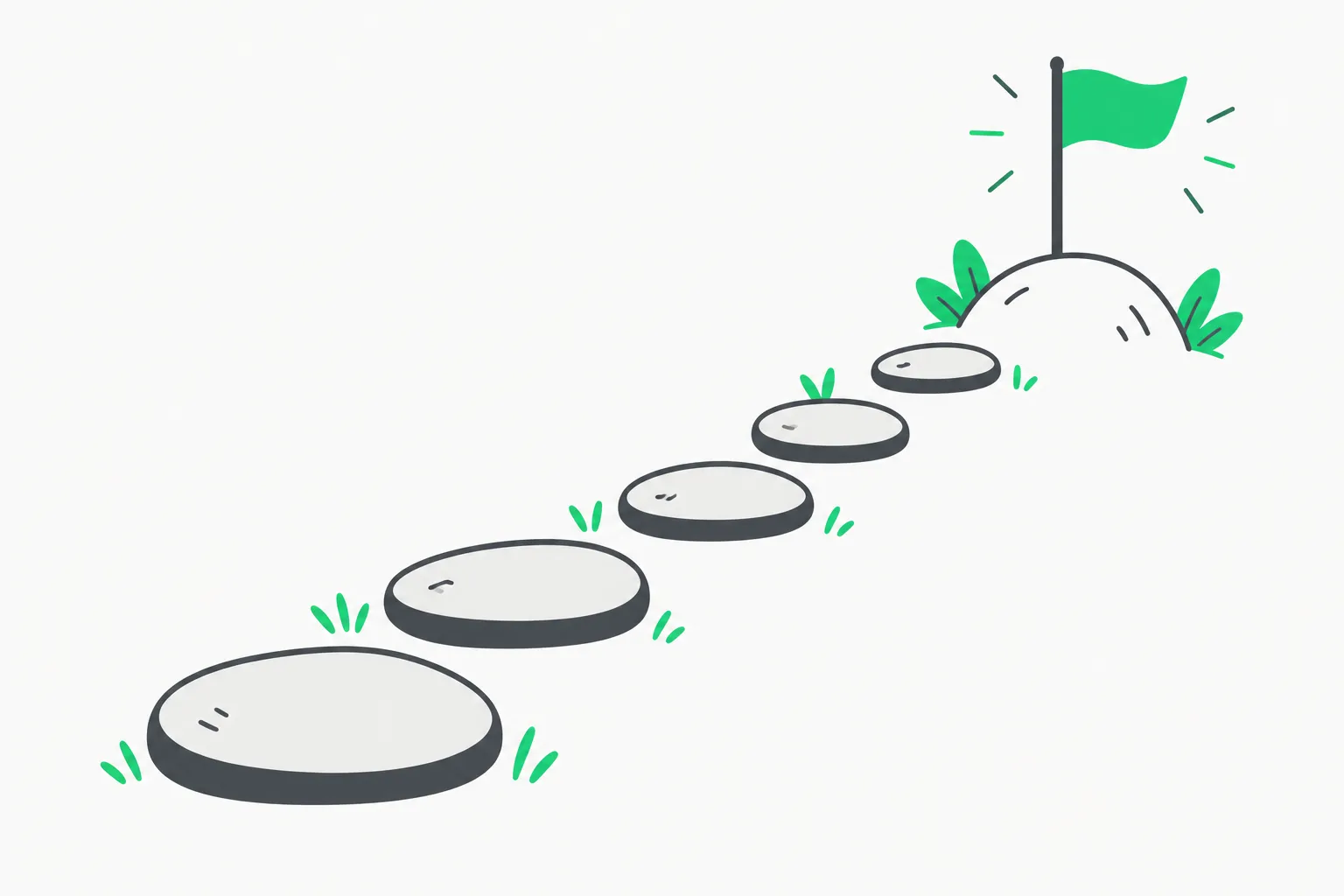 Centaur workflow: humans delegate steps where models are strongest
Brown's centaur framing matches how practitioners already route work:
- Delegate subtasks models handle well (partial poker solvers, code snippets, structured transforms).
- Keep humans on planning, cross-checking, and self-correction — models struggle to notice when they chase the wrong bug for hours.
- Prompting skill equals decomposition: smaller boxes until the model stops failing.
He calls current models jagged: Astra can allegedly profit at online poker, yet the same family can burn hours on irrelevant numerical noise in an algorithm that tolerates approximation.
That jaggedness is why agent workshop formats keep stressing evaluation harnesses, not model vibes.
Why he says drop out now
Brown's controversial line, paraphrased from The Decoder:
If somebody is a promising student, the best thing to do is actually to drop out and join the labs now.
His reasoning:
- Recursive improvement — LLMs already assist training the next generation.
- Time horizon — one to two years of steep progress ahead.
- Compute and skill bottlenecks — labs fight over talent they cannot manufacture.
This is labor-market rhetoric during OpenAI hiring waves and students-over-internships discourse — not accredited academic policy.
What Brown did not promise
The Decoder piece does not quote OpenAI offering universal leave scholarships or degree buyouts. It does not give profit tables for Astra poker or compute curves for the next flagship.
Readers searching "should I drop out for AI" should weigh:
| Factor | Why it still matters |
|---|---|
| Visas and research credibility | Many labs still hire PhDs |
| Safety and eval roles | Need statistics and systems depth |
| Enterprise adoption | Buyers want process, not only founder mythology |
Connections to OpenAI's November product stack
Brown's talk lands beside public OpenAI moves explainx.ai already covered:
The drop-out advice is about who builds those systems, not which API tier to buy.
How teams should use centaur thinking Monday
- Map jagged skills per task — don't ship one-shot agent loops on planning-heavy work.
- Instrument self-correction — harnesses that restart beats models that persist.
- Treat RL-on-CoT models as budget items — test-time compute isn't free after November price parity.
Libratus to o1: Brown's credential stack
Brown's poker pedigree matters when evaluating drop-out advice:
| System | Role | Lesson for today's models |
|---|---|---|
| Libratus (2017) | Heads-up no-limit Texas hold'em vs pros | Imperfect-information search at scale |
| Pluribus (2019) | Six-player poker | Multi-agent reasoning under hidden state |
| CICERO / Diplomacy | Language + negotiation | Human irrationality breaks naive game theory |
| OpenAI o1 | General reasoning via RL on CoT | Test-time compute as productized inference |
He is not claiming undergrads should skip statistics; he is saying frontier reasoning research rewards years inside labs during a recursive improvement window.
Poker bot tournament as venue
The Sequoia / Citadel / OpenAI hosting choice is deliberate: imperfect-information games remain Brown's teaching metaphor for hidden state in real-world planning. The Decoder's recap does not publish hand histories or win rates — treat poker profitability claims as illustrative, not audited performance tables.
Still, linking Astra to online poker income gives builders a concrete mental model: some reasoning models already monetize closed-loop decision tasks with real money feedback.
RL on chain of thought versus prompting tricks
 Scaling test-time reasoning beats one-shot chain-of-thought prompting
Brown distinguishes:
- Chain-of-thought prompting — cheap, inconsistent gains
- RL on chain of thought — reliable scaling of thinking time into quality
That distinction maps to product tiers: GPT-6.2 families charge for extended thinking modes while cheaper models hide reasoning traces. Procurement teams should compare tokens per solved task, not list price per million tokens alone.
Planning failures Brown warns about
His examples — models chasing irrelevant numerical bugs for hours — match what coding agent evaluators and ShellBench try to measure. Centaur workflows stop runaway loops; fully autonomous loops burn budgets.
Drop-out advice versus immigration reality
International students face visa constraints that Brown's quip ignores. Drop-out headlines also spook university partners running Claude campus programs. Read the advice as US-centric labor signaling.
Who still benefits from degrees
| Path | Why degrees help |
|---|---|
| Mechanistic interpretability | Math and stats depth |
| Healthcare and bio ML | Regulatory training |
| Enterprise AI adoption | Change-management credibility |
Brown targets already-promising students who could ship in labs today — not every CS101 enrollee.
Recursive improvement without sci-fi
Brown's steep progress claim rests on models helping train successors, echoed in Alexandr Wang superintelligence essays and OpenAI alien-mind alignment discourse. Builders can watch public artifacts — system cards, eval releases, checkpoint churn — instead of debating philosophy.
Hiring managers: what to scan for
When Brown says join labs now, hiring bar still includes:
- Reproducible OSS or competition math
- Eval intuition — knowing when a model fails silently
- Cross-team communication in centaur setups
Drop-out candidates who cannot show shipped research may fare worse than PhD grads with publication trails.
Education startups and bootcamps
Explosion of AI workshops — including explainx.ai programs — sits between Brown's urgency and institutional slow motion. Workshops teach centaur decomposition without requiring anyone to abandon accreditation.
Compute bottlenecks Brown cites
Brown ties progress speed to available compute and unsolved skills. That matches public GPU scarcity reporting and TSMC Texas fab applications — labs compete for HBM stacks, not only PhDs.
Students inside labs see allocation queues firsthand; students outside feel them as API rate limits and queue times on reasoning endpoints.
Self-correction as the next product battleground
If models cannot detect wrong directions, centaur teams win indefinitely. Vendors pitching fully autonomous coding agents should expect Brown-style skepticism until evals show recovery after blind alleys — see Greptile computer-use trees and Duopra full-duplex agency for contrasting autonomy levels.
Poker money versus enterprise ROI
Brown's Astra profits at poker line is memorable but not audited here. Enterprise buyers should still compare Astra vs Fable token economics on their workflows — legal, finance, or support — not No-Limit Hold'em.
Parents and counselors
If a student asks "Brown said drop out", counselors can answer:
- Join labs via internships, campus grants, or open-source without quitting mid-degree
- Recursive improvement is real but non-deterministic — backup plans matter
- Visa and scholarship cliffs remain sharp for international talent
When OpenAI posts the full talk
This article relies on The Decoder's summary. If OpenAI uploads video, revisit quotes for exact wording and context cuts — summaries can compress nuance.
Search questions this page answers
Queries like Noam Brown drop out or centaur period AI usually want career guidance. Brown's message is urgency, not permission to skip fundamentals. Pair his talk with Paul Graham university-founder essays and a16z academy alternatives — different lenses on the same tightening talent market. If your school runs Claude training workshops, ask how centaur workflows are taught before you treat drop-out lines as official policy. Brown's point is timing, not a blanket anti-degree stance for every student profile. Keep transcripts and advisor relationships intact if you experiment with a leave-of-absence instead of a permanent withdrawal today.
Related reading
- GPT-6.2 Astra vs Claude Fable hands-on costs
- GPT-6 Astra historical cipher work
- Students choosing startups over internships
- OpenAI Navier-Stokes agent swarm coverage
- Sam Altman on agent teams and superhuman sandboxes
- AI agent workshop how to pick
Source: The Decoder summary of Noam Brown's poker bot tournament talk, November 24, 2026.