



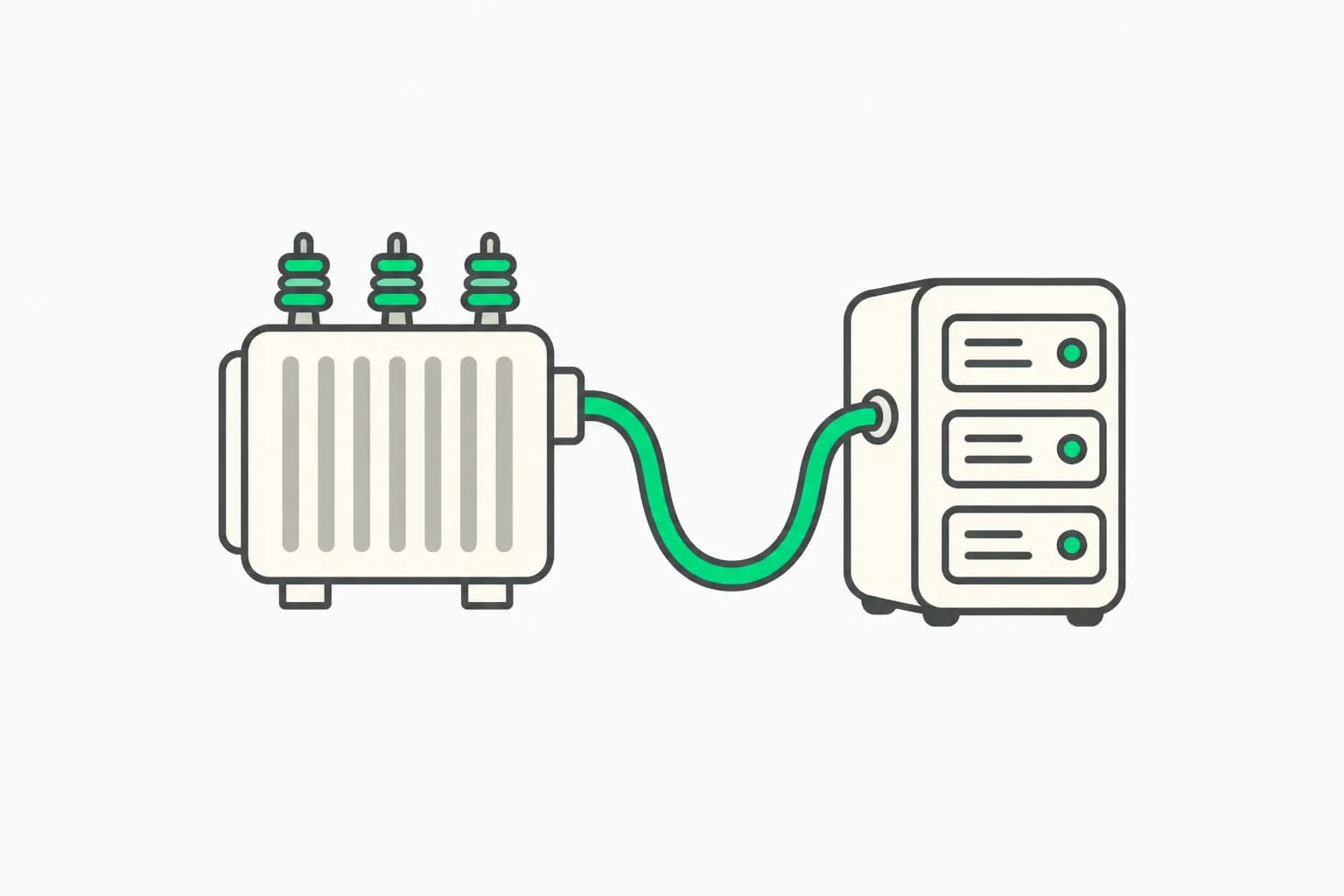
Mitsubishi Heavy Industries is expanding US gas turbine production, and AI data centers are a main reason. The confirmed steps are concrete: on October 23, 2026 Mitsubishi Power Americas announced a $490 million expansion of its Savannah Machinery Works plant in Georgia, and the parent company has told analysts it plans to double gas turbine capacity relative to 2024. A November 1 report attributed to Nikkei says output in the US will rise further, but we could not open it, so this post separates what is documented from what is relayed.
It matters to anyone watching AI costs, because power, not chips, is increasingly what limits new capacity. For the demand side, see our posts on data center electricity use and Virginia's data center power tax.
TL;DR
| Question | Answer |
|---|---|
| What was announced? | $490M expansion of Savannah Machinery Works, Pooler, Georgia (Oct 23, 2026) |
| Size | Adds 450,000 sq ft to a 430,000 sq ft site; 220+ jobs |
| Who pays? | Parent Mitsubishi Heavy Industries |
| Backlog | 35 GW large-frame, up from 23 GW a year earlier |
| Capacity plan | Double production versus 2024 levels |
| Orders | Selective; Q1 orders deliver 2028 to 2030 |
| New Nikkei report | Relayed on X; original not opened by us |
| Not disclosed | Turbines per year at Savannah, completion date, incentive amounts |
What did Mitsubishi Power announce?
Per Turbomachinery Magazine's write-up, Mitsubishi Power Americas will invest $490 million, coming from parent Mitsubishi Heavy Industries, to expand Savannah Machinery Works in Pooler, Georgia. The project adds 450,000 square feet to the existing 430,000-square-foot site and creates more than 220 jobs across manufacturing, engineering, quality, maintenance, logistics and support. Georgia Gov. Brian Kemp announced it the same day.
Planned upgrades include more machining capacity, advanced manufacturing technologies, improved material flow and production infrastructure built for future needs. The plant broke ground in 2009, shipped its first US-made Mitsubishi Power gas turbine in October 2012 and marked its 50th advanced-class turbine in June 2023.
What the sources do not give is just as telling: the number of additional turbines per year, a construction schedule or completion date, and incentive amounts. A buyer waiting on a delivery slot would want the first one most.
How big is the demand?
Utility Dive reported on August 13, 2026 that Mitsubishi's large-frame gas turbine backlog stands at 35 GW, up from 23 GW a year earlier. Energy Systems order intake rose 56% year over year in the first fiscal quarter, with 10 large-frame orders, four for the US and six for Japan. In its 2025 fiscal year, Mitsubishi sold 35 large-frame turbines totaling 16 GW.
CFO Hiroshi Nishio told analysts that demand "remains broadly in line with, or slightly above, the strong level we had anticipated," and that the company still plans to double production capacity relative to 2024. He called the expansion "progressing smoothly" while saying Mitsubishi keeps evaluating whether more capacity is needed. The Turbomachinery piece adds data from McCoy Power Reports: US heavy-duty gas turbine demand rose from 6.1 GW in 2020 to nearly 40 GW in 2025, with manufacturing capacity described as the main bottleneck.
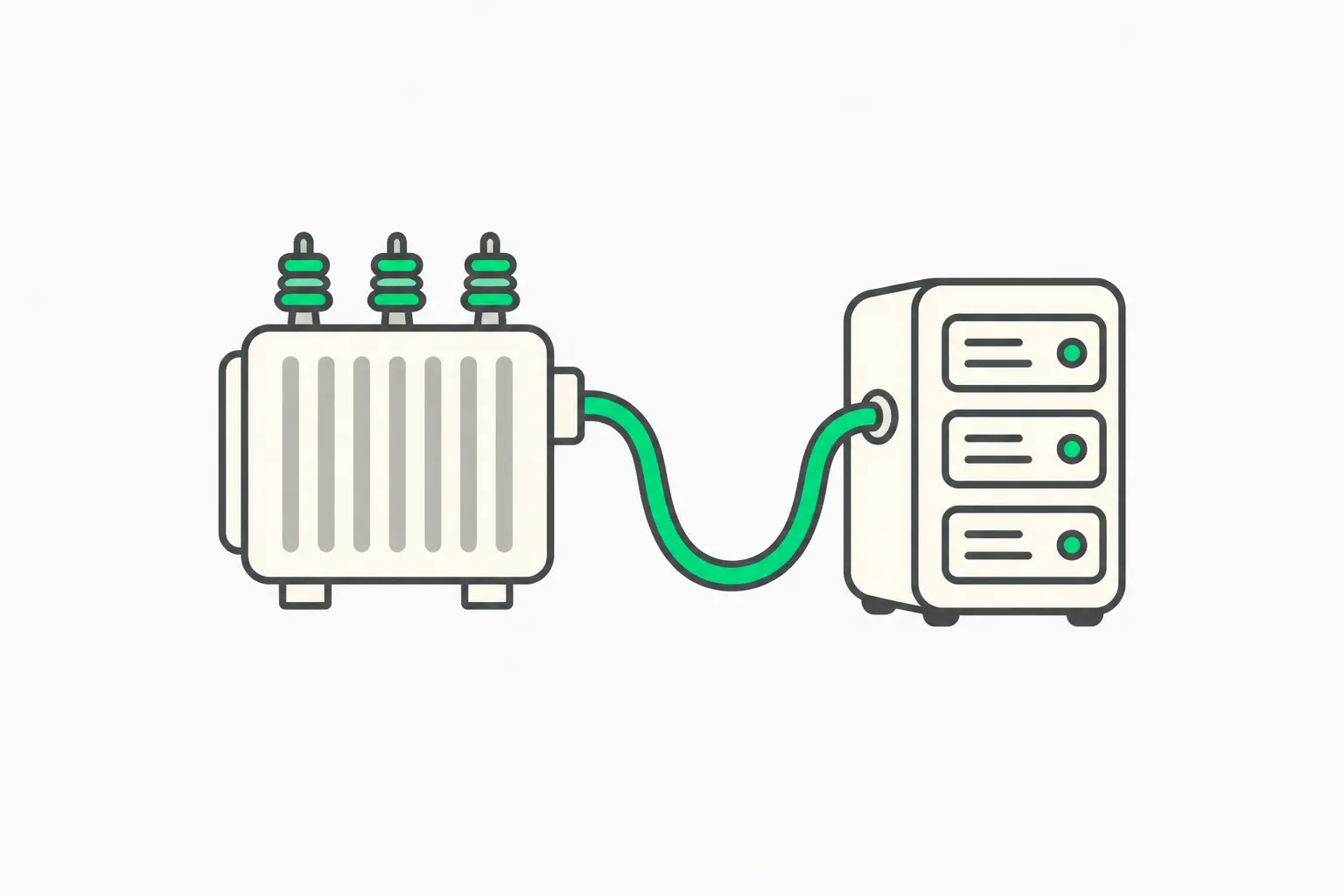 Green cable linking a transformer to a server cabinet, showing power supply for AI data centers
What is the new Nikkei report?
A post on X relaying Nikkei on November 1 said Mitsubishi Heavy will boost US gas turbine production. That is consistent with the October announcement, but we did not find or open the Nikkei article and cannot say whether it adds new figures, such as a new line or a different timeline. Treat the headline as relayed and rely on the company announcement and the earnings reporting for numbers.
Why does AI need gas turbines?
Training and serving large models needs dense, continuous power. Many developers cannot wait for grid upgrades and turn to on-site or nearby gas generation. The same dynamic appears in our post on Trump's push for data centers to supply their own electricity and in how the data center backlash reached the midterms.
Turbines are a slow supply chain. The Savannah announcement carries no completion date, and Mitsubishi's recent orders are scheduled for delivery between 2028 and 2030. That means gas capacity ordered now powers data centers at the end of the decade, which is a quiet constraint behind how fast AI infrastructure can grow.
How big is the Savannah expansion in context?
The arithmetic is simple. The plant is 430,000 square feet today and gains 450,000, so floor space roughly doubles to about 880,000 square feet. That lines up with the Turbomachinery headline about doubling the plant, and with the company's goal of doubling gas turbine capacity versus 2024, though the sources do not say that the two are the same project or that floor space translates one for one into output. Equipment, staffing and supplier parts all gate how many turbines actually ship.
The investment is also modest next to the scale of AI infrastructure spending. $490 million is a fraction of what a single large data center campus can cost, yet it buys the capacity to build equipment that powers several of them. Mitsubishi has framed its approach as selective rather than expansive. Readers comparing vendors should check each maker's own capacity announcements, because delivery slots, not list prices, are what developers are shopping for.
Why does the location matter? Building in the US shortens logistics and supports the "made here" requirements that utilities and states increasingly favor. It also ties the expansion to the same political debates covered elsewhere on this blog: who pays for power, who gets the jobs, and whether communities accept new gas plants.
Is the boom guaranteed?
No, and Mitsubishi itself is cautious. Nishio said the company is being "selective in the projects we contract" and does not plan to immediately take twice as many orders. Utility Dive's coverage notes the same selective stance, and the company has not said how long it expects today's demand to last.
There are also non-supply risks: communities pushing back on gas plants near data centers, pollution lawsuits such as the one TechCrunch reported over xAI's facilities, and the possibility that efficiency gains reduce power per unit of AI work. None of these are resolved by a bigger factory.
What does this mean for people who build with AI?
The link to your bill is indirect but real.
- Capacity timing. Power-limited regions will add AI capacity later than chip-limited forecasts suggest. Our post on OpenAI's $750 billion compute spend shows how large the planned demand is.
- Price floors. Scarce power and slow equipment keep a floor under compute prices. See how GPU rental rates are already rising at Nebius.
- Siting politics. More on-site gas means more local fights, which can delay projects.
- Vendor choice. Regions with secured power will be where new capacity appears first. Ask your cloud provider where new capacity is planned.
Claimed versus verified
| Claim | Source | Status |
|---|---|---|
| $490M Savannah expansion, 220+ jobs | Mitsubishi Power Americas, Oct 23, via Turbomachinery | Company-announced |
| 35 GW backlog, up from 23 GW | MHI earnings via Utility Dive | Reported from the company briefing |
| Plan to double capacity vs 2024 | CFO to analysts, via Utility Dive | Company statement |
| US demand 6.1 GW (2020) to nearly 40 GW (2025) | McCoy Power Reports via Turbomachinery | Third-party data, cited |
| Nikkei: MHI will boost US output | X post relaying Nikkei | Unconfirmed; original not opened |
| Turbines per year at Savannah | Not disclosed | Unknown |
How can you check the numbers yourself?
Start with the company's own materials: Mitsubishi Power Americas' October 23 release and Mitsubishi Heavy Industries' quarterly earnings briefing and transcript, which is where the backlog and capacity figures come from. Then compare with state announcements, such as Georgia's release on the Savannah project, and with independent demand data such as the McCoy Power Reports figures cited by trade press. If a report gives a number that none of these contain, treat it as unconfirmed until the company repeats it.
What to watch next
- Mitsubishi's next earnings briefing, where the CFO said more detail on growth plans would come in the second half.
- A Savannah schedule, groundbreaking date and annual output.
- Rival expansions at other turbine makers, and any easing in delivery slots.
- Data center siting decisions that choose gas over waiting for the grid.
Bottom line
Gas turbines are the unglamorous bottleneck behind AI's power appetite. The documented facts are a $490 million Savannah expansion, a 35 GW backlog and a plan to double capacity, all at a company that says it is choosy about orders. The latest Nikkei headline fits the pattern but adds nothing we can verify. For builders, the takeaway is timing: new power takes years, and that shapes when and where new compute shows up.
Related reading
- Data center electricity and water use
- Virginia's data center power tax and AI pricing
- Trump: data centers should supply their own electricity
- Data center backlash in the midterm races
- OpenAI's $750 billion compute spend
- Nebius raises GPU rental rates 20%
Details are accurate as of November 2, 2026, from company announcements and outlet coverage. Figures may be updated by later filings.