



Meteoric, a two-person Y Combinator S26 startup, launched with an arresting premise: send fleets of autonomous drones into clouds above solar farms, change the droplets mechanically, and recover sunlight without spraying chemicals or building new generation capacity. The company projects 10–30% more annual solar output in major US grid regions and eventually wants to weaken severe storms and hurricanes.
The launch is high-signal because it combines AI weather forecasting, autonomous flight, swarm control, atmospheric science, and renewable-energy economics in one physical system. It also needs a strict evidence check. Meteoric's official YC launch reports a 13% reduction in an artificial cloud inside a chamber. The annual solar uplift, dollar value, 2027 field flight, 2028 storm operation, and hurricane goal all sit higher—and less proven—on the evidence ladder.
TL;DR: what has been tested versus projected?
| Question | Direct answer |
|---|---|
| What does Meteoric propose? | Autonomous fleets of tens to hundreds of drones that enter low and mid-altitude clouds, mechanically change droplets, lower cloud reflectivity, and let more sunlight reach solar panels |
| What has been measured? | Meteoric says its prototype reduced an artificial cloud by 13% in a cloud-chamber test |
| Has it cleared a natural cloud over a solar farm? | No public evidence yet; the first large-scale cloud-clearing flight is targeted for 2027 |
| Is the 10–30% solar gain real production data? | No; it is a Meteoric model projection based on treatable cloud types and grid regions |
| Is the $5,000–$28,000/MW figure measured revenue? | No; it is the company's modeled value range for the projected extra generation |
| Can the drones weaken hurricanes? | Not demonstrated; that is the long-term goal, with a first storm operation targeted for late 2028 |
| Why should AI builders care? | It is a clean example of an agentic system whose forecast, plan, action, sensor feedback, and physical outcome must all be evaluated separately |
How Meteoric says cloud clearing would work
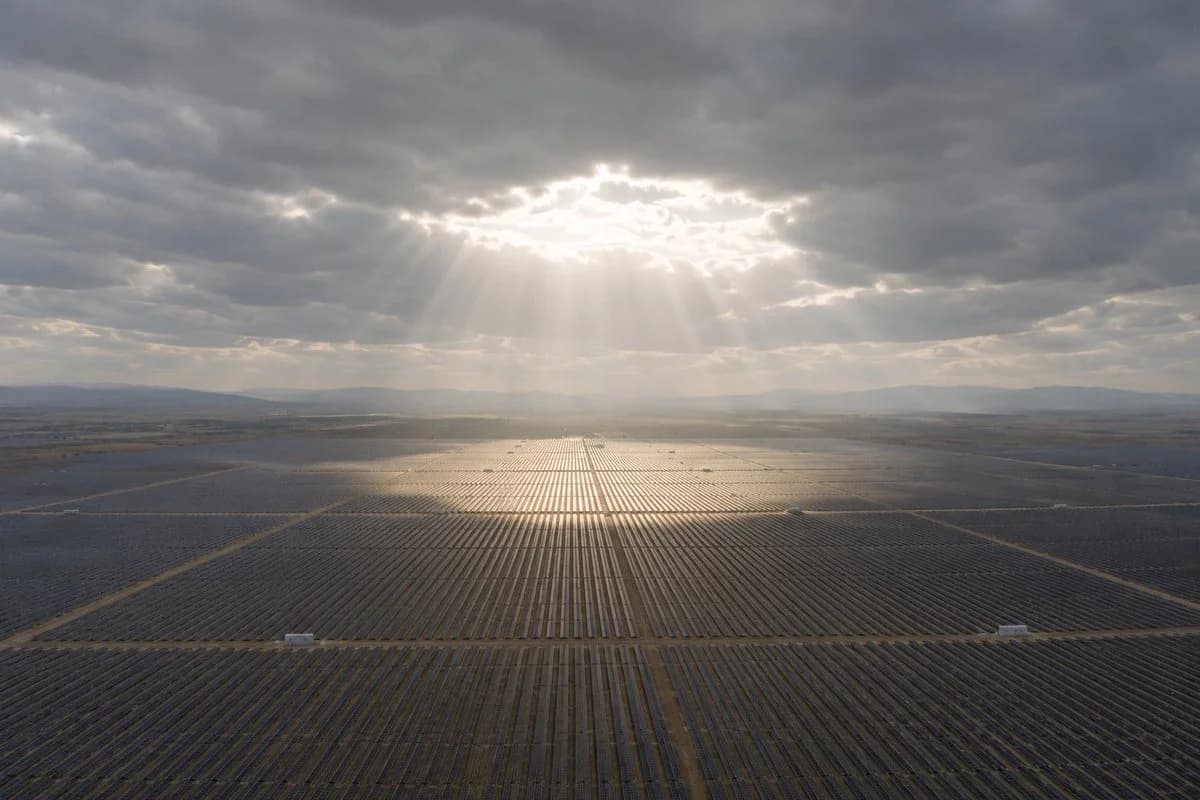
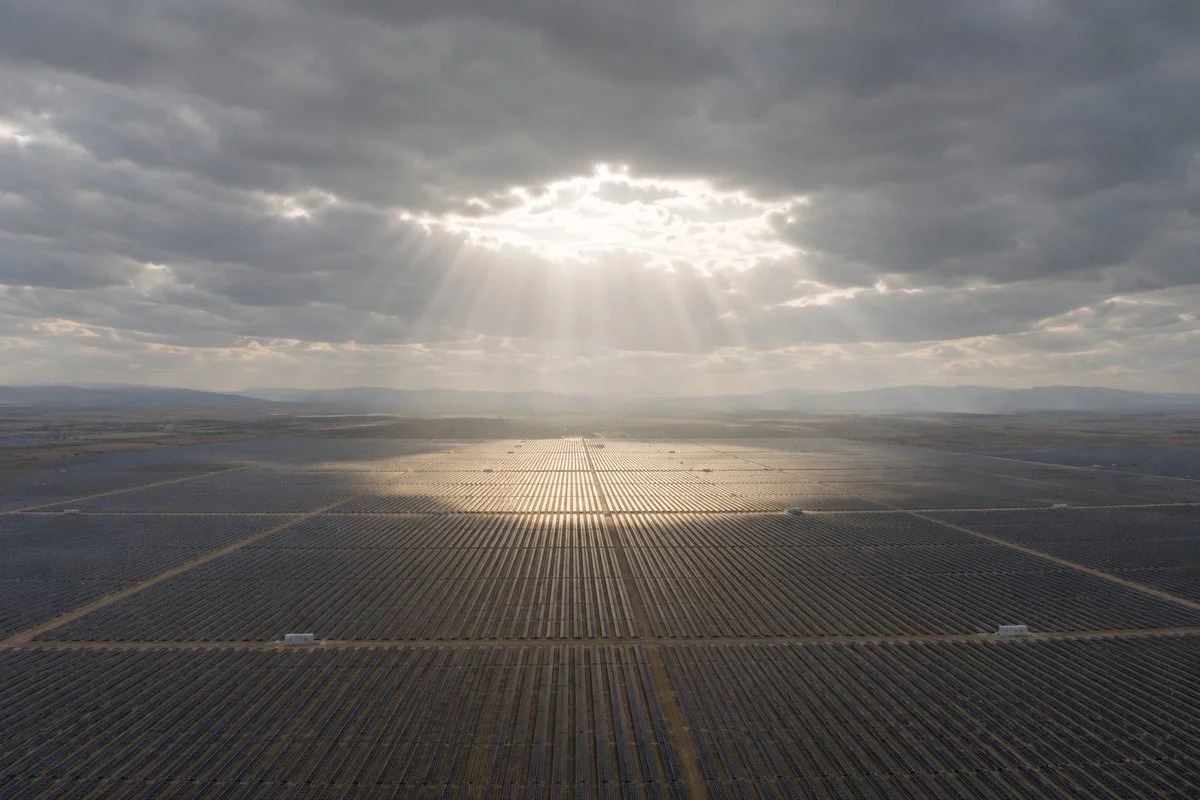 Utility-scale solar farm under an overcast sky with sunlight breaking through the cloud deck
Meteoric launch image showing the intended outcome over a solar farm. Source: Meteoric, supplied by the founders in the launch materials.
Meteoric's official site describes a five-stage loop: deploy near a solar plant, fly into low and mid-altitude clouds, alter the droplets, reduce the cloud's reflectivity, and increase the sunlight reaching the panels. The company says the intervention uses no chemicals and requires no new infrastructure at the power plant.
Its YC launch adds the operational shape. Fleets of tens to hundreds of drones would work in clouds roughly 1–5 kilometres above ground, using weather forecasts and a cloud-loss model to identify conditions worth treating. The intended product is therefore not simply a drone. It is a closed-loop autonomy stack:
- Observe: ingest weather forecasts, cloud properties, solar-production data, and local flight conditions.
- Predict: estimate which clouds are treatable and how much energy the plant would otherwise lose.
- Plan: assign routes, timing, altitude, and intervention targets across a drone fleet.
- Act: fly into the selected cloud volume and mechanically alter droplets.
- Measure: compare cloud properties and solar output before, during, and after treatment.
- Update: decide whether to continue, stop, or change the plan as the atmosphere moves.
That loop is why Meteoric belongs in AI-builder coverage, rather than being treated as a strange energy headline. The same architecture appears in AI systems that optimize grids and climate infrastructure: a model is useful only when its prediction reaches a controlled action and a trustworthy measurement comes back.
The Meteoric evidence ladder
The easiest way to evaluate the launch is to avoid placing every number on the same rung.
| Evidence level | Claim | Current status |
|---|---|---|
| Bench result | Prototype dissipated an artificial cloud by 13% | Reported by Meteoric from a cloud-chamber test |
| Model output | Annual solar generation could rise 10–30% | Company projection, not field production data |
| Economic model | Extra generation could be worth $5,000–$28,000/MW | Company estimate derived from the projected uplift |
| Near-term target | First large-scale cloud-clearing flight in 2027 | Planned, not completed |
| Later target | First storm operation in late 2028 | Planned, not completed |
| Long-term ambition | Reduce the intensity of severe storms and hurricanes | Not demonstrated |
What the 13% chamber result establishes
If reproduced with controls, the chamber result would show that the chosen mechanism can measurably change an artificial cloud under controlled conditions. That is useful: many physical-AI ideas fail before the actuator produces a repeatable effect at all.
It does not establish persistence in moving natural clouds, reliable navigation inside low visibility, energy-positive fleet economics, ecological safety, or a 10–30% annual increase at a real solar site. A chamber removes much of the atmosphere's variability. Field conditions add wind shear, turbulence, mixed droplet sizes, temperature gradients, precipitation, air traffic, maintenance failures, and clouds that continuously form and dissipate.
What would validate the 10–30% solar claim
Meteoric's public site is careful to label its regional uplift numbers as maximum estimates based on modeled cloud types. It lists a range from 10% in the Northwest to 30% in NYISO, with CAISO at 12%, ERCOT at 15%, and several eastern markets between 20% and 22%.
The next credible evidence would be a pre-registered field trial over a consenting solar farm with untreated control periods or matched control sites. The useful output is not “the cloud looked thinner.” It is the counterfactual energy result: measured irradiance and megawatt-hours versus what the same site would have produced without intervention, after subtracting fleet energy, downtime, weather-selection bias, and operating cost.
This matches the deployment test in our evidence-based answer to whether AI can solve global warming: a climate application counts when it changes a physical outcome and the net benefit survives full-system accounting.
Where AI matters—and where physics still dominates
Meteoric says falling drone costs and rapid AI weather forecasting make the idea newly practical. The forecasting side is plausible as an enabling layer. Systems such as DeepMind's WeatherNext Cyclones show how learned weather models can produce large probabilistic ensembles quickly enough to support operational decisions.
But a faster forecast is not evidence that cloud intervention works. It improves when and where a controller might act; it does not prove what happens after the actuator enters the atmosphere. The control system would need uncertainty estimates, conservative abort conditions, geofenced flight plans, human approval for consequential operations, and a way to detect distribution shift when a cloud behaves unlike the training or simulation data.
For builders, the transferable lesson is to evaluate each layer independently:
- Forecast quality: Does the model identify treatable clouds with calibrated uncertainty?
- Planner quality: Does fleet coordination avoid collisions and choose interventions with positive expected value?
- Actuator reliability: Does the drone produce the intended droplet change outside a chamber?
- Measurement integrity: Can sensors attribute extra irradiance to the intervention rather than natural cloud evolution?
- System safety: Does a safe state exist when communication, navigation, weather data, or a drone fails?
- Net outcome: Do extra megawatt-hours exceed electricity, maintenance, labor, and lifecycle costs?
This is also why Meteoric is an interesting candidate for a future edition of explainx.ai's AI climate-tech startup map, but not yet evidence that it belongs beside deployed monitoring and control systems. A compelling autonomy stack and a chamber result are earlier-stage signals than commercial field performance.
The regulatory problem is part of the product
Meteoric's proposed flight profile appears to cross several US aviation constraints, depending on aircraft weight, altitude, site, visibility, and operating plan. The FAA's Part 107 waiver guidance identifies separate waiver paths for beyond-visual-line-of-sight operations, one pilot operating multiple drones, flights above 400 feet, low-visibility conditions, and flights within specified distances of clouds. Meteoric describes fleets operating inside clouds at altitudes up to 5 kilometres, so regulatory engineering cannot be left until after the autonomy system works.
Weather modification adds another reporting layer. NOAA says activities intended to modify weather or Earth's solar-radiation exchange must be reported under the Weather Modification Reporting Act. A February 2026 GAO review found that NOAA oversees reporting, not the scientific validity or approval of every weather-modification activity, and that the current database and forms contain substantial gaps.
That distinction matters. Filing a report would not by itself establish ecological safety, efficacy, local consent, liability coverage, or permission to operate a drone swarm. State laws can add further restrictions, and atmospheric effects do not necessarily stop at a solar farm's property line.
The ecological questions a field test must answer
The claim “no chemicals” removes one obvious concern associated with traditional cloud seeding, but it does not make atmospheric intervention impact-free. Mechanically changing cloud droplets could alter cloud lifetime, local radiation, temperature, humidity, precipitation timing, or downwind conditions. The magnitude and duration of those effects are precisely what field research would need to measure.
A responsible trial program should publish at least:
- the intervention mechanism and the cloud types it targets;
- target and control-area definitions;
- irradiance, precipitation, humidity, and downwind measurements;
- drone energy use, failure rates, and abort criteria;
- independent environmental review and incident reporting;
- trial data sufficient for outside researchers to reproduce the analysis;
- a clear rule for stopping when forecasts or effects leave the tested range.
These requirements are not anti-innovation. They make the claim legible. AI's climate impact is already difficult to account for; a system that intentionally changes clouds needs better measurement than a startup launch page can provide.
Hurricane weakening is a different problem class
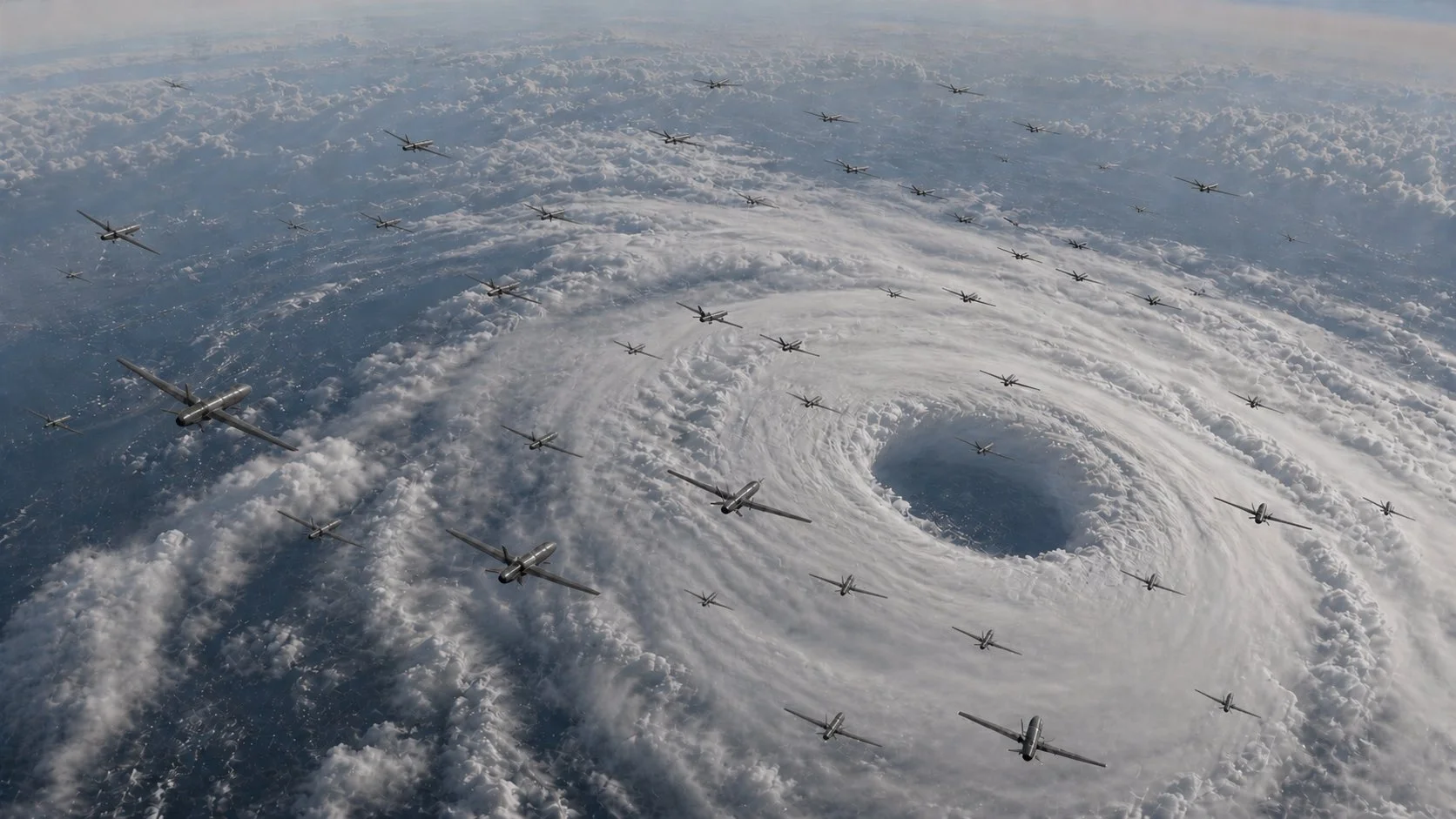 Concept rendering of a large autonomous drone fleet flying around a hurricane
Concept rendering from Meteoric's launch materials. It illustrates the long-term hurricane ambition; it is not a photograph of a test or deployment.
Clearing stable overcast above a bounded solar asset and influencing a severe convective storm are not incremental versions of the same task. A hurricane contains energy, moisture, and circulation across an enormous three-dimensional system. The observations, aircraft endurance, fleet size, control authority, failure consequences, international coordination, and evidence standards all change by orders of magnitude.
Meteoric itself presents stable-cloud clearing as the first technical milestone and hurricane weakening as the ultimate goal. That sequencing is sensible, but the 2028 storm target should not be read as a forecast that hurricane control will work by 2028. It is a target for an operation, not proof of a safety or efficacy threshold.
The strongest near-term connection to hurricane AI is therefore forecasting and experimental design. Better ensemble forecasts could help select safe research windows and model counterfactuals, while WeatherNext's cyclone work shows what serious validation looks like: historical benchmarks, comparisons against operational systems, uncertainty modeling, and real-world evaluation. Intervention requires all of that plus causal evidence that an action changed the storm.
Who is building Meteoric?
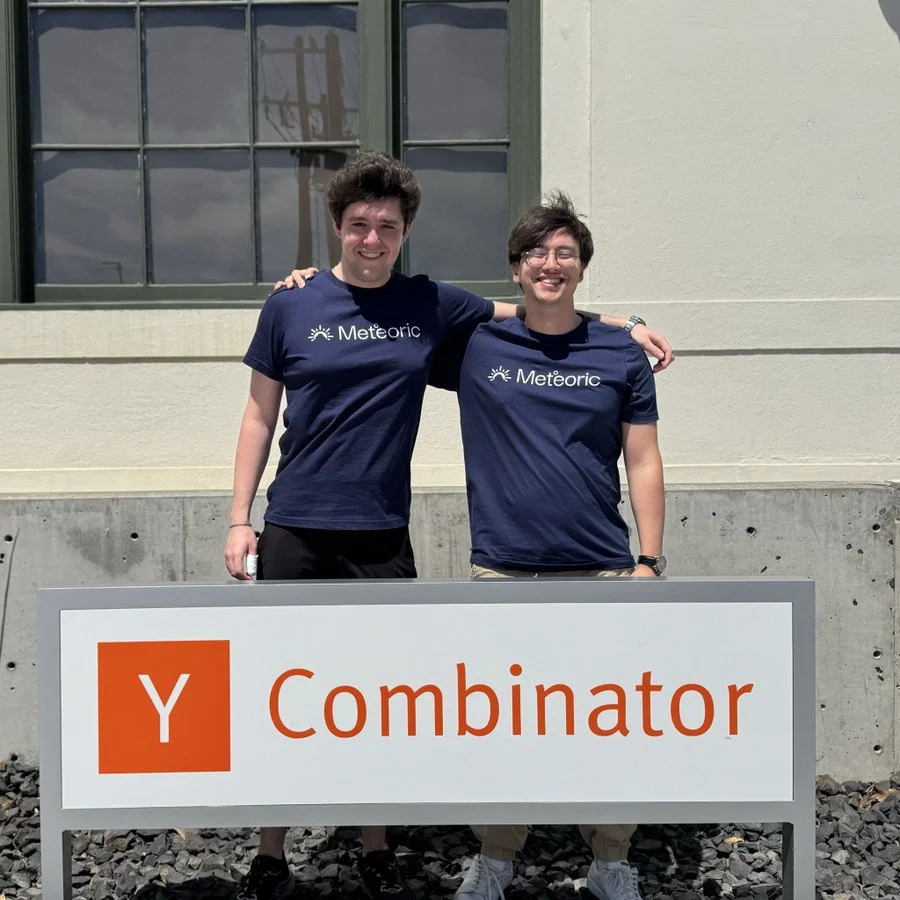 Meteoric co-founders Mete Karslioglu and Eric Nilsson standing behind a Y Combinator sign
Meteoric co-founders Mete Karslioglu and Eric Nilsson at Y Combinator. Source: Meteoric's first-party launch materials.
Meteoric was founded in 2026 by Cambridge engineering graduates Mete Karslioglu and Eric Nilsson and is part of Y Combinator's Summer 2026 batch. According to the company's official profiles, Karslioglu previously developed seawater spray nozzles for marine cloud-brightening research and atmospheric measurement equipment. Nilsson worked on droplet removal from LiDAR lenses, digital microfluidics, and control and instrumentation systems.
That background is unusually aligned with the proposed mechanism. It raises the probability that Meteoric can build a serious experiment; it does not substitute for field evidence. The fairest reading of the launch is “a technically relevant team has produced an early controlled result and an ambitious test roadmap,” not “drones can now add 30% to solar farms or weaken hurricanes.”
What should AI builders watch next?
Three milestones would materially change the assessment:
- A natural-cloud flight with public measurement: evidence that the mechanism transfers from chamber to atmosphere.
- A controlled solar-farm trial: measured net megawatt-hours, not modeled maximum uplift.
- A regulator- and community-visible operating case: documented FAA permissions, NOAA reporting, environmental monitoring, and transparent incident handling.
Until then, Meteoric is best understood as a bold physical-AI hypothesis with one early bench result. The interesting part is not whether the launch image looks futuristic. It is whether the company can climb an unusually demanding evidence ladder—from artificial cloud, to natural cloud, to attributable solar output, to repeatable economics—without skipping the safety and governance rungs between them.
Related on explainx.ai
- DeepMind WeatherNext Cyclones: one more day of forecast lead time
- Can AI solve global warming? What the evidence says
- AI and climate change: where the benefits and energy costs collide
- Top 10 AI + climate-tech startups to watch in 2026
- Data centers: the real environmental impact
- The model-selection energy math
Official and regulatory sources: Meteoric · Y Combinator launch · FAA Part 107 waivers · GAO weather-modification oversight review
Company test results, model projections, timelines, and regulatory information are accurate to the linked sources as of August 22, 2026. Future field results and permissions may change the assessment.