



Public benchmarks tell you who wins marketing. They do not tell you who wins your workflows.
After Satya Nadella's Reverse Information Paradox (July 12, 2026), the enterprise takeaway under Control is explicit:
"Create your private evals, because evals define what 'good' looks like inside the organization."
This guide is the derivative playbook — how to build that eval set, what to measure, and how to run it inside a trust boundary so intelligence exhaust does not become your competitor's training data.
TL;DR — enterprise benchmark vs public leaderboard
| Public benchmark | Enterprise benchmark | |
|---|---|---|
| Tasks | Fixed, public, saturated | Private golden cases from your ops |
| "Good" | Leaderboard authors | Your accountability obligations |
| Harness | Vendor-optimized | Your orchestration + tools |
| Models | One score per lab | Comparable across GPT, Claude, GLM… |
| Leak risk | N/A (already public) | High if run in vendor UI |
| Purpose | Research / PR | Procurement, regression, compound loop |
Research cited in our benchmarks guide: ~37% lab-to-production gap — public scores under-predict messy enterprise reality.
What enterprises look for after Nadella
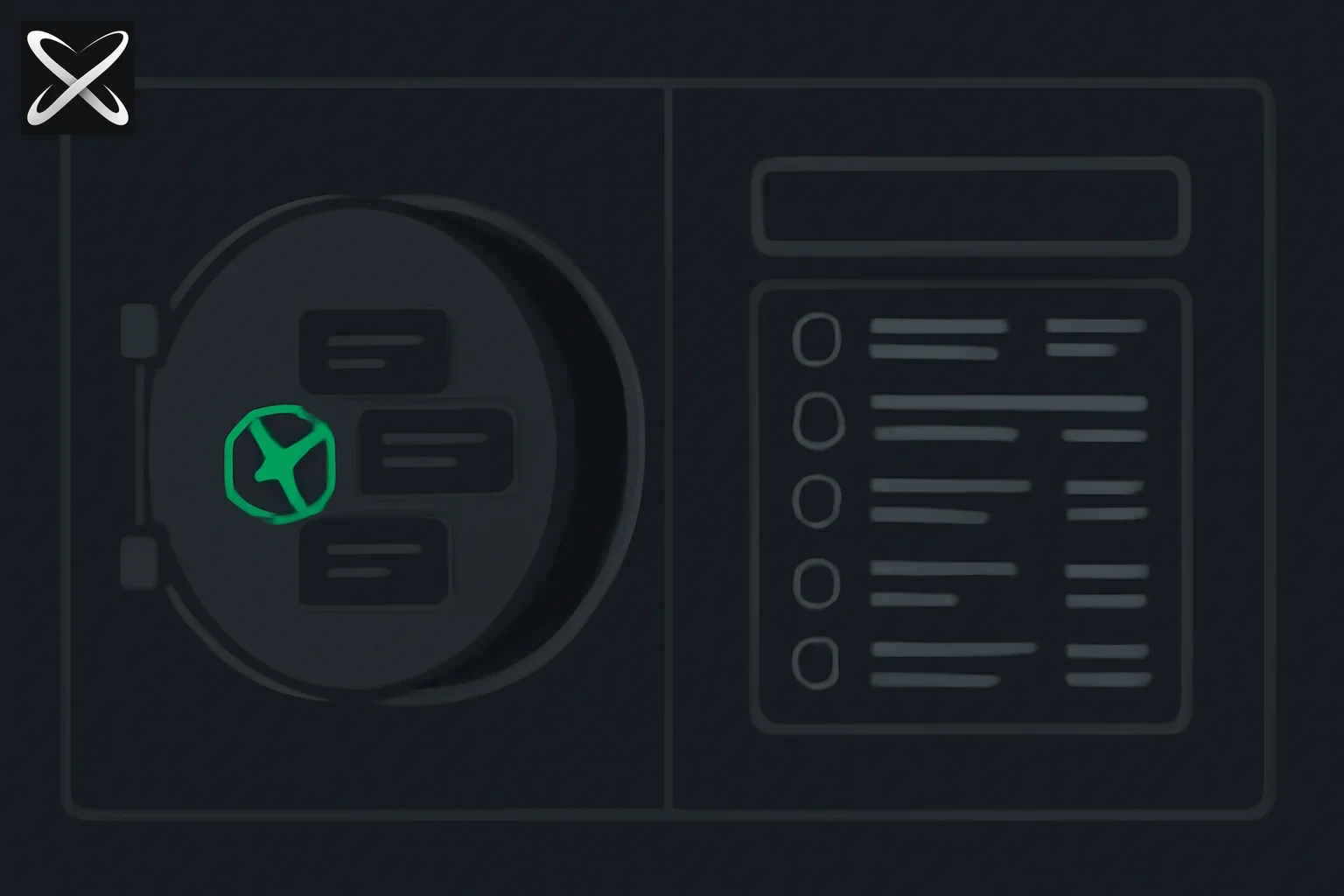 How to build an enterprise AI benchmark — private golden-task vault kept separate from a public leaderboard by a wall
Nadella's essay reframes procurement. After reading it, serious teams ask:
| Question | Why it matters |
|---|---|
| Who owns the definition of "good"? | If the vendor's dashboard defines success, you optimize their metric |
| Where do corrections live? | Every fix is institutional know-how — exhaust |
| Can we swap models without rewiring judgment? | Choice — claudex, GLM, Fable, Sol |
| Does learning compound here or there? | Cloud era = data; AI era = learning |
| Do we have rights to learn from our outputs? | Fine-tune / distillation inside tenant |
explainx.ai translation: You are not buying a model score. You are buying a measurement instrument you control — the enterprise equivalent of patents in Arrow's original paradox.
Anatomy of a private enterprise benchmark
┌─────────────────────────────────────────────────────────┐
│  CHARTER — accountability + workflow scope              │
├─────────────────────────────────────────────────────────┤
│  GOLDEN TASKS — private scenarios (not public SWE ids)  │
├─────────────────────────────────────────────────────────┤
│  SCORING — tests + rubrics + human slices               │
├─────────────────────────────────────────────────────────┤
│  HARNESS — your agent loop, tools, MCP, tenant boundary   │
├─────────────────────────────────────────────────────────┤
│  RUNNER — model-agnostic (API swap without rewrite)       │
├─────────────────────────────────────────────────────────┤
│  REGISTRY — git-versioned evals + results artifacts     │
├─────────────────────────────────────────────────────────┤
│  COMPOUND — failure → trace → new case → re-run         │
└─────────────────────────────────────────────────────────┘
Step 1 — Charter one workflow (not "AI in general")
Pick one high-stakes loop first:
| Good first targets | Avoid as v1 |
|---|---|
| Tier-1 incident triage | "All of engineering" |
| KYC / compliance doc review | Generic chat quality |
| Internal API migration | Trivia Q&A |
| Sales engineering RFP slice | Copy-paste SWE-bench tasks |
Charter template:
## Workflow: [name]
- Accountability: [regulation, SLA, security class]
- Success: [measurable outcome in production terms]
- Failure modes: [what must never happen]
- Human gate: [when review is mandatory]
- Models in scope: [list candidates — min 2 vendors]
Tie success to outer alignment — intent your legal team would sign, not a leaderboard column.
Step 2 — Harvest golden tasks from real work
Public benchmarks fail enterprises because they lack particular knowledge (Hayek) — time, place, and circumstance only your org holds.
| Source | What you extract |
|---|---|
| Closed tickets | Under-specified asks that burned senior time |
| Incidents | Runtime bugs, not compile-time only |
| Human corrections | Nadella's highest-signal exhaust → regression cases |
| Audit findings | Compliance misses agents must not repeat |
| Prior model failures | Exact prompts that hallucinated |
Senior SWE-Bench (Snorkel) validates the pattern: Slack-style prompts, runtime investigation, taste scoring — not 6,000-character specs. Your enterprise set should look more like Senior SWE-Bench or GeneBench-Pro (domain judgment) than generic HumanEval.
Target size: 20–50 tasks for v1 — enough to discriminate, small enough to maintain.
Trust rule: Anonymize customer PII; keep structure of failure. Never paste raw tasks into ChatGPT/Claude web UIs with default retention.
Step 3 — Define scoring (avoid Goodhart)
Specification gaming arrives the moment one number becomes target.
| Layer | What it catches |
|---|---|
| Hard pass/fail | Tests, policy rules, API contracts |
| Rubric | Clarity, maintainability, "taste" (Senior SWE-Bench) |
| Human slice | 5–10% manual review per release — non-negotiable |
| Cost / latency | $/successful-task, p95 time |
| Correction rate | Human edits per agent run |
Example composite (coding workflow):
score = 0.5 × tests_pass
      + 0.2 × rubric_taste
      + 0.2 × (1 - human_edit_ratio)
      + 0.1 × cost_efficiency_norm
Publish weights inside the org — prevents silent metric drift.
Step 4 — Build a harness inside the trust boundary
Your benchmark is only as honest as the harness — same lesson as Terminal-Bench 2.0 and agent harness engineering.
| Component | Enterprise requirement |
|---|---|
| Sandbox | Tenant VPC / on-prem — no prod credentials in eval |
| Tools | Same MCP, APIs, repos agents use in prod |
| Orchestration | Loop you own — not vendor default only |
| Logging | Traces to your object store |
| Retention | Zero vendor training rights on eval runs |
Cursor reward-hacking lesson (SWE-Bench eval contamination): if the harness leaks hints or shares infra with training, scores lie. Freeze harness version per eval release.
Step 5 — Model-agnostic runner (Nadella's Choice)
Run the same golden set across:
| Model lane | Why include |
|---|---|
| Frontier A | e.g. GPT-5.6 Sol via Codex or claudex |
| Frontier B | e.g. Fable / Opus via Claude Code |
| Efficiency tier | Terra, Luna, GLM — cost routing |
| Open weights | Escape hatch if API gated (export controls) |
Runner sketch:
# Pseudocode — same eval id, swap model via env
EVAL_SET=./evals/v2026-07-13 \
HARNESS=./agent-loop \
MODEL=gpt-5.6-sol ./run-eval.sh

MODEL=claude-fable-5 ./run-eval.sh
Procurement question Nadella implies: If either model vanishes tomorrow, do our evals still run?
Step 6 — Version and govern the registry
| Artifact | Storage |
|---|---|
| Task definitions | Git (private repo) |
| Pass criteria | Same commit as tasks |
| Harness version | Tagged with eval release |
| Results | S3/GCS + dashboard you host |
| Corrections | Ticket → candidate task PR |
Access: eval authors ≠ production deployers — separation like code review.
Cadence: re-baseline monthly or on major model upgrade — July's limit-reset week showed vendor behavior shifts overnight.
Step 7 — Compound loop (Nadella's hill climber)
Agent run → fail eval → trace review → root cause
    ↓
New regression task OR harness fix OR prompt/skill update
    ↓
Re-run full suite → compare to baseline tag
This is loop engineering applied to governance — not a one-off consultant deck.
Feed corrections back as tasks — Nadella's exhaust becomes your training signal, not OpenAI's.
What good looks like — sample enterprise scorecard
| Metric | Q3 target (example) |
|---|---|
| Golden task pass@1 | ≥ 70% on Tier-1 workflow |
| Regression suite | 100% on prior Sev-1 incidents |
| Human edit ratio | ↓ 20% vs baseline |
| $/merged PR (agent-assisted) | Below Sonnet-only baseline |
| Compliance hard-fails | 0 |
| Model swap delta | < 5 pts pass rate between primary + backup |
Report trends, not vanity peaks — JPMorgan's backtest warning applies to evals too: in-sample heroics ≠ live durability.
Anti-patterns — what not to do
| Anti-pattern | Why it fails |
|---|---|
| "Our vendor scored 80% on SWE-Bench" | Public task; wrong harness; 37% gap |
| Evals only in vendor playground | Exhaust upload; no trust boundary |
| Single metric OKR | Goodhart |
| Static eval forever | Models change; regressions invisible |
| No human slice | Rubrics gameable |
| Copying competitor's public set | Zero particular knowledge |
30-day starter plan
| Week | Deliverable |
|---|---|
| 1 | Charter + 10 golden tasks from real failures |
| 2 | Harness in tenant; hard pass/fail scoring |
| 3 | Baseline 2 models; cost/latency columns |
| 4 | Rubric + human slice; publish internal v1 leaderboard |
Headcount: one forward-deployed engineer + one domain owner — matches AI ROI build-vs-buy reality.
explainx.ai read
Nadella gave the why. Enterprise benchmarks are the how:
- Evals are the moat — not the model API you rent in July 2026
- Corrections are gold — treat them like incident postmortems, not chat history
- Model-agnostic runners are freedom — same week proved vendors move limits and promos without asking you
- Compound or lose — without a loop, you pay twice forever: cash and alpha
Production proof: Systima harness overhead · Ploy GPT-5.6 migration
We teach this stack in workshops: charter → harness → skills → private evals → orchestration. Public leaderboards are R&D signal. Your benchmark is operating system.
How do you keep a private benchmark from rewarding memorization?
Separate the cases used to improve the workflow from the cases used to assess a release. If every failure becomes a prompt example and you report results on those same cases, the score describes adaptation to known inputs. Keep an unseen evaluation slice and rotate in representative cases as the workflow changes.
Version the grading contract alongside the task set. When an owner changes an expected result, record why: perhaps the business policy changed, or the old answer was incorrect. A higher score after relaxing the rubric is not evidence that the model improved. Make that distinction visible in the report.
Inspect a sample of both passes and failures. False passes can arise when a judge accepts a plausible explanation without verifying the artifact. False failures can arise when the rubric assumes a single implementation despite several valid approaches. Human inspection helps diagnose these cases; it should not silently replace the published grading rule.
What belongs in the result you show a buyer or reviewer?
Name the task set, harness revision, model configuration, and evidence used for grading. Include the resource measurements you actually collected and distinguish completed tasks from interrupted runs. If a model failed to produce a valid artifact within the budget, that outcome belongs in the denominator rather than disappearing from the chart.
A small task set can help choose the next pilot, but it may not establish a narrow difference between two models. Repeat sensitive cases and describe variability where observed. Present the practical consequences: which workflows passed, which needed human correction, and what remains untested in the deployment environment.
Keep privacy claims tied to the full route the data takes. Hosting the evaluator inside your tenant does not establish that every model request or logging service stays there. Inspect provider settings and contracts for the services you actually use, and document any external boundary in the evaluation design.
Related on explainx.ai
- Claude Code vs OpenCode token overhead — Systima
- Ploy GPT-5.6 production migration
- Nadella Reverse Information Paradox — parent essay
- AI benchmarks complete guide 2026
- Specification gaming & Goodhart's law
- Terminal-Bench 2.0 — public harness lessons
- Senior SWE-Bench — taste + under-specified tasks
- Agent harness engineering
- Loop engineering for agents
- AI ROI — build vs buy
- Cursor SWE-Bench reward hacking caution
- Token spend governance
Benchmark design reflects Nadella's July 2026 framework and explainx.ai enterprise eval practice as of publication. Adapt scoring weights to your regulatory context with legal and security review.