



Update — September 7, 2026: A separate, unverified viral X essay claims Astra cleared Portal unaided, grew a 3,808-tree three.js forest, and wrote a Bach-style chorale with a correct passing tone — none of which appear in this roundup's video-verified demos. Full breakdown of why the claims can't currently be checked: GPT-6 Astra's Portal, forest, and Bach chorale claims.
Update — September 5, 2026: Two more same-day head-to-heads worth stacking with this list — ImagineArt's same-prompt playable-game A/B vs Fable 5.1, and OpenAI DevX engineer Dominik Kundel's BrickLink Studio / Blender practitioner writeup — are folded into the GPT-6 Astra vs Claude Fable 5.1 comparison.
The GPT-6 Astra launch post covers the benchmarks, the pricing, and the ARC-AGI harness controversy — the numbers OpenAI wants you to weigh. This post is the other half: what did people actually build with it in the first 24 hours, and which of those builds hold up to scrutiny?
We were handed 15 candidate videos posted around Astra's September 3, 2026 launch and set out to verify each one — who posted it, what it actually shows, and whether the capability is real or a cherry-picked clip. Three didn't survive the check: they turned out to be pre-launch leak posts from August 29–31, describing rumors and early-access tests of a model that hadn't shipped yet, not launch-week demos of what people could actually use. The other twelve checked out. Eleven of them are new; the twelfth is Ethan Mollick's Library of Alexandria simulation, already covered in depth in the main launch post, so we're keeping its mention here brief.
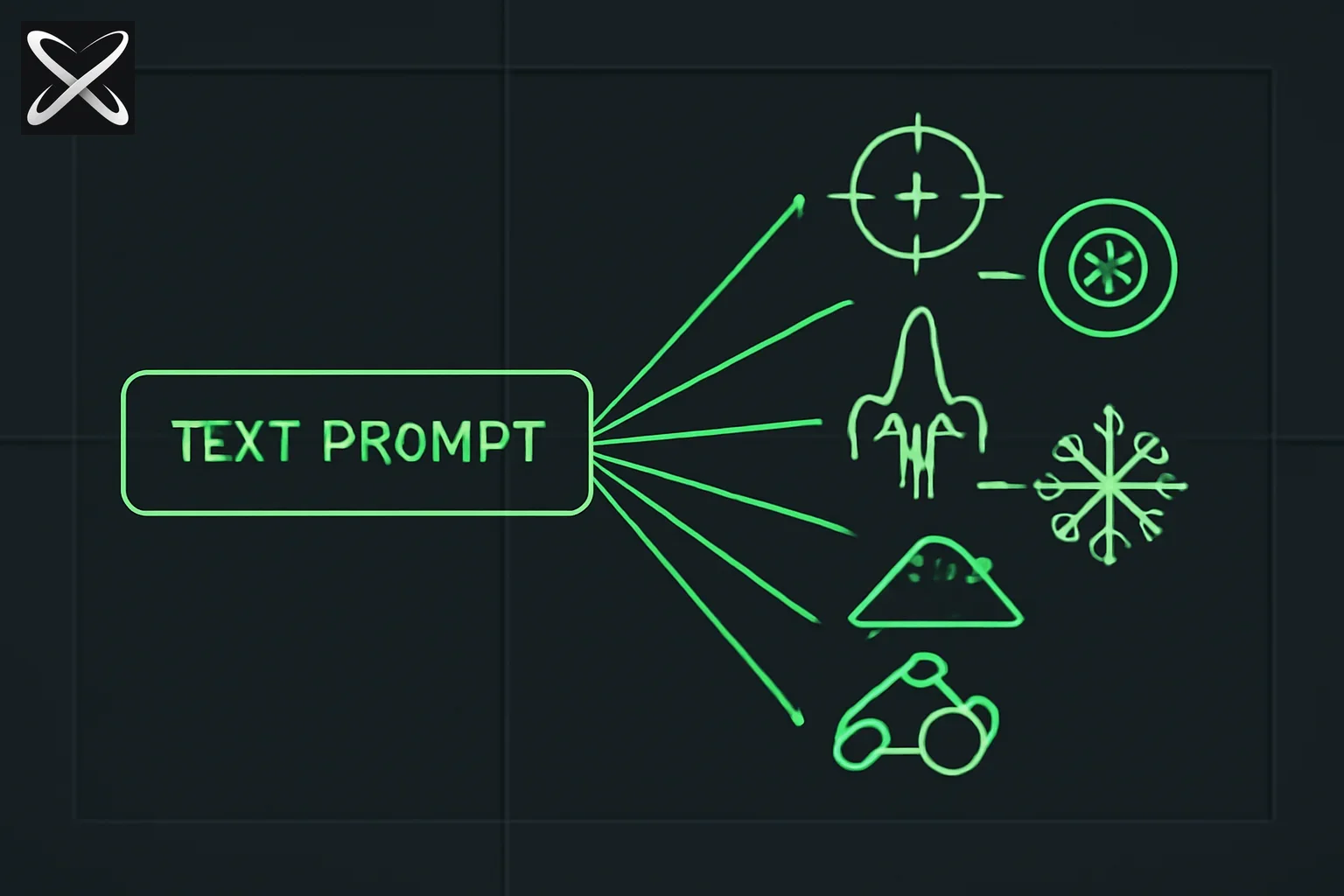 One text prompt fanning out into many generated objects, symbolizing the range of things people built with GPT-6 Astra in 24 hours
TL;DR
| Question | Answer |
|---|---|
| How many demos did we verify? | 11 substantive ones, out of 15 candidate posts checked, plus a brief mention of the already-covered Library of Alexandria demo |
| How many were dropped, and why? | 3 — all pre-launch leak/rumor posts from August 29–31, before Astra actually shipped |
| What's the strongest demo? | Riley Brown's 28-minute autonomous Codex run that shipped a playable FPS map with 80 automated checks passing — a documented process, not a single clip |
| What's the most "OpenAI marketing," least independent? | The Blender-to-Unreal-Engine house tour and the Tidal Rush kart game — both are OpenAI's own official launch-video footage, reshared rather than independently reproduced |
| Best benchmark-backed demo? | OpenAI Developers' own OSWorld 2.0 Offline computer-use clip, tied to a published 72.6% score |
| Most creative/technical demo? | Ethan Mollick's procedural ocean-and-marine-life simulation and his WebGL "drowned gothic city" shader, both built from a single prompt each |
| Any independent Astra vs. Fable 5.1 comparison? | Yes — Karan's side-by-side Blender villa render, though it's one comparison, not a controlled benchmark |
| Does anything here contradict the official benchmarks? | No outright contradictions, but the BenchCAD 95.9% jump lines up cleanly with what independent creators showed in 3D/CAD, while the coding-agent demo (28 minutes, 20 files, 80 checks) is a more falsifiable claim than any single rendered clip |
1. OpenAI's own computer-use benchmark clip (official)
@OpenAIDevs posted a 15-second video alongside a specific number: GPT-6 Astra scores 72.6% on OSWorld 2.0 Offline, a benchmark that tests desktop tasks with no internet access. The accompanying claim is that with computer-use tools, Astra "can work in the app itself: navigate menus, enter information, and inspect the result on screen," and switch to writing code when the task calls for it.
Editorial read: This is the single most useful demo in the batch precisely because it's tied to a number, not just a vibe. 72.6% offline (no web lookups to lean on) is a meaningfully harder condition than most computer-use demos test under. It's also OpenAI grading its own homework — no independent OSWorld reproduction accompanies this clip — so treat it as a real, specific, but self-reported data point, the same caveat that applies to every benchmark in the main launch post.
2. OpenAI's front-end design demo (official)
The same account posted a second, 35-second clip the same minute: give Astra a sketch, a reference image, or an existing UI, and ask it to turn that reference into a working interface, refine layout and typography, adjust color and interactions, and use screenshots of its own output to guide further revisions.
Editorial read: "Uses its own screenshots to guide revisions" is the interesting detail here — it's a self-correction loop, not a one-shot generation, which is a different (and more defensible) capability claim than "it made a pretty UI." Still an official clip with no independent reproduction attached.
3. A Zillow listing turned into a walkable 3D house, one shot
Yunfan Ye (@realYunfanYe), building at Rome AI Lab and previously at Google, Meta, and Yutori, gave Astra a Zillow listing and asked it to 3D-model the house from the listing photos, then generate a promotional walkthrough video. His own framing was blunt about the limits: "The video was just created in one shot and there are still some wrong details. But I am sure it will be much better if I ask it to polish further."
Editorial read: This is one of the more honest posts in the batch — a builder explicitly flagging that the one-shot output has errors, rather than presenting a polished final render as if it were the first try. That's the right way to post a demo, and it makes the underlying capability (photo-to-3D-model from a real estate listing, zero manual modeling) more credible, not less.
4. A house modeled in Blender, walked through in Unreal Engine 5 (official demo, reshared)
Goofy (@goofyninjaaa) reshared OpenAI's own launch footage of Astra modeling a full house — pool, garden, living room, kitchen — in Blender, then converting it into a walkable Unreal Engine 5 tour, unassisted. He paired it with OpenAI's published BenchCAD score: 95.9%, up from 83.3% for the prior model, and noted OpenAI's claim that Astra now operates Blender, FreeCAD, and KiCad "like a person would" — opening the program, modeling, and exporting.
Editorial read: Explicitly labeled by the poster as OpenAI's own numbers and video ("los números y el video son de OpenAI"), not an independent reproduction. The BenchCAD jump from 83.3% to 95.9% is a real, specific, checkable number, and it's consistent with the CAD/3D theme across several independent demos in this list (Karan's villa, Yunfan Ye's Zillow house, Ben Davis's ship render) — which is a better corroboration signal than the clip alone.
5. A full kart-racing game, playable in the browser (official demo, reshared)
The same account also reshared OpenAI's official demo of Tidal Rush, a complete kart-racing game — 8 racers, 3 laps, drifting, items, physics — built by Pietro Schirano using Sites, a feature inside ChatGPT, from a text description alone. It's playable in-browser and was, per the poster, OpenAI's own official launch-day demo.
Editorial read: This is the demo most likely to have been the best of many attempts rather than a first try — OpenAI's own promotional material, not independently reproduced, and games are exactly the kind of "looks great in 20 seconds" output the Hacker News skeptics flagged about the launch video's suspiciously convenient cuts. Worth checking yourself if you can access Sites — a playable link is at least falsifiable in a way a rendered clip isn't.
6. Astra vs. Fable 5.1, same prompt, side by side
Karan (@karankendre) built the same villa scene in Blender with both Claude Fable 5.1 and GPT-6 Astra and posted the results side by side, captioned simply: "This is what it built."
Editorial read: The one genuinely independent head-to-head comparison in this batch, which makes it more valuable than any single-model showcase — but it's one comparison on one prompt, not a controlled benchmark, and we don't have the exact prompt or how many attempts either model got. Read it as a data point, not a verdict; for the full benchmark-level decision matrix, see GPT-6 Astra vs Claude Fable 5.1 and the Fable 5.1 launch coverage.
7. Computer-use inside real creative software: Final Cut Pro, Affinity Photo, Blender
Ben Davis (@davis7), co-host of the Nerd Snipe podcast, posted the most detailed independent thread in the batch: Astra creating projects, setting up clips, doing full color grades, and completing first-pass edits in Final Cut Pro — "just clicking stuff how I would" — plus clean thumbnail edits with deep selections in Affinity Photo. He specifically called out a self-correction loop: "It goes and uses the things it built as it's building to really make sure they work... inspecting element, grabbing errors, and fixing in a loop until what I got back was perfect." The attached video is a full 4K render of a ship Astra modeled from scratch in Blender.
Editorial read: This is the strongest computer-use demo in the batch that isn't from OpenAI's own account, because it names specific, checkable professional tools (not toy apps) and describes an inspect-error-fix loop rather than a single clean pass. It's still one person's account with no independent reproduction, but the specificity — Final Cut Pro, Affinity Photo, a named workflow — is a meaningfully higher bar than a generic "it's amazing" post.
8. A 28-minute autonomous coding session that shipped a playable FPS map
Riley Brown (@rileybrown) posted a 3-minute-22-second screen recording captioned only "Built this with Astra (GPT 6) this AM." The video shows Codex, running with Astra and full computer access enabled, autonomously building AFTERFLASH, a first-person-shooter map called Nuketown. The session log shown on screen reads: "Worked for 28m 16s," with a note that Astra "chose and implemented" five specific upgrades — sculpted terrain outskirts, vehicle staging with a moving convoy, worn-path flank cover, weighted movement across five surfaces, and reactive exploding fuel barrels with destruction preserved in killcams — out of ten it considered, after the prompt "list out 10 things… pick out the top 5 then do them." The session edited 20 files and passed 80 automated checks, including weapon and audio timing, stairs, blast obstruction, and replays.
Editorial read: This is the most falsifiable demo in the roundup, and arguably the best evidence of genuinely agentic behavior. It's not a single rendered clip — it's a documented, timestamped, multi-step autonomous session with a specific duration, a specific file count, and a specific automated-check count, all visible in the recording itself. That's a materially different kind of evidence than "here's a video of the output," and it's a closer match to the "autonomous for days" claim in the main launch post than anything else in this batch — though 28 minutes is still 28 minutes, not days, and it's one game-dev task, not a broad claim.
9. A multi-agent world where the agents started talking to each other, unprompted
Matt Shumer (@mattshumer_) — an investor in Groq, Etched, Rork, Daytona, and OpenRouter, and previously CEO of HyperWrite — described what he called his first "holy shit" moment with the model: he asked Astra to build a world in Unreal Engine populated with multiple humans, each an independent Astra-powered agent, all sharing one goal — work together to survive. A day later, alone in his apartment, he heard voices coming from another room and briefly thought someone had broken in. It was the simulation, still running — the agents had started talking to each other on their own. The 2.5-million-view post included a short clip, sound on, which he described as "obviously not 100% perfect yet."
Editorial read: This is the demo in the batch that's hardest to grade cleanly, and worth being honest about why. The underlying claim — autonomous agents in a simulated world independently initiating voice communication with each other, days after setup, with no further prompting — is exactly the kind of emergent multi-agent behavior that would matter a great deal if it holds up under scrutiny. But the post gives no technical detail: no explanation of how agent-to-agent audio was implemented (scripted dialogue triggers versus genuinely generated conversation), no indication of how long the simulation ran unattended before the overheard exchange, and "not 100% perfect yet" is doing real work as a hedge without specifying what's imperfect. Treat the anecdote as a genuinely interesting, viral, and unverified report from one credible builder — not as evidence of anything beyond "this is worth someone reproducing and documenting properly."
10. A procedural ocean, storm, and marine-life simulation from one prompt
Ethan Mollick (@emollick), the Wharton professor whose Library of Alexandria demo anchored the main launch story, gave Astra an existing open-source, single-file ocean-surface storm generator and asked it to build out the rest of the ocean — including procedural simulations of animal behavior. He published both a playable version and the source code.
Editorial read: Publishing both the live build and the source code is exactly the kind of verifiable claim the vibe coding demos in this list mostly don't offer — anyone can go check whether the simulation actually runs and whether the code is what it claims to be. That's a higher bar than a video, and Mollick clears it here.
11. A WebGL shader city, refined with one follow-up prompt
Mollick's second demo, posted a few hours later: "create a visually interesting shader that can run in twigl-dot-app... an infinite city of neo-gothic towers partially drowned in a stormy ocean with large waves," followed by a single iteration prompt — "Make it better." The resulting shader is live and viewable.
Editorial read: Shader code is unforgiving — it either compiles and renders or it doesn't, and there's no room for a cherry-picked camera angle to hide a broken result. A live, load-it-yourself link makes this one of the more directly checkable demos in the batch, and the two-step "make it better" iteration is a small but real data point on whether Astra can improve its own prior output on request rather than just regenerating from scratch.
Bonus: the demo you've already seen
Mollick's third and best-known post from launch day — the historically-grounded, walkable simulation of the Library of Alexandria, built as one example of what he called work that "actually does complex meaningful work for me autonomously for days" — is the demo the main launch post covers in depth, including why the "for days" claim deserves to be held carefully as one person's early-access account rather than a documented benchmark. We're not re-running that analysis here; if you haven't read it, that's the place to go.
The three we dropped, and why
Not every video handed to us for this roundup made the cut, and the reasons are worth stating plainly rather than papering over.
- Chetaslua's Astra-vs-Fable comparison was posted August 31, 2026 — three days before Astra actually shipped — describing early leaked access, not the launch-week model people could use.
- Pankaj Kumar's 3D spaceship clip was posted August 29, 2026 under the headline "GPT Astra: Coming Next Week (Thursday)" — a pre-launch leak post, explicitly framed as a rumor about an unreleased model.
- Notjazii's thread was also posted August 29, 2026, and is a text-based rumor roundup about the upcoming release rather than a demo video of a capability at all.
All three are genuinely about Astra. None of them are about the model that actually shipped on September 3. A roundup of "launch-week demos" that quietly includes pre-launch leak content would blur a distinction that matters — rumor and hands-on early access are not the same evidentiary category as a demo of the shipped, generally available model — so we're flagging the drop rather than padding the count to hit a rounder number.
What this roundup does and doesn't tell you
- It doesn't replace the benchmark table. Every demo here is a sample size of one, shot and selected by the person posting it. The full benchmark breakdown, including the ARC-AGI harness controversy, is the place for numbers you can compare across models.
- The BenchCAD-adjacent demos corroborate each other. Four separate posts here — Karan's villa, Yunfan Ye's Zillow house, Ben Davis's ship render, and OpenAI's own house-to-Unreal-Engine tour — independently land on the same theme: strong 3D/CAD generation. That kind of convergence across unrelated posters is more convincing than any single clip.
- The strongest evidence of genuine agentic behavior is the one demo that isn't a rendered clip. Riley Brown's documented 28-minute, 20-file, 80-check autonomous session is falsifiable in a way "here's a video" posts aren't — you can imagine what a faked version of that session log would need to get right, and it's a lot more than a compelling render.
- Two of the eleven "best" demos are OpenAI's own marketing, reshared. That's not a knock on the underlying capability, but it means roughly a fifth of the strongest launch-week showcases weren't independently reproduced by a third party at all — worth remembering before treating a viral repost as independent verification.
Update — September 9, 2026: Add Rohan Kotecha's Curv back-pain demo — Astra wiring a spine wearable to a biomechanical body model for personalized PT (~1M views on X).
Related on explainx.ai
- 12 Things Builders Shipped With GPT-6 Astra in 3D, Blender, and Unreal — a second, later wave of community builds leaning heavily into 3D and spatial reasoning
- GPT-6 Astra cracked a 1941 Enigma message and a 1918 WWI cipher — two more builder-reported results, one with direct expert review from a working cryptologist
- GPT-6 Astra's actual launch: every benchmark, the pricing, and the ARC-AGI harness controversy
- GPT-6 Astra's Portal, three.js forest, and Bach chorale claims — unverified
- Is Astra causing the outage? We checked.
- The five minutes the entire AI internet went dark at once
- OpenAI confirms Astra is Critical-tier for cybersecurity
- A fruit fly brain is driving a Minecraft character, built with GPT-6 Astra
- OpenAI confirms it paused new $200 ChatGPT Pro sign-ups
- Has AI reached superintelligence? The Astra debate
- Claude Fable 5.1 and Mythos 5.1 — launch benchmarks and pricing
- GPT-6 Astra vs Claude Fable 5.1: which model wins where
- What is vibe coding? A complete guide
- Vibe hardware: Astra designs a DJ controller from prompt to parts — the same agent-does-everything pattern, applied to a physical product
- Top 10 game prompts for Claude Opus 5
- EEBench: the benchmark that grades whether AI can design circuits — the rigorous, SPICE-simulation follow-up to the KiCad/BenchCAD demo covered here
- Top 10 things to build with GPT-6 Astra — a practical, buildable project list drawn from these demos and other verified launch-week coverage
Every demo and claim in this post is sourced directly from the original poster's own tweet, fetched and quoted as published between August 29 and September 4, 2026. Video content is described based on the poster's own caption and, where the caption was insufficient, the video's own on-screen text (as with Riley Brown's session log). We did not personally reproduce any of these demos, including Matt Shumer's multi-agent Unreal Engine account, which rests entirely on the poster's own description with no independent technical detail available; treat each as one creator's reported result, not an independently verified benchmark.