




Google confirmed that it expanded voluntary exit packages in June to some employees in Canada, France, Germany, Japan and Switzerland, as it tries to rein in costs while spending heavily on AI. Reuters broke the story on November 4, 2026. A Google spokesperson told Reuters: "In 2025, some of our teams introduced a voluntary exit programme with severance. In June we expanded the programme globally in a few countries to support our important work ahead."
The offers had not been reported before. Reuters could not determine how many employees accepted them, and its Swiss details come from three anonymous sources. This post sorts what Google confirmed, what is sourced to unnamed people, and what is not known.
TL;DR: what is confirmed
| Item | Status | Source |
|---|---|---|
| Voluntary exit packages in five more countries | Confirmed by Google | Reuters, Google spokesperson |
| Started in June 2026 | Confirmed by Google | Reuters |
| Countries | Canada, France, Germany, Japan, Switzerland | Reuters |
| Switzerland: announced mid-June, replies by mid-July, people left from August | Three people familiar | Reuters |
| Switzerland: one month of salary per year of service, up to 12 months | Same three people | Reuters |
| DeepMind excluded in Switzerland | Same three people | Reuters |
| Number of acceptances | Unknown | Reuters could not determine it |
| Cost savings | Not reported | n/a |
What Reuters reports
The Reuters story, syndicated by TimesLIVE, says Alphabet's Google has expanded employee buyout offers to several countries this year as it looks to hold down costs amid heavy AI spending. It frames the move against an environment where AI spending has "unnerved Wall Street and dented Alphabet's stock price", which is Reuters' wording, not ours.
The same Reuters report also ran on Global Banking & Finance. For the earlier history, the first US offers in June 2025 were covered by Business Standard, which tied them to AI spending priorities.
It notes that the latest buyouts follow voluntary exit programmes offered since last year to employees in some divisions in the US and Britain. Executives have described those programmes as an option for people who no longer feel aligned with the company's pace or direction. Reuters adds that in at least one case the company followed its voluntary offers to a division with a round of layoffs.
On hiring, Reuters says Alphabet's workforce has grown steadily in recent quarters while it shifts resources toward priority areas, and that chief financial officer Anat Ashkenazi has repeatedly highlighted AI and cloud computing as key hiring priorities in earnings presentations.
The Swiss details
Switzerland is the one country with reported specifics. Google employs about 5,000 people there, with a major engineering hub in Zurich. According to three people familiar with the matter:
- The programme covered many divisions but excluded DeepMind.
- Google announced the packages in mid-June and gave employees who applied until mid-July to respond.
- Employees began leaving in August.
- Those who accepted received one month's salary for each year of service, up to a maximum of 12 months.
- One person said at least four employees in a team of about 50 had accepted.
Reuters adds that Google laid off more than 200 employees in Switzerland in 2023, which prompted staff protests and a walkout. The last point is background, not a link to this round.
The four-in-fifty figure is one person's recollection about one team. It does not tell us the acceptance rate for Google overall, and we do not extrapolate from it.
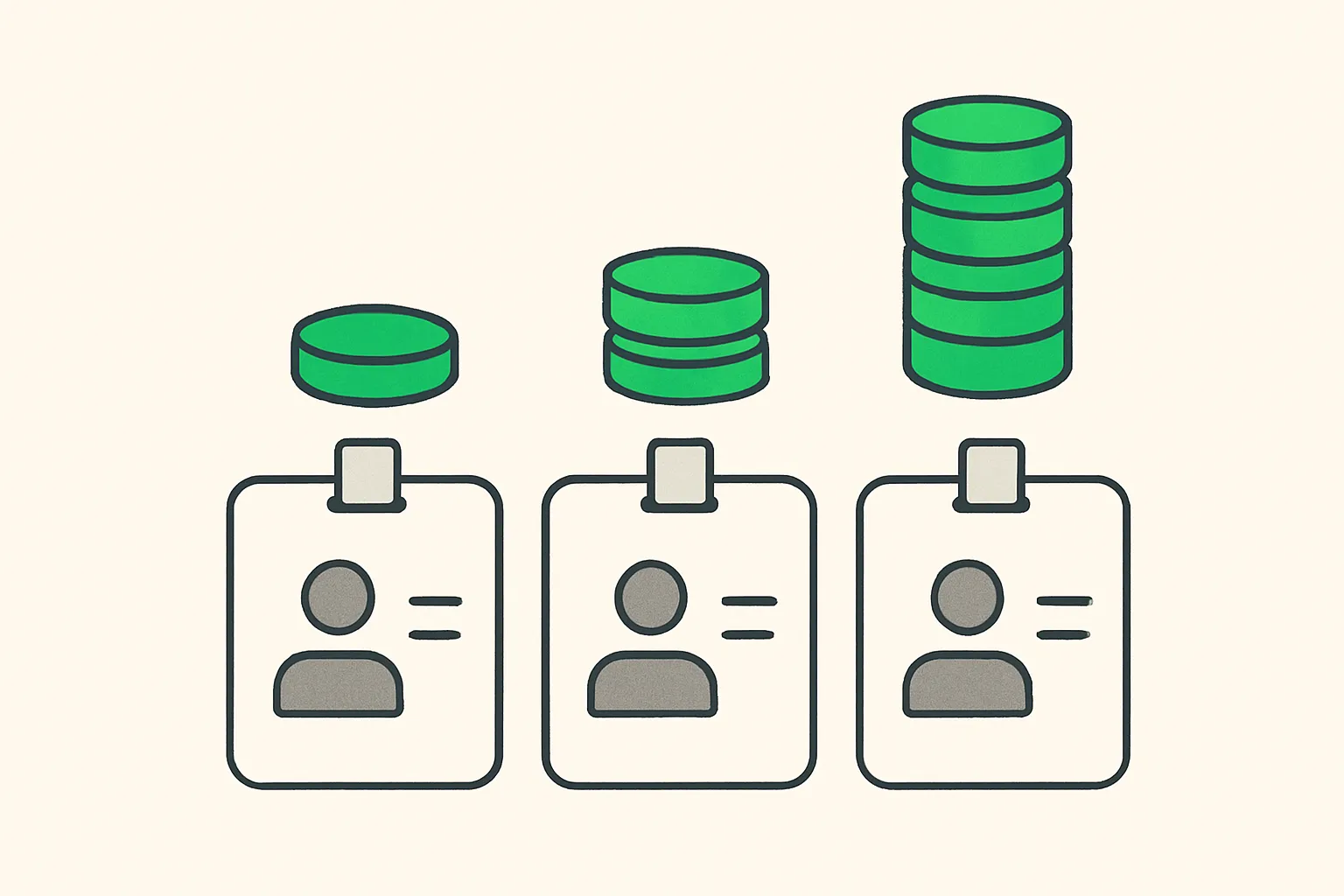 Employee badges with coin bars, one much taller, representing how AI spending shifts company budgets
Why DeepMind and Cloud are left out
Reuters says employees in Google Cloud and in the AI unit DeepMind were excluded from past buyout offers and that this expansion appears to follow the same pattern. That fits what the company says it prioritizes. An exit programme paired with exclusions for the AI research unit and the cloud business is a way to shrink some teams while protecting those the company expects to grow.
It is also consistent with how other firms handle the same trade-off. Microsoft last week offered voluntary buyouts to about 60,000 employees, according to Reuters; we covered what was verified and what was only viral in our Microsoft buyout post. The numbers differ (60,000 eligible at Microsoft versus an unknown number at Google), but the logic is similar: pay people to leave voluntarily while capital goes to AI infrastructure.
Timeline of Google's exit programmes
| When | What | Source |
|---|---|---|
| June 2025 | Several US teams offer voluntary exit with severance | Business Standard and others, per Google statements |
| Since 2025 | Voluntary exit programmes in some US and UK divisions | Reuters |
| June 2026 | Programme expanded to Canada, France, Germany, Japan, Switzerland | Google, via Reuters |
| Mid-July 2026 | Swiss employees' replies due | Three people, via Reuters |
| August 2026 | First Swiss employees leave | Three people, via Reuters |
| Nov 4, 2026 | Reuters reports the expansion for the first time | Reuters |
The long gap between June and November matters. Google did not announce the expansion; it surfaced when a reporter asked. That is common for internal HR programmes, and it is why Reuters could not say how many people took the offer. Companies rarely publish acceptance counts for voluntary schemes.
How this compares with Microsoft
| Microsoft | ||
|---|---|---|
| Offer type | Voluntary exit with severance | Voluntary buyout |
| Scale | Not reported | About 60,000 eligible, per our earlier coverage |
| Regions | Some employees in five more countries, plus earlier US and UK divisions | US, UK, Canada and India in the reporting we verified |
| Protected units | DeepMind and Cloud reportedly excluded | Not part of this reporting |
| Acceptance numbers | Unknown | Eligibility, not departures, per our earlier post |
The comparison is rough because the companies disclose different things. The Microsoft figure is the number of people who were offered the choice, not the number who left. The same caution applies to Google, where we know the countries but not the headcount.
How to read a voluntary exit programme
A voluntary programme is neither a layoff nor a harmless perk. It moves the decision to the employee while the company sets the incentives and decides which units are eligible. Four things reveal more than the headline.
First, who is eligible. Excluding AI research and cloud, as Reuters reports for past rounds and the Swiss round, signals priorities more clearly than a mission statement does.
Second, the formula. One month of salary per year of service, capped at 12 months, rewards long-tenured staff most. A person with three years gets three months, which is a weaker offer than for a person with twelve years.
Third, the timing. A window of a month, as in Switzerland, pushes a decision fast, and departures that start two months later give the company time to plan handovers.
Fourth, what follows. Reuters says the company followed voluntary offers with layoffs in at least one case. That does not mean it will happen again here, but it shows why some employees treat the offer as a signal.
What it says about AI spending
Voluntary exit packages are a cost lever. Google has not said how much it expects to save, and Reuters does not say either, so any savings figure you may see elsewhere is an estimate. What the reporting does support is a link in the company's own framing: a spokesperson says the expansion supports "important work ahead", and Reuters ties it to AI costs.
For readers who follow the economics of AI, the point is the trade between two budgets. Spending on chips and data centers is set years ahead and is hard to cut. Payroll is flexible. When the first grows fast, the second is where companies look for room. We saw the capital side in the Alphabet quarter and AI Mode ads coverage and in how Nvidia's equity book shows who funds the build-out.
Workforce and trust at AI companies
Workforce changes at AI companies have drawn scrutiny this year. Meta faced a lawsuit over AI-related layoffs and disability discrimination, and Washington Post reporting raised questions about a lifetime non-disparagement clause for former Google DeepMind staff. Those are separate stories with their own facts. We list them to show how often the same themes (pace, cost, and what former staff may say) recur.
What this means for people who work in AI
- Read the exclusions. A programme that excludes AI research and cloud tells you where a company thinks its future is. That is information for anyone choosing an employer.
- Voluntary is not risk-free. Reuters notes at least one case where layoffs followed voluntary offers.
- Terms vary by country. Swiss terms (up to 12 months) do not tell you what Germany, Japan or Canada offered. Employment law differs in each.
- Skills still matter. If your role sits close to model development, data centers or cloud, you are more likely to be in a protected area, but nothing in the reporting promises that.
What we do not know
- How many Google employees accepted in each country.
- The packages' terms outside Switzerland.
- What Google expects to save.
- Whether layoffs will follow in any of these countries.
- Whether more countries will be added.
We will update this post if Google or Reuters adds detail.
Related reading
- Microsoft offers buyouts to 60,000 employees: verified vs unverified
- Google AI Mode ads and Alphabet Q3 search growth
- Nvidia's $99 billion equity book
- Meta AI layoffs and the disability discrimination lawsuit
- Google DeepMind lifetime non-disparagement clause
- Google turns AI off by default in K-12 schools
Details are accurate as of November 4, 2026.