



Google Research on November 20, 2026 said Duplex—the stack that has placed automated phone calls for Search, Maps, and Pixel features since 2018—now runs inside Tasks in Gemini so the Gemini app can dial businesses when structured booking channels do not exist. The post is a technical history, not a separate consumer marketing page, but it names Gemini 4 Hydrogen and Gemini 4 Neon as the models behind live calls and ties the launch to broader Tasks workflows (utility bill analysis, Agent Payments Protocol transactions, email, and RCS).
For anyone comparing Meta Muse outbound calling or proactive phone agents, this is Google’s answer: telephony as a modality the agent picks when APIs and web forms fail.
TL;DR
| Question | Answer (per Google Research, Nov 20, 2026) |
|---|---|
| What launched? | Duplex integrated into Tasks in Gemini for autonomous phone errands |
| Models named | Gemini 4 Hydrogen, Gemini 4 Neon |
| Disclosure | Call opens stating an automated Google system |
| Merchant control | Opt out via Business Profile or verbal stop request on the call |
| Setup for businesses | No new software; uses existing phone lines |
| History | 2018 Duplex debut; trillions of business-info impressions from prior calls cited for 2023 |
| Rivals in market | Meta Muse paid US calling; other agents documented in our Muse comparison posts |
What are Tasks in Gemini?
Google describes Tasks in Gemini as a personal AI collaborator that coordinates real-world chores. The November 20 article’s headline claim is that Duplex—previously visible in products like Ask Maps quote checks and Pixel Call Assist—is integrated directly in Tasks so users can hand off phone work.
Search demand around “what are Tasks in Gemini” and “schedule tasks in Gemini” reflects the same product family Gemini 4 Neon already touched when Google said Neon would back Tasks for faster multi-step jobs. This Duplex post is the voice layer on that roadmap: not only analyzing a PDF bill, but calling the utility when the answer requires a human receptionist.
Tasks also connect to payment flows. Google lists Agent Payments Protocol secure transactions and email or RCS coordination in the same paragraph as Duplex, signaling that phone calls sit beside structured digital rails rather than replacing them.
Three eras of Duplex architecture
Google frames a three-generation evolution:
1. Pre-LLM closed domains (before transformers)
Duplex predates modern language models. Early versions used recurrent networks on anonymized, task-specific conversations with narrow domains (restaurant bookings vs holiday hours). Without pretrained world knowledge, each task type needed its own training volume.
2. Generative hybrids (LaMDA era)
When foundation models arrived, LaMDA entered live Duplex calls in 2022 per Google. Generative models handled unexpected turns, but latency and unpredictability led Google to hybrid stacks: generative phrasing plus deterministic state tracking and strict policy guardrails.
3. Prompted tasks on Gemini (2026)
The latest shift removes fixed verticals. Google now prompts with free-text task descriptions, so one stack can generalize to new business categories (window seating, stroller space) without training a dialogue model per vertical. Gemini unifies multimodal understanding, planning, and dialogue for multi-constraint requests—for example scheduling car maintenance around calendar conflicts when a receptionist proposes another slot.
That architecture choice matters for builders: Google's bet is prompt-defined missions over bespoke finetunes for each local service category.
Live telephony constraints Google emphasizes
Phone audio is not web text. Google lists hurdles its stack optimizes for:
- Pragmatic grounding from nearly a decade of goal-directed calls—predicting whether a task fits a merchant before dialing, reading indirect refusals, and keeping calls short.
- Sub-second latency on compressed lines with kitchen noise, espresso machines, and street sound—custom acoustic and cadence models assist core Gemini inference.
These are the same constraints that show up in full-duplex speech benchmarks and Grok Voice turn-taking scores: latency and barge-in dominate user trust more than raw ASR word error rate.
Design choices for both sides of the call
Google's post is explicit about merchant experience, not only subscriber convenience:
- Clear disclosure at call open.
- Businesses stay in control via Business Profile settings or in-call stop language.
- Zero adaptation—no staff training beyond answering the phone.
- One conversation, many insights—details from a single Duplex call can populate Maps (happy hour, patio seating, pet-friendly flags, trivia nights), reducing repeat nuisance calls.
That last point explains why Duplex is strategically more than a consumer perk: it is still a data pipeline for local Search and Maps listings, even as Tasks productizes the same stack for individuals.
Pixel, Maps, and Search: where Duplex already worked
Before Tasks in Gemini, Google routed Duplex through hardware and discovery products the post recounts in detail.
During the COVID-19 period, Duplex verified merchant hours when storefronts changed quickly. Google says business information gathered from Duplex calls had been shown in Search and Maps more than one trillion times by 2023—a scale metric that explains why telephony investment continued after the 2018 demo buzz faded.
On Pixel, Call Assist features shipped across five consecutive Pixel generations starting in 2019, including Call Screen and Hold for Me. Those on-device flows trained the same acoustic and turn-taking models Tasks now inherits.
In Search and Ask Maps, Duplex checked quotes, product availability, and service openings—from pet grooming to auto repair—without the user placing the call manually. Tasks in Gemini is therefore product consolidation: the same conversational stack becomes a user-visible agent surface instead of an invisible data collector.
Agent Payments Protocol and non-phone Tasks
The November 20 article groups Duplex with digital channels. Google lists utility bill analysis, Agent Payments Protocol transactions, and coordination over email and RCS in the same closing paragraph.
That framing matters for builders evaluating when to dial vs when to pay online. Agent Payments Protocol is Google’s structured path when a merchant supports tokenized agent checkout; Duplex is the fallback when only a human receptionist can confirm a slot or price. Consumer agents that lack both modalities tend to fail on real-world errands that mix web forms, holds, and verbal exceptions—exactly the pain OpenAI Dots limitations discussions keep circling.
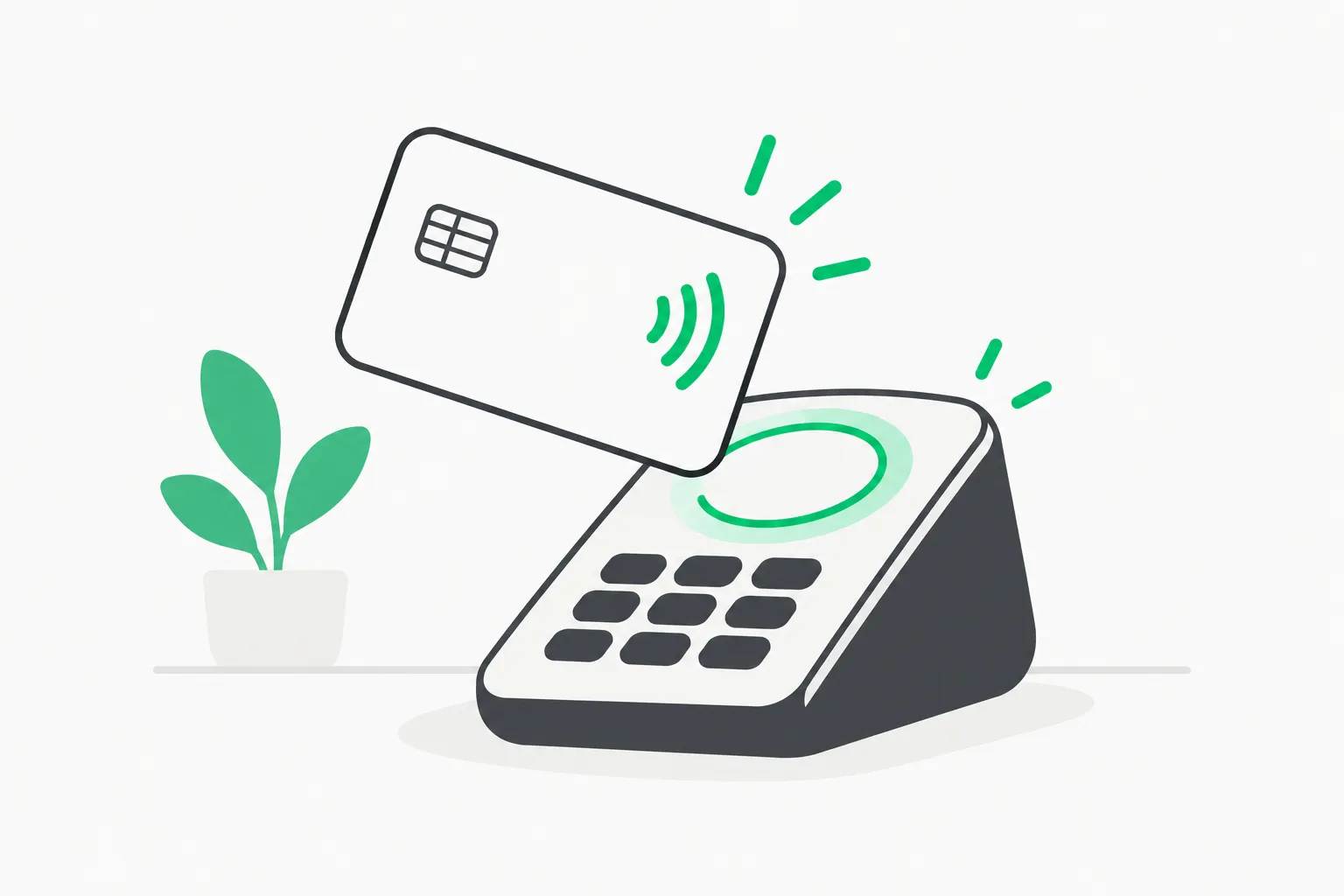 Contactless payment terminal illustrating Agent Payments Protocol beside Duplex phone errands
How this compares to Meta Muse calling
| Dimension | Google Duplex in Tasks (Nov 20 post) | Meta Muse (Nov 12 rollout) |
|---|---|---|
| Consumer access | Gemini Tasks; pricing not detailed in Research post | Paid US Muse subscribers ($20–$100/mo) per TechCrunch |
| Disclosure | Mandated opening AI disclosure | Launch copy did not resolve human-concierge questions |
| Merchant opt-out | Business Profile + in-call phrase | Business-side controls not equivalent in Meta docs we tracked |
| Data feedback | Maps and Search business attributes | Commerce connectors (PayPal, Shopify) emphasized elsewhere |
| Model generation | Gemini 4 Hydrogen and Neon | Muse proprietary stack |
Neither replaces compliance work: US states differ on two-party recording consent, and businesses may hang up on obvious AI callers—as Muse coverage already warned reception teams about.
What developers should watch next
Google did not publish API keys, per-minute pricing, or a public Tasks telephony SDK in this Research article. Treat the post as architecture and policy documentation until Google ships builder-facing Tasks APIs comparable to MCP phone tools.
Practical takeaways:
- Disclose early on outbound agent calls if you mirror consumer products—regulators and callee trust both punish late reveals, as seen in synthetic voice policy debates.
- Prompt-defined missions beat per-vertical dialogue models when Gemini-class models can plan and speak in one loop—aligns with loop engineering for long agent jobs.
- Latency budgets on phone audio remain the bottleneck; do not assume chat-optimized models work without acoustic tuning.
- Merchant data ethics: if your agent writes structured fields into a public directory, document provenance and opt-out paths—parallel to Signal blocking screenshot agents pushing back on ambient capture.
What Google did not publish on November 20
The Research article is not a consumer terms update. It does not specify:
- Which countries can place Duplex Tasks calls on day one
- Whether Gemini free tier users get telephony or only subscribers
- Per-minute or per-task metering inside Gemini billing
- A public developer API to trigger Duplex with the same guardrails
Until Google documents those items on gemini.google.com or the Gemini API release notes, treat phone Tasks as announced capability described in a research retrospective, similar to how other Gemini modality previews precede full SDK access.
Enterprise teams should also watch regulatory filing: automated outbound dialing intersects TCPA and state recording rules in the United States, and GDPR-style processing when calls record EU merchants. Google's disclosure-at-open pattern is necessary but not sufficient for compliance programs—pair it with your counsel's call-recording matrix.
Scheduling and automating Tasks in Gemini
Searchers ask how to schedule Tasks in Gemini and whether Gemini can automate tasks in apps. The November 20 post does not walk through UI steps; it describes backend architecture. Practical scheduling behavior—recurring bill checks, calendar-aware maintenance calls—likely rides the same Tasks scheduler Google tied to Neon in earlier launch notes.
Until Google publishes a Tasks scheduling help page, the safe reader answer is: use Tasks inside the Gemini app for multi-step jobs, expect phone steps only when the task description requires live coordination, and watch release notes for region flags.
 Voice turn-taking lanes illustrating how Duplex-style phone agents share conversational timing constraints
Related context on explainx.ai
Duplex sits in a crowded agent phone lane:
- Meta Muse outbound calling for paid US users
- Gemini 4 Neon launch and Tasks performance claims
- Agent harness comparisons including phone agents
- Google I/O agentic themes
- Cloudflare Clef and voice modality experiments
Sources
Primary: How Google Duplex evolved to also call businesses for you in Gemini (Google Research, November 20, 2026).
Secondary consumer rollout context: Meta Muse outbound calling (TechCrunch, November 12, 2026).
Version notes and product names are accurate as of November 21, 2026.