




London-based General Reasoning has published a way to train a language model as a small company of cooperating agents. On October 23, 2026 the lab introduced Reinforcement Learning from Collective Rewards (RLCR), a recipe where agents share a message board and a workspace and are rewarded together, and used it to train Avalon-M1-Mini, a 120B-parameter model it calls its first long-horizon reasoning model.
The announcement is early and comes from the lab's own X account, General Reasoning's homepage, and posts from its team. We could not open the full blog post or technical report, and we found no sign of released weights. So this post explains the idea, then separates what the lab claims from what has been verified.
TL;DR: what is claimed and what is verified
| Question | Answer |
|---|---|
| What is RLCR? | A training recipe that treats a group of LLM agents as one organisation with a shared message board and workspace and a collective reward |
| What model did they train? | Avalon-M1-Mini, 120B parameters, the first of an Avalon-M1 series |
| What did they report finding? | Learned hierarchies and divisions of labour, more verification through hired verifiers and testers, and agents thinking more about each other |
| Is it independently verified? | No. These are the lab's own results, from a team that says it is small and still running experiments |
| Are weights available? | Not confirmed; one summary says weights are pending |
| Is the lab credible? | Its team previously worked on open models at Meta, including Galactica and Llama 2 and 3, per its site |
What RLCR actually is
Most multi-agent systems today are assembled at inference time: you take a strong model, give it a role prompt, and let several copies pass messages. The model was never trained to work in a group. RLCR flips that. According to General Reasoning's announcement, the training itself happens with the agents sharing a message board and workspace, so the policy learns how to coordinate as part of reinforcement learning.
The key word is "collective" reward. One team member described the setup as one policy playing a CEO and the specialists it hires, all sharing a single reward stream. When everyone is paid for the group outcome, behaviors that help others, such as reviewing someone's work or offering help, become worth learning, even if they do not help the individual agent directly.
Ross Taylor, the lab's CEO, framed the motivation as "Why automate researchers when we should be automating communities?", adding that "genius is great, but scenius matters too." He also stressed the usual caveats: it is an eight-person team, it is running more experiments and ablations, and it is still training and seeing gains.
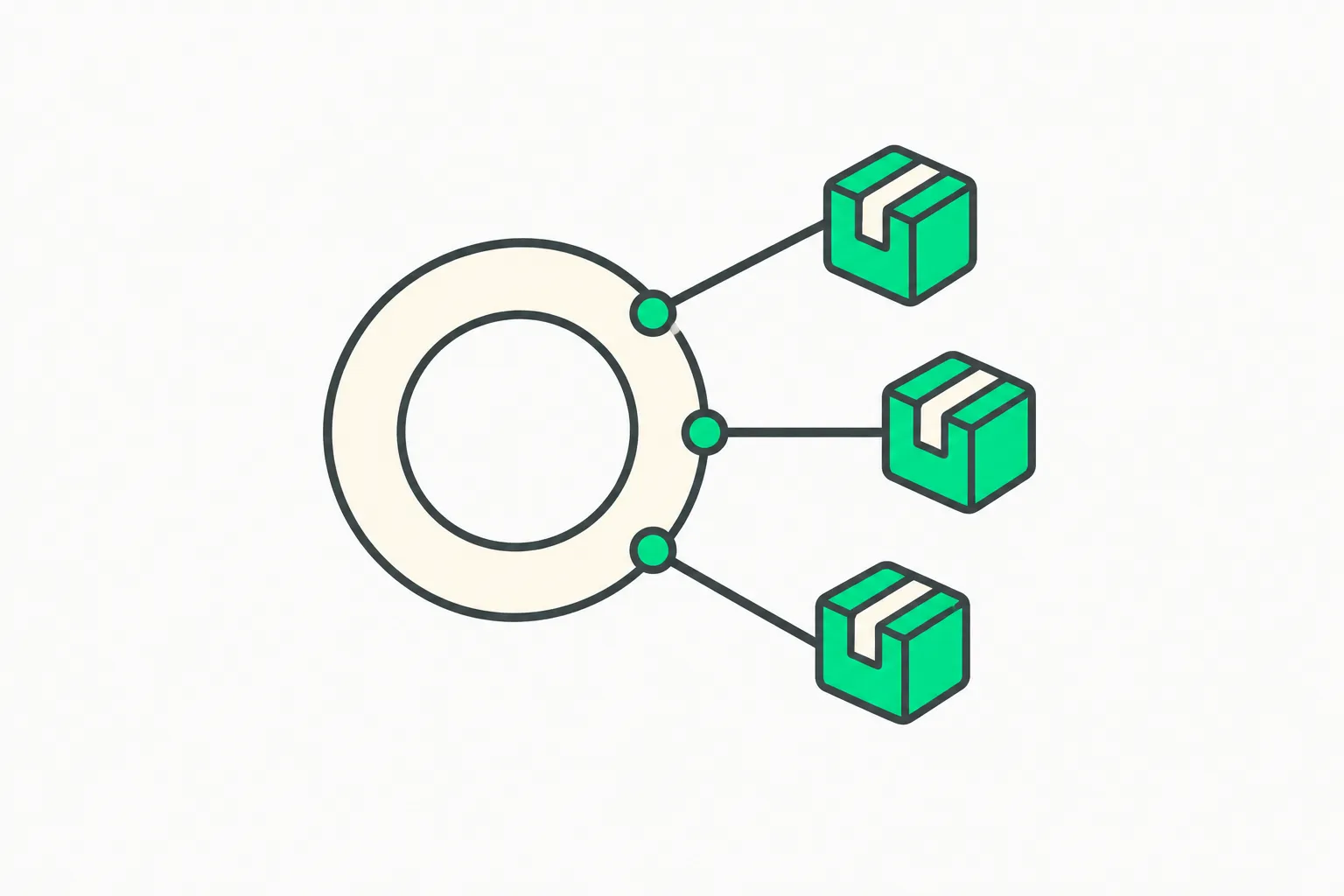 Multi-agent delegation: one organising agent routing tasks to specialists in a RLCR agent organisation
What General Reasoning says it found
The lab's own summary lists three findings from studying Avalon-M1-Mini:
- Learned hierarchies and divisions of labour. Without being told to, the agents organized into structures. A team member noted the CEO role learned to hire lead individual contributors, which they compared to Brooks' surgical team, an old software-management idea of one lead surgeon supported by specialists.
- Increased collective verification. The organisation hired verifiers and testers, so checking became a dedicated job rather than something each agent does alone.
- The rise of collective thinking. Agents spent more of their reasoning on other agents and how to help them, and became more collegial, with more peer review and offers of help.
General Reasoning says it hopes RLCR can serve as "a laboratory for studying collective intelligence and multi-agent safety". Those are the lab's words and goals, not independent conclusions.
Why this matters for people building agents
Agent teams are already everywhere in practice. Our own guides on multi-agent orchestration patterns and error propagation between agents cover how fragile hand-built swarms can be: errors compound, and the coordinator becomes a bottleneck. If the coordination behaviors could be learned by the model instead of scripted by the developer, that would change how teams are built.
There is a relevant precedent in the market. Sakana's Fugu trains a model for orchestration, and the discussion around graph engineering for multi-agent organizations argues that structure matters as much as the model. RLCR is a different bet: put the organisation inside the training loop.
The skeptical read
A few things make this a "watch, don't adopt" story right now.
- No independent reproduction. Everything reported comes from the lab. The tweet-level summaries are enthusiastic, but a researcher quoted in Digg's roundup also says experiments and training are ongoing.
- Speed is not the same as quality. One commentator summarizing the post said that, with the same token budget, the organisation reached similar scores across 12 evaluations in roughly one quarter of the time of a single agent. We could not trace that to the report, so treat it as a secondhand claim. It also raises the question the commentator asked: on short tasks, does communication overhead eat the parallel gain?
- Emergent hierarchy is not proof of better reasoning. Agents hiring verifiers is a behavior; whether it improves accuracy per dollar is the testable question.
- Weights are not confirmed. Without released weights, nobody outside the lab can test the model or the recipe.
- Safety cuts both ways. A message board shared by agents is also a channel for collusion or error spreading. We covered a related incident in OpenAI's agent swarm message board security incident. General Reasoning explicitly frames RLCR as a way to study multi-agent safety, which is the right instinct, but the findings need independent checking.
How it compares to other RL-trained open models
RL post-training is already producing small models that beat larger ones on narrow tasks, as in Castform's open model beating GPT-5.6 Sol on retrieval. The difference with RLCR is the unit being trained: not a single policy answering a query, but a group working over a long horizon. That fits General Reasoning's stated focus on "AI that reasons, plans, and acts together over long horizons".
The lab has released other work this year. Its homepage lists BackSearch (July 24, a frozen archive of the web for point-in-time search used in forecasting evaluations), KellyBench (April 9, a benchmark for long-horizon sequential decision making) and OpenReward (March 24, an open resource for community RL environments). Together they show a research agenda built around long horizons, not a one-off paper.
 Reinforcement learning loop where agents are rewarded together in the RLCR training recipe
Questions people are asking
Is this just a swarm of prompted agents? No, according to the lab. The difference is that the organisation is the thing being trained: the shared message board and workspace exist during reinforcement learning, so the coordination behaviors are shaped by reward, not by a system prompt. Whether the learned behavior beats a well-prompted swarm is exactly what an independent comparison would need to show.
Why a 120B model? The team calls it "a small 120B model", which tells you how the lab sees the scale: small compared with the frontier, but large enough to show interesting behavior. The "Mini" in the name signals larger Avalon-M1 models are planned, though no dates have been given.
What does "long-horizon" mean here? Tasks that take many steps, many tool calls and sometimes many context resets, where a single agent tends to lose coherence. General Reasoning describes its mission as models that "work, communicate and co-ordinate over long horizons", and the organisation structure is its proposed answer: split the work, let specialists verify, and keep a shared record.
Will this reduce cost? Unknown. More agents mean more tokens in total, so any saving would have to come from finishing faster or from better results per token. The one speed figure circulating is secondhand and unchecked.
Does it change safety? Possibly in both directions. Collective reward can teach agents to catch each other's mistakes, which is the point of the verifier behavior. It can also teach them to cover for each other. Because the lab itself pitches RLCR as a way to study multi-agent safety, expect follow-up work on exactly this, and read it critically.
What to do now
- Read the primary material first. Start from the lab's X announcement and its site, then the technical report when you can open it, and check the exact evaluation names and token budgets before quoting any speed-up.
- Do not build a product on it yet. With no confirmed weights, treat RLCR as a research direction.
- Borrow the ideas now. Even with prompted agents, you can add a dedicated verifier role, give workers a shared scratchpad, and score the group's outcome rather than each step, then measure whether it helps on your own tasks.
- Watch for replication. The first independent runs of RLCR on open models will tell you whether the recipe generalizes beyond a lab that built it.
Related reading
- Multi-agent orchestration patterns guide
- Multi-agent error propagation patterns
- Sakana Fugu: a multi-agent orchestration model
- Graph engineering for multi-agent organizations
- Cursor's agent swarm and model economics
- OpenAI agent swarm message board incident
Details are accurate as of October 23, 2026 and based on the lab's public posts; we will update this post when the technical report and any weights are checked. Follow @explainx_ai for updates.