



Gemini 4 Neon's best-known demos are a first-person ski simulator, a 3D recreation of Alan Turing's study, and a Google Sheet that relights an image with more than 500,000 formulas. Google built them in Antigravity and published them with the November 18, 2026 launch. They are good evidence of what Neon can do over long, tool-heavy sessions, but they are Google's own picks, not independent tests.
This is the showcase companion to our Gemini 4 Neon launch, price and benchmark post, which also covers the comparison with Carbon and Hydrogen. For the other Gemini 4 models, see our Hydrogen use cases and Argon 3D periodic table build.
The demos at a glance
| # | Demo | Built with | What Google says it shows |
|---|---|---|---|
| 1 | Freeride ski simulator | Antigravity | 10,200 lines of shaders, 120 Hz physics, zero pre-made assets |
| 2 | Turing's 1936 study in 3D | /swarm | Archival photos turned into an interactive scene |
| 3 | Image relighting in Google Sheets | Agent swarm | 100,000 cells, over 500,000 formulas, no scripts |
| 4 | Element-themed lab bench | Blender MCP and /swarm | Photorealistic scene from a model-name concept |
| 5 | 72-second Rube Goldberg machine | Antigravity | Physics reasoning in a simulated arcade |
| 6 | Two-player game | /swarm | Agent plays the second player in the built-in browser |
1. A first-person ski simulator from scratch
 Agent swarm flock of dots, standing for the parallel Antigravity runs behind the Gemini 4 Neon demos
According to Google's launch post, Neon "wrote a first-person WebGL2 freeride ski simulator from scratch on real Mont Blanc and Chamonix elevation terrain." The build combines 10,200 lines of custom shaders, 120 Hz ski physics across six alpine lines, dynamic carved tracks, slab avalanches and spatial Web Audio, with zero pre-made assets.
What it shows: sustained work on a graphics project where shaders, physics and audio must fit together. What it does not show: how many attempts, prompts and tokens it took, or how much a human steered. Google does not give those numbers in the passages we read.
2. Alan Turing's 1936 study in interactive 3D
Using /swarm, Google says Neon "pulled archival photos to recreate Alan Turing's 1936 study at King's College, Cambridge in interactive 3D," from King's Chapel outside to Room X.8 inside, with a working Universal Turing Machine on the desk.
This is the most useful demo for people who do research-driven builds. It combines retrieval of archival material with 3D construction. It also invites a check: a reader with the archival photos can compare the scene with the sources. We did not do that comparison.
3. A 100,000-cell Google Sheet that relights an image
A Neon agent swarm "turned a single image into a 100,000-cell Google Sheet with zero embedded images and zero Apps Script," using over 500,000 live formulas to run edge detection, map 3D depth and relight the scene across six interactive modes, per Google.
For business users this is the most transferable idea. It treats the spreadsheet as a compute surface. You probably will not relight photos in Sheets, but the same pattern, many formulas generated and checked by an agent, applies to modelling and reporting work. Google also ranks Neon #1 on several finance and spreadsheet tasks in the launch post, citing Surge AI evaluations. Those are Google-cited results.
4. A Blender MCP lab bench
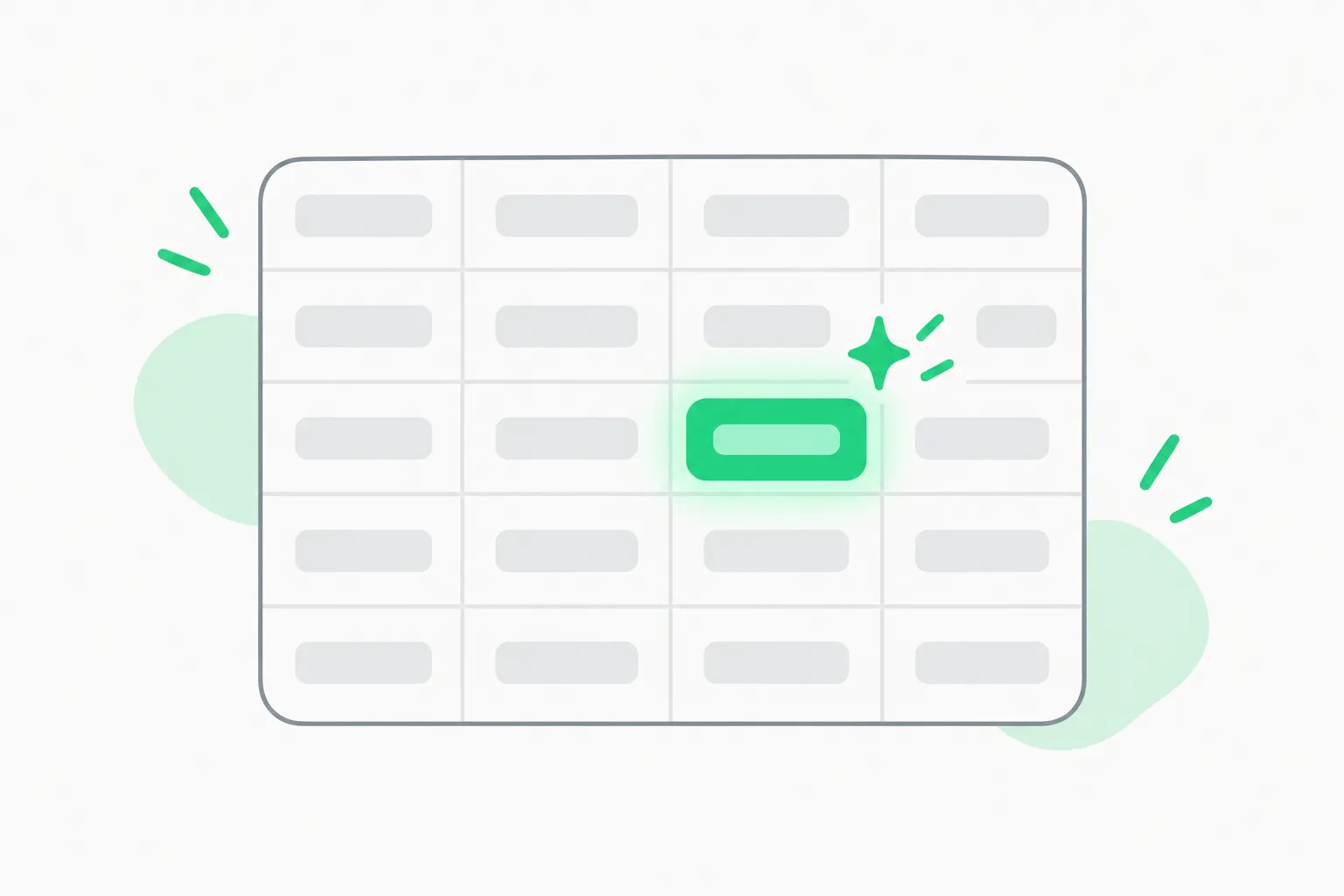 Spreadsheet grid with one glowing cell, illustrating the Google Sheets relighting demo built with Gemini 4 Neon
Driving Blender MCP in Antigravity, Neon used /swarm to build "a photorealistic 3D lab bench visualizing the model names with elemental accuracy," pairing Bunsen flames for Carbon and Hydrogen with high-voltage gas discharge tubes for Argon and Neon, as Google describes it. It is a clever fit for the naming scheme, and a demonstration of an agent controlling a 3D application through the Model Context Protocol. For background on MCP, see our guide to MCP.
5. A 72-second Rube Goldberg machine
Google for Developers posted that it tested Neon's "fast coding and physics reasoning" by having it build and simulate a 72-second Rube Goldberg machine in a darkened 1980s arcade hall.
Video: Google for Developers (@googledevs)
The video is a short, edited clip. It shows a result, not the process. A 72-second chain of cause and effect is a good test of simulation consistency, because one wrong collision breaks the sequence, but one clip cannot tell you how often it works.
6. A two-player game where the agent plays too
The Antigravity team's post says that with /swarm, Antigravity scaffolds a multi-level two-player game that runs in the built-in browser while the agent plays as the second player. Here the agent both builds and tests the product, which is the loop developers care about most: write, run, observe, fix.
Practical use cases beyond the demos
The demos are showpieces. Google's launch and Antigravity posts also describe everyday uses. These are Google's claims:
- Planner plus executor. Orchestrator in Antigravity can pair Neon as planner with Hydrogen as executor. Neon handles planning and complex reasoning, Hydrogen handles routine edits, package updates and test runs, and Hydrogen hands back to Neon when it hits friction. The aim is to stretch quota.
- Repo-level coding. Google describes multi-file debugging and refactoring with targeted, surgical edits, and cites 65.2% on Terminal-Bench 4.1 and a #1 rank on the Artificial Analysis Coding Agent Index at 58.6.
- Enterprise analysis. Neon takes spreadsheets, PDFs, charts, audio and video in one 1 million-token context. Google cites #1 on the Legal Research Bench and Tax Agent Bench and #2 on the Vals Index at 70.9%.
- Science. Google cites 70.5% on Terminal-Bench Science and 71.3% on HLE-Diamond.
- Cyber defense. Neon for cyber is rolling out to trusted defenders in the coming days through the Fairwind Program, with 76% on the hard tier of AutoBaxBench for secure code generation, per Google.
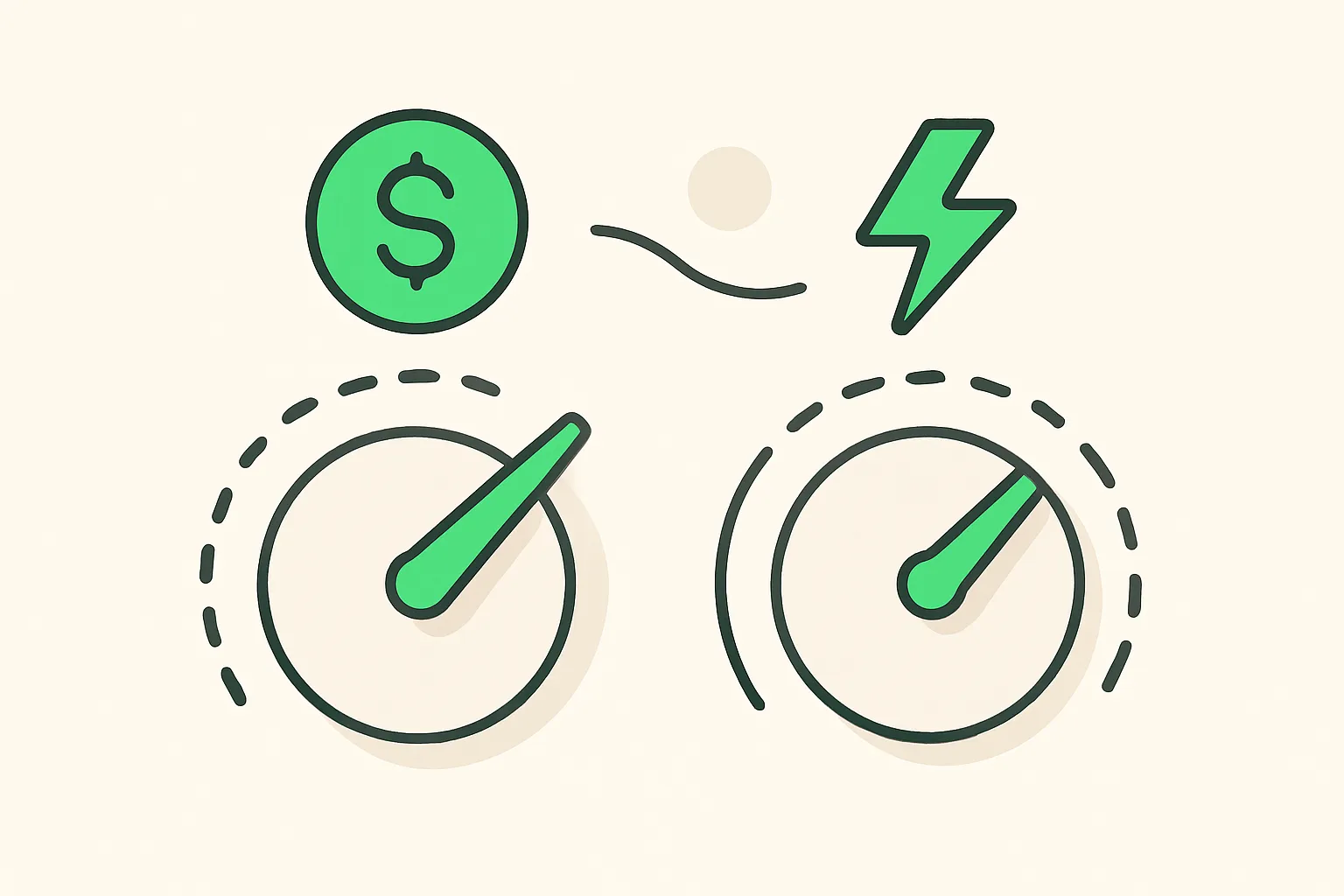 Two dials, one for cost and one for power, showing the Neon and Hydrogen pairing trade-off
What would you pay to reproduce these?
Neon is priced at $3 per million input tokens, $0.15 per million cached input tokens and $15 per million output tokens, with a 1 million-token context window, per Google. Google says Neon at its default high thinking level shows 32% lower cost per task than Carbon, and that it sits on the Pareto frontier of the Vals index and Agent Arena with roughly 50% to 80% lower cost per task than top competing frontier models. Those are Google's statements based on third-party indexes.
Nobody has published the token bill for the ski simulator or the Sheet. Our advice: before you budget a project like these, run a small version, log tokens, and extrapolate. For the broader price comparison, see our Neon versus Carbon versus Hydrogen post and our Gemini 4 Carbon comparison with Opus 5.5 and GPT-6 Astra.
How to try something like this today
- Check your plan. Google says Neon rolls out to paid Google AI Pro and Ultra subscribers in Antigravity, to Pro and Ultra subscribers in the Gemini app, and through the Gemini API paid tier in Google AI Studio.
- Start in Antigravity and pick Neon. Try one small prompt that needs several files, such as a single-page WebGL scene.
- Use /swarm for parallel pieces, for example one agent for assets and one for physics. Keep the run short while you learn token use.
- Pair Neon with Hydrogen in Orchestrator for repetitive follow-up work.
- Log what the run costs and whether the result works without edits. That is the number the demos do not give you.
How to judge a vendor demo like these
A showcase answers one question: can the model do this at all? It does not answer how reliably, how cheaply or with how much human help. When you read a demo, ask four things. Was the prompt shown? Was the first attempt the one published? Is the cost or token count stated? Could someone else rerun it? None of the six demos above comes with all four. That does not make them fake. It means they are starting points for your own tests, not benchmarks. Independent results, such as the Artificial Analysis and Vals indexes Google cites, are better evidence of average performance, while demos show the ceiling. Use both, and trust your own logged runs most.
What is confirmed and what is not
Confirmed from Google's own posts: the six demos exist and are described as above; pricing, context window, availability and the Orchestrator pairing.
Not independently confirmed: that any demo can be reproduced from the same prompt, how many tries each took, and their token cost. We also saw a report of a blogger who generated 17 interactive demos in a day, but we could not verify it, so we do not rely on it. We will add independent builds as they appear.
Our read
The ski simulator and the Sheet are the strongest demos because they test long coherent builds, not a single answer. The Turing study shows research plus 3D. The honest limit is evidence: these are showcases from the vendor. Treat them as a list of things worth trying, and measure your own results.
Related reading
- Gemini 4 Neon launch, price and benchmarks
- Gemini 4 Neon on Vertex: SKU claimed vs verified
- Gemini 4 Hydrogen use cases and demos
- Gemini 4 Argon 3D periodic table build
- Gemini 4 Carbon vs Opus 5.5 vs GPT-6 Astra vs Grok 4.7
- What is MCP, the Model Context Protocol
Details reflect Google's posts of November 18, 2026. Demos are Google's showcases and may change.