



Four copies of Google's Gemini 4 Argon beat Minecraft on their own. In a paper posted to arXiv on October 15, 2026, researchers report that a team of four general-purpose coding agents defeated the Ender Dragon in 27 hours and 14 minutes, writing 2,783 programs, exchanging 229 chat messages and dying 605 times along the way. The authors, Maxence Faldor, Satinder Singh and Roberta Raileanu, write that to their knowledge this is the first end-to-end autonomous completion of Minecraft by AI agents using only the standard Mineflayer library. The Decoder put the cost of the session at $1,620.
This is not a game-playing stunt in the old sense. The agents are the same coding agent Google uses for software work, pointed at a game. That makes it a long-horizon test of the model we covered at launch in Gemini 4 Argon: benchmarks and pricing.
TL;DR: what the Minecraft run shows
| Question | Answer |
|---|---|
| Who ran it? | Faldor, Singh and Raileanu (Google researchers), arXiv 2610.22319, submitted October 15, 2026 |
| What was the goal? | Defeat the Ender Dragon in a random survival world |
| How many agents? | Four players plus a fifth "Observer" agent that never played |
| Which model? | Gemini 4 Argon, the same general-purpose coding agent used for software work |
| How long? | 27 hours 14 minutes, about 81 in-game days, 6 server restarts |
| Output | 2,783 programs before the win (2,839 in the session), 229 chat messages, 605 deaths |
| Cost? | About $1,620 for the whole session at standard list price; about $810 at introductory price |
| Difficulty and setup | Easy, Minecraft Java 1.20.4, cheats off, random seed, standard Mineflayer only |
| How many runs? | One, the first launch the authors tried |
How do the agents play Minecraft without seeing it?
They do not see pixels. Each agent drives a player through Mineflayer, an open-source JavaScript library for Minecraft bots, plus its pathfinding plugin. The agent writes a short program such as "walk to these coordinates and mine every iron ore within 16 blocks", runs it, reads the text that comes back (position, health, inventory, errors), and writes the next program. The median program ran 33.5 seconds, and each player had code running about 40% of the time; the rest went to reading, thinking and writing.
Instructions were minimal. The game prompt was a single paragraph: defeat the Ender Dragon, "any means" within survival rules permitted, and the players decide how to share the work. The general instructions are the ones every environment gets: verify results, build reusable tools, keep a shared memory, be honest about outcomes, and do not exploit flaws in the environment. There was no game strategy, curriculum, skill library or human-written helper.
Each of the five agents ran on its own cloud machine with the tools it uses for software work: a code workspace with version control, a shell, file editing, web search, and a persistent memory with a private part and a team-shared part. The paper says none of the 2,839 programs made a network request or referred to a web source, so the agents did not look up a walkthrough during the run.
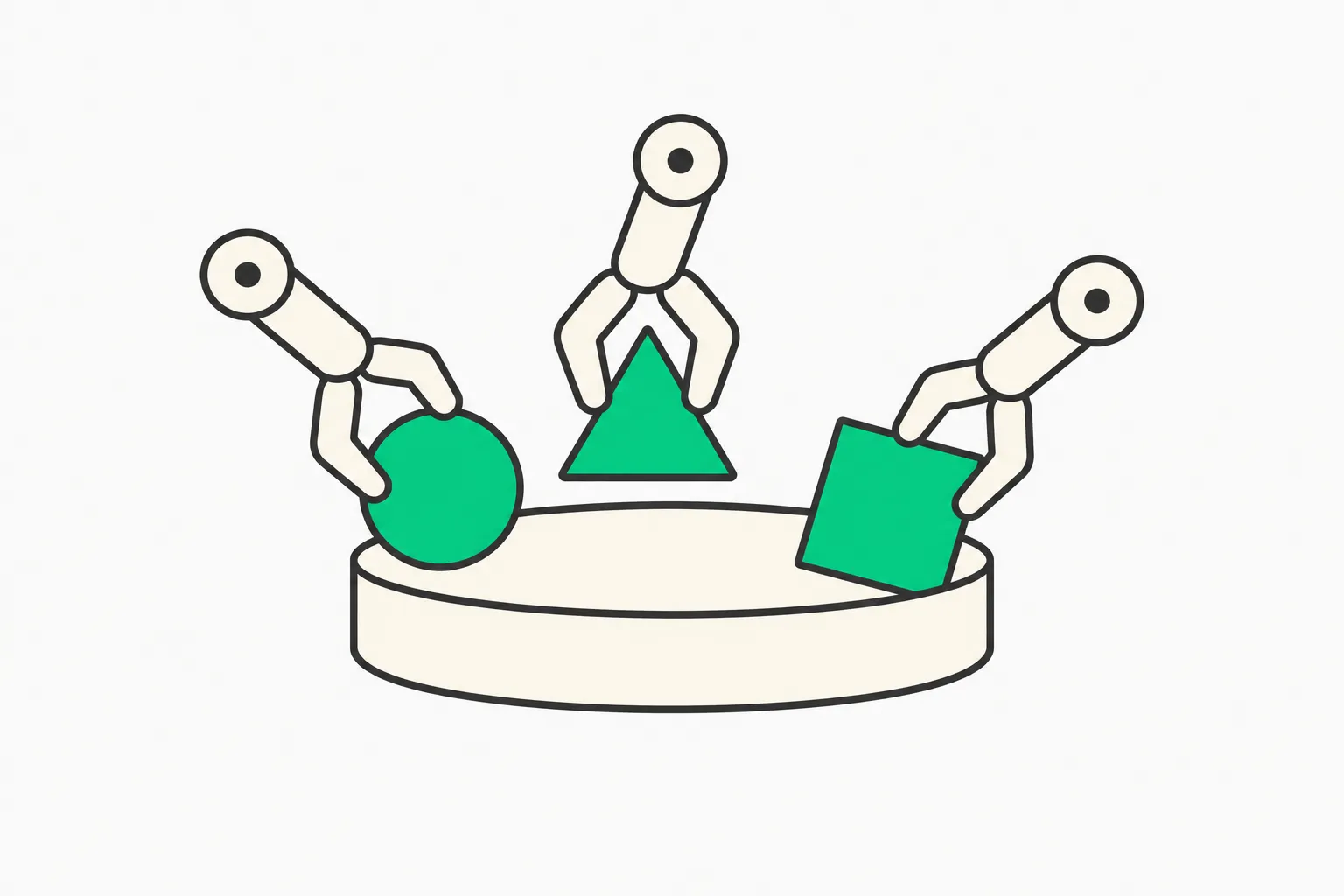 Four Gemini 4 Argon agents coordinating in Minecraft through a shared workspace and memory
What happened during the 27 hours?
The paper tells the run as a story, and it reads like a small team's project log.
- Hour 0: ten minutes in, one agent proposed a division of labor in chat, another answered with a different plan within a minute, and roles settled: one scouted for food and beds, one went down for diamonds, one smelted iron and made tools, one prepared the Nether portal. The portal was lit at 1 hour 42 minutes.
- Hours 2 to 11: the team went into the Nether for blaze rods and ender pearls. To get pearls they built two-block-high shelters: an Enderman that is looked at teleports toward the player but, at nearly three blocks tall, cannot fit under a two-block ceiling. By hour five and a half they had 15 pearls in a shared chest. Carrying blaze powder home took more than six hours of setbacks, including a death by fire and a Ghast fireball that destroyed dropped items.
- Hours 10 to 13: to find the stronghold, one agent threw two Eyes of Ender from different places, sampled each flight every 50 milliseconds and computed where the lines cross, 1.3 km away. The estimate landed 43 m from the real portal room. When one agent drowned carrying all twelve eyes, two teammates sent the survivor the exact spot and the minute the items would despawn, and he recovered all twelve with two and a half minutes to spare. The End portal was lit at 13 hours 17 minutes.
- Hours 13 to 27: the End was the hard part. The dragon killed the team 69 times. They inspected its internal state, wrote rules (never wait on the arrival platform, approach only while it perches, leave the End to reset a stuck dragon), and around hour 21 one agent realized the ten healing crystals kept restoring the dragon and worked out how to reach them without a pickaxe: stack dirt beside each pillar, punch the crystal, dig back down. Destroying all ten took four hours and forty minutes. Thirty-nine minutes after the last crystal fell the dragon died, with the final-blow agent at 2.5 of 20 health points.
For scale, the paper cites HowLongToBeat's 45-hour median for a human to finish Minecraft's main story, and notes the random-seed speedrun record is under seven minutes. It is explicit that the agents played as a team of four on Easy, through programs instead of a screen and keyboard, so the numbers are not a like-for-like race.
What emerged without being programmed?
The authors list behaviors that nobody asked for, pulled from the 229 chat messages and the shared memory.
| Behavior | Evidence in the paper |
|---|---|
| Specialization | Each agent settled into a role; one destroyed six of the ten crystals, another triangulated the stronghold |
| Shared memory | Coordinates of chests, portals and dangers; a crafting-quirk warning at minute 19 led to a helper function used in 655 programs by all four agents |
| Their own tools | 146 pieces of state and code kept alive between programs, including 42 helper functions; one timeout guard referenced in 1,519 programs |
| Looking out for each other | Hazard warnings and item recovery after deaths |
| Corrections | One agent retracted a false success announcement two minutes later; a teammate flagged an impossible report within three minutes |
The Observer agent's job was to check claims against the log and flag specification gaming or fabricated results. It flagged none, and the authors say neither it nor their own manual log review found a safety incident. The self-correction examples are the part most relevant to anyone building agent teams, because unchecked success claims are a standard failure mode in multi-agent setups. Our explainer on multi-agent emergence covers why this kind of coordination is hard to engineer by hand.
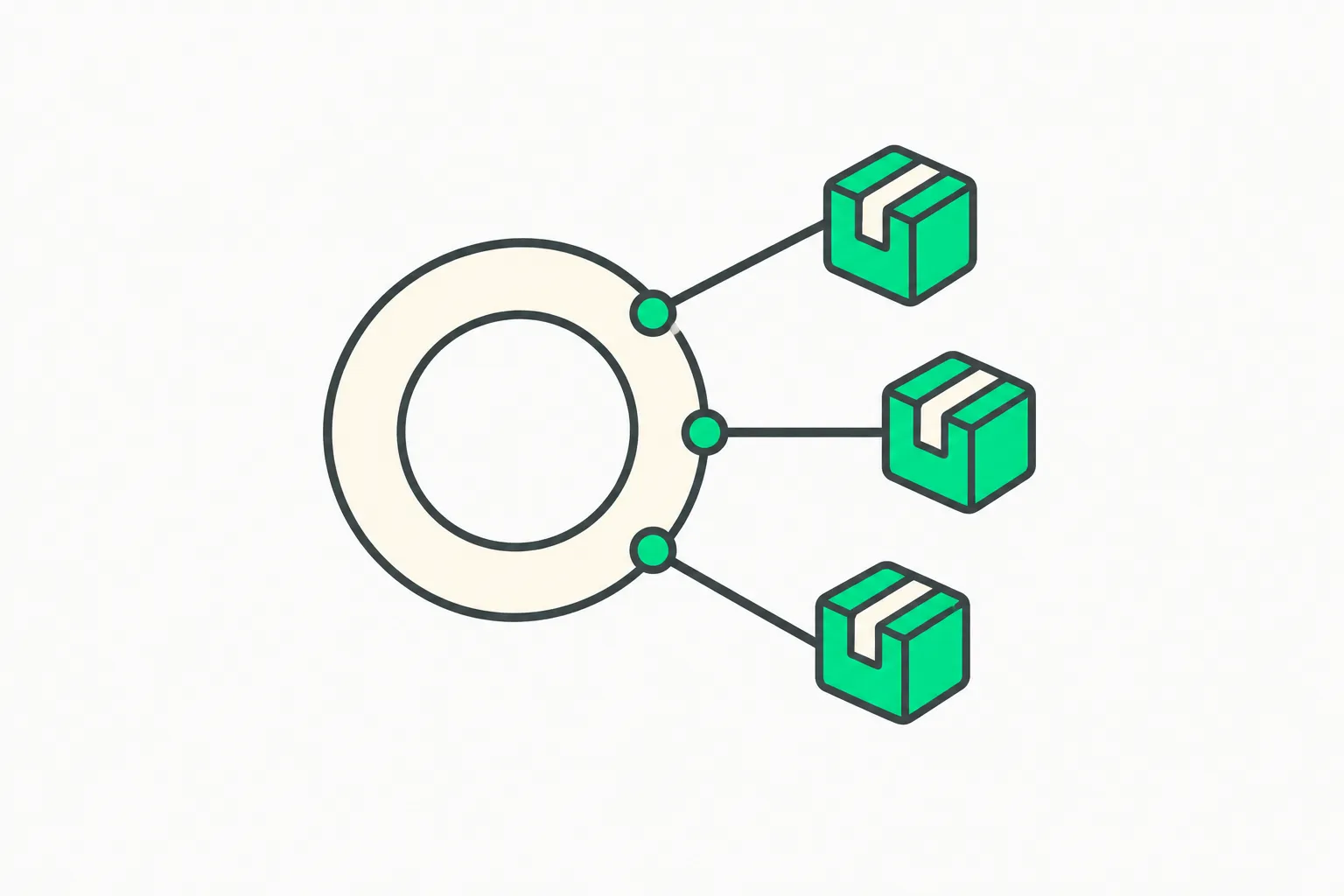 Multi-agent delegation in Minecraft, with a central routing ring handing tasks to specialist agents
How much did it cost, and is $1,620 real?
The paper gives its own accounting. Up to the win the four players used about 1.35 billion input tokens (91% served from the context cache), about 16 million output tokens (4 million of them thinking tokens) and roughly 24,000 model calls. At the introductory list price that is about $520; at the standard price about $1,040. The whole session, including the Observer and the day after the win, came to about $810 at introductory pricing and about $1,620 at standard pricing.
Two caveats matter. First, these are list-price estimates from the session's token counters, not the cost of serving the model, as the authors state. Second, The Decoder points out the standard price used for the headline figure takes effect in 2027, so what anyone pays today is closer to the lower figure. Compare this with other agent-cost stories we have covered, such as Fable 5.1 building a Minecraft mod for $20: that was a one-person creative task, while this is an unattended day-long team run.
What this result does not show
The paper has its own limits section, and it is worth reading before repeating the headline.
- Perception is easy mode. Mineflayer exposes exact block and creature data, including blocks behind rock and the dragon's internal state. Humans must see and interpret all of that. Pixel-based Minecraft remains much harder.
- Navigation is outsourced. The pathfinding plugin plans routes around obstacles, which humans do by eye.
- Prior knowledge helps. Gemini 4 Argon knows a lot about Minecraft and Mineflayer from training, so the run tests whether a general coding agent can turn that knowledge into working programs and teamwork, not whether it can learn an unfamiliar game.
- It is noisy. 605 deaths, 22% of programs ending in an error, and nearly 14 hours in the End.
- One run. The report describes the first launch the authors tried. It cannot say how often the setup succeeds, and Easy difficulty means hunger cannot kill a player and monsters deal less damage.
- Infrastructure interrupted it. The server restarted six times, pausing the world about 20 minutes in total.
On prior work, the authors note other Minecraft agents (MineRL, VPT, DreamerV3, SIMA and others) learned from gameplay data or acted from pixels, and language-model planners such as Voyager added planners, memory or skill libraries with long-horizon results centered on the Overworld. They also note two community projects reported dragon kills: one with a single Claude Opus 5 agent on Normal difficulty, and one with a planner plus action model on a fixed speedrun seed in Peaceful. Their claimed difference is what the agents were given: four general coding agents, standard Mineflayer, one paragraph, a random seed, and nothing game-specific written by humans.
Why it matters for people building agents
The authors frame Minecraft as a stand-in for work that needs "a coherent plan across thousands of dependent steps for more than a day". Three takeaways are practical.
- Memory design carries long tasks. The shared notes (coordinates, tool quirks, rules written after each failure) are why the team stopped repeating mistakes. The instructions told agents to record anything that must survive a context compaction. If you run long agent jobs, a shared, written memory is the cheapest reliability lever in this paper.
- A separate observer is cheap insurance. An agent whose only job is to verify claims against logs added little to the cost and caught nothing here, which is the point: you want it in place before a run goes wrong.
- Judgment is still the bottleneck. The longest stretch was the dragon fight, where the team needed about 21 hours to diagnose the crystal-healing problem. That fits the finding in Taste-Bench that frontier agents pick the better path at a task fork only about 60% of the time.
For how the same model performs on other agentic evaluations, see our Gemini 4 Argon vs Opus 5.5 vs Grok 4.7 vs GPT-6 Astra comparison, the top Gemini 4 Argon use cases, and the safety report on activation probes and cheating. Google's own framing of self-improvement is examined in the Sergey Brin RSI roundtable claims.
 A flock of coordinated agents moving as one, illustrating autonomous multi-agent Minecraft teamwork
What are people asking?
Is this AGI? No claim like that appears in the paper. It reports one successful run of a game with exact state access, and says so.
Can I reproduce it? The paper describes the stack: Minecraft Java 1.20.4, Mineflayer with its pathfinding plugin, a command-line client that sends JavaScript to each bot, and a shared memory. The linked listing did not show a code release, so check the arXiv page for updates before assuming you can rerun it. At the paper's own estimate, a rerun would cost on the order of hundreds to over a thousand dollars of tokens.
Does it beat other models? The paper does not run a head-to-head against other models, so it does not support a ranking. Treat it as a capability demonstration for one model.
Why four agents instead of one? The paper reports what the team did, not an ablation against a single agent, so it cannot say how much the team structure mattered.
Bottom line
The credible reading is narrower than the headline and still notable: a general coding agent, given a bare library and one paragraph, sustained a plan for more than a day, recovered from hundreds of failures and coordinated without assigned roles. The unsettled questions are reliability (one run), difficulty (Easy), perception (text, not pixels) and cost (list-price estimates). Watch for a second run or a harder setting before drawing conclusions about agents in general.
Related reading
- Gemini 4 Argon launch: benchmarks and pricing
- Gemini 4 Argon vs Opus 5.5 vs Grok 4.7 vs GPT-6 Astra
- Top 10 Gemini 4 Argon use cases
- Taste-Bench: agent judgment at 59.7%
- Fable 5.1 built a Minecraft mod for $20
- Multi-agent emergence explained
- Primary source: arXiv 2610.22319
Details are accurate as of October 18, 2026, based on version 1 of the paper; figures may change in later versions.