



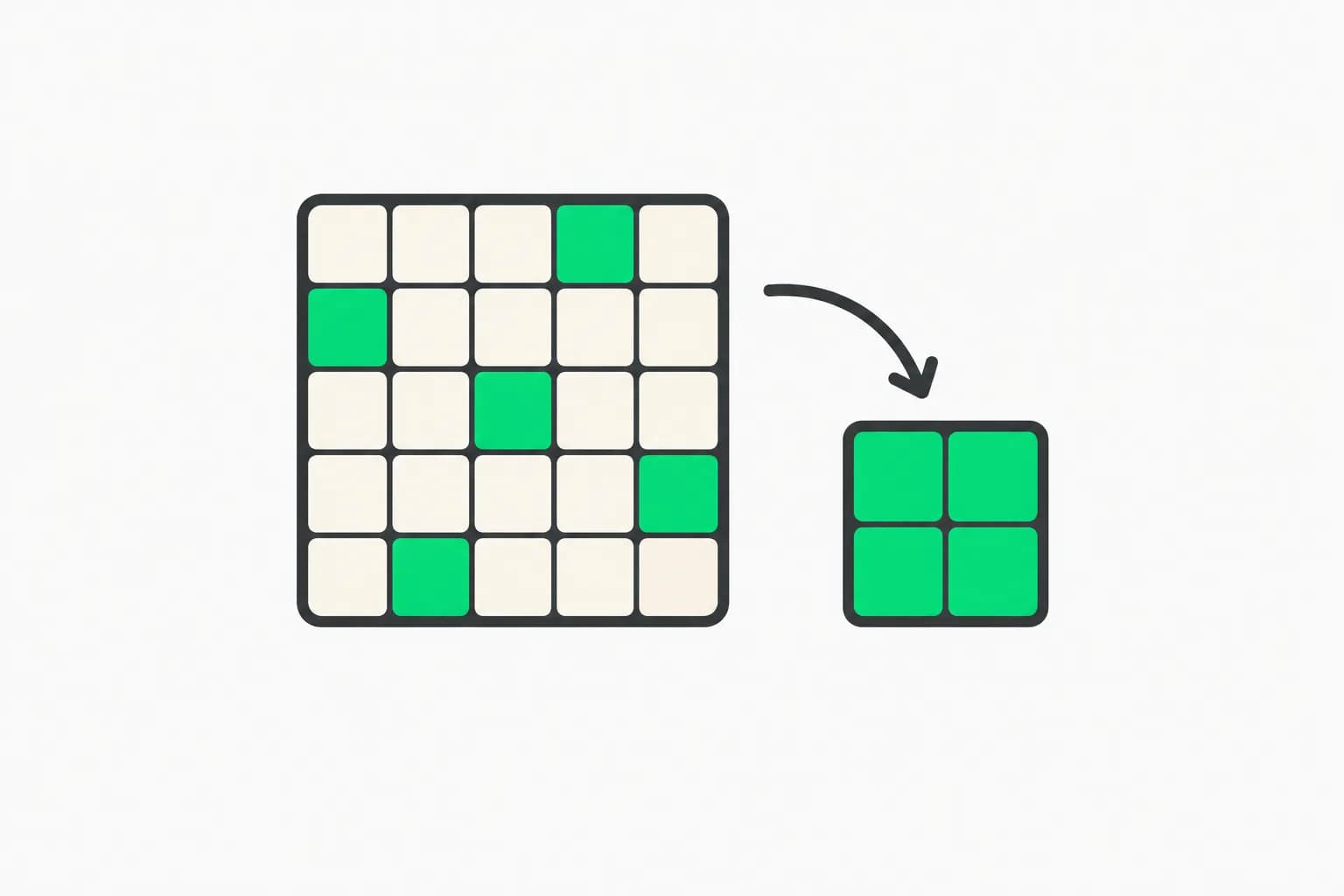
Low-precision pretraining is attractive on Blackwell-class stacks because NVFP4 matrix multiplies cut bandwidth (see NVIDIA's NVFP4 introduction). Teams often gate recipes on validation loss parity with BF16.
A November 2026 paper, arXiv:2611.12832 by Chang Lu and Mengjiao Zhang, argues that loss curves hide a memorization tax: models can match loss within ~0.5–2% yet need ~1.2–1.5× more token exposures to reach the same rare-fact recall as BF16 training.
TL;DR
| Question | Answer |
|---|---|
| Formats compared | NVFP4 emulated 4-bit matmul vs BF16 |
| Primary metric beyond loss | Rare-fact recall vs exposure count |
| Exposure penalty | ~1.32–1.52× for matched recall |
| Loss delta at same point | 0.5–2% validation loss gap |
| Inference matmul | Gap persists with BF16 eval |
| Fix by higher LR? | No in their tests |
Experimental setup
The authors train transformers from scratch with emulated 4-bit matrix multiplications on:
- Synthetic biographies with controlled exposure counts per fact
- The same facts mixed into web text
They measure when models recall injected rare facts and compare exposures required at matched recall, not only cross-entropy.
This matters because production corpora are heavy-tailed: most tokens are common n-grams; long-tail facts (names, dates, regulatory clauses) are exactly what enterprise RAG hopes the base model already knows.
Headline numbers
From the abstract and body of arXiv:2611.12832v1:
- NVFP4 needs 1.32× and 1.52× exposures vs BF16 to match recall in biography settings while validation loss differs by 0.5% and 2%.
- With BF16 evaluation matmuls for both checkpoints, exposure costs remain ~1.26× and 1.30×.
- Under their primary readout, exposure cost is ~1.2× at matched loss.
So deployment precision does not erase the training-format scar on rare facts.
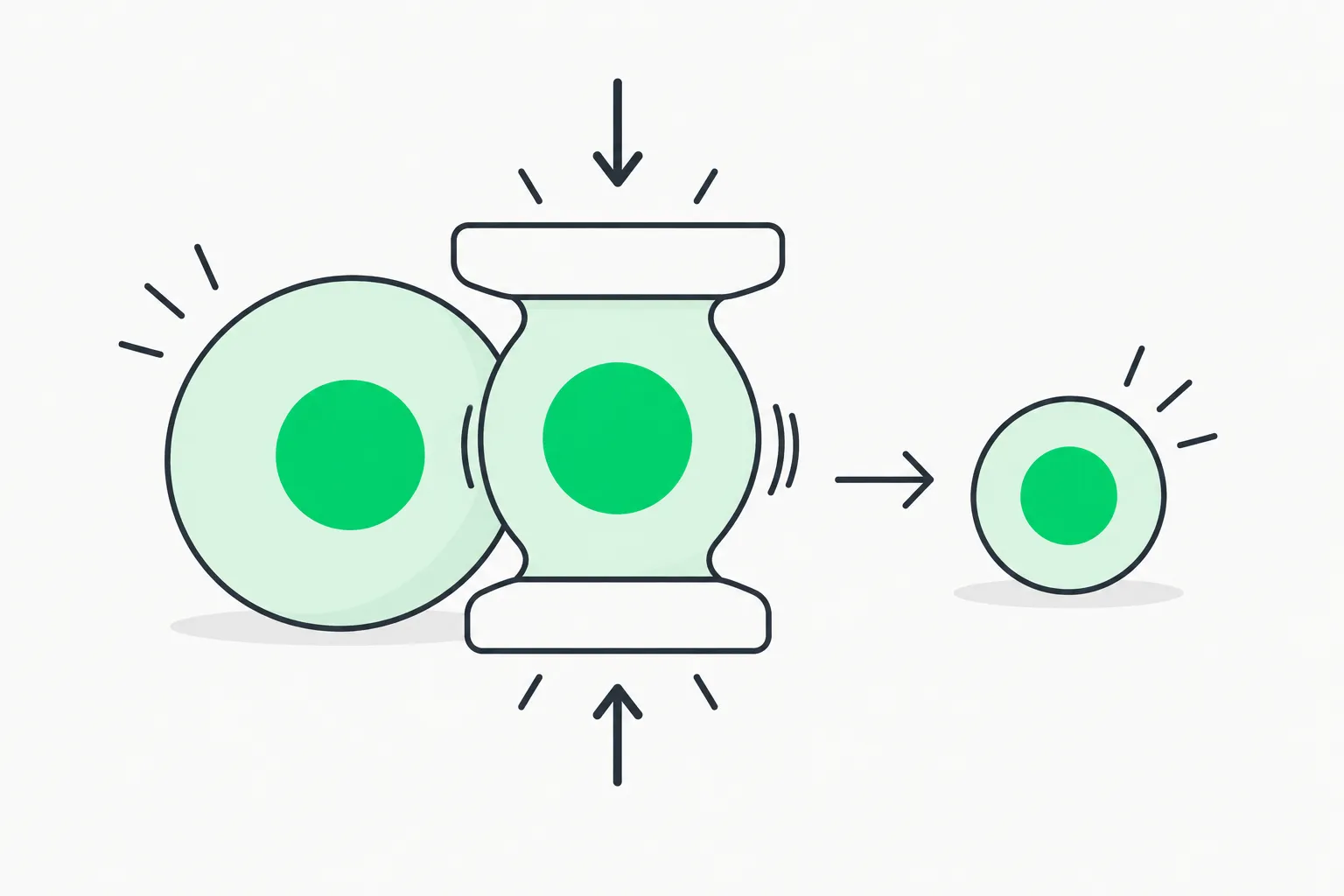 NVFP4 quantization compression tradeoff between loss curves and rare knowledge recall
Mechanism: optimizer noise, not just matmul error
The paper decomposes penalties with controlled gradient noise:
- Zero-mean noise reproducing backward-pass quantization barely moves loss but imposes recall cost.
- Noise fed only to Adam's second moment acts like reduced learning rate — cost fades.
- Noise in the update itself lowers signal-to-noise and carries ~two thirds of NVFP4's recall penalty late in training.
They report Spearman 0.96 correlation between gradient statistics on BF16 checkpoints and observed format costs — suggesting you may rank recipes before long runs.
Practical read: If your team only watches loss/all-reduced grad norm, you may ship an NVFP4 recipe that looks ready while entity-heavy evals (spreadsheets, biology pathways, legal entities) lag.
NVFP4 in the wider precision stack
NVFP4 sits beside FP8 inference, KV cache quantization, and adapter fine-tunes in many 2026 training playbooks. This paper isolates pretrain matmul precision, not LoRA ranks or post-training quantization (PTQ) — but the rare-fact lesson likely travels:
- PTQ to 4-bit weights may preserve perplexity while erasing tail entities — run entity-centric probes after AWQ/GPTQ passes.
- Mixture-of-experts routing can hide dead experts that never saw rare domains — correlate with Amazon HOPE pruning audits.
- Distillation from teacher to student may copy head loss faster than tail facts — mirror StepFun multi-teacher caution.
Hardware narrative: NVIDIA's public story ties Blackwell to cheaper training FLOPs; Chang Lu and Mengjiao Zhang add a data-efficiency asterisk: you may need more epochs on tail slices even when step time drops.
Implications for November 2026 training stacks
This connects to broader efficiency news explainx.ai follows:
- NVIDIA Teter probe pause and supply stories — cheaper matmul only wins if downstream evals hold.
- Amazon HOPE MoE pruning — another knob that can move loss without moving factual calibration.
- Moonshot B300 filings — claimed vs verified capacity narratives; your internal rare-fact suite is the antidote.
What to add to nightly training dashboards:
| Metric | Why |
|---|---|
| Tail-fact QA suite | Catches exposure penalties loss misses |
| Exposure counterfactuals | Train duplicate runs with boosted tail duplication |
| Grad second-moment stats | Early warning per paper's ranking claim |
| BF16 eval of FP4 weights | Separates train vs deploy precision effects |
What this paper does not claim
- It is not a NVIDIA official NVFP4 guide — authors emulate 4-bit matmul in research training.
- Results are on synthetic biography + web mix, not a 405B production run.
- No downstream agent tool-use eval — pair with WorkflowArena-style integration tasks separately.
Synthetic biography protocol (why the setup is clever)
Chang Lu and Mengjiao Zhang control per-fact exposure counts in synthetic biographies — something impossible in messy web scrapes at first pass. That lets them ask: "How many times must token X appear before recall matches BF16?" without confounding from tokenizer artifacts or duplicate news wires.
They then mix those biographies into web text to approximate long-tail tokens embedded in naturalistic noise, closer to real pretraining blends.
Readout choice matters: The paper distinguishes evaluating with NVFP4 matmuls at inference versus BF16 matmuls on the same checkpoint. Teams that train FP4, deploy FP16 should measure both — the gap shrinks but does not vanish in their tables.
Connecting optimizer noise to your Adam hyperparameters
The ablation story is actionable for ML systems engineers:
| Intervention | Effect on rare-fact cost | Effect on loss |
|---|---|---|
| Quantize backward pass only (noise matched) | Raises exposure need | Barely moves |
| Noise into Adam second moment only | Cost fades | Acts like lower LR |
| Noise in weight update | ~two-thirds of late-training penalty | Moderate |
| Raise LR to compensate | Fails to restore rare facts | Can destabilize |
If your Blackwell recipe tweaks optimizer states or grad clipping to stabilize FP4, also schedule monthly rare-entity evals — loss dashboards may stay flat while CEO name spellings regress.
Spearman 0.96 claim: Gradient statistics from BF16 checkpoints predicted format ranking across partial quantizations without task-specific fitting. Worth porting as a cheap pre-flight before 30-day runs.
What people are asking
Does this mean NVFP4 is a bad idea? It means loss parity ≠ knowledge parity. For chat models sold on citation fidelity, add fact recall evals to acceptance tests.
Will repetition schedule fixes help? The paper shows LR bumps alone failed; targeted upsampling rare contexts may still help — that ablation is on you.
Relation to KV-cache compression? Different layer — see LowRAM KV compression for inference, this paper for pretrain quantization.
Designing your own rare-fact eval (copy the paper's idea)
You do not need biography synthetics to apply the lesson:
- Pick 500 tail entities your domain cares about (SKU codes, amino acid motifs, API error strings).
- Instrument pretraining mixtures so each entity's exposure count is logged.
- Checkpoint weekly and run cloze probes — masked span prediction beats trivia QA for memorization tests.
- Plot exposure vs recall separately for NVFP4 and BF16 runs matched on validation loss.
If curves diverge at equal loss, your cheap format is eating memorization budget — compensate with duplicated tail slices or mid-training BF16 phases.
Leaderboard hygiene: Public MMLU or GPQA scores may look flat while your entity probes collapse — do not outsource tail risk to generic benchmarks alone.
Historical context
Low-precision training has been sold on FLOPs per dollar since FP16 widespread adoption. Chang Lu and Mengjiao Zhang add a 2026 nuance: optimizer dynamics under noise matter as much as mantissa width. That echoes older mixed-precision war stories where loss scaling hid gradient underflow — here the underflow is semantic, not numeric.
Teams migrating from Samir's vLLM from-scratch course into production training should treat this paper as required reading before signing NVFP4-only cluster contracts.
Related on explainx.ai
- NVIDIA Teter probe and export controls
- Amazon HOPE MoE expert pruning
- LowRAM KV cache compression
- CoreWeave Wayve Blackwell training deal
- StepFun multi-teacher distillation
- Samir vLLM build from scratch guide
- Rigel efficient pretraining at 2.3B
Sources: arXiv:2611.12832v1.
Checklist before you ship an NVFP4-trained base model
-
Match validation loss to BF16 reference — necessary, not sufficient.
-
Run tail-entity probes at matched loss checkpoints.
-
Log exposure counts for curated rare slices in the training mix.
-
If probes lag, budget extra epochs or BF16 cool-down phase — not only higher learning rate.
-
Document results in model cards so downstream RAG teams know memorization risk.
-
Re-run probes after instruction tuning — alignment passes can wash out rare facts even when chat loss improves.
Finance tie-in: CFOs like NVFP4 for cap-ex per trained parameter; researchers should translate 1.3× exposure into real dollars on replicated tail slices before signing cluster renewals.
Share probe curves with downstream RAG owners — they feel entity drift first when users ask about obscure SKUs or legacy APIs.
If probes fail while loss matches, extend tail duplication before you extend total tokens — the paper suggests format noise not under-training is the usual culprit.
Publish both loss and probe charts in release notes so customers can sanity-check cheap checkpoints before they bet production RAG on them.
Treat 1.2× exposure as a planned data surcharge, not a surprise change order after training finishes on the cluster.
Exposure multipliers and loss deltas follow the November 9, 2026 arXiv v1 submission.