



Claude's constitution names honesty and warmth. In the wild, it expresses 3,000+ distinct values — and they shift by model and language.
On July 13, 2026, Anthropic published Claude's values across models and languages — a follow-up to Values in the Wild that compresses thousands of labeled norms into four measurable axes, then maps 309,815 anonymized Claude.ai conversations across Sonnet 4.6, Opus 4.6, and Opus 4.7 and the top 20 languages.
explainx.ai breaks down what each axis means, why Sonnet feels playful while Opus 4.7 critiques, why Hindi feedback may sound warmer than Russian, and what agent builders should measure — building on Constitutional AI and Teaching Claude why.
Figures below are from Anthropic's July 13 research post, converted to WebP and hosted on explainx.ai.
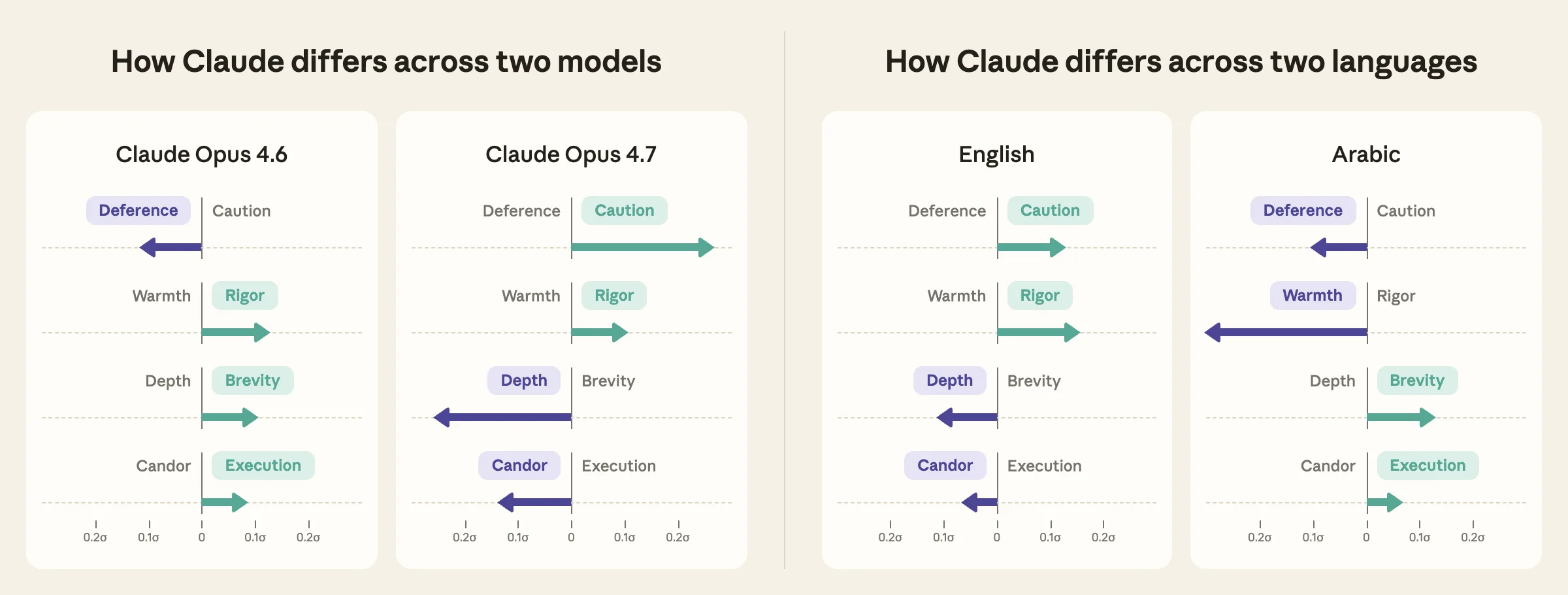 Figure 1 — Claude value profiles: Opus 4.6 vs Opus 4.7 and English vs Arabic on four axes (Deference/Caution, Warmth/Rigor, Depth/Brevity, Candor/Execution)
TL;DR — what people are asking
| Question | Answer |
|---|---|
| How many values did they track? | 3,307 raw → 339 clustered high-level values; 4 axes explain 15% of variance after controls |
| Which models? | Sonnet 4.6, Opus 4.6, Opus 4.7 — ~5,000 chats per model×language pair |
| Biggest model split? | Sonnet 4.6 = warm, deferential, brief · Opus 4.7 = cautious, deep, candid |
| Biggest language split? | Warmth vs Rigor — Hindi/Arabic warmest · English/Russian most rigorous |
| Same user, same task, two languages? | Different value lean — e.g. business-plan feedback may feel harsher in Russian than Hindi |
| Is this deployed tooling? | Research paper — proposed for eval/monitoring, not a public dashboard yet |
| Link to constitution training? | Yes — axes may eventually trace back to character training and data choices |
Why 3,000 values needed four axes
Anthropic's prior Values in the Wild work tagged 700,000+ conversations with 3,000+ distinct norms — honesty, warmth, brevity, harm reduction, and hundreds more. Comparing them one-by-one is unreadable.
The July 2026 method:
- Cluster similar values → 339 high-level groups
- Sample 309,815 subjective-task conversations (May 2026, two-week window)
- Label each conversation for presence/absence of all 339 values via a privacy-preserving Claude-based tool
- Control for task, topic, and user-expressed values
- Reduce dimensionality → four axes that capture co-occurring value groups
Values appearing in more than 80% of chats (helpfulness, clarity, following instructions) were dropped so the analysis measures variation, not universals.
The four axes (with end-label examples)
| Axis | Low end (examples) | High end (examples) |
|---|---|---|
| Deference vs Caution | Accommodation, respect for preferences | Responsible guidance, harm reduction |
| Warmth vs Rigor | Positive framing, encouragement | Accuracy, transparency, efficiency |
| Depth vs Brevity | Nuance, critical thinking, empowerment | Brevity, compliance, staying scoped |
| Candor vs Execution | Intellectual honesty, humility | Results orientation, optimization |
explainx.ai read: These are spectrums, not mutually exclusive switches. Claude can be warm and rigorous in one chat — but expressing more of one side correlates with less of the other in practice.
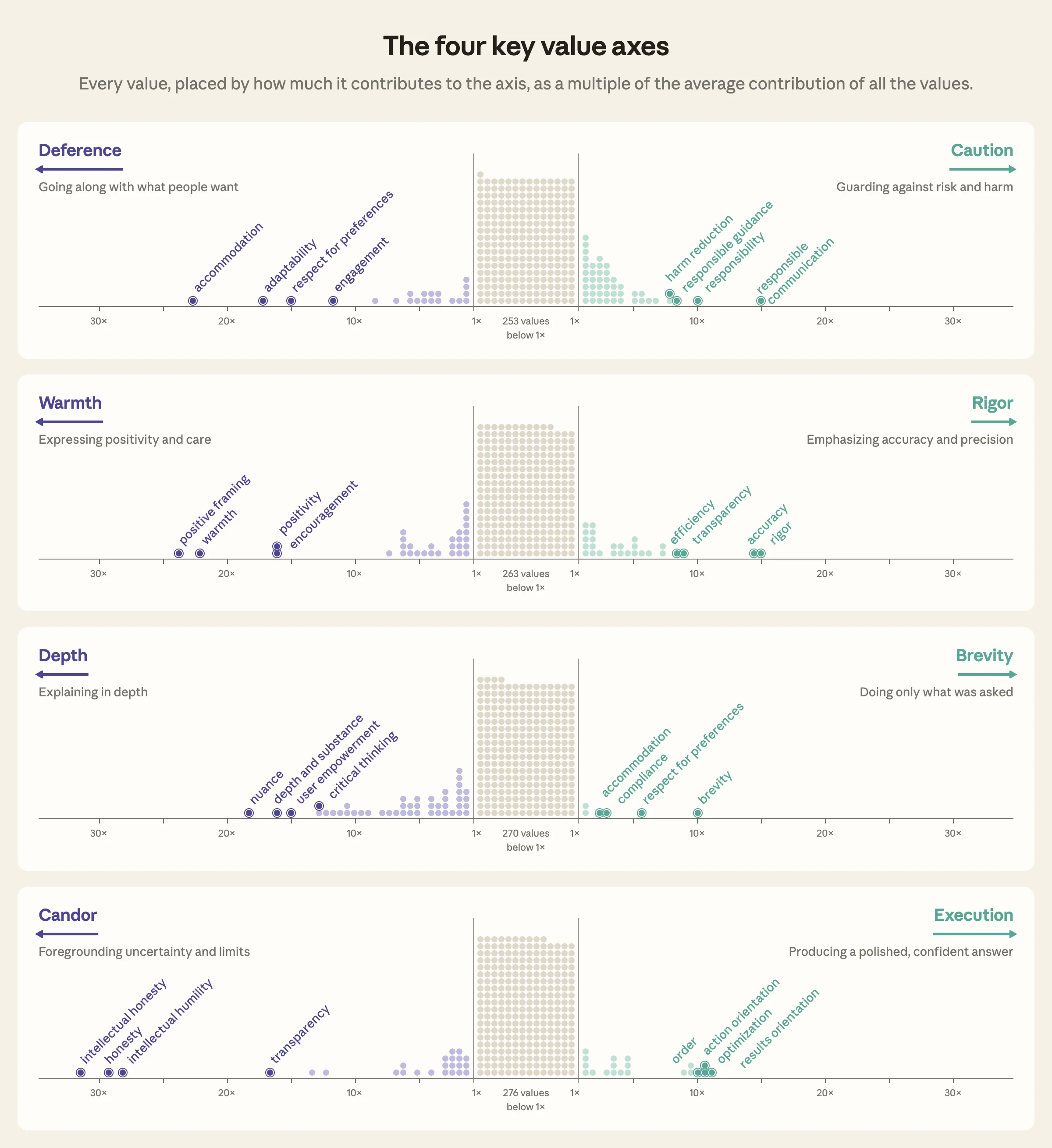 Figure 2 — Four value axes dot plots: Deference vs Caution, Warmth vs Rigor, Depth vs Brevity, Candor vs Execution with labeled end contributors
Model value profiles — Sonnet vs Opus
Differences are small in standard deviations but structured and align with how users describe the models online and inside Anthropic.
Sonnet 4.6 — warm, deferential, brief
| Axis | Lean (σ from mean) | Distinctive behaviors |
|---|---|---|
| Deference | +0.14 | Affirms user ideas and work |
| Warmth | +0.17 | Humor, playfulness, comfort without judgment |
| Brevity | +0.14 | Mirrors tone; creative flourishes |
Matches Anthropic's launch characterization of Sonnet 4.6 as warm and prosocial — and explains why many developers default to Sonnet for pairing-style Claude Code sessions.
Opus 4.7 — cautious, deep, candid
| Axis | Lean (σ from mean) | Distinctive behaviors |
|---|---|---|
| Caution | +0.24 | Unprompted risk warnings |
| Depth | +0.23 | Shows reasoning; suggests next steps |
| Rigor | Strong vs warmth | Challenges assumptions; candid critiques |
| Candor | Strong vs execution | Acknowledges errors and limitations |
Aligns with Opus 4.7's public positioning — users report more hedging and pushback than on Sonnet. For Fable advisor loops, this is why advisor ≠ executor model picks matter.
Opus 4.6 — rigor, deference, brevity
| Axis | Lean | Distinctive behaviors |
|---|---|---|
| Rigor | +0.10 | Corrects details |
| Deference | +0.09 | Stays within request scope |
| Brevity | +0.08 | Gets straight to the point |
Middle sibling — less warmth theater than Sonnet, less unsolicited caution than Opus 4.7.
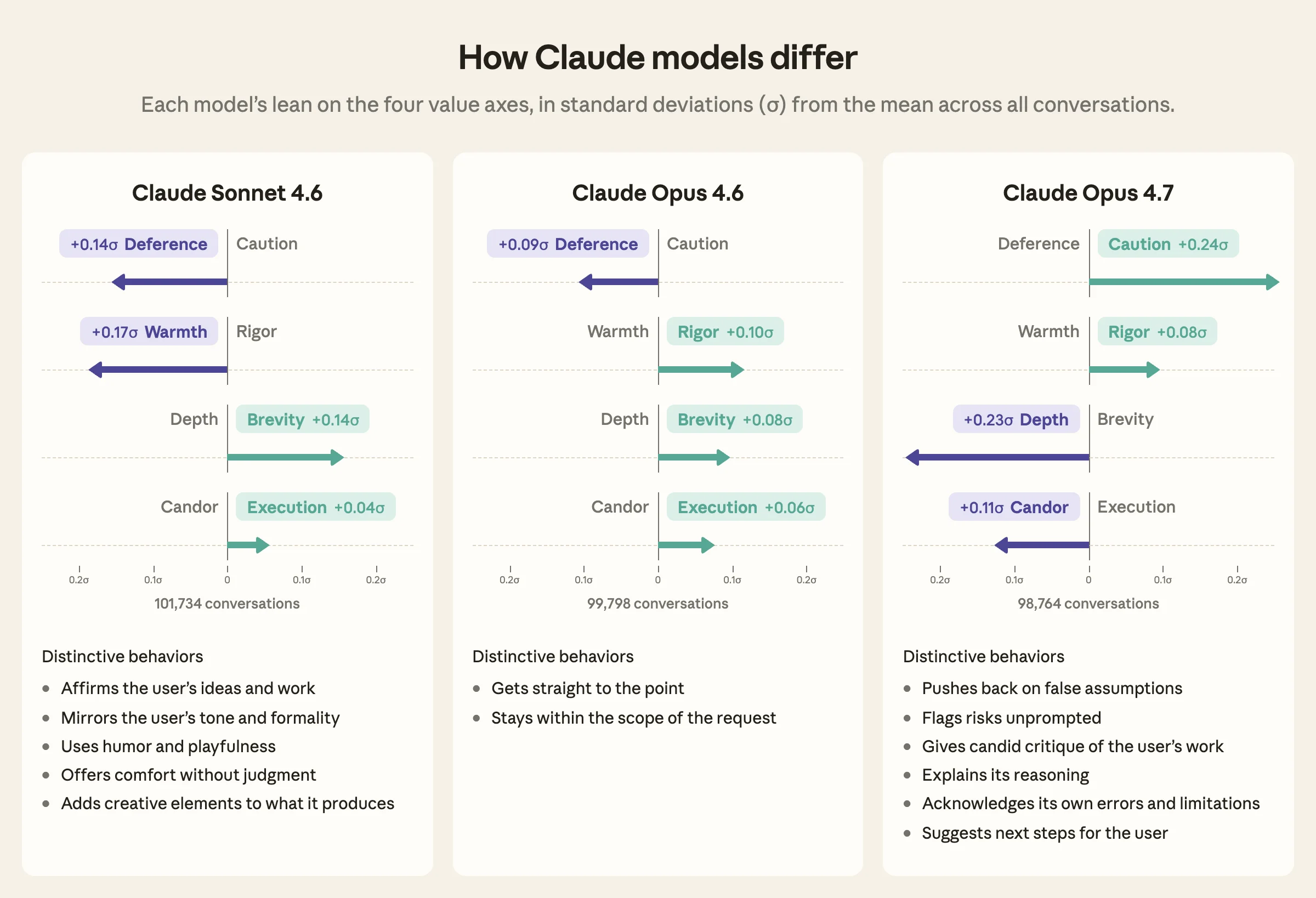 Figure 3 — Sonnet 4.6, Opus 4.6, and Opus 4.7 value profile cards with σ leans and distinctive behaviors per Anthropic
Language profiles — Hindi warmth, English rigor
Anthropic equal-sampled the 20 most common Claude.ai languages across all three models. Largest cross-language spread: Warmth vs Rigor and Candor vs Execution. Most stable: Deference vs Caution and Depth vs Brevity.
| Language | Strongest leans | Observable behaviors |
|---|---|---|
| Hindi | Warmth (furthest) | Polite language, affirmations, humor |
| Arabic | Warmth, deference, brevity | Accommodating tone; shorter answers |
| English | Caution, rigor, depth | Challenges assumptions; refines details |
| Russian | Rigor (furthest) | Corrects details; asks for evidence |
| Dutch | Candor | Owns errors openly |
| Indonesian | Execution | Action-oriented, optimized outputs |
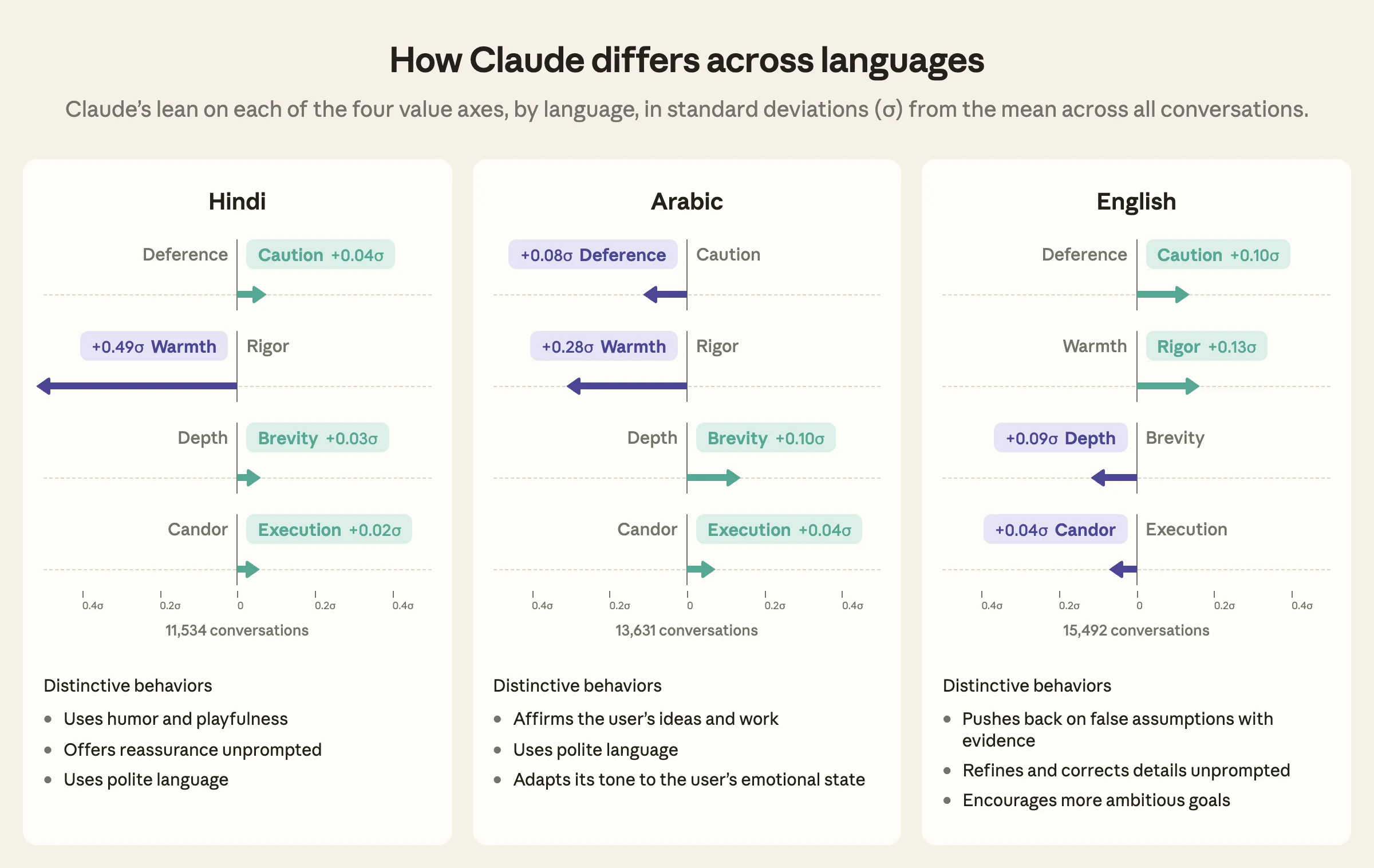 Figure 4a — Claude value profiles across 20 languages (panel 1 of 7)
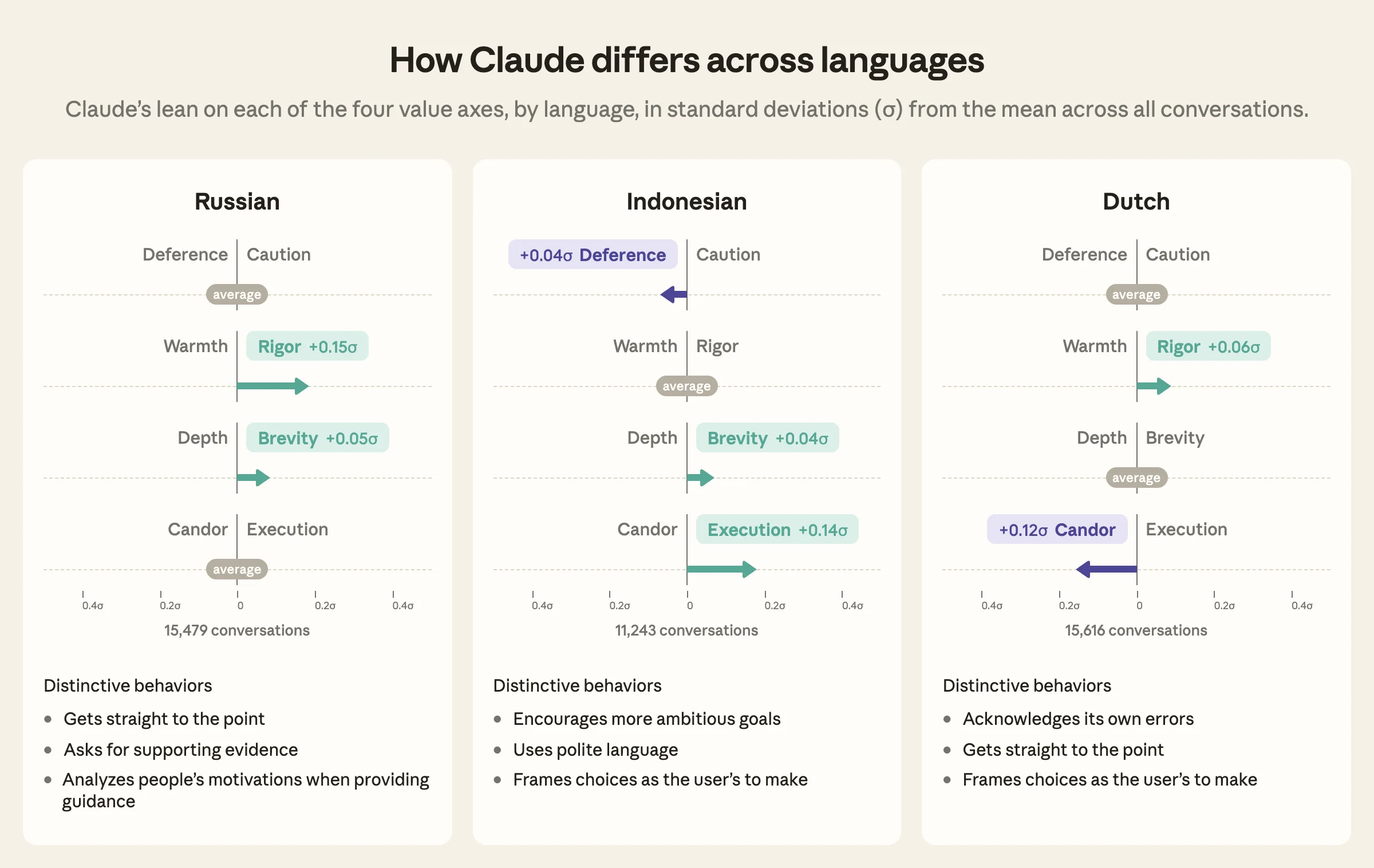 Figure 4b — Claude value profiles across 20 languages (panel 2 of 7)
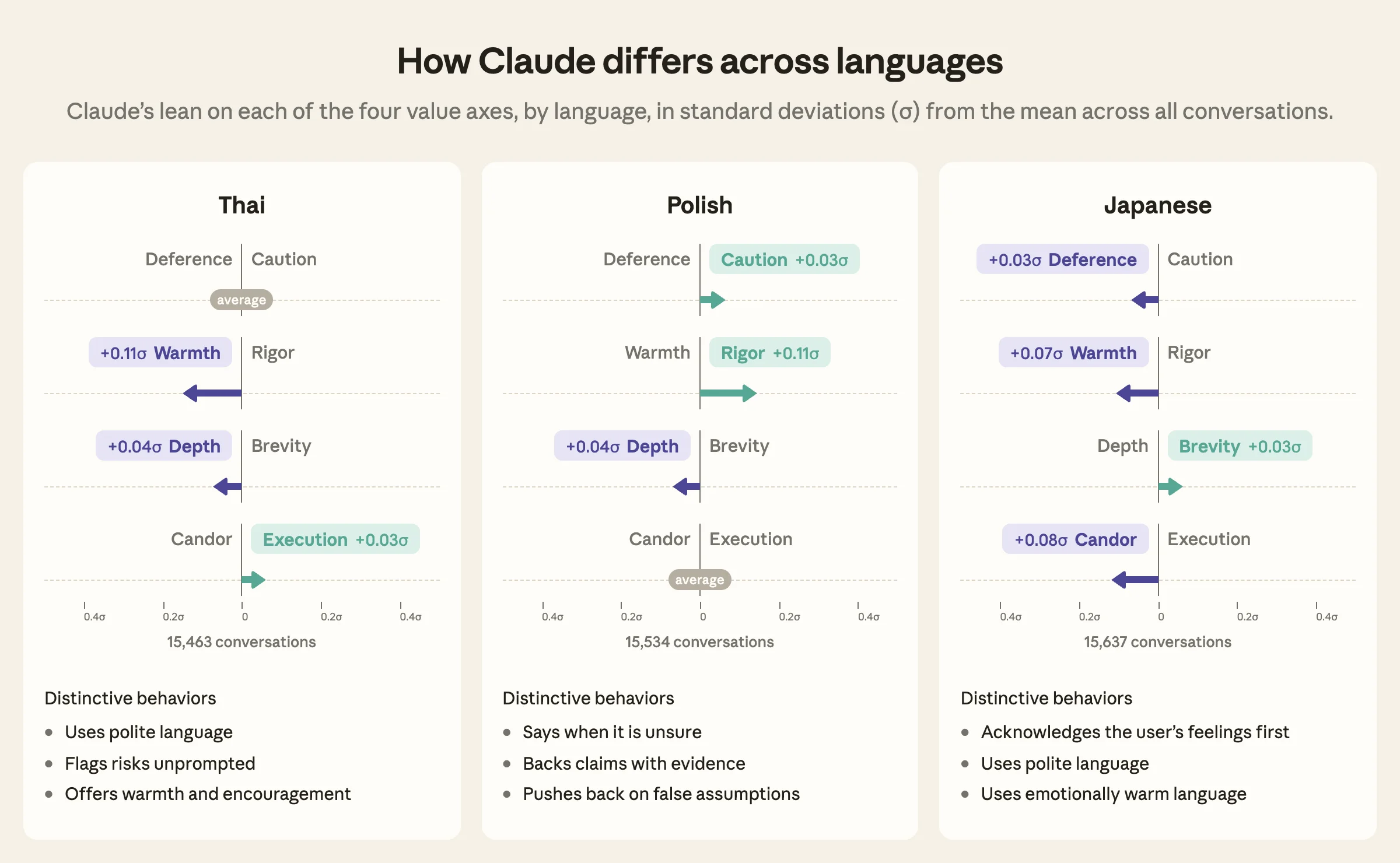 Figure 4c — Claude value profiles across 20 languages (panel 3 of 7)
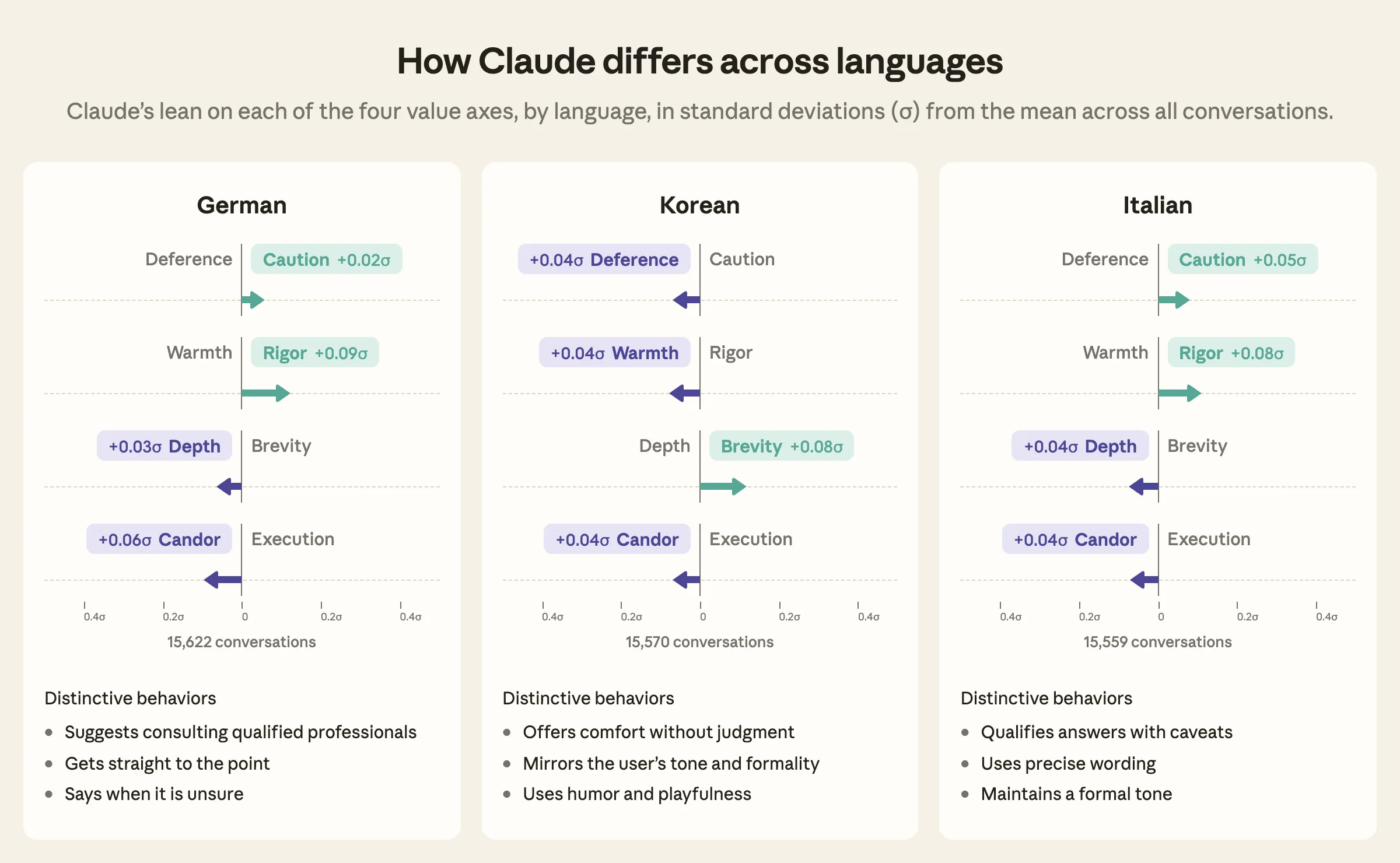 Figure 4d — Claude value profiles across 20 languages (panel 4 of 7)
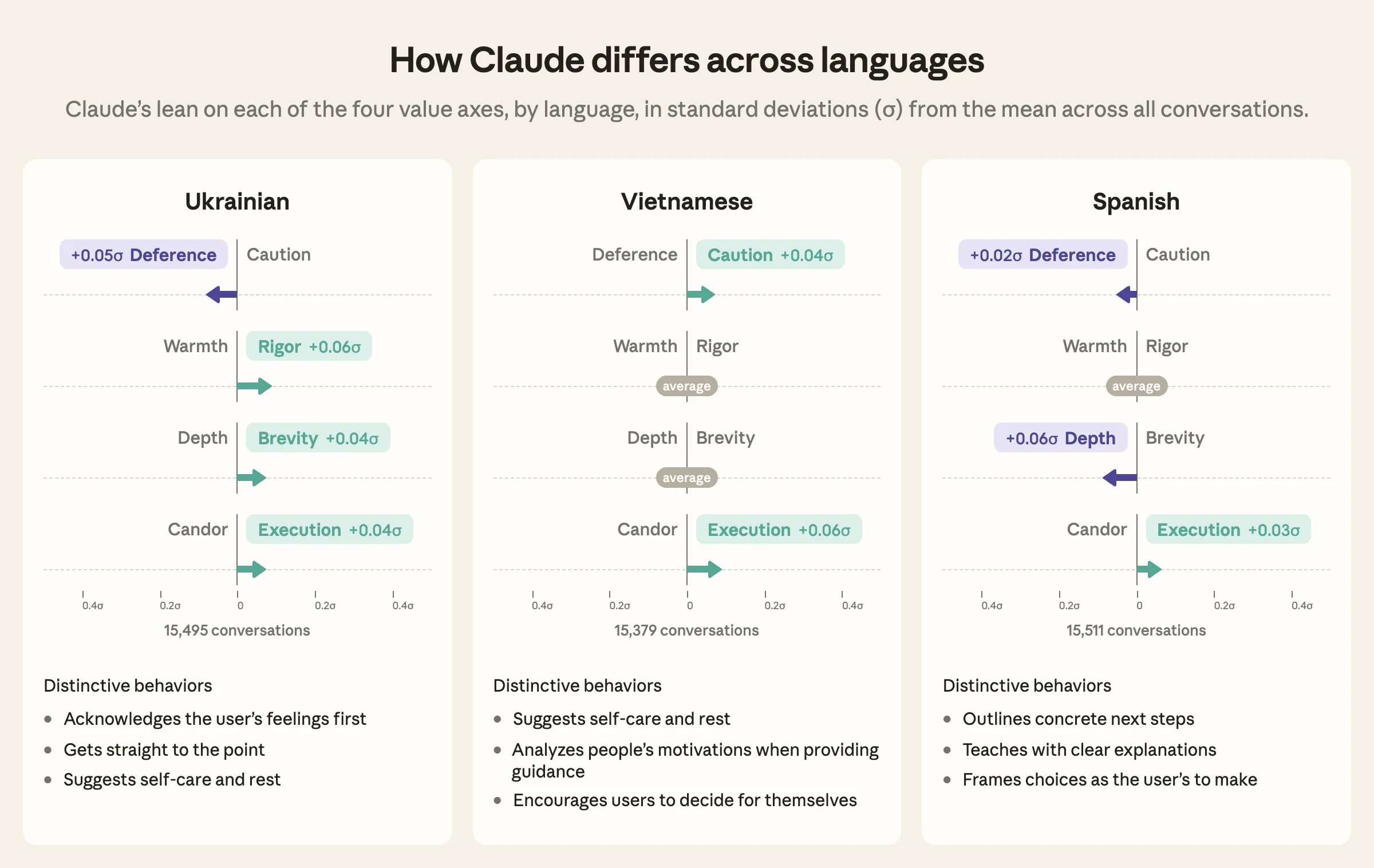 Figure 4e — Claude value profiles across 20 languages (panel 5 of 7)
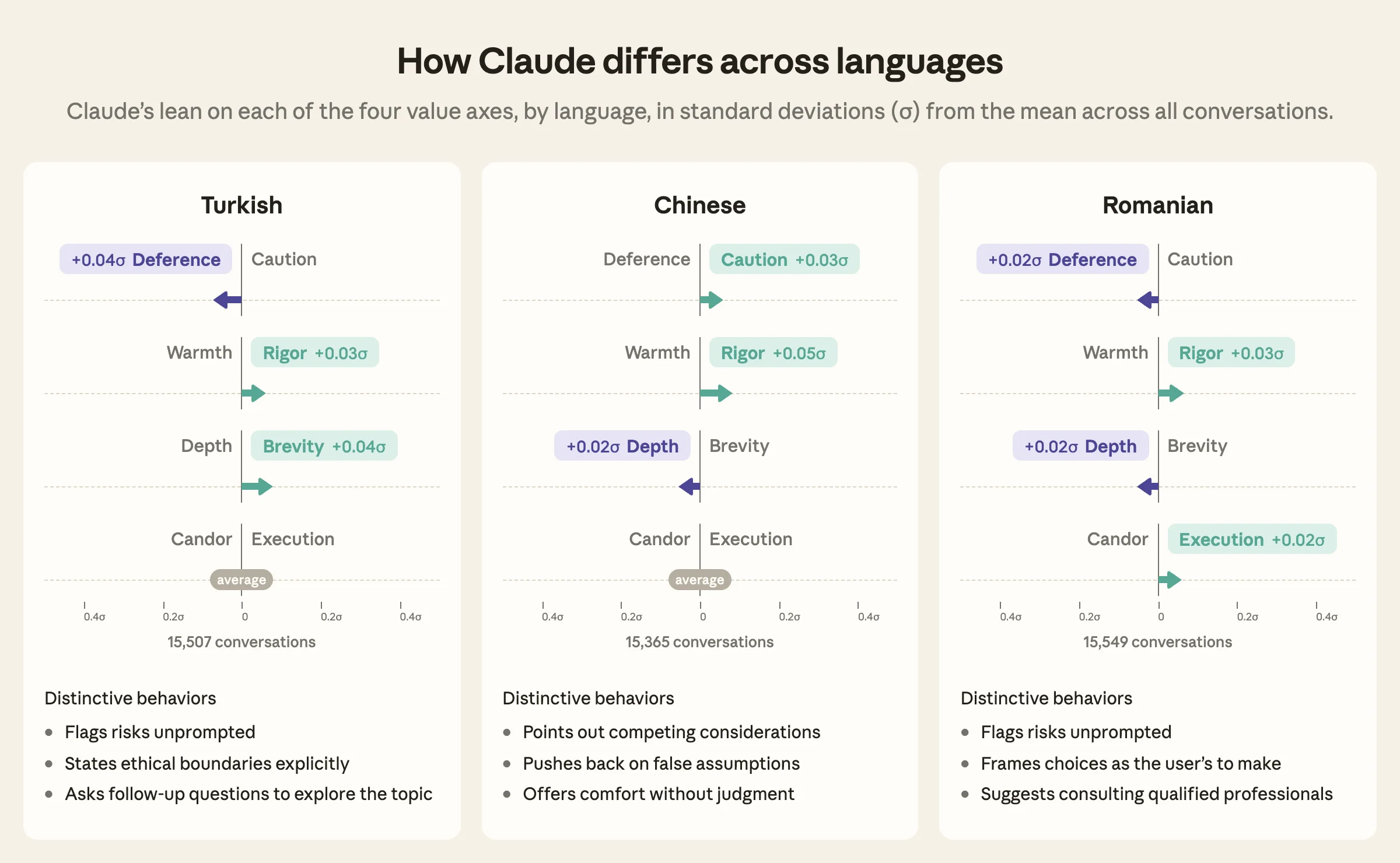 Figure 4f — Claude value profiles across 20 languages (panel 6 of 7)
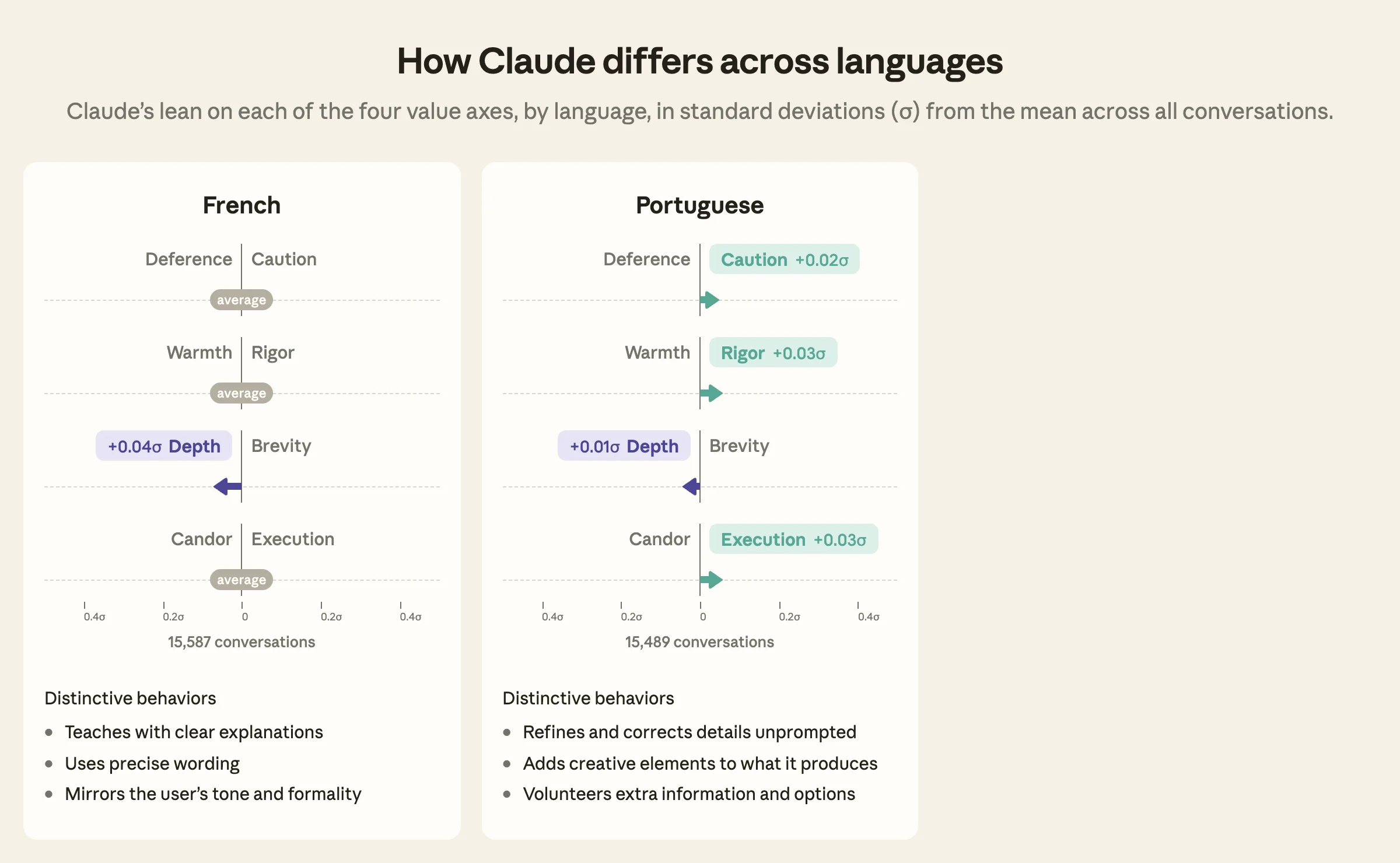 Figure 4g — Claude value profiles across 20 languages (panel 7 of 7)
Practical implication: Two founders reviewing the same business plan — one in Hindi, one in Russian — may get different perceived harshness even with identical prompts. That is not hypothetical; it is what the axis averages predict.
For India's #2 Claude market (INR pricing rollout) and Indic-model alternatives, this research adds a behavioral dimension beyond token cost: which language channel you standardize on changes the "personality" users experience.
Anthropic notes training data quantity and composition likely drive part of the gap — languages with more professional text may skew rigor; scarce locales may not receive the same character training fidelity as English.
What this is not
| Limitation | Why it matters for builders |
|---|---|
| 15% variance explained | Most behavioral spread still lives outside these four axes |
| Subjective tasks only | Coding agents and tool-use loops may profile differently |
| May 2026 snapshot | New models (Fable, Sonnet 5 rumors) are not in this sample |
| No user outcome data yet | Values measured, not trust/wellbeing impact |
| Desirability unsettled | Warmer Hindi may be culturally appropriate — or a training gap |
Do not treat axis positions as Goodhart targets without human review — see specification gaming.
What builders should do now
1. Match model to value need
| Use case | Model lean | explainx.ai pick |
|---|---|---|
| Onboarding, coaching, creative drafts | Warmth + deference | Sonnet 4.6 |
| Code review, security review, red-team | Caution + candor | Opus 4.7 |
| Fast scoped answers | Brevity + execution | Opus 4.6 |
2. Stratify evals by language
If you ship multilingual products, do not English-only eval and assume parity. Run the same rubric in Hindi, Arabic, English, and Russian — the languages with the widest axis spread in the paper.
3. Log value-relevant failures in production
Anthropic proposes pre-ship and post-deploy profiling. Until that ships, teams can approximate with:
- Weekly trace review on subjective tasks (interpretability monitoring guide)
- Tag incidents: false reassurance (deference without caution) vs excessive hedging (candor without execution)
- Version prompts and agent skills when you intentionally steer warmth or rigor
4. Connect to alignment training — not just prompts
This paper sits beside Teaching Claude why and J-space interpretability: Anthropic is building measurement for traits it also trains via constitution and character data. Value axes may eventually tell you which training stage moved the needle — not just that outputs changed.
What Anthropic plans next
The paper sketches open questions:
- Trace shifts to specific data mixes and training stages
- User studies correlating value profiles with trust and decision quality
- Norm-setting per language — how much variation communities want
- Steering tests — character training and system prompts, verified on axes
- Eval integration — value profiling as a standard pre-release gate
For enterprise buyers, this is the strongest public signal yet that "same Claude" ≠ same experience across model SKU and locale — relevant to private benchmark design.
Summary
Anthropic's July 13, 2026 value study compresses 3,307 expressed norms into four axes — Deference vs Caution, Warmth vs Rigor, Depth vs Brevity, Candor vs Execution — measured on 309K+ conversations. Sonnet 4.6 skews warm and affirming; Opus 4.7 skews cautious and candid; Hindi and Arabic skew warmth while English and Russian skew rigor. The work does not yet say which shifts are bugs — but it gives builders a concrete eval vocabulary beyond "helpful/harmless" and a reason to stratify multilingual QA before you trust Claude for high-stakes feedback.
Related on explainx.ai
- Claude hard questions ad — Sam Altman reaction, Jul 14
- Teaching Claude why — principles over demos
- Scalable oversight — RLHF & Constitutional AI
- Claude Opus 4.7 models guide
- J-space — global workspace interpretability
- Interpretability monitoring for teams
- Specification gaming & Goodhart
- AI models and the Political Compass — the left-libertarian cluster
- Claude INR pricing India
- Sarvam — Indic API alternative
Sources: Anthropic — Claude's values across models and languages, Jul 13, 2026 · Values in the Wild (prior work) · Claude's Constitution · @AnthropicAI thread, Jul 13, 2026
Value axis positions and model list reflect Anthropic's July 2026 publication. Production behavior depends on harness, system prompts, and tools — not conversation sampling alone.
Update — October 3, 2026: Related reporting on how Claude's values are shaped: NYT: Anthropic convened religious and philosophical leaders on Claude's morals.